How Pre-Breaking Units Reduce Cracking in Die-Cut Carton Folds
Fold cracking often becomes visible only after a carton has passed the most expensive stages of production: printing, die-cutting, stripping, and gluing. A panel may appear acceptable at the delivery end of a folder gluer, yet show fractured coating, exposed fibers, or a broken outer liner when the carton is opened, erected, or packed. The defect can weaken visual presentation and may also reduce confidence in the crease line on premium folding cartons.
Pre-Breaking Units reduce cracking by partially reversing or flexing a scored panel before its final fold. They do not repair a poor crease, unsuitable board, or incorrect grain direction. Their practical value is to distribute bending stress more gradually, so the outer surface of the cartonboard is less likely to split when the panel reaches the final folding section. The best results come from treating pre-breaking as part of a crease-and-folding system rather than as a standalone cure.
Why a clean die-cut crease can still crack during folding
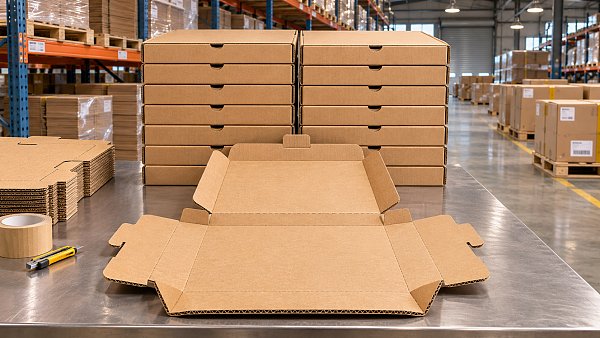
A crease is intended to create a controlled hinge in cartonboard. During die-cutting, the crease rule compresses fibers into a defined line while the matrix supports the sheet from below. In a well-formed score, the board bends at that compressed channel instead of bending broadly across the panel.
The problem is that folding places the outer surface under tension. On coated cartonboard, printed sheets, laminated stock, or board with a brittle surface layer, that tensile stress can exceed what the coating or top fiber layer can absorb. The result may be a fine white line, a visible split, flaking ink, or a crack that continues across the fold. The defect is usually most obvious on outward folds, where the printed or coated face stretches around the crease.
At low speeds, an operator may manually help a difficult panel into position or accept a wider folding path. At production speed, the carton is guided through carriers, belts, hooks, rails, and folding devices within a short distance. The fold can occur abruptly. A crease that looks acceptable in a flat blank may therefore fail when it encounters real folding geometry, pressure, and timing.
Pre-breaking changes that sequence. Instead of forcing the board from flat to its final folded angle in one event, the unit begins the bend earlier. The panel is pre-flexed, sometimes in the opposite direction to the final fold depending on machine configuration and carton design, before it enters the later folding section. This conditions the hinge and makes the final bend less sudden.
What the pre-breaking station is actually doing
Pre-breaking equipment can use belts, rollers, rails, plows, carriers, or dedicated folding mechanisms to lift and flex selected panels. The exact arrangement varies by folder gluer design and carton style, but the operating principle remains consistent: establish the fold progressively and keep the blank controlled while doing so.
Its contribution is often misunderstood as “softening” the board. The board is not chemically softened. Rather, the score line and adjacent fibers are mechanically worked through an initial bending movement. When the final fold occurs, less of the deformation has to happen instantaneously. That reduced peak stress is why pre-breaking can lower cracking risk.
The benefit is especially relevant where a carton requires a reverse fold, a tight presentation fold, or a fold that must be closed accurately at speed. It can also help where the folder gluer must process boards with limited fold tolerance, provided the crease is fundamentally suitable. A pre-breaker cannot compensate for a score that is too shallow, irregular, crushed, or positioned incorrectly relative to the intended folding path.

Start with the defect pattern, not the machine setting
Before changing the pre-breaking station, identify where and how the cracking occurs. This helps separate a converting problem from a die-cutting or material problem. A crack only on one specific panel, for example, points toward fold direction, local artwork, score geometry, or a particular pre-break path. Random cracking across multiple panels may indicate variable board properties, changing moisture condition, inconsistent make-ready, or unstable folder-gluer transport.
Inspect blanks both before and after the folder gluer. Fold several die-cut blanks manually, slowly and with the printed side observed closely. If cracking is already severe under gentle manual folding, changing only the pre-breaking setting is unlikely to solve the issue. If manual folds are acceptable but high-speed production cracks, the focus should shift to machine guidance, fold sequence, and the abruptness of the final closure.
Creasing quality sets the usable range
Pre-Breaking Units perform best when the crease has enough controlled compression to guide the fold but has not been damaged by excessive pressure. That balance depends on board construction, caliper, grain, coating, and the relationship between the creasing rule and matrix channel.
A shallow score may leave too much intact material resisting the fold. The folder gluer then applies force over a broader area, and the outer surface stretches rather than rotating cleanly at the hinge. Conversely, an over-compressed score can fracture internal structure, crush the board edge, or create a visible damaged line before the carton reaches the gluer. The aim is not maximum indentation; it is a stable hinge that folds repeatedly in the intended direction.
Grain direction deserves early review
Cartonboard usually folds more predictably when the fold is aligned with the material’s favorable bending direction. A design may impose folds across grain because of layout efficiency or carton geometry, but that choice narrows the process window. Cross-grain folding can increase resistance, raise outer-surface tension, and make cracking more likely, particularly on heavier coated or laminated stocks.
Where the carton layout cannot change, a controlled pre-break is more valuable. It should still be assessed alongside crease specification and board selection. Asking the folder gluer to overcome an unfavorable grain relationship through greater mechanical force usually produces more damage, not less.
Setting the pre-break without creating a new defect
The most common adjustment error is to make the pre-break more aggressive as soon as cracks appear. Excessive early bending can cause scuffing, panel distortion, inaccurate fold position, or premature fracture. A productive adjustment method is incremental: confirm the blank path, establish a light and repeatable pre-flex, then assess the final fold under normal operating conditions.
Begin by verifying that the blank reaches the station consistently. Side-register variation, unstable carrier engagement, or intermittent belt contact means the pre-break device may act on different parts of the panel from one blank to the next. A fold support that is correctly positioned for one blank can rub a printed surface or miss the crease on another.
- Confirm the intended fold direction. Review which panels need to be pre-broken and whether the machine should lift, open, or partially close them before final folding.
- Check the crease position against the folding tools. The device should work the panel through the designed hinge, not flex a neighboring board area.
- Set initial contact lightly. The purpose is to initiate controlled bending, not force the panel into a completed fold too early.
- Run samples at a representative production speed. Evaluate both immediate appearance and fold behavior after the carton has passed compression or collection.
- Increase intervention only when the panel still reaches final folding too flat or too abruptly. Small changes in position, angle, or contact pressure are easier to interpret than broad changes made at once.
Keep an eye on the relationship between pre-breaking and the final folding rail or belt. A good pre-break can be nullified by a later component that snaps the panel closed too sharply. The full folding path should show a gradual progression: stable blank transport, initial flex, guided panel movement, final closure, and compression. Each stage must support the next one.
Material and surface conditions that change the result
Cartonboard behavior is not fixed simply because its nominal grade is the same. Moisture balance, storage environment, print coverage, varnish, film lamination, and surface treatments can all alter folding response. A board that has become too dry may lose flexibility. A heavily inked or coated outer face can crack before the base board visibly fails. Laminated structures may resist bending differently from uncoated cartonboard and can show whitening or delamination at the fold.
When the defect follows a dark solid print area, examine the complete printed construction rather than blaming the folder gluer alone. Ink film thickness, coating flexibility, curing condition, and the sequence of printing and finishing all affect the surface’s ability to stretch. The crease may need evaluation before print, after print, and after any coating or lamination stage to determine when the vulnerability is introduced.
Board caliper also matters because thicker material needs a crease geometry capable of directing the bend. Reducing pre-break force may protect a surface temporarily, but it may leave an incomplete or springing fold. Increasing force may stabilize closure yet worsen cracking. The correct response is often a better score-and-fold balance rather than a single machine adjustment.
When pre-breaking is most useful—and when it is not enough
Pre-breaking is particularly useful for cartons with reverse creases, multi-panel structures, short critical folds, and designs that need precise control before adhesive compression. It can improve process stability where a panel otherwise resists engagement with the normal folding section. It also helps reduce the difference between a carton that folds well in a hand sample and one that must fold repeatedly at line speed.
It is less likely to resolve cracking when the underlying issue is material incompatibility, poor die-cut make-ready, unsuitable crease rule selection, or damage already present in the sheet. A crack that begins during die-cutting, stripping, or blank stacking should be traced to that stage. Likewise, a folder-gluer setting cannot correct a printed surface that lacks sufficient flexibility for the intended fold radius.
There are cases where the visible defect is not true fold cracking. White stress marks may arise from coating deformation, while a jagged break through the board edge suggests structural fiber failure. These conditions can require different corrective actions. Recording the defect with folded samples, retaining flat blanks, and comparing affected panels with unaffected ones gives the production team a clearer basis for adjustment.
Assessing a folder gluer’s pre-breaking capability
When reviewing equipment, the useful question is not simply whether a machine includes a pre-breaker. Evaluate how controllably it can handle the carton range under consideration. Important points include the number and location of pre-break stations, accessibility for setup, range of adjustable folding geometry, carrier and belt stability, support for reverse folds, and the ability to maintain repeatable panel contact as speed changes.
Also consider the transition into the final folding and compression sections. A capable station should fit into a coherent folding path rather than operate as an isolated attachment. For short runs or frequent changeovers, setup visibility and repeatable reference positions may matter as much as the mechanism itself. For longer runs, durability of contact components and stable transport become more significant because small alignment changes can gradually affect appearance.
The most reliable evaluation uses representative blanks with the intended board, print treatment, crease pattern, and carton geometry. Flat samples alone cannot reveal how a panel behaves through a high-speed path. The goal is not merely to achieve a folded carton; it is to confirm that the fold line remains visually acceptable, the panel closes consistently, and the adjustment window is wide enough for normal production variation.
Used correctly, Pre-Breaking Units lower the peak stress placed on a critical crease and make final folding more controlled. Their value is greatest when die-cutting, material preparation, printing, transport, and folding are evaluated as connected stages. That approach avoids the costly mistake of treating every cracked fold as a folder-gluer pressure problem.
Related News
 How to Choose a Sheet Feeder for Paperboard ProductionChoose the right sheet feeder for paperboard with practical tips on material handling, line speed, integration, and trials to improve production reliability.Post-Press Kinematics Expert
 How Do Creasing Dies Prevent Cracks in Folded Cartons?Creasing Dies help prevent carton fold cracks through controlled deformation. Discover key tooling factors and practical production tips for cleaner, more consistent folds.Post-Press Kinematics Expert
 How to Prevent Sheet Misfeeds in an Automatic Feeder SystemPrevent automatic feeder system misfeeds with practical checks for sheet alignment, suction, air separation, timing, and double-sheet detection.Post-Press Kinematics Expert
 How Do Non Stop Feeder Piles Reduce Die-Cutter Downtime?Discover how non stop feeder piles reduce die-cutter downtime, improve pile-change efficiency, and keep sheet feeding reliable on long production runs.Post-Press Kinematics Expert
 USITC Advances Trade Probe Into Corrugated Die-Cut BoxesCorrugated die-cut boxes face a USITC trade probe. Explore what the investigations could mean for packaging costs and sourcing.Post-Press Kinematics Expert
 What to Consider When Choosing Heavy Duty Pile TurnersChoosing heavy duty pile turners? Discover how to assess load capacity, substrate handling, safety and operating costs to find the right fit for your production line.Post-Press Kinematics Expert