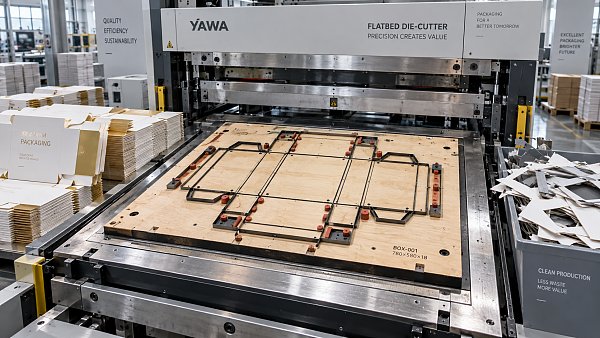
How Pile Feeders Reduce Labor Costs in Automated Die Cutting
Labor cost in die cutting is often misunderstood as a simple headcount issue. In practice, the expensive part is not only the operator standing at the machine. It is the time spent bringing stacks to the feeder, squaring sheets, correcting misfeeds, clearing stoppages, and waiting for the next pile to be ready. Pile Feeders reduce that burden by supplying sheets continuously and consistently, allowing an automated die-cutter to spend more time producing saleable work and less time waiting for manual intervention.
For a packaging plant running folding cartons, corrugated displays, or printed board packaging, this changes the economics of automation. A feeder does not merely move a stack of sheets. It stabilizes the first stage of the converting process. When feeding is reliable, downstream die cutting, stripping, delivery, inspection, and pallet handling can operate with fewer interruptions and less operator attention.
The practical question is not, "Can a pile feeder replace people?" It is, "Which manual tasks can be removed from the critical production path, and what will that do to labor hours, output stability, and waste?" That is the right starting point for an investment decision.
Why Pile Feeders Matter in Automated Die Cutting
A flatbed die-cutter can be mechanically capable of high output, but its real production rate is limited by the weakest part of the workflow. In many plants, that weak point is sheet feeding. Manual loading may work reasonably well on long, stable runs with experienced crews. It becomes much less efficient when the plant handles frequent order changes, varying board grades, short delivery windows, or labor shortages.
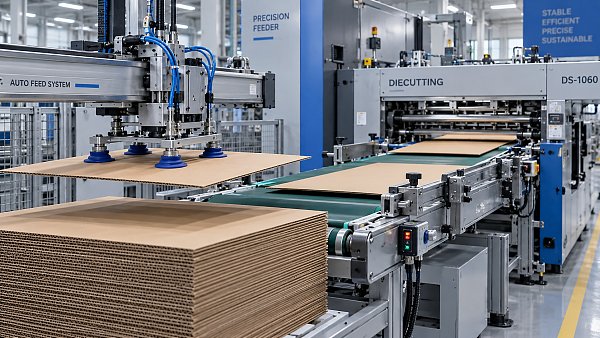
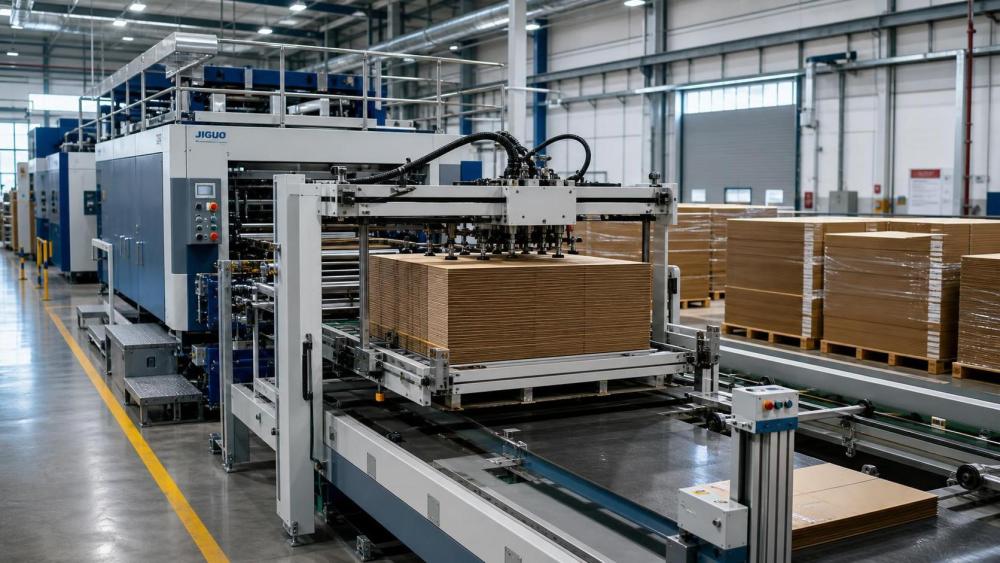
Pile Feeders create a controlled interface between material handling and the die-cutting section. A prepared pile is positioned, lifted, separated, and presented to the feeder head under repeatable conditions. Depending on the equipment design and substrate, the system may use pile alignment, side guides, suction separation, sheet detection, and automatic pile-height control to maintain a steady sheet stream.
This consistency matters because an operator who repeatedly leaves the machine to fetch, square, or reload material is not supervising process quality. They are performing logistics. In a well-designed automated line, routine sheet supply should be handled by the feeder and upstream material flow, while the operator focuses on setup verification, print-side orientation, die-cut quality, creasing performance, waste removal, and exceptions that genuinely require judgment.
Direct answer: Pile Feeders reduce labor costs by removing repetitive sheet-loading work, reducing the number of people needed to keep a die-cutter supplied, and cutting the downtime caused by inconsistent piles or delayed replenishment. Their larger value usually comes from more stable production per labor hour, not from eliminating every operator position.
Where the Labor Savings Actually Come From
The first source of savings is obvious: fewer manual touches. When sheets arrive at the die-cutter in prepared piles and the feeder handles lifting and presentation, employees spend less time manually loading small quantities or correcting an uneven stack. This is especially relevant for heavier board, large-format sheets, and corrugated blanks, where repeated handling is physically demanding and often requires two people for safe, consistent operation.
The second source is less visible but often more important: fewer micro-stoppages. A feeder that pauses frequently due to poor pile preparation, double sheets, skewed sheets, or an empty feed station can consume a significant amount of productive time across a shift. These short interruptions are easy to overlook because they may not appear as a major breakdown. Yet they still tie up operators, reduce effective throughput, and make delivery planning unreliable.
Third, stable feeding reduces the labor attached to rework. A misfed sheet can lead to inaccurate register, a damaged print surface, poor creasing, incomplete stripping, or a damaged cutting tool. The immediate material loss may be small, but the investigation, cleanup, re-running, and quality checks all use labor that was never included in the original job estimate.
There is also a scheduling benefit. A production manager can plan staffing more confidently when the die-cutting line runs at a predictable effective speed. Plants that rely heavily on manual intervention often compensate by scheduling extra labor around busy periods. Automation does not make scheduling effortless, but it reduces the need to protect every shift with spare hands simply because feeding performance is uncertain.
Automation Changes the Operator's Job, Not Just the Headcount
A common mistake is to justify an automatic pile feeder only by counting the operators who might be reassigned. That calculation is too narrow. In a well-run converting department, an experienced operator remains valuable. The difference is that their time shifts from repetitive loading to process control.
Instead of watching an empty pile develop and reacting late, the operator can monitor sheet separation, registration behavior, stripping quality, waste discharge, and delivery stack quality. They can prepare the next job, confirm tooling readiness, and address small defects before they turn into a large batch problem. This is particularly useful in carton production, where the die-cutting stage has a direct effect on folding accuracy, glueing performance, and final pack appearance.
That said, automation only delivers this benefit when the work around the machine is organized. If incoming piles are poorly prepared, material specifications change without notice, or the next job is not staged in time, the feeder will not solve the underlying discipline problem. It may even make the problem more visible.
Plants should therefore treat a pile feeder as part of a working method. Material preparation, job staging, operator training, maintenance routines, and production data all need to support the machine. A feeder cannot create stable production from unstable inputs.
When a Pile Feeder Is a Strong Fit
Automatic pile feeding tends to be most compelling where the die-cutter is already a bottleneck or where labor availability is affecting delivery performance. The following conditions usually strengthen the business case:
- The machine runs multiple shifts or has a consistently high workload.
- Operators spend meaningful time loading, aligning, or replenishing sheets.
- Sheet size, board weight, or pile height makes manual handling slow or strenuous.
- Jobs require dependable registration and controlled sheet presentation.
- The plant experiences frequent minor stops rather than only major machine failures.
- Production includes enough repeatable volume for operators to benefit from automated supply.
- Downstream stripping, blanking, delivery, or packing equipment is already limited by feeder interruptions.
Corrugated packaging plants may see a different mix of benefits than folding-carton converters. Corrugated sheets can vary more in flatness, warp, surface condition, and thickness. The feeder must be evaluated for those realities, not only against a brochure speed. For cartonboard and printed paperboard, print scuffing, sheet direction, static, coating, and registration tolerance may carry more weight. The right feeder is the one that handles the plant's everyday material, including its difficult jobs, not just its best samples.
Do Not Buy on Rated Speed Alone
Suppliers may quote maximum feeding or die-cutting speeds, but a decision should be based on effective production speed. Effective speed accounts for setup, pile changes, sheet faults, stoppages, operator intervention, quality holds, and the time needed to recover after a problem. A line that runs more slowly on paper but requires less attention can deliver more finished work per shift than a faster machine that stops repeatedly.
Ask suppliers to demonstrate the system using representative substrates and job formats. This should include the board grades that create the most difficulty, not only standard material. Observe the time required to load a new pile, adjust guides, recover from a misfeed, and change between job sizes. Those details reveal much more about labor demand than a nominal speed figure.
It is also sensible to ask how the feeder handles partially used piles, curled sheets, dusty material, static-prone stock, and variable sheet edges. A feeder may perform well with uniform factory-fresh board but need different settings or additional preparation for more challenging work. There is no universal answer; the production mix determines the value.
The Short-Run Question Needs an Honest Answer
Many managers assume that frequent short runs make feeder automation uneconomic. Sometimes that is true. If jobs are extremely short, material varies widely, and every setup requires significant manual adjustment, the feeder may not have enough running time to recover its investment through lower labor use alone.
But short-run production is not automatically a reason to reject it. The key is the changeover design. If format settings are repeatable, job data is organized, piles are staged before the previous run ends, and the operator can switch efficiently, automation can still reduce the amount of labor consumed per order. The benefit may come less from high speed and more from preventing small delays from multiplying across dozens of jobs.
Look at labor minutes per completed order, not only labor hours per shift. A plant with many daily changeovers should measure preparation, loading, adjustment, first-sheet approval, cleanup, and end-of-job handling. That is where the hidden cost of manual feeding usually appears.
Integration Is Where the Project Succeeds or Fails
A pile feeder should be evaluated as part of the entire converting cell. Upstream, the plant needs enough floor space and a reliable method for staging pallets or piles. Downstream, delivery capacity must match die-cutting output. If stripped blanks accumulate or finished stacks require frequent manual removal, the labor constraint simply moves to another point in the line.
For larger automation projects, the best sequence is often to map the material path from printed sheet or corrugated board arrival through die cutting, stripping, blanking, folding, gluing, inspection, and palletizing. This makes it easier to identify whether the feeder is the first priority or whether another step is causing the larger loss.
Packaging operations also benefit from connecting equipment data to production management. Basic information such as run time, stop reason, feeder faults, setup duration, reject quantity, and operator calls can show whether the expected labor savings are actually being achieved. A platform such as Global Commercial Print & Corrugated Packaging Intelligence (CPCS) is useful in this stage because it frames feeders, die-cutters, inspection, delivery systems, and end-of-line automation as connected investment decisions rather than isolated machine purchases.
Build the Business Case From Your Own Production Data
A credible investment case does not need exaggerated assumptions. Start with a representative period of normal production and record the current state:
- Number of people involved in loading and supporting the die-cutter.
- Minutes per shift spent on pile replenishment and manual alignment.
- Frequency and duration of feeding-related stops.
- Material waste and rework associated with feeding errors.
- Average changeover time by job type.
- Overtime or temporary labor used to protect delivery dates.
Then ask the supplier to state what assumptions support their proposal. Labor savings may come from reassignment, reduced overtime, fewer support hours, or higher output from the same crew. These are different financial outcomes and should not be mixed together. A machine that does not reduce payroll immediately can still be commercially sound if it lets the plant absorb more work without adding another shift or relying on difficult-to-secure labor.
Include training, installation, spare parts, preventative maintenance, utilities, floor layout changes, and integration work in the review. Ignoring these items makes any automation project look better on paper than it will be in operation. The decision should be based on long-term operating cost and realistic production behavior.
FAQ
Can Pile Feeders run without an operator?
Usually, no. They reduce routine handling and supervision requirements, but an operator is still needed for setup, material verification, quality control, exceptions, and safe operation. The goal is a more productive role, not an unattended process in every application.
Will a pile feeder improve die-cut quality?
It can improve consistency by delivering sheets in a more controlled way. It cannot correct poor tooling, unstable board, incorrect make-ready, or downstream stripping issues. Quality gains depend on the entire die-cutting process.
What is the most overlooked cost in a feeder project?
Material flow. If pallets cannot be staged efficiently, empty pallets are not removed, or the next job is not prepared, the line will still wait. Review the area around the machine, not only the feeder itself.
Is retrofit automation practical on an existing die-cutter?
It can be, provided the machine condition, controls, safety system, floor space, and interface options support it. A technical assessment is necessary before assuming a retrofit will deliver the same result as an integrated new line.
Pile Feeders deliver their strongest return when they are selected for the real production mix, supported by disciplined material staging, and measured against effective output rather than headline speed. For a die-cutting operation facing labor pressure, recurring feed interruptions, or unstable delivery performance, the right feeder can turn manual handling into a controlled, repeatable part of the production system.
Related News
 How to Calculate Short Run Die Cutting Costs Before Placing an OrderCalculate short run die cutting costs before you order. Learn how tooling, setup, material waste, and finishing affect your budget—and compare quotes to avoid hidden charges.Post-Press Kinematics Expert
 How a High Accuracy Sheet Feeder Reduces Misfeeds in Die CuttingDiscover how a high accuracy sheet feeder reduces die-cutting misfeeds, waste, and downtime. Learn how to choose the right system for more reliable production.Post-Press Kinematics Expert
 How to Choose a Platen Die Cutter Manufacturer for Reliable OutputChoose a platen die cutter manufacturer with proven output. Discover how material trials, service support, and clear acceptance criteria help reduce downtime and protect your investment.Post-Press Kinematics Expert
 How to Choose a Counterplate Manufacturer for Accurate CreasingChoose a counterplate manufacturer that delivers accurate creasing. Learn how to assess channel design, production trials, and repeatability to reduce setup waste and improve folding.Post-Press Kinematics Expert
 How Flatbed Steel Rule Dies Improve Cut Accuracy and Changeover SpeedFlatbed steel rule dies improve cut accuracy, crease quality, waste release, and changeover speed. Discover practical tooling tips for reliable, efficient converting.Post-Press Kinematics Expert
 How Platen Presses Support Precise Foil Stamping and Die CuttingPlaten Presses deliver precise foil stamping, clean die cutting, and reliable creasing for premium packaging. Discover setup practices that improve quality and reduce waste.Post-Press Kinematics Expert