How Paperboard Die Cutters Reduce Waste in Folding Carton Production
How Paperboard Die Cutters Reduce Waste in Folding Carton Production
In folding carton production, waste rarely comes from one dramatic failure. More often, it accumulates through small losses: sheets rejected during make-ready, poor registration at the beginning of a run, cracked crease lines, incomplete stripping, damaged carton blanks, or finished cartons that fail during folding and gluing. When paperboard costs are volatile and delivery windows are tight, these losses quickly become a commercial problem rather than a purely technical one.
Paperboard Die Cutters are one of the most direct tools available for controlling that loss. A well-matched die-cutting system does more than cut a carton outline. It keeps the printed image, cut line, crease geometry, stripping pattern, and delivery process aligned at production speed. The result is not simply fewer rejected sheets. It is a more predictable converting process, with less rework transferred downstream to folder gluers, inspection stations, packing lines, and warehouse teams.
For an engineering project, the key question is not whether a die-cutter can reach a stated maximum speed. It is whether the entire system can maintain acceptable quality across the board grades, carton structures, print methods, and job-change frequency the plant actually handles. That distinction often determines whether an investment reduces waste in daily operation or merely looks capable on a specification sheet.
Waste Starts Before the Cutting Stage
Die-cutting waste is often blamed on the finishing department, but the root cause may begin earlier. Paperboard moisture variation, curl from printing or coating, inconsistent sheet squareness, ink build-up, varnish characteristics, and print-to-cut registration all influence how a sheet behaves on a flatbed die-cutter. A carton blank may appear acceptable when it exits the press, then reveal its real problem when it enters the cutting and creasing section.
This is particularly common in work involving metallized substrates, heavy ink coverage, UV coatings, laminated board, or cartons with narrow panels and intricate locking features. These jobs leave less room for variation. A minor positional shift can produce a visible white edge, cut through printed graphics, weaken a crease, or make a glued seam unreliable. Rejecting the sheet at die-cutting is correct, but it is also expensive because printing, coating, and material have already been consumed.
A practical waste-reduction plan therefore links prepress, printing, and converting rather than treating them as separate islands. The die-cutting team needs clear information about grain direction, board caliper, coating type, print registration tolerance, and any known sheet stability issues. In return, converting feedback should be visible to the pressroom and planning teams. If a particular coating repeatedly causes cracking on reverse creases, the answer may be a change in board specification, crease rule selection, or print process—not simply slower die-cutting.
Registration Control Prevents High-Value Sheets From Becoming Scrap
Accurate registration is the first obvious route by which Paperboard Die Cutters reduce waste. In folding carton work, the cut and crease must follow the printed artwork closely enough that visual edges, windows, barcodes, logos, and functional folds remain correct. The requirement becomes more demanding when cartons include embossing, foil stamping, security features, pharmaceutical text, or detailed brand graphics near the cut edge.
Modern feeder and registration arrangements can help stabilize sheet positioning, but the machine cannot compensate indefinitely for poor incoming material. Side guides, front lays, pull lays, sheet sensors, and registration systems need to work as a coordinated sequence. If operators are continually correcting sheet position during a run, the plant should not assume this is simply an operator issue. It may indicate feeder wear, inconsistent sheet dimensions, electrostatic effects, board curl, or a mismatch between feeder settings and the substrate.
The most costly registration waste tends to appear after a job change. Operators may need a number of sheets to bring cutting, creasing, stripping, and delivery into stable condition. That loss cannot always be eliminated, especially for complex cartons, but it can be controlled. Repeatable job settings, disciplined tool preparation, accessible machine adjustment points, and reliable job data all reduce the number of “trial sheets” needed before production begins.
Plants running frequent short orders should pay particular attention here. A machine that performs very well on long runs but requires lengthy, material-heavy setups may not be the lowest-waste option in a high-mix production environment. Changeover performance deserves the same scrutiny as rated production speed.
Creasing Quality Has a Direct Effect on Yield
Cutting is visible; creasing is where many avoidable losses hide. A carton can leave the die-cutter with a clean outline yet still fail later because the score line is too weak, too aggressive, off-position, or poorly matched to the board structure. Cracked outer surfaces, delamination, poor fold memory, and uneven panels often show up at the folder gluer or during packing. By then, the original defect may be harder to trace.
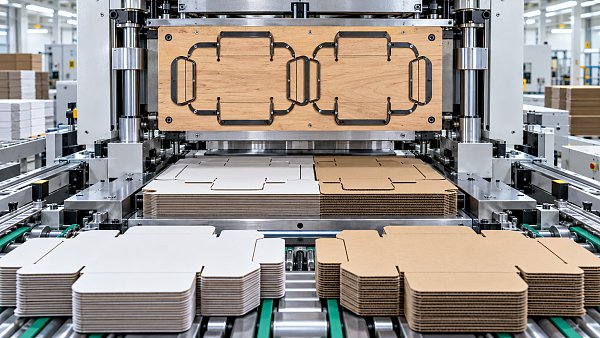
Crease performance depends on more than the machine. It is shaped by rule height, channel selection, matrix condition, counterplate setup, board caliper, fiber direction, moisture condition, and the carton’s folding geometry. A plant cannot solve every issue by increasing pressure. Excessive pressure may temporarily force a sharper crease while introducing cracking, crushed edges, or unnecessary stress on the tooling and machine.
Experienced teams usually treat crease setup as a controlled process rather than a visual adjustment. They document settings that work for recurring board grades and carton families, inspect creases after folding rather than only in the flat blank, and include the folder-gluer team in problem diagnosis. This matters when a project involves new board suppliers, lightweighting initiatives, or a shift toward more recycled fiber content, where material behavior may differ from the grades a plant has historically processed.
For packaging intended for food, healthcare, cosmetics, or premium retail, functional defects can also become brand defects. A carton that opens poorly, shows visible cracking, or cannot hold its intended shape may not be acceptable even if the printed image is perfect.
Stripping Is Where Hidden Waste Becomes Either Recoverable or Unmanageable
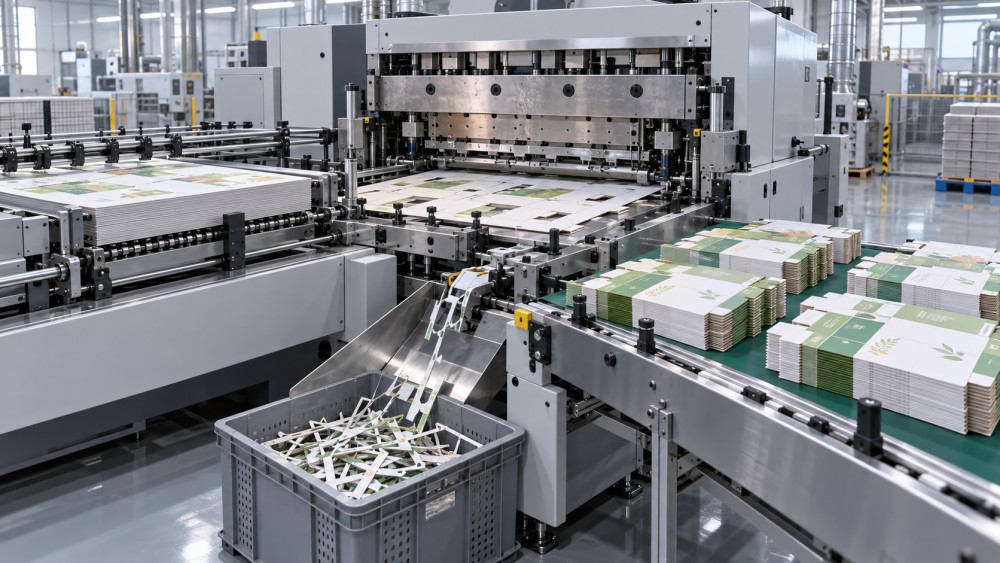
Waste reduction is not limited to preventing bad sheets. It also depends on removing waste cleanly and consistently from good sheets. Complex carton layouts generate internal waste around windows, handle holes, locking tabs, and narrow openings. If stripping is incomplete, unstable, or poorly timed, waste pieces can remain attached to the blank, interfere with delivery, damage carton edges, or create downstream jams.
A stripping section should be evaluated against the actual carton designs planned for the line, not only standard sample blanks. Some structures are forgiving; others require carefully designed stripping pins, frames, and support elements. Fine details, small apertures, lightweight board, and heavily coated stock can behave very differently at speed. A reliable stripping setup reduces manual breakout work, but its larger benefit is consistency. Manual intervention introduces labor cost, handling damage, and irregular quality.
Delivery performance deserves similar attention. Carton blanks that arrive misaligned, scuffed, mixed, or poorly counted may create waste during packing and gluing even when die-cutting itself is correct. Clean separation and stable pile formation protect the value already added to the sheet. In automated plants, delivery stability also affects the ability to connect die-cutting with inspection, blanking, conveying, and palletizing systems.
Choose the Die-Cutting Configuration Around the Production Mix
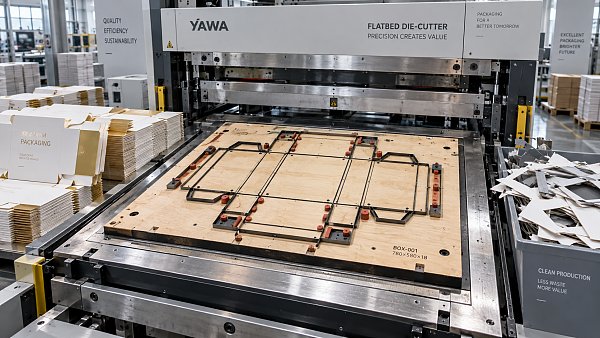
There is no single “best” machine architecture for all folding carton operations. Flatbed die-cutters are widely used where precise cutting and creasing are required across a broad range of carton formats and substrates. Their suitability for more detailed carton structures is one reason they remain central to commercial print and paper-based packaging converting. Rotary die-cutting may be appropriate in other production conditions, particularly where repeatable, high-volume work and compatible formats justify the tooling and process approach.
The project decision should begin with the job mix: sheet sizes, board grades, annual order profile, average run lengths, degree of embellishment, number of changeovers, required stripping complexity, and downstream finishing capacity. Buying excessive capacity for a plant dominated by short, variable jobs can create a different kind of waste: idle capital, difficult scheduling, and unnecessarily complex maintenance. On the other hand, under-specifying automation can leave operators spending too much time on repetitive setup and handling tasks.
Automation Helps, but Only When Process Discipline Comes First
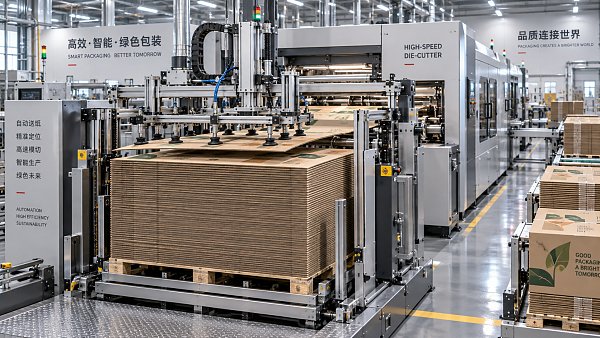
Automatic feeders, non-stop delivery, preset functions, inspection systems, and production data interfaces can reduce variation and manual handling. They are especially valuable where labor availability is limited or order volumes make manual adjustment unsustainable. Still, automation does not repair weak tooling management, unclear job specifications, or poor maintenance routines. In some plants, advanced features are present but underused because operators do not trust the data or because setup practices vary from shift to shift.
A more dependable approach is to define a small set of waste-related control points: make-ready sheets used, registration rejects, crease-related rejects, stripping faults, delivery jams, and downstream returns from folder gluing. These categories should be recorded consistently enough to identify patterns by carton type, board supplier, shift, or tooling condition. The aim is not to burden operators with reporting. It is to distinguish random incidents from repeatable causes.
Vision inspection can add value where print, code, or structural errors must be detected before cartons move further into production. However, inspection thresholds need careful setup. Overly sensitive criteria may reject acceptable variation and create unnecessary waste; loose criteria may allow defects to pass. The right setting is tied to product risk, customer expectations, artwork design, and the plant’s actual process capability.
Tooling, Maintenance, and Operator Access Are Not Secondary Details
Many die-cutting projects focus heavily on the press itself while giving too little attention to dies, stripping tools, consumables, spare parts, maintenance access, and operator training. That is a mistake. A high-quality machine cannot deliver stable output with worn cutting rules, poor ejection material, damaged grippers, inaccurate make-ready components, or inconsistent tool storage.
Before finalizing a project, teams should review who will maintain the equipment, how quickly key wear parts can be obtained, whether die suppliers understand the intended carton designs, and how job data will travel from prepress to the machine floor. It is also worth observing a supplier demonstration using representative substrates and challenging carton structures where possible. Generic sample sheets rarely reveal the problems that occur with a plant’s real product mix.
This broader system perspective is increasingly relevant in packaging factories connecting printing, converting, inspection, coding, and end-of-line automation. CPCS follows these links across commercial print and corrugated packaging operations because equipment performance is rarely isolated. A stable die-cutting stage can reduce bottlenecks at folder gluers, simplify inspection, improve delivery planning, and make production data more meaningful.
A Lower-Waste Die-Cutting Project Begins With Real Production Evidence
The strongest business case for Paperboard Die Cutters is built from the plant’s own loss pattern, not from a broad promise of higher efficiency. Review which jobs consume the most make-ready sheets, which defects cause the most downstream rework, where manual stripping is still required, and whether waste rises after particular board, coating, or artwork changes. Those answers reveal whether the priority is registration, creasing, stripping, setup repeatability, inspection, or integration with the next process.
A die-cutter reduces waste when it is specified as part of a controlled converting system: appropriate tooling, stable incoming sheets, capable operators, maintainable components, and feedback from downstream operations. If those conditions are addressed early, material savings are not dependent on heroic operator intervention. They become part of the normal production routine, which is where a folding carton plant actually protects margin and delivery reliability.
Related News
 How Flatbed Steel Rule Dies Improve Cut Accuracy and Changeover SpeedFlatbed steel rule dies improve cut accuracy, crease quality, waste release, and changeover speed. Discover practical tooling tips for reliable, efficient converting.Post-Press Kinematics Expert
 How Platen Presses Support Precise Foil Stamping and Die CuttingPlaten Presses deliver precise foil stamping, clean die cutting, and reliable creasing for premium packaging. Discover setup practices that improve quality and reduce waste.Post-Press Kinematics Expert
 How Pre-Breaking Units Reduce Cracking in Die-Cut Carton FoldsPre-Breaking Units help reduce cracking in die-cut carton folds by easing bend stress, improving fold accuracy, and supporting high-speed carton production.Post-Press Kinematics Expert
 How a High Pile Feeder Reduces Downtime in Die-CuttingHigh pile feeder solutions reduce die-cutting downtime, improve sheet supply stability, and help packaging plants increase throughput with fewer interruptions.Post-Press Kinematics Expert
 Carton Die Cutting for Folding Cartons That Reduces Setup WasteCarton die cutting for folding cartons reduces setup waste with stable registration, reliable creasing, smarter tooling, and repeatable production control.Post-Press Kinematics Expert
 How to Choose Hardened Die Cutting Knives for Longer Production RunsHardened die cutting knives for longer runs: learn how to balance hardness, edge profile, consistency, and total conversion cost for reliable results.Post-Press Kinematics Expert