How Does a precision creasing die Improve Folding Accuracy in Production?
On a high-speed carton line, a fold that is only slightly off can become a visible defect within seconds. Panels drift at the folder gluer, glue lands too close to an edge, printed graphics break across a corner, or a carton springs open after packing. In corrugated converting, poor score performance can create crushed flutes, uneven panels, and boxes that do not erect squarely. These symptoms are often blamed on board variation or machine settings. Sometimes that diagnosis is correct. Just as often, the underlying issue begins with the creasing tool.
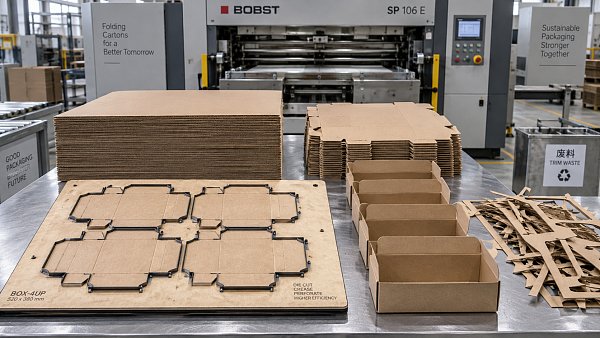
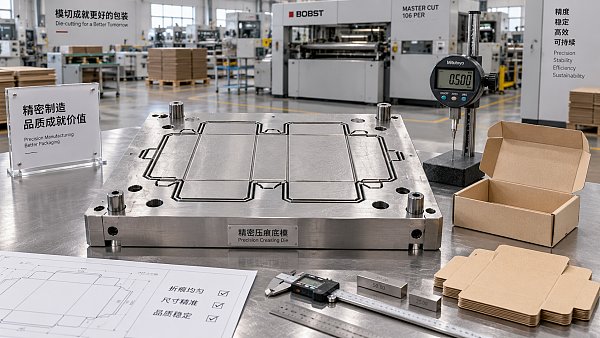
A precision creasing die is designed to create a controlled deformation line rather than a simple indentation. Its purpose is to establish a fold path with enough consistency that the sheet or board bends where intended, in the intended direction, under real production speeds. For technical evaluators, this makes the die part of a broader quality system: it influences die-cutting accuracy, fold geometry, print appearance, glue performance, packing efficiency, and the repeatability of the finished carton.
The question is not whether a crease exists. Most tooling can leave a visible line. The more meaningful question is whether the crease has the correct depth, width, location, and compression profile for the specific substrate and folding operation that follows.
Folding accuracy begins before the folder gluer
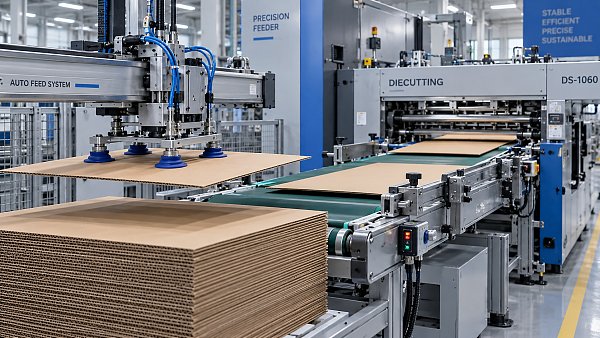
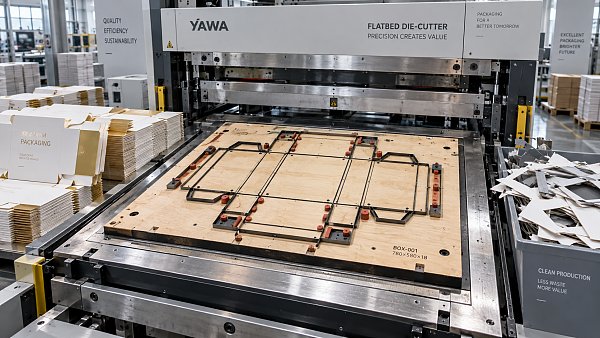
Folding accuracy is commonly measured at the completed-carton stage: panel alignment, squareness, glue seam position, dimensional conformity, and erecting performance. Yet those outcomes are largely determined earlier, when the sheet passes through the die-cutting section.
A crease line changes the mechanical behavior of the material. In folding carton board, it locally breaks and compresses the fiber structure so the board can hinge with less random resistance. In corrugated board, scoring manages the relationship between liners and flutes, creating a controlled bend while attempting to preserve enough structure for compression strength and visual quality. If this controlled weak point is inconsistent, the fold will search for its own path. That is when operators see wandering folds, edge cracking, liner rupture, and variable carton dimensions.
A precision creasing die improves folding accuracy by controlling the features that define this hinge:
- Score location: The crease is positioned consistently relative to cut lines, printed registration marks, slots, and panel dimensions.
- Crease geometry: Rule profile, channel width, channel depth, and make-ready determine how the substrate is displaced and compressed.
- Pressure distribution: A stable tool transfers force evenly along the length of the score rather than creating local high-pressure points.
- Repeatability across the sheet: Parallel scores, cross-scores, short tabs, and detailed structural features remain aligned from one blank to the next.
- Compatibility with subsequent handling: The resulting blank runs more predictably through stripping, pre-breaking, folding, gluing, packing, and automated case packing.
That last point matters in modern packaging plants. A carton may look acceptable immediately after die-cutting but still fail in downstream automation. Technical assessment should therefore connect crease quality with the entire conversion route, not treat it as an isolated tooling characteristic.
What makes a creasing die “precision” tooling?
The term does not simply mean that a die is made carefully. It refers to the control of dimensional and functional variables that govern scoring behavior. These variables include the placement and height consistency of creasing rules, the condition of the cutting and scoring matrix, the accuracy of the die board, the choice of rule profile, and the relationship between the upper rule and lower channel.
In a conventional setup, a score may be created with limited attention to channel matching or material-specific calibration. This can be sufficient for simple work with forgiving substrates. However, it becomes less reliable when a job involves tight tolerances, heavy ink coverage, laminated or coated board, recycled fibers, microflute corrugated, high-speed stripping, or cartons with multiple closely spaced folds.
A precision creasing die is usually evaluated as a matched system. The upper creasing rule and the lower counterforce arrangement must work together. If the rule is too narrow for the channel, pressure becomes concentrated and cracking risk rises. If the channel is too wide or too deep, the fold may feel loose, shift under folding pressure, or fail to hold a consistent angle. An incorrect rule-to-channel relationship can also produce a score that appears sharp on one side and weak on the other.
For this reason, die specifications should be linked to the actual board caliper, flute profile where applicable, grain direction, coating, moisture condition, print coverage, and fold direction. A tooling drawing alone cannot fully predict production behavior; the converting conditions must be part of the evaluation.
The mechanics behind a clean, repeatable fold
When a blank is folded, the outer surface stretches while the inner surface compresses. A proper crease directs these forces into a defined zone. Instead of bending over a broad, uncontrolled area, the material hinges around the scored line. The result is a fold that starts with less variation and reaches its intended angle with more predictable resistance.
In folding carton applications, the ideal crease balances flexibility and surface integrity. Too little compression leaves the board stiff and encourages an irregular fold. Too much compression can fracture the coating, expose fibers, or cause printed ink to crack. On cartons with metallic decoration, UV varnish, or dense solid color, even small surface damage can become commercially unacceptable.
For corrugated packaging, the balance is different but equally demanding. The score must support accurate folding without excessively collapsing the board structure. Over-scoring can weaken a box edge and reduce stacking performance. Under-scoring can cause panels to bow or resist folding, particularly on automatic folder gluers. The precision creasing die helps manage this trade-off by maintaining a controlled score profile across the production run.
Folding direction also deserves attention. A fold made with the crease opening outward does not behave exactly like one folded inward. Grain direction changes the result further. On some paperboards, cross-grain folds need different consideration than machine-direction folds because fiber resistance and crack tendency are not the same. Where carton design includes reverse folds, narrow dust flaps, or short locking tabs, a single generalized creasing approach may not be adequate.
How improved creasing affects the production line
The practical value of accurate scoring is often revealed downstream rather than at the die-cutter delivery. A well-formed crease gives a folding machine a consistent reference. Pre-break stations apply force more evenly. Folding belts do not have to compensate as aggressively for spring-back. Glue flaps arrive at their intended position, reducing the chance of uneven seams or adhesive squeeze-out.
This matters especially in short-run, high-changeover environments. When order frequency rises, teams have less time to correct marginal tooling through repeated manual adjustment. A die that delivers a stable crease profile can shorten the path to an acceptable setup, while a poorly matched score may consume time in make-ready without ever becoming truly stable.
Evaluation criteria: look beyond the line on the blank
Technical evaluators should avoid judging a precision creasing die only by visual inspection of the score line. A score can look neat while producing an inconsistent fold under speed. A more useful review combines dimensional checks, material observations, and functional tests.
1. Verify dimensional relationships
Measure score-to-cut distance, panel width, parallelism of major scores, and diagonal dimensions of the blank. On multi-panel cartons, small deviations can accumulate across several folds. The final carton may then be visibly skewed even if each individual measurement appears close to tolerance. Where print is involved, compare the score position to key artwork features, barcode zones, windows, and regulatory text—not only to the sheet edge.
2. Assess score uniformity along its full length
Inspect the beginning, center, and end of long crease lines. Look for changes in compression, discontinuities, liner fractures, or sections that require noticeably different folding force. Short scores and intersecting score patterns require similar attention; they can become weak points during stripping or high-speed folding.
3. Test the finished folding behavior
Fold representative blanks in the same direction and sequence used in production. Observe whether the fold initiates cleanly, whether the board cracks, and whether panels return or spring back after pressure is released. For corrugated cases, erect samples and check squareness, flap meeting, and corner geometry. For folding cartons, run samples through the relevant pre-break and folder-gluer conditions whenever possible.
4. Review durability rather than only first-sheet performance
Tooling can perform well at startup yet change as the run continues. Rule wear, matrix degradation, adhesive movement in the make-ready, dust buildup, and heat from continuous operation may alter scoring behavior. A robust evaluation includes checks at practical intervals and compares early-run blanks with later production samples.
Material variation can overpower a good die if it is ignored
Precision tooling does not eliminate substrate variation. Paperboard caliper, fiber composition, moisture content, recycled content, coating, lamination, and storage conditions all influence crease response. Corrugated board introduces additional variables: flute type, liner weights, adhesive quality, warp, flute direction, and the degree of pre-existing compression from upstream handling.
This is why the most useful die specification is not a generic one. It is linked to the material window the plant expects to run. If a converter routinely receives board from multiple mills or operates across a broad caliper range, the evaluation should identify where the score remains functional and where a matrix change, rule adjustment, or separate tooling configuration becomes necessary.
Moisture deserves particular caution. Dry paperboard is more prone to cracking; excessively moist material may score differently and lose dimensional stability. In corrugated work, board condition can alter both score appearance and folding force. A tooling problem should not be diagnosed before material condition, storage, and environmental control have been considered.
Common mistakes in creasing-die assessment
One common mistake is increasing pressure to solve every folding issue. More pressure may sharpen a weak score, but it can also create crushed fibers, surface cracking, or damaged flutes. The correct response may instead be a different channel dimension, rule profile, make-ready method, or board condition.
Another is evaluating the die-cut blank without involving the folder-gluer team. Die-cutting and folding are connected processes. Operators who see the blanks at the folding stage can often identify whether a crease is causing spring-back, timing sensitivity, or recurring glue-position corrections.
Technical teams also sometimes focus on average performance while overlooking edge cases: reverse scores, small tabs, high-coverage printed panels, and folds near windows or embossed areas. These are frequently where a carton’s real production risk becomes visible.
A practical specification conversation with tooling and equipment suppliers
When reviewing a precision creasing die, provide more than the structural drawing. Share the board specification, caliper range, grain direction, coating or lamination details, print process, expected run length, press or die-cutter type, stripping requirements, folding sequence, and acceptable finished-carton criteria. If the carton must run on automated filling or packing equipment, include those downstream constraints as well.
Ask suppliers to clarify the intended rule and channel relationship, the assumed material range, the recommended make-ready approach, and the inspection points they consider critical. For repeat work, preserve setup records that connect tooling configuration with actual production results. Such records become valuable when a job returns with a different board batch, a revised artwork layout, or a new machine condition.
Creasing accuracy is a system-level quality decision
A precision creasing die improves folding accuracy because it gives the packaging material a repeatable instruction: bend here, in this direction, with this controlled amount of resistance. That instruction affects far more than the visual line left on a blank. It shapes carton geometry, protects printed surfaces, supports reliable gluing, and reduces the corrective effort demanded from downstream equipment and operators.
For technical evaluators in commercial printing and corrugated packaging, the strongest assessment combines tooling design with substrate behavior, die-cutting stability, folding performance, and finished-packaging requirements. When those elements are reviewed together, creasing stops being a minor post-press detail and becomes what it truly is: a decisive control point for accurate, scalable packaging production.
Related News
 How to Calculate Short Run Die Cutting Costs Before Placing an OrderCalculate short run die cutting costs before you order. Learn how tooling, setup, material waste, and finishing affect your budget—and compare quotes to avoid hidden charges.Post-Press Kinematics Expert
 How a High Accuracy Sheet Feeder Reduces Misfeeds in Die CuttingDiscover how a high accuracy sheet feeder reduces die-cutting misfeeds, waste, and downtime. Learn how to choose the right system for more reliable production.Post-Press Kinematics Expert
 How to Choose a Platen Die Cutter Manufacturer for Reliable OutputChoose a platen die cutter manufacturer with proven output. Discover how material trials, service support, and clear acceptance criteria help reduce downtime and protect your investment.Post-Press Kinematics Expert
 How to Choose a Counterplate Manufacturer for Accurate CreasingChoose a counterplate manufacturer that delivers accurate creasing. Learn how to assess channel design, production trials, and repeatability to reduce setup waste and improve folding.Post-Press Kinematics Expert
 How Flatbed Steel Rule Dies Improve Cut Accuracy and Changeover SpeedFlatbed steel rule dies improve cut accuracy, crease quality, waste release, and changeover speed. Discover practical tooling tips for reliable, efficient converting.Post-Press Kinematics Expert
 How Platen Presses Support Precise Foil Stamping and Die CuttingPlaten Presses deliver precise foil stamping, clean die cutting, and reliable creasing for premium packaging. Discover setup practices that improve quality and reduce waste.Post-Press Kinematics Expert