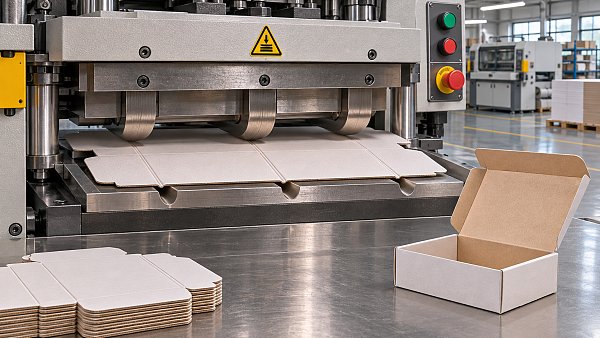
Choose serrated die cutting knives by matching the actual cut pattern, blade specification, and machine setup to your substrate, then verify performance through production trials.
Clean perforations require controlled separation: enough material must remain connected for converting and distribution, while the intended user should tear the finished product open predictably.
For procurement teams, the strongest evidence combines acceptable samples, stable production performance, documented specifications, and repeatable replacements. A low blade price cannot compensate for rejected packaging.
This guide explains how to specify perforating tools, assess suppliers, and compare operating costs for folding cartons, corrugated packaging, and commercial print applications with confidence.
First, Confirm What the Supplier Means by “Serrated”
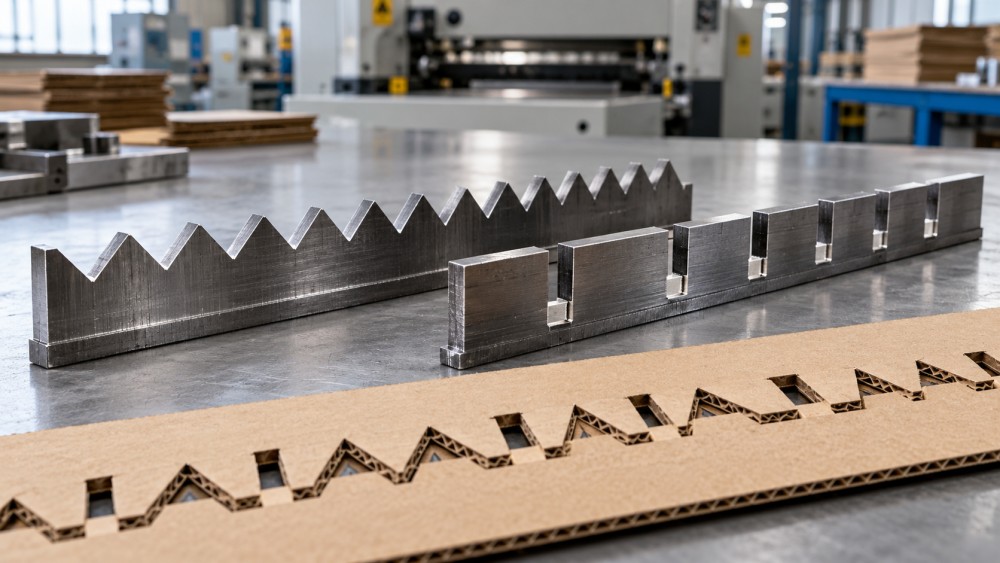
The term “serrated” can describe different cutting profiles. Some toothed edges improve penetration, while perforating rules deliberately alternate cutting sections with gaps that leave connections.
Those connections are commonly called ties or bridges. Their dimensions and spacing largely determine whether a perforated panel survives handling and separates cleanly when required.
A serrated cutting edge does not automatically produce the interrupted cut pattern your design needs. Ask suppliers to identify the exact profile on a drawing.
Before requesting quotations, establish whether the application needs a removable panel, tear strip, ticket separation, ventilation openings, or another function with different performance requirements altogether.
Define “clean” in measurable terms: acceptable edge appearance, complete separation along the intended path, limited fiber pull, and no premature opening during downstream production operations.
For consumer packaging, also specify the intended opening action. Pulling a tab, bending a panel, and tearing across a sheet impose different loads on ties.
Procurement should agree on these requirements with production and quality teams before comparing tools. Otherwise, suppliers may quote technically different products against the same description.
Which Cut Pattern Gives the Right Tear Strength?
Cut length, tie length, pitch, and tooth profile work together. Selecting only by teeth per inch or a generic perforation grade leaves important differences unresolved.
Pitch describes the repeating interval of the pattern. Two patterns can share a cut percentage yet produce different tear behavior because their individual bridges differ.
As an illustration, a repeating 3 mm cut followed by a 1 mm tie has a nominal cut percentage of 75%, before considering cutting effects.
That calculation describes geometry, not guaranteed opening force. Fiber direction, coating, material thickness, moisture, and press conditions can change how the same pattern actually performs.
Longer cuts or shorter ties generally encourage easier separation, but may increase premature opening. Stronger connections can improve handling resistance while making opening less comfortable.
Request candidate patterns around the required performance window instead of assuming one ratio suits every product. Evaluate opening force alongside resistance to accidental separation consistently.
Where tears change direction, inspect corners and transitions carefully. A pattern that performs well along a straight line may initiate unwanted tearing at a corner.
How Should the Specification Change with the Substrate?
Provide the supplier with actual production material wherever possible. Nominal grammage alone cannot describe the thickness, stiffness, surface structure, and variability that affect perforation quality.
Paper grain can make tearing easier in one direction than another. Test the finished layout in its actual orientation, particularly when panels include perpendicular perforations.
For corrugated packaging, examine both liners and the medium. A visually acceptable outer surface can conceal incomplete penetration or internal damage that changes opening behavior.
Moisture variation can alter board stiffness and tear response. Include representative material conditions when practical, especially if supply sources or storage environments vary between batches.
Printed coatings and laminates introduce additional interfaces. Confirm that the perforation separates every required layer without creating unacceptable peeling, stretched film, or debris during opening.
When several substrates share one tool, validate each material family explicitly. A common specification can simplify inventory, but only if every approved combination performs acceptably.
Will the Knife Work with Your Existing Die-Cutting System?
Machine compatibility includes more than blade height. Confirm the die construction, cutting method, rule dimensions, mounting arrangement, and approved operating conditions with the responsible toolmaker.
For flatbed applications, rule height and thickness must suit the dieboard, counter surface, and surrounding cutting rules. Incorrect relationships can produce uneven engagement across sheets.
Rotary applications require specifications suited to the tooling system, including relevant cylinder geometry and mounting details. Flatbed recommendations should not be transferred without technical confirmation.
Ask who owns the complete setup specification. The knife supplier, die maker, and press team should agree on interfaces before tooling manufacture or replacement orders.
Uneven perforations do not always indicate an unsuitable blade. Worn cutting surfaces, poor sheet control, inconsistent board thickness, or inadequate make-ready can produce similar symptoms.
Excessive cutting pressure may crush material or damage tooling while masking the original problem. Investigate alignment, support, and engagement before treating pressure as the solution.
Ejection materials also influence sheet release and local loading. Include their arrangement and condition in troubleshooting, particularly when breaks occur as sheets leave the die.
Which Blade Material and Manufacturing Details Matter?
Blade steel, heat treatment, edge preparation, and dimensional consistency all influence performance. Request application-specific recommendations supported by comparable production experience rather than broad durability claims.
Hardness involves tradeoffs: a harder edge may resist wear, while demanding shapes or operating conditions may require greater toughness. Higher hardness alone does not establish suitability.
If a supplier proposes a coating or special surface treatment, ask which observed failure mechanism it addresses and what evidence supports the expected operating benefit.
Manufacturing consistency matters because small changes in tooth geometry or rule dimensions can alter penetration and bridge formation. Require drawings that define critical features clearly.
Ask how the supplier controls profile accuracy, edge defects, and dimensional variation between batches. Inspection documentation should correspond to the features that affect your application.
Also confirm identification and traceability arrangements. Linking each tool to its specification revision and manufacturing batch makes repeat orders and failure investigations considerably more manageable.
A premium material can offer good value when it extends useful life reliably. It offers little benefit if setup instability determines replacement frequency instead today.
What Should a Meaningful Production Trial Include?
A hand-torn sample is useful for screening, but purchasing approval should consider production conditions. Speed, sheet handling, and downstream operations can expose weaknesses hidden during demonstrations.
Start with a documented baseline covering material, tool specification, machine settings, operating speed, and inspection criteria. Change variables deliberately so differences remain interpretable during evaluation.
Test at the intended production speed after establishing a stable setup. Record output quality across relevant sheet positions, rather than selecting only the best samples.
Follow the perforated product through stripping, folding, gluing, stacking, and packing where applicable. Connections that survive cutting may still fail during subsequent handling or compression.
Assess the intended opening action on finished products. If force measurement is required, define sample conditioning, pull direction, test speed, and equipment before comparing results.
Agree on sample sizes and acceptance limits with quality personnel. Requirements should reflect product risk and customer expectations; no universal tear-force target suits every package.
Record tool condition and cumulative output during an extended run when feasible. Initial sharpness alone cannot demonstrate how long acceptable perforations will remain repeatable consistently.
How Can Buyers Compare Suppliers and Total Operating Cost?
Issue the same specification package to every shortlisted supplier. Include material samples, drawings, machine details, required opening behavior, anticipated volumes, and agreed trial acceptance criteria.
Require suppliers to state assumptions and exclusions in their quotations. This reveals whether pricing covers equivalent tooling, technical support, delivery obligations, and replacement specifications consistently.
Evaluate responsiveness during the trial as part of supplier capability. Useful support identifies causes, proposes controlled changes, and documents the specification that ultimately receives approval.
For supply continuity, confirm manufacturing lead times, emergency replacement options, minimum order quantities, and drawing ownership. These details matter when a small consumable stops production.
Compare total relevant costs over the same output volume: tooling purchases, setup labor, attributable downtime, material waste, inspection effort, and any additional finishing or rework.
Divide that total by accepted output to estimate cost per thousand saleable pieces. Keep material mix and production conditions comparable when evaluating competing knife options.
Treat quoted service life as provisional until verified on your application. Ask suppliers to explain the replacement endpoint, operating assumptions, and evidence behind their estimates.
Make the Purchase Decision Against an Approved Performance Window
The best serrated die cutting knives deliver the required balance of controlled tearing, handling strength, and repeatable production on your actual materials and equipment consistently.
Approve a defined combination of profile, material specification, tooling interface, and operating conditions. Retain reference samples and trial records so future deliveries have clear benchmarks.
If performance later changes, compare substrate condition, machine setup, cutting surfaces, and tool wear before revising the knife specification. This prevents unnecessary purchasing changes repeatedly.
Base the final award on proven perforation quality, supplier repeatability, and cost per accepted output. Those measures connect a small tooling purchase to dependable packaging production.