How Do Non Stop Feeder Piles Reduce Die-Cutter Downtime?
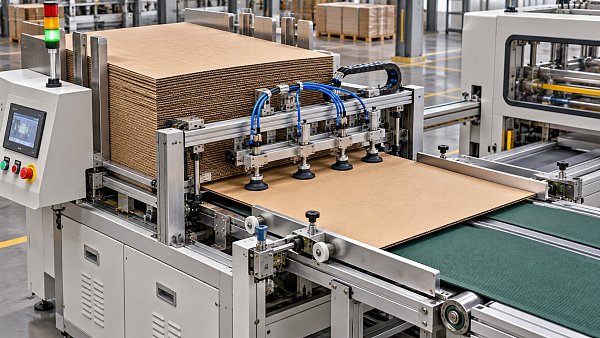
Non stop feeder piles reduce die-cutter downtime by allowing sheets to keep feeding while the main pile is replenished. Instead of stopping the machine every time a stack runs low, the feeder temporarily supports the remaining sheets while the next pile is brought into position. The benefit depends on a smooth handover: the replacement pile must arrive on time, align with the sheets already feeding, and be suitable for the machine’s feeder.
For operators, the goal is not simply to keep the die-cutter running at all costs. A successful pile change maintains reliable sheet separation and registration without creating a jam, damaging sheets, or forcing an avoidable stop immediately afterward.
What happens during a non-stop pile change?
On a conventional pile-fed die-cutter, the stack gradually rises as sheets are taken from the top. When the stack is nearly exhausted, feeding may have to stop while an operator removes the empty pallet, brings in another pile, and sets it up for feeding. The machine then needs to restart and return to a stable operating condition.
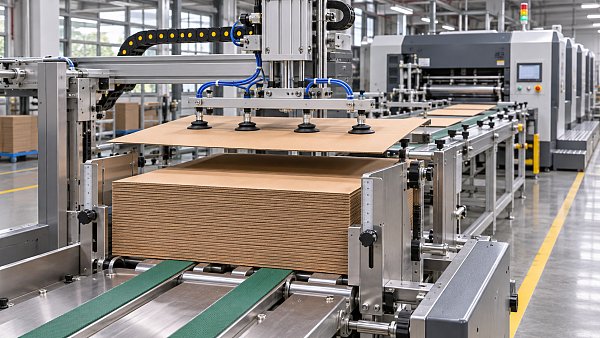
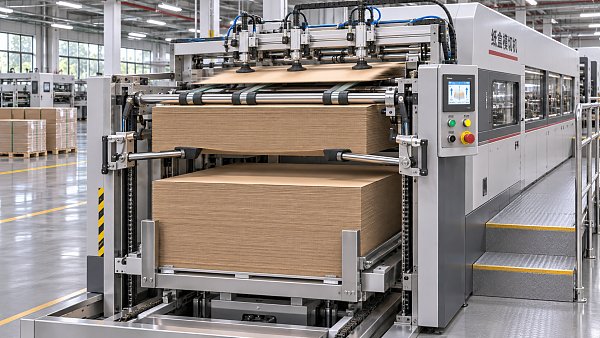
A non-stop feeder introduces an intermediate support for the sheets remaining above the main pile. Depending on the machine, this may involve a rake, rods, a supporting platform, or another device designed for that feeder. Once the remaining sheets are supported, the main pile platform can be lowered and the replacement pile positioned underneath. The new pile is then raised to meet the supported sheets, and the temporary support is withdrawn according to the machine’s sequence.
During that handover, the feeder continues to take sheets from the temporary reserve. The reserve is limited, so the next pile has to be ready before the old one runs out. Some systems automate more of the sequence than others; the operator’s role depends on the equipment, pile logistics, and safety arrangements.
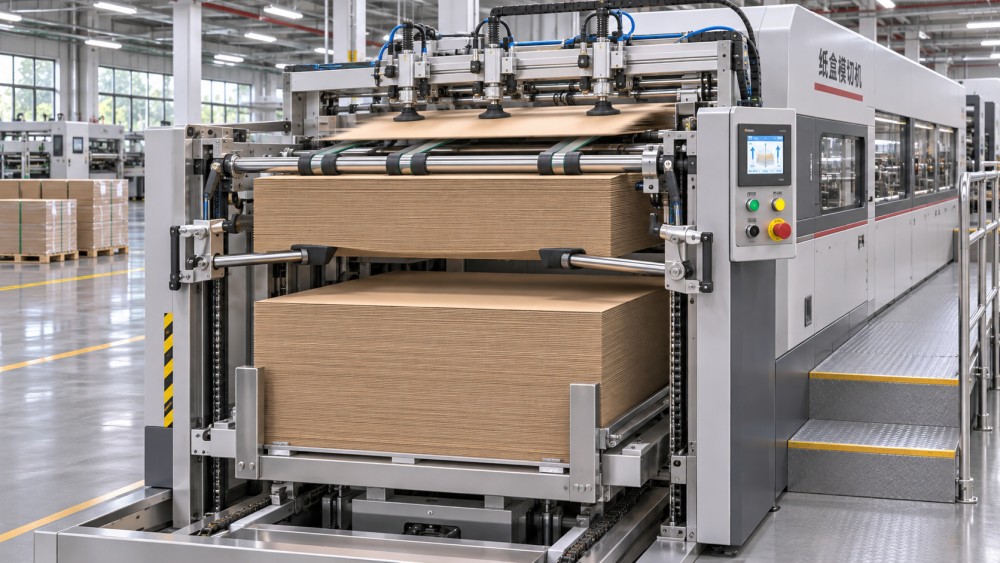
The details matter because “non-stop” describes the intended feeding sequence, not a guarantee that the die-cutter will never slow down or stop. A poorly aligned replacement stack, a late pallet, or unstable material can interrupt feeding even when the mechanism itself is working correctly.
Where the time savings come from
The most direct saving is the pile-change stop that no longer occurs during normal production. A long run with repeated pile changes offers more opportunities to recover this time than a short job that finishes before the first change is needed.
There can also be an indirect benefit. Every stop and restart adds another transition to manage. Sheets may need to be checked as feeding resumes, and the operator may need to return attention to sheet travel, front-edge presentation, and registration. Keeping the feed continuous can reduce these interruptions, although it does not remove the need to monitor quality.
Consider a long carton run where a prepared replacement pile is waiting beside the feeder. If the handover is completed while the reserve sheets are being fed, the die-cutter can continue processing during the time previously used for a pile change. If the replacement pile arrives late, however, the reserve may be exhausted and the machine will still stop. The feeder and the material-handling process have to work together.
Non-stop feeding does not address every source of lost time. Make-ready, die changes, delivery pile changes, sheet jams, maintenance, and downstream congestion can still limit output. If pile changes account for only a small portion of a machine’s stoppages, improving the feeder alone may have a modest effect on total production.
Preparing the next pile for a reliable handover
Preparation starts before the current pile reaches its changeover point. The next stack should be the correct job and orientation, with a pallet or pile carrier compatible with the feeder’s handling system. Check that the stack is stable, within the machine’s permitted size and height, and accessible to the equipment used to move it.
Pay particular attention to pile shape. A leaning stack, uneven edges, damaged bottom sheets, or a distorted pallet can prevent the new pile from meeting the supported sheets cleanly. Even if the sheets initially feed, a misaligned pile can affect sheet presentation as the stack rises through the feeder.
Printed or coated stock may need different feeder settings from uncoated material. Corrugated sheets introduce their own considerations, including board flatness, flute direction, sheet stiffness, and edge condition. Air separation, suction, and pile alignment should be set for the material and machine; a setting that works well on one job should not automatically be carried over to another.
Operators should also make sure the correct side and leading edge are presented for the job. A neatly aligned pile is still a problem if it has been turned the wrong way, particularly when print position, grain direction, or the cutting layout depends on sheet orientation.
A practical pile-change sequence
The machine’s controls and approved operating procedure determine the exact sequence. The following checks help an operator understand what needs to happen around the handover:
- Prepare the replacement pile early. Confirm the job, sheet orientation, pile condition, and pallet compatibility. Move the pile to the designated staging position without obstructing access or safety devices.
- Watch the current pile level. Begin the machine’s changeover sequence at the appropriate point so there is enough material in the temporary reserve for the exchange.
- Allow the support and platform sequence to complete. The remaining sheets must be supported before the main pile is lowered. Follow the machine’s controls and keep clear of moving equipment.
- Position the new pile. Align it using the machine’s guides or positioning aids. Avoid forcing a damaged or unstable stack into the feeder.
- Monitor the transition. As the new pile joins the reserve and temporary support is removed, watch for changes in sheet separation, skew, double sheets, and registration. Respond to alarms or abnormal feeding according to the operating procedure.
Do not reach into the feeder to correct sheets while parts are moving, defeat guards, or bypass interlocks to save a changeover. When a stack must be corrected manually, stop and secure the equipment as required by the machine’s procedure.
Why a non-stop feeder still stops
When a handover fails, the feeder mechanism is only one possible cause. Separating the symptom from the cause helps prevent repeated adjustments that make the next change less predictable.
The reserve runs out before the new pile is ready
This is often a timing or material-flow problem. The replacement pile may not have been staged, a pallet truck or automatic conveyor may be unavailable, or the change sequence may have been started too late. Check the sequence from the point the next pile is requested through to its arrival at the feeder. Increasing running speed without improving that sequence leaves less time to complete the exchange.
Sheets skew or double-feed after the exchange
Inspect the pile edges and the transition between the reserve and replacement stack. Differences in alignment or sheet condition can disturb separation. Check feeder settings for the stock being processed, including air and suction where applicable, and look for damaged sheets at the top of the new pile. If the problem follows a particular stack rather than every handover, the material or pile preparation deserves attention.
The feeder stops despite a prepared pile
An alarm may relate to positioning, a safety condition, or a component that has not completed its movement. Use the machine’s diagnostic information and operating procedure to identify the cause. Repeated faults involving supports, sensors, drives, or guards should be handed to authorized maintenance personnel rather than worked around by the operator.
It is useful to record whether a stop occurred before, during, or immediately after the pile transfer, along with the stock type and alarm shown. That gives the next shift or maintenance team a starting point and helps distinguish a recurring equipment fault from a pile-specific issue.
When does non-stop feeding make the most difference?
The strongest application is usually a die-cutter running jobs long enough to require frequent pile changes, with prepared material consistently available at the feeder. High utilization of the machine makes each avoided interruption more valuable, provided the delivery end and downstream processes can handle the resulting flow.
The benefit can be smaller on short runs with frequent tooling and job changes. In that setting, setup may dominate the schedule, and a non-stop pile change may not occur on every job. It can also be limited when sheets arrive inconsistently, the delivery pile requires frequent stops, or feeding reliability is already affected by poor stack condition.
A plant handling a mixture of short and long runs should look at its actual production pattern rather than assume that rated machine speed tells the whole story. The relevant question is how often pile changes interrupt productive running time, and whether those interruptions can be removed without shifting the delay elsewhere.
Check the whole material path, not just the feeder
Before changing a working routine or evaluating an upgrade, trace a pile from preparation to the die-cutter. Establish who prepares it, where it waits, how it reaches the feeder, and what happens to empty pallets. A non-stop feeder needs enough clear space and a dependable method of supplying the next stack. An automatic conveyor can support that flow, but it is not a substitute for correct pile preparation.
Check the other end of the machine as well. If the delivery pile must be changed with a full stop, uninterrupted feeding alone cannot make the complete die-cutting process continuous. Depending on the equipment and production mix, a non-stop delivery arrangement or a better delivery-side routine may be just as relevant.
For an existing die-cutter, compatibility should be established before planning a retrofit. Feeder design, pile dimensions, pallet handling, controls, guarding, and available floor space can all affect what is practical. A system intended for one machine configuration should not be assumed to fit another.
To judge whether the change is working, compare records from similar jobs and stock types. Track pile-change stops separately from feeder jams, make-ready, delivery stops, and other delays. Also watch usable output and waste: a handover that avoids a stop but causes damaged or misregistered sheets may not be an improvement. Start with the recurring interruption that costs the most productive time, then make sure the next pile can reach the feeder in a condition the machine can run.
Related News
 How to Choose a Sheet Feeder for Paperboard ProductionChoose the right sheet feeder for paperboard with practical tips on material handling, line speed, integration, and trials to improve production reliability.Post-Press Kinematics Expert
 How Do Creasing Dies Prevent Cracks in Folded Cartons?Creasing Dies help prevent carton fold cracks through controlled deformation. Discover key tooling factors and practical production tips for cleaner, more consistent folds.Post-Press Kinematics Expert
 How to Prevent Sheet Misfeeds in an Automatic Feeder SystemPrevent automatic feeder system misfeeds with practical checks for sheet alignment, suction, air separation, timing, and double-sheet detection.Post-Press Kinematics Expert
 How Do Non Stop Feeder Piles Reduce Die-Cutter Downtime?Discover how non stop feeder piles reduce die-cutter downtime, improve pile-change efficiency, and keep sheet feeding reliable on long production runs.Post-Press Kinematics Expert
 USITC Advances Trade Probe Into Corrugated Die-Cut BoxesCorrugated die-cut boxes face a USITC trade probe. Explore what the investigations could mean for packaging costs and sourcing.Post-Press Kinematics Expert
 What to Consider When Choosing Heavy Duty Pile TurnersChoosing heavy duty pile turners? Discover how to assess load capacity, substrate handling, safety and operating costs to find the right fit for your production line.Post-Press Kinematics Expert