How Box Making Machines Support Faster Custom Packaging Production
How Box Making Machines Support Faster Custom Packaging Production
For project managers and engineering leaders, Box Making Machines are central to accelerating custom packaging production without sacrificing quality or cost control. As order volumes diversify and delivery windows tighten, selecting the right equipment can improve changeover speed, material utilization, automation readiness, and production reliability. The relevant question is rarely “Which machine is fastest?” It is whether the production system can turn a mixed order book into finished, stackable, traceable boxes with predictable labor, waste, and downtime.
Custom packaging has changed the operating logic of many corrugated plants. A converter may need to process retail-ready displays in the morning, e-commerce mailers in the afternoon, and heavy-duty transit cartons before the next shift. Box sizes, flute profiles, print requirements, die-cut features, and bundle counts may all vary. In that environment, nominal machine speed matters, but the time spent waiting for material, setting printing units, adjusting slotting heads, clearing delivery jams, or correcting a poor score can matter more.
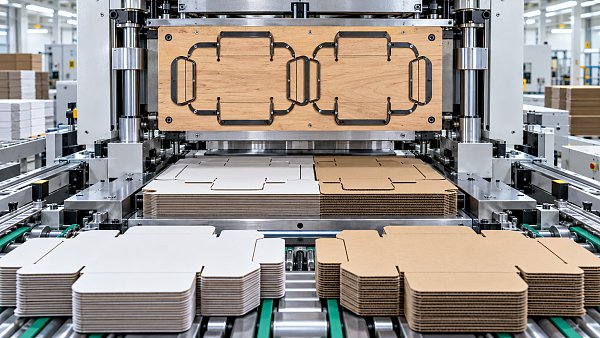
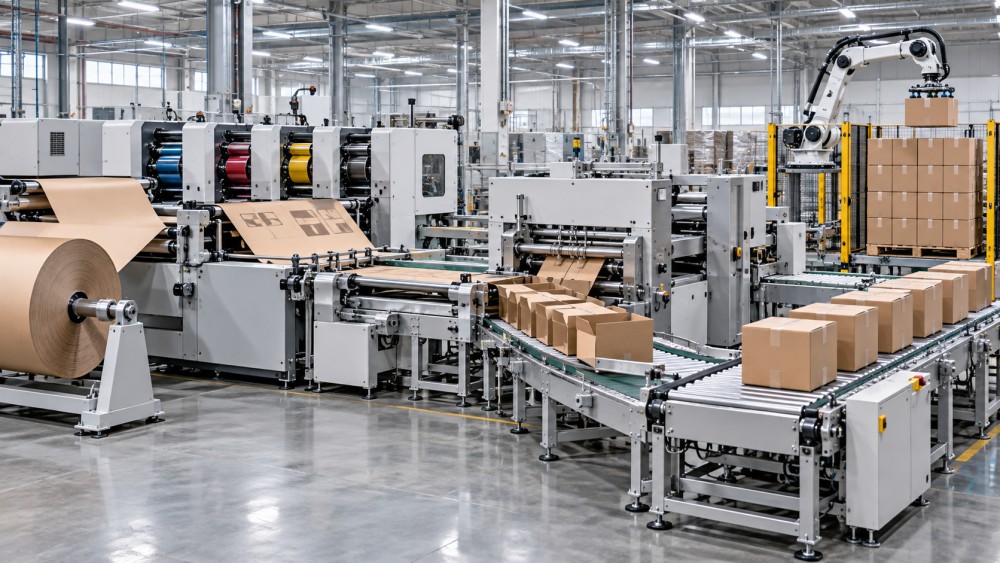
Modern box-making equipment supports speed by reducing those interruptions across the workflow. Depending on the packaging format, a system may combine feeding, flexographic printing, slotting, rotary die-cutting, folding, gluing, counting, bundling, and discharge. Other plants may use separate converting stations, particularly where complex die-cut boxes, litho-laminated sheets, or short digital print runs are involved. Neither layout is automatically better. The right choice depends on the job mix, board supply model, downstream handling, and the factory’s ability to maintain stable process conditions.
Speed Starts with the Real Production Constraint
A frequent project mistake is to size a machine around peak output alone. A high-speed line can still underperform if the feeder cannot handle warped board, if artwork approvals arrive late, or if finished bundles accumulate before palletizing. Before comparing Box Making Machines, project teams should map the full route from incoming sheets or corrugated board through finished-goods staging. The bottleneck may sit upstream at the corrugator, within printing and converting, or after the machine at bundling and logistics.
For integrated corrugated operations, board consistency deserves early attention. Moisture variation, poor flatness, uneven flute formation, unstable bonding, and score cracking are not simply board-quality issues; they become converting-speed limits. Corrugator settings such as preheating, steam balance, web tension, starch application, slitting, and cross-cutting influence whether box converting can run steadily. A project plan that treats corrugation and box making as separate investments can miss this dependency.
The same principle applies to printed work. If a box must carry scannable barcodes, variable codes, regulated information, or tightly controlled brand colors, quality verification has to keep pace with production. Stopping late in the process to find unreadable codes or registration drift is expensive because affected material may already have been converted, bundled, or shipped internally. Inline inspection and traceability are therefore practical speed tools, not merely compliance additions.
Where Modern Box-Making Systems Save Time
The most visible gain often comes from faster order changeovers. Conventional setups can depend heavily on manual adjustment of feeding guides, print settings, slotting positions, die-cut tooling, crease settings, and delivery controls. Modern equipment may store repeat-job settings, use servo-driven positioning, and guide operators through setup steps. These features do not eliminate the need for skilled crews, especially when materials or tooling change, but they can reduce variation between shifts and make repeat orders more controllable.
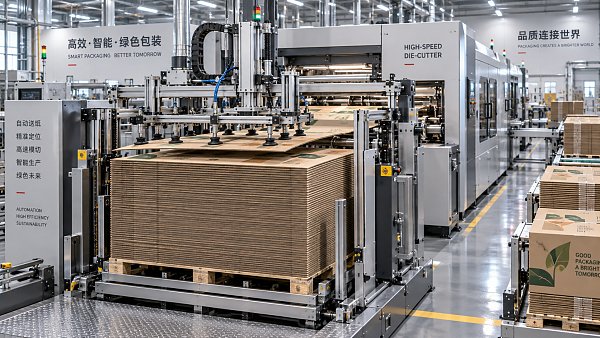
Automatic feeding is another area where apparent details have large operational consequences. Reliable sheet separation, registration, and transport help prevent double feeds, skewing, crushed leading edges, and unplanned stops. For plants handling lightweight board, recycled-content grades, coated surfaces, or a wide size range, feed performance should be verified with representative materials rather than assumed from a supplier’s demonstration on ideal sheets.
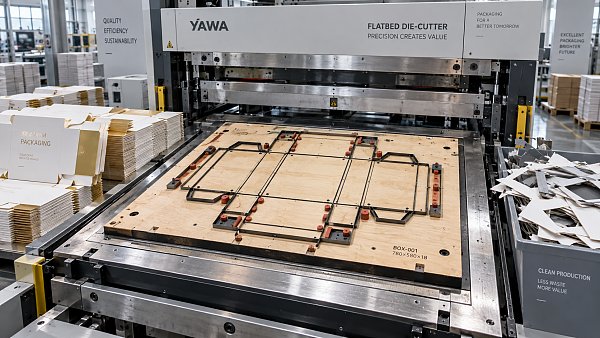
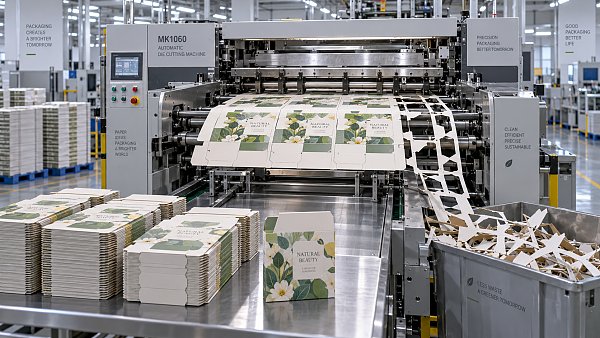
Converting method should match the product portfolio. Rotary die-cutting is commonly suited to repeatable high-throughput work, while flatbed die-cutting can be appropriate where carton geometry, detail, or substrate behavior calls for different control. Flexographic printing and slotting machines can efficiently produce many regular slotted containers and shipping boxes, but they are not a universal answer for premium folding cartons, highly decorative packaging, or every display format. The project team should define which jobs must run on the proposed machine and which are better retained on another process.
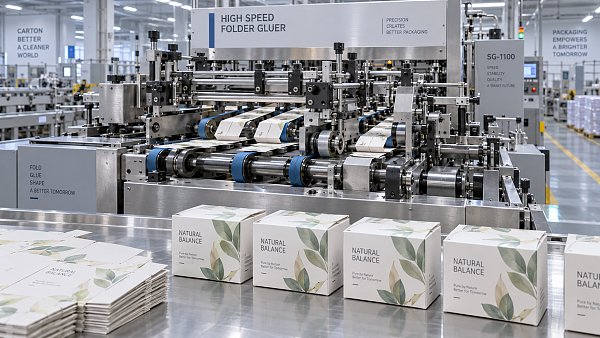
Speed also depends on what happens after the final crease. Folder gluer integration, automatic counting, strapping or bundling, robotic palletizing, and conveyor connections can prevent converted boxes from becoming a manual handling problem. A line that produces blanks quickly but requires several people to sort, count, and move unstable stacks has only shifted the constraint. End-of-line design should consider bundle dimensions, stack integrity, pallet patterns, warehouse space, and the way customers receive the product.
Custom Work Requires a Different Selection Logic
Custom packaging production is not defined only by small quantities. It may include frequent size changes, seasonal graphics, mixed board grades, special perforations, internal partitions, hand holes, display features, or customer-specific packing instructions. A machine designed around a narrow standard-box range may deliver attractive output on its preferred work but create delays when exceptions arrive. For that reason, a useful equipment review begins with actual order history, not with a generic capacity target.
Project managers should categorize jobs by dimensions, board type, print colors, die-cut complexity, run length, required tolerances, and finishing route. This reveals whether the factory needs one flexible line, separate lanes for standard and complex work, or a hybrid model that combines conventional converting with digital printing or digitally controlled cutting for selected orders. The decision should also account for forecast uncertainty. Buying for a single large program can create a poor fit if that program changes or disappears.
Automation Is Most Useful When It Connects Decisions
Automation should not be evaluated as a collection of isolated features. A touchscreen, servo drives, or a robot can be useful, but the larger benefit appears when production information moves reliably between order entry, planning, machine setup, inspection, maintenance, and dispatch. For example, job data may help prepare settings before a run, while production data may reveal which orders cause recurring setup loss or quality rejects. That information gives engineering and operations teams a basis for changing workflow, tooling, or material specifications.
Integration, however, has practical limits. Existing factories may have older machines, inconsistent job data, limited network infrastructure, or separate software systems for production and warehousing. The appropriate implementation path may be phased: establish reliable machine data collection, define a common job record, introduce inspection where risk is highest, then connect scheduling and end-of-line automation. Attempting a full digital transformation before defining ownership of the data can create a more complicated version of the same problem.
Maintenance information belongs in the same conversation. Custom packaging schedules often leave little room for unexpected stoppages, yet highly automated machines may require stronger capabilities in controls, sensors, pneumatic systems, and preventive maintenance. Availability depends on spare-parts planning, remote support arrangements where appropriate, technician access, training, and clear escalation procedures. A lower-cost installation can become costly if critical components or qualified service support are difficult to obtain when the line is down.
Avoiding a Fast Machine with a Slow Commissioning
Equipment selection is only part of the project. Site readiness can determine whether a box-making investment starts producing on schedule. Layout dimensions, floor loading, electrical capacity, compressed air quality, dust extraction, material flow, safety guarding, and space for maintenance all require early coordination. Where printing, glue application, curing, coding, or inspection are included, utilities and environmental controls may need closer review. Local safety rules, customer requirements, and applicable packaging standards should be confirmed with the relevant parties rather than inferred from a general machine specification.
Factory acceptance and site acceptance criteria should focus on representative production conditions. A useful test plan addresses the actual board grades, typical box sizes, approved artwork, changeover expectations, defect criteria, output handling, and operator roles that the factory will use. It should also distinguish between a successful demonstration run and stable day-to-day production. The latter depends on repeatability, recoverability after stoppages, training quality, and the discipline of standard operating procedures.
It is equally important to clarify boundaries between suppliers. In a multi-vendor project, who owns controls integration, conveyor interfaces, job-data transfer, guarding gaps, and fault diagnosis? Unclear responsibility at those handover points is a common source of commissioning delays. A single interface document, reviewed before delivery, is often more valuable than a broad statement that the systems will be “compatible.”
Evaluating the Investment as a Production System
The commercial case for Box Making Machines should include more than machine purchase price and stated throughput. A realistic review considers usable output, setup time, expected material loss during startup and changeover, consumables, tooling, energy demand, maintenance labor, operator coverage, and the cost of quality failures. It should also recognize benefits that do not appear directly on a speed specification: better order visibility, fewer manual transfers, more consistent bundles, easier traceability, and greater confidence when accepting urgent custom work.
Global Commercial Print & Corrugated Packaging Intelligence (CPCS) examines these decisions across corrugated board production, printing, converting, inspection, palletizing, and digital production management. That system perspective is useful because a box is the outcome of linked processes, not one machine. A strong project review compares functional boundaries, material compatibility, changeover design, maintenance demands, and integration requirements before a line is specified.
For teams planning faster custom packaging production, the next step is to turn the order mix into a clear technical brief. Define the boxes that drive revenue, the exceptions that create delays, the board conditions that challenge production, and the quality checks that cannot be skipped. Then assess whether the proposed system can handle those realities at the required pace—not just achieve an impressive speed on a simplified sample job.
Related News
 How Flatbed Steel Rule Dies Improve Cut Accuracy and Changeover SpeedFlatbed steel rule dies improve cut accuracy, crease quality, waste release, and changeover speed. Discover practical tooling tips for reliable, efficient converting.Post-Press Kinematics Expert
 How Platen Presses Support Precise Foil Stamping and Die CuttingPlaten Presses deliver precise foil stamping, clean die cutting, and reliable creasing for premium packaging. Discover setup practices that improve quality and reduce waste.Post-Press Kinematics Expert
 How Pre-Breaking Units Reduce Cracking in Die-Cut Carton FoldsPre-Breaking Units help reduce cracking in die-cut carton folds by easing bend stress, improving fold accuracy, and supporting high-speed carton production.Post-Press Kinematics Expert
 How a High Pile Feeder Reduces Downtime in Die-CuttingHigh pile feeder solutions reduce die-cutting downtime, improve sheet supply stability, and help packaging plants increase throughput with fewer interruptions.Post-Press Kinematics Expert
 Carton Die Cutting for Folding Cartons That Reduces Setup WasteCarton die cutting for folding cartons reduces setup waste with stable registration, reliable creasing, smarter tooling, and repeatable production control.Post-Press Kinematics Expert
 How to Choose Hardened Die Cutting Knives for Longer Production RunsHardened die cutting knives for longer runs: learn how to balance hardness, edge profile, consistency, and total conversion cost for reliable results.Post-Press Kinematics Expert