Carton Die Cutting for Folding Cartons That Reduces Setup Waste
For project managers and engineering leaders, carton die cutting for folding cartons is often the point where a well-planned production schedule either holds together or starts to unravel. A job may look straightforward on the order sheet, yet the first several hundred sheets can reveal registration drift, weak creases, stripping issues, uneven pressure, or a tool setup that takes longer than planned. Every correction consumes board, operator time, and the confidence needed to move the job into stable production.
Reducing setup waste is not simply a matter of running the die-cutter faster. In folding carton converting, speed without control can magnify problems: scuffed printed sheets, damaged carton blanks, poorly formed creases, difficult stripping, and downstream folder-gluer interruptions. The more useful objective is to reach an approved, repeatable production condition with as few trial sheets and adjustments as possible.
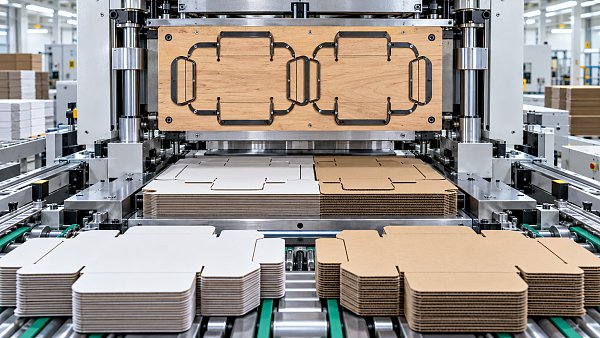
That requires a connected view of the die-cutting process: incoming sheet condition, print registration, die-board preparation, feeder settings, pressure control, stripping configuration, delivery handling, inspection criteria, and job data. When these elements are treated as one operating system rather than isolated tasks, carton plants can reduce makeready losses while protecting quality across short runs, repeat orders, and complex premium packaging.
Setup waste begins before the first sheet enters the die-cutter
A common mistake is to define setup waste only as the material consumed while operators adjust the machine. In reality, much of that waste is designed into the job before production begins. If the die line, crease profile, stripping layout, substrate specification, print tolerances, and folding requirements have not been reviewed together, the die-cutting department inherits uncertainty.
Consider a printed folding carton with heavy ink coverage, a tight registration requirement, narrow glue flaps, and a demanding opening performance requirement. A die-cutting team may successfully cut and crease the sheet, but a slight mismatch between crease rules and board grain direction can later create cracking or inconsistent folding. The folder gluer then becomes the place where the problem is discovered, even though the source was earlier in the converting chain.
For this reason, project teams should establish a pre-production review that asks practical questions:
- Does the approved artwork include clear die-line, bleed, and print-to-cut registration references?
- Is the selected cartonboard grade consistent with the required creasing behavior, coating, caliper, and grain direction?
- Can the die-cutting tool design support clean stripping at the planned production speed?
- Are embossing, foil stamping, window patching, or special coatings likely to affect feeding, pressure, or delivery?
- Will the finished blank run reliably through the folder gluer, packing operation, and the brand owner’s filling line?
These questions are not administrative details. They determine whether carton die cutting for folding cartons can begin from a controlled baseline instead of a sequence of reactive adjustments.
Build the job around a stable “first good sheet” process
Many plants have an informal standard for a good first sheet: the cut appears clean, the creases look acceptable, and the printed image is reasonably aligned. That standard is too loose for projects where material cost, delivery risk, and brand requirements matter. A first good sheet should be approved against defined conditions that can be reproduced after a break, a shift change, or a repeat order months later.
For engineering teams, the most valuable setup standard is one that combines physical samples with machine settings and measurable acceptance criteria. The record does not need to be complicated, but it should capture the information that operators would otherwise have to rediscover.
A workable job file may include the approved carton blank, die and counterplate identification, sheet size, feeder and side-lay references, cutting and creasing pressure settings, stripping notes, delivery configuration, substrate batch information, and known risk points. It should also record the print registration target and any inspection zones where a small deviation is commercially unacceptable, such as barcodes, pharmaceutical text, legal symbols, or metallic design elements.
This approach changes the conversation on the shop floor. Instead of asking an experienced operator to “set it as usual,” the team starts from a documented process window. Operator judgement remains essential, especially when board humidity, print finish, or tooling condition changes, but it is applied to controlled variables rather than guesswork.

Sheet positioning is the foundation of material control
Registration errors are among the most visible forms of die-cutting waste because they can turn an otherwise good printed sheet into unusable material. The risk increases with small carton formats, densely printed designs, premium graphics, and jobs that combine printing, foil, embossing, and die-cutting in separate passes.
Reliable sheet positioning depends on more than the accuracy specification of the machine. Feeder separation, sheet flatness, static control, side-lay consistency, front-lay contact, and sheet transport all influence actual performance. Curl, warped board, inconsistent trim, powder from printing, and moisture variation can each cause a sheet to behave differently from the sample used during setup.
Project managers should therefore evaluate registration stability across a representative production sequence, not only during the first few sheets. A line may appear accurate at low speed and then shift as the feeder accelerates, as the pile height changes, or as static builds in dry conditions. Monitoring the first good sheet, ramp-up phase, and sustained run helps identify whether the process is truly stable.
Where high-value printed material is involved, camera-based registration support and inline vision inspection can provide an additional layer of confidence. These systems are especially relevant when defects are subtle: a code is present but partly cut off, a print element falls too close to the cut edge, or a color-to-die relationship drifts beyond the approved tolerance. Inspection does not replace sound setup; it makes variation visible early enough to prevent a larger rework event.
Creasing quality should be judged by what happens after die-cutting
Clean cutting is easy to see. Creasing quality is more deceptive, because the real test often occurs later when the carton is folded, glued, packed, shipped, and opened. A crease that looks acceptable in the delivery pile may crack on the folder gluer or create panels that spring back out of square.
The setup team should assess creases through finished-carton behavior. Fold several blanks in both the intended machine direction and by hand. Check whether panels align, whether glue flaps remain predictable, whether reverse folds perform cleanly, and whether coated or heavily printed areas show surface fracture. For cartons with automatic-bottom structures, locking tabs, or tight radii, functional testing is particularly important.
Crease performance is shaped by the relationship between board caliper, rule height and thickness, channel width, matrix condition, make-ready material, and applied pressure. Excessive pressure can crush the board and weaken its structure; insufficient pressure may create a shallow fold that resists downstream forming. The correct setting is not necessarily the strongest visible crease. It is the crease that creates dependable folding without damaging the printed surface or compromising carton strength.
Plants handling a broad range of substrates should avoid carrying forward pressure settings from one board grade to another without validation. Similar calipers can still react differently because of fiber composition, coating construction, moisture content, and grain. A disciplined substrate-change procedure may take a little longer at the start, but it prevents a much larger loss when a full stack must be downgraded or remade.
Tooling decisions have a direct effect on changeover time
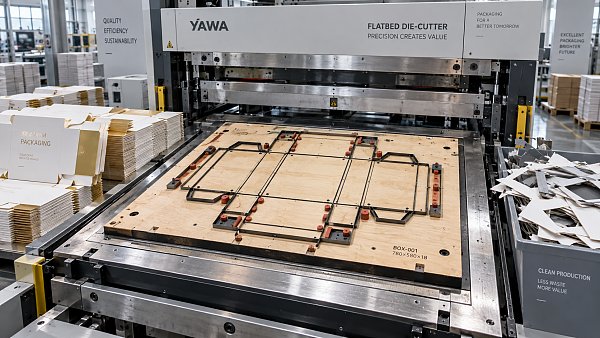
When a plant is under pressure to shorten lead times, die-cutting tooling is sometimes treated as a consumable detail rather than a production asset. Yet die-board quality, rule selection, rubbering, stripping design, and tool maintenance all affect how quickly a job reaches stability.
A well-prepared tool helps the machine cut consistently with fewer pressure corrections. Good rubbering supports controlled sheet release. A stripping layout that matches the carton geometry reduces the chance of nicks, hanging waste, and manual intervention. For difficult shapes, small internal holes, or carton designs with closely spaced cut lines, stripping should be reviewed early with the die maker and production team rather than improvised at the machine.
Tool condition also matters on repeat orders. Worn cutting rules, damaged creasing rules, compressed ejection rubber, and poorly stored stripping components can make a formerly stable job unexpectedly difficult. A maintenance record that tracks run history and observed issues gives planners a better basis for deciding whether a tool can be reused, refurbished, or replaced before the next campaign.
This is an area where engineering and procurement decisions meet. The lowest initial tooling price does not always produce the lowest operating cost if it requires excessive makeready, causes inconsistent stripping, or generates more rejected sheets. The relevant comparison is the total impact on usable output, labor time, delivery reliability, and downstream performance.
Short-run folding cartons need a different operating logic
Frequent job changes are now normal in many carton plants, driven by promotional packaging, regional versions, seasonal designs, and brand owners seeking lower inventory exposure. In this environment, setup waste cannot be addressed only through individual operator skill. The production system needs to make changeovers predictable.
For short and medium runs, a practical approach is to separate the activities that can be completed off-machine from those that require live adjustment. Tool preparation, job verification, stripping frame checks, counterplate readiness, substrate confirmation, and sample review should be completed before the previous job leaves the machine. The die-cutter should not become the place where missing information is discovered.
Digital job instructions can support this workflow when they are connected to production planning and quality records. At minimum, operators need the latest approved version of artwork, tool references, run quantity, substrate details, packing instructions, and notes from prior runs. More advanced plants may link die-cutting data with scheduling, maintenance alerts, inspection results, and traceability requirements across the converting line.
The goal is not to remove experienced people from the process. It is to preserve their knowledge in a form that makes the next setup less dependent on memory, shift patterns, or a single specialist being available.
A practical control plan for die-cutting projects
For a new production line, capacity expansion, or improvement project, managers can use a simple control plan to keep carton die cutting for folding cartons aligned with commercial expectations. The plan should follow the material through the operation rather than focus only on machine output.
Not every job requires the same level of control. Commodity cartons with generous tolerances can be managed differently from cosmetics, healthcare, food, electronics, or high-graphic retail packaging. The key is to match the control plan to the cost of failure. If a defect can stop a brand owner’s packing line or compromise code readability, it deserves more attention during setup than a simple shipper insert.
Measuring improvement beyond “waste percentage”
Waste percentage is important, but it can hide the reason a process is underperforming. A project team should also observe the number of setup sheets used, time from job start to approved production, number of pressure adjustments, registration corrections, stoppages caused by stripping, and rejects found at the folder gluer. These indicators show where improvement work should begin.
For example, low die-cutting waste paired with frequent folder-gluer rejects may indicate a creasing problem that is not visible in the die-cutting department’s quality report. Similarly, a fast changeover that repeatedly produces early-run registration rejects may not be a successful changeover at all. The right measures encourage teams to optimize usable cartons, not just machine activity.
CPCS follows this systems-based perspective across commercial print and paper-based packaging operations. Die-cutting performance is connected to printing, material handling, inspection, folder gluing, automation, and production data management. For engineering teams evaluating equipment or upgrading a converting workflow, this wider view is useful because the most meaningful savings rarely come from one isolated adjustment.
From faster setup to more dependable output
The strongest die-cutting improvement programs do not chase speed at every moment. They reduce uncertainty: fewer unknowns in the artwork and tooling, fewer unrecorded machine settings, fewer surprises from substrate behavior, and fewer defects that travel unnoticed to the next process.
That is the real value of a disciplined approach to carton die cutting for folding cartons. When sheet positioning is stable, creasing is validated for downstream folding, tooling is maintained, and job data is accessible, setup becomes less wasteful without becoming rushed. The result is a converting operation that can respond to demanding carton schedules while protecting material yield, product appearance, and confidence in every delivered blank.
Related News
 How Flatbed Steel Rule Dies Improve Cut Accuracy and Changeover SpeedFlatbed steel rule dies improve cut accuracy, crease quality, waste release, and changeover speed. Discover practical tooling tips for reliable, efficient converting.Post-Press Kinematics Expert
 How Platen Presses Support Precise Foil Stamping and Die CuttingPlaten Presses deliver precise foil stamping, clean die cutting, and reliable creasing for premium packaging. Discover setup practices that improve quality and reduce waste.Post-Press Kinematics Expert
 How Pre-Breaking Units Reduce Cracking in Die-Cut Carton FoldsPre-Breaking Units help reduce cracking in die-cut carton folds by easing bend stress, improving fold accuracy, and supporting high-speed carton production.Post-Press Kinematics Expert
 How a High Pile Feeder Reduces Downtime in Die-CuttingHigh pile feeder solutions reduce die-cutting downtime, improve sheet supply stability, and help packaging plants increase throughput with fewer interruptions.Post-Press Kinematics Expert
 Carton Die Cutting for Folding Cartons That Reduces Setup WasteCarton die cutting for folding cartons reduces setup waste with stable registration, reliable creasing, smarter tooling, and repeatable production control.Post-Press Kinematics Expert
 How to Choose Hardened Die Cutting Knives for Longer Production RunsHardened die cutting knives for longer runs: learn how to balance hardness, edge profile, consistency, and total conversion cost for reliable results.Post-Press Kinematics Expert