Why High Temperature Pressure Rolls Fail and How to Prevent It
High temperature pressure rolls usually fail long before the line stops. A gradual loss of bond uniformity, a narrow polished band on the cover, higher bearing temperature, repeated web tracking correction, or pressure settings that keep climbing are early signs that the roll system is no longer transmitting load and heat as intended. Treating these symptoms as isolated adjustments often accelerates damage. The useful response is to identify whether the failure begins at the roll surface, the internal structure, the bearing arrangement, the loading system, or the surrounding process.
On corrugators, laminating sections, hot-melt coating units, thermal converting equipment, and certain printing or finishing stations, pressure rolls work under a combined load: compressive force, elevated temperature, rotation, material contact, contamination, and repeated thermal cycling. A roll may appear mechanically sound at ambient temperature yet deflect, bind, lose crown effect, or transfer pressure unevenly after the machine reaches production temperature. The fault must therefore be assessed under real operating conditions rather than from a cold visual inspection alone.
Failure often begins with non-uniform pressure, not a broken roll
Uneven pressure is one of the most damaging conditions because it affects both product quality and the roll assembly. In corrugated board production, insufficient pressure across part of the width can leave weak bonding, open flute tips, or inconsistent moisture release. Excess pressure in another zone can crush flute structure, mark the liner, squeeze adhesive beyond the intended bond area, and create local heat buildup. Similar patterns appear in thermal laminating and coating operations as edge defects, gloss variation, wrinkles, or incomplete material contact.
A common error is to raise total nip load when a defect is visible. That action can hide a low-pressure band temporarily while increasing load on sections that were already correct. If the root cause is roll runout, an uneven cover, a distorted journal, misaligned bearings, or a loading cylinder that is not sharing force equally, more pressure makes the defect harder to diagnose and shortens bearing life.
Pressure distribution should be separated from nominal line pressure. A gauge may show the specified pneumatic or hydraulic value while the actual nip remains uneven. The gauge reports source pressure; it does not confirm force at each end of the roll, parallelism between rolls, or contact across the working width. Pressure-sensitive film, a controlled nip impression test, or the machine's approved measurement method provides more useful evidence. Tests must be made with the correct safety controls and at conditions close enough to the production temperature to reveal thermal effects.
Heat changes geometry, clearance, and load path
Thermal expansion is a frequent reason that a roll behaves normally during startup and then deteriorates after a sustained run. The roll shell, shaft, journals, bearing housings, frames, and adjacent rolls do not necessarily heat at the same rate or expand by the same amount. A steel shell with internal heating can grow differently from its shaft. A covered roll may have a surface temperature that masks a cooler core. When these parts are restrained by incorrect fits or misaligned housings, expansion becomes stress rather than controlled movement.
Symptoms of thermal binding include a steadily rising bearing temperature after warm-up, increased drive load without a matching production change, intermittent vibration, or a roll that turns freely when cold but feels resistant during a planned hot inspection. These symptoms can resemble poor lubrication. The distinction matters: adding grease to a bearing with inadequate operating clearance may reduce noise briefly while increasing churning and temperature.
Clearance must match the bearing type, fit, operating temperature, and loading direction. A replacement bearing installed with an overly tight interference fit can lose internal clearance as the journal heats. Conversely, a loose fit permits creep, fretting corrosion, and loss of concentricity. Housing bores, shaft journals, locking elements, and bearing seats should be inspected whenever a bearing has failed hot. Replacing only the bearing without examining these interfaces invites a repeat failure.
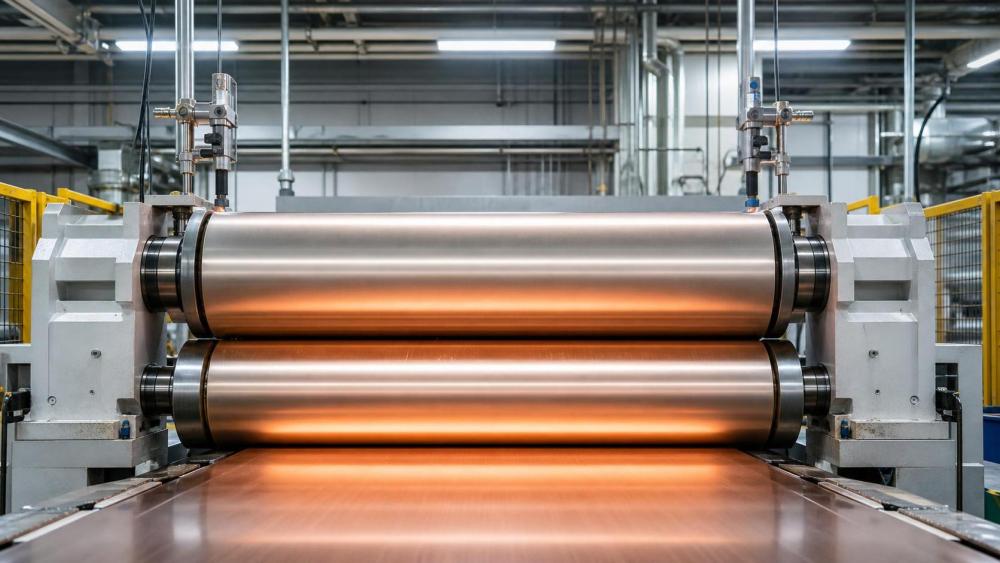
Heat-transfer rolls introduce another complication: restricted internal flow can create a temperature profile that is uneven across the shell or along its length. Scale, deposits, incorrect supply routing, partially closed valves, trapped condensate in steam-heated equipment, or fouling in thermal-fluid circuits can produce localized hot or cold areas. A surface reading taken at one accessible point is not proof of a uniform shell temperature. Compare several positions across the face and near both ends, then relate the readings to product defects and bearing temperatures. An edge-to-center difference may point to circulation or insulation issues; a difference concentrated near one journal more often points to bearing drag, alignment, or localized mechanical friction.
Surface damage has different causes that look similar at first
Polished tracks, cracks, blisters, dents, material pickup, and scoring should not be treated as one category of “roll wear.” Their shape and location reveal the mechanism. A narrow continuous shiny band usually indicates concentrated contact or excessive local load. Random scoring can come from hard debris, dried adhesive, paper grit, metal fragments, or contact with a damaged mating roll. Repeating marks at a fixed circumferential interval often correspond to a damaged zone, an out-of-round condition, or contamination caught in the nip.
Elastomer-covered rolls need particular attention at high temperature. The cover compound must tolerate the actual combination of heat, pressure, cleaning chemicals, adhesive, ink, coating, and dwell time. A cover that is chemically compatible with an adhesive at room temperature may soften, swell, harden, crack, or lose adhesion to its core when exposed to a hotter process. Cover failure is sometimes blamed on excessive temperature when the initiating condition was aggressive cleaning solvent, an unsuitable release agent, or prolonged contact with a contaminated web.
Hardening and glazing reduce the cover's ability to conform to minor material variation. The result is often narrower real contact despite an apparently acceptable pressure setting. Softening has the opposite appearance: the roll may show indentation, smearing, edge deformation, or material pickup. Neither condition is corrected reliably by adjusting nip load. The cover needs to be evaluated for hardness change, thickness uniformity, bond integrity, and surface profile against the original roll specification.
Lubrication failures are often application failures
High temperature does not simply require “more lubricant.” Excess grease can create heat through churning, especially where bearing cavities are overfilled or relubrication intervals ignore operating temperature and speed. Too little lubricant permits metal contact and rapid wear. The wrong base oil viscosity can leave an inadequate film at operating temperature, while an incompatible thickener can separate, harden, or react poorly with residual lubricant already in the housing.
Contamination changes the decision. A dark lubricant does not automatically mean thermal failure; it may contain paper dust, adhesive vapor, water, cleaning residue, or metallic debris. Water ingress can lead to corrosion and false brinelling during shutdown, followed by noisy running on restart. Fine abrasive contamination can damage raceways gradually without an immediate temperature alarm. When a failed bearing is removed, the condition of seals, labyrinths, grease paths, purge points, and housing drains is as important as the bearing itself.
Relubrication should account for the actual machine arrangement. A centralized system can give a false sense of security if a blocked line, failed injector, or incorrect metering element deprives one bearing while the rest receive lubricant. Manual lubrication can be equally inconsistent when access is difficult and the amount is estimated by feel. Establishing a traceable record of lubricant type, quantity, interval, bearing temperature, and abnormal observations makes recurring patterns visible. It also prevents incompatible grease from being introduced during urgent repairs.
Misalignment damages more than the bearing
Roll alignment is often checked only after a bearing replacement or a major machine disturbance. That is late. Small angular or parallel offsets shift the load toward one side of the bearing and create an uneven nip. At temperature, frame movement and differential expansion can increase the offset. The product may show a one-sided defect before the bearing gives a clear warning.
Alignment work should include the roll face, journals, bearing housing position, loading arms, pivot points, and the reference condition of the mating roll. Measuring only shaft centerlines can miss a shell that has lost concentricity or a cover that has been ground unevenly. Likewise, correcting one roll against a distorted mating roll merely transfers the problem.
Runout measurements deserve context. Radial runout at the journal, shell, and finished cover can point to different faults. Journal runout suggests shaft damage, mounting error, or a seating problem. Shell runout with sound journals can indicate thermal distortion, impact damage, or internal construction issues. A covered roll may have acceptable metal-core runout but excessive finished-diameter variation after regrinding or cover deterioration. Record the location, rotation position, temperature condition, and measuring reference rather than retaining a single maximum value without context.
Contamination turns minor process variation into roll damage
Adhesive buildup, coating residue, paper dust, fibers, dried starch, and cured deposits create high spots. Every high spot concentrates pressure, traps heat, and repeatedly strikes the mating surface. Scraping deposits while the roll is running or using an unsuitable abrasive can damage the surface finish and create a new site for buildup. Cleaning should follow the cover or shell material limits, the chemical exposure limits, and the lockout procedure for the machine.
Source control is more durable than frequent cleaning. If buildup repeatedly occurs on one edge, inspect material tracking, edge trim removal, adhesive application width, doctoring condition, and web moisture behavior. Deposits across the full width may indicate an excessive application rate, insufficient drying or release, or a temperature condition that is changing material viscosity. A roll surface cleaned to a visually acceptable condition can still have embedded residue or altered roughness that changes release behavior.
A practical sequence when failure signs appear
Start by preserving evidence. Record product defects, machine speed, pressure setting, temperatures at several points, material grade, adhesive or coating condition, recent changeovers, and the time from startup to symptom onset. Avoid making several major adjustments before recording the initial state; otherwise the relationship between cause and effect disappears.
- Confirm whether the defect follows the roll rotation, remains at one machine side, or changes with width and material. This separates many surface defects from alignment and process-distribution faults.
- Inspect the loaded nip and roll parallelism before increasing pressure. Use the approved test method and compare both ends as well as the center.
- Review the temperature path: supply temperature, roll-face readings, bearing-housing readings, and warm-up behavior. A single displayed process temperature is insufficient.
- Examine lubrication delivery, seal condition, and the removed lubricant where accessible. Do not mix lubricant types during diagnosis.
- After correcting the identified fault, return pressure and temperature changes gradually while monitoring product quality and bearing response. A rapid return to maximum load can conceal whether the repair solved the original issue.
Replacement roll selection should preserve the working system rather than focus only on outside diameter. Shell material, cover compound, hardness, surface finish, crown or profile, journal dimensions, bearing arrangement, heating medium, maximum operating temperature, line load, and cleaning exposure all affect service life. A roll that fits physically but has a different thermal expansion behavior or cover chemistry can introduce a failure mode absent from the original assembly.
Transport and storage also matter. Long rolls can be permanently affected by unsupported storage, impact to journals, moisture entering protective wrapping, or lifting through an unsuitable point. Store rolls on properly spaced supports, protect the surface from contamination and direct sunlight, and inspect journal protection before installation. During fitting, keep heated components, clean bearing seats, torque sequences, and coupling alignment within the machine documentation. Small assembly shortcuts often become visible only after the first thermal cycle.
The most reliable prevention program ties roll condition to the process signals that precede failure: nip consistency, warm-up temperature behavior, bearing trend, surface cleanliness, vibration, and product defects by position. When those signals are reviewed together, high temperature pressure roll failures become traceable mechanical and thermal problems rather than recurring emergencies.
Related News
 How Steam Joints for Corrugator Rolls Prevent Heat LossSteam joints for corrugator rolls prevent heat loss, stabilize roll temperatures, improve condensate drainage, and support consistent board quality. Learn key maintenance practices.Corrugated Thermodynamics Architect
 When to Replace Single Facer Rolls to Prevent Corrugator DowntimeReplacement single facer rolls: learn the warning signs, inspection steps, and planning strategies that prevent corrugator downtime and protect board quality.Corrugated Thermodynamics Architect
 When Replacement Single Facer Rolls Can Restore Board QualityReplacement single facer rolls can restore flute definition, bonding consistency, and board quality. Learn when replacement helps reduce waste, stabilize production, and protect uptime.Corrugated Thermodynamics Architect
 When Wear Resistant Glue Rollers Deliver a Lower Total CostWear resistant glue rollers can reduce total cost by improving adhesive film stability, minimizing downtime, waste, and bond-quality risks.Corrugated Thermodynamics Architect
 When Should You Replace Industrial Single Facer Rolls?Industrial single facer rolls: discover the warning signs that demand replacement, from profile wear and runout to heat loss, quality defects, waste, and costly downtime.Corrugated Thermodynamics Architect
 When Should Corrugating Rolls Be Replaced?When should corrugating rolls be replaced? Discover key wear signs, inspection methods, and cost-saving steps to protect board quality, bonding, and uptime.Corrugated Thermodynamics Architect