When Should You Replace Industrial Single Facer Rolls?
Knowing when to replace industrial single facer rolls protects flute formation, adhesive bonding, board strength, and corrugator uptime. For maintenance teams, replacement should follow measured condition and production evidence.
A roll does not need to fail catastrophically before action is justified. Recurring quality defects, unstable machine behavior, increasing waste, and ineffective repairs often indicate that replacement planning should begin.
The practical question is not simply how many operating hours a roll has accumulated. It is whether its present condition still supports required speed, paper grades, flute profiles, and bonding consistency.
This guide helps after-sales maintenance personnel inspect industrial single facer rolls, distinguish repairable wear from end-of-life damage, and make replacement recommendations supported by operational evidence.
Start With the Production Symptoms, Not the Calendar
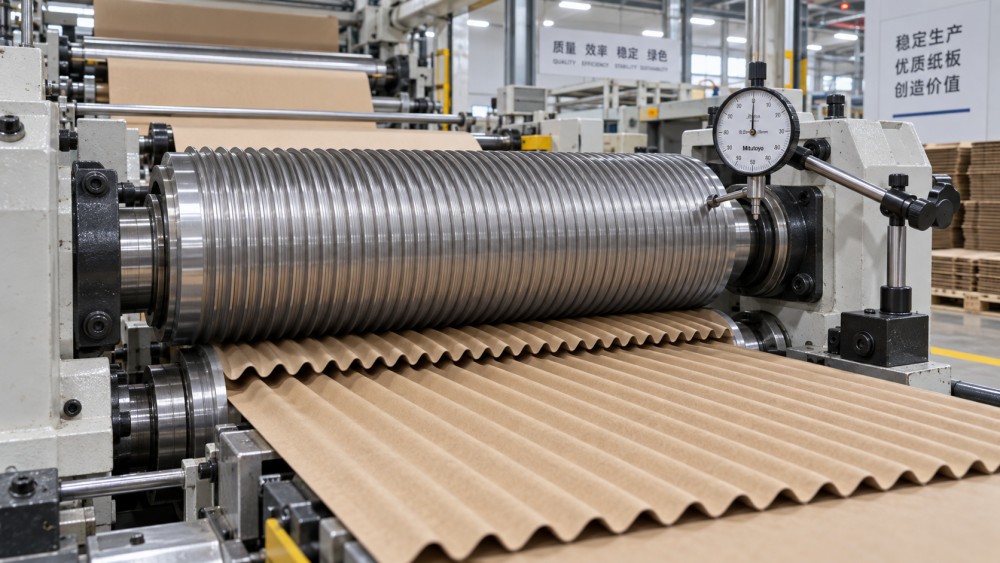
Industrial single facer rolls experience heat, pressure, abrasion, adhesive exposure, moisture, and repeated paper contact. Their service life varies widely with operating conditions, maintenance quality, and material mix.
Calendar-based replacement intervals can support preventive planning, but they should never be the only decision tool. A lightly used roll may remain stable longer than expected.
Conversely, a roll running abrasive recycled papers, frequent grade changes, poor steam conditions, or inconsistent cleaning may deteriorate well before its planned replacement date.
Maintenance teams should first review production symptoms. These include poor flute shape, crushed tips, uneven bonding, warp, delamination, excessive starch use, and unstable web tracking.
When defects repeatedly appear on the same side of the sheet, roll condition becomes especially suspect. Localized wear, contamination, damaged corrugation profiles, or uneven pressure may be involved.
Do not assume every board defect originates at the single facer. Verify paper moisture, adhesive viscosity, pressure settings, steam supply, brake control, and downstream tension before condemning a roll.
However, if process settings must be repeatedly adjusted to maintain acceptable board, the rolls may no longer provide a stable mechanical foundation for normal operation.
Inspect the Corrugating Surface for Wear and Profile Loss
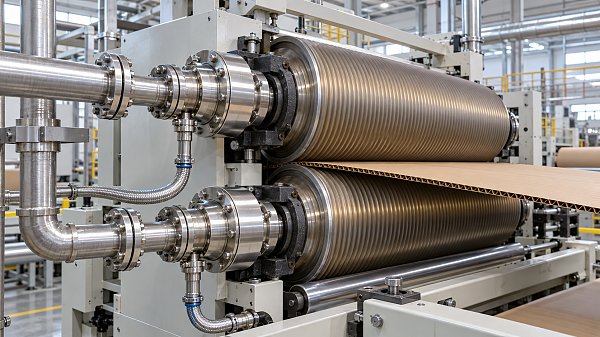
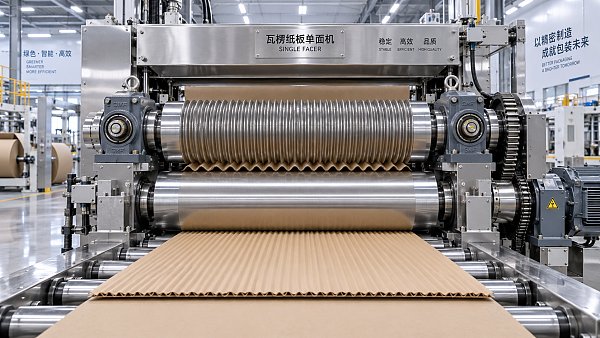
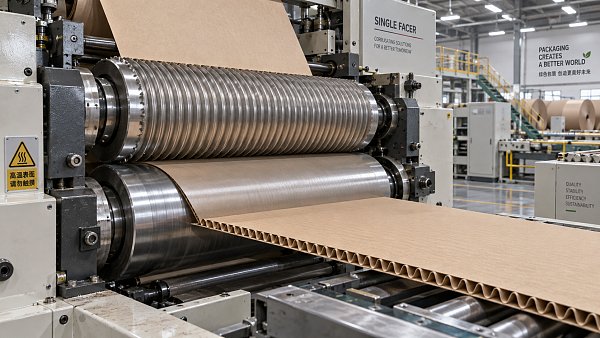
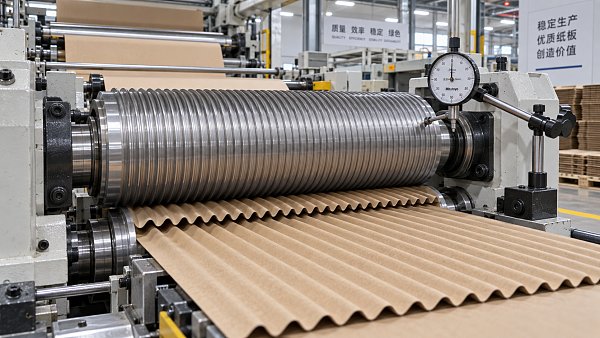
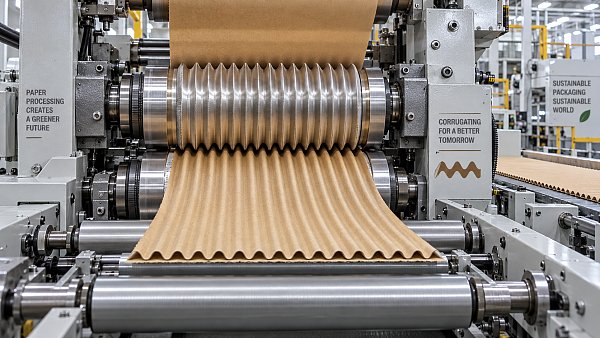
The corrugating roll surface is the most direct indicator of single facer condition. Its flute geometry controls paper forming, adhesive pickup, caliper, bonding area, and finished board performance.
During planned shutdowns, inspect the full usable face width under adequate lighting. Look for polished bands, flattened flute tips, chipped edges, corrosion marks, adhesive buildup, and scoring.
Polished or shiny areas may indicate coating wear or continuous contact concentration. These zones can change friction behavior and reduce the roll's ability to form consistent flutes.
Flattened flute tips are particularly serious because they reduce defined flute geometry. The medium may crush more easily, receive inconsistent adhesive, and lose compression performance.
Use approved gauges, profile templates, or supplier-recommended measurement methods to compare flute height, pitch, and tip condition against the original roll specification.
Measurements should be taken across both edges, the center, and any visible problem areas. Averages can hide localized damage that affects narrow orders or one-sided board quality.
Replace industrial single facer rolls when profile loss exceeds the machine builder's tolerance, when regrinding cannot restore required dimensions, or when coating integrity is no longer reliable.
Check Runout, Alignment, and Bearing-Related Damage
Surface condition alone does not determine whether replacement is necessary. Roll runout, shaft wear, bearing seat condition, and alignment all influence pressure distribution and flute quality.
Excessive radial runout can cause cyclic board defects, inconsistent adhesive transfer, vibration, and fluctuating nip pressure. These issues may become more visible as operating speed increases.
Measure runout using calibrated indicators and follow the corrugator manufacturer's inspection procedure. Record readings at defined locations rather than relying on a single measurement point.
Compare current results with commissioning data or previous maintenance records. A gradual trend is often more useful than one isolated reading collected after a quality complaint.
Inspect journals, bearing seats, keys, couplings, and gear interfaces for scoring, looseness, fretting, or heat discoloration. Mechanical damage can make a surface-only refurbishment uneconomical.
Abnormal bearing temperature, repeated bearing failure, or unexplained vibration should trigger a broader roll assembly inspection. Replacing bearings without identifying the root cause can delay failure briefly.
Replacement becomes the better option when the roll body, journals, or critical interfaces cannot be restored within tolerance, or when repeated mechanical repairs compromise reliability.
Assess Heat Transfer and Steam Performance
Single facer rolls must transfer heat uniformly enough to soften the medium, support flute formation, activate adhesive conditions, and maintain stable speed across changing paper grades.
Poor heat transfer may appear as edge-to-center moisture differences, unstable bonding, weak flutes, delayed startup, or a need for unusually aggressive steam pressure settings.
Inspect steam traps, rotary joints, condensate removal, internal passages, and temperature sensors before attributing thermal problems directly to industrial single facer rolls.
Once peripheral systems are confirmed, use temperature mapping or infrared inspection where appropriate. Compare readings across the roll face and over a normal production cycle.
Cold zones can result from internal scale, condensate retention, damaged internal channels, or reduced shell condition. They often correspond with localized board defects or operating limitations.
A roll that cannot maintain uniform working temperature may force operators to slow down, overheat paper, alter adhesive settings, or accept higher waste during startup.
Consider replacement when cleaning and steam-system correction cannot restore thermal consistency, especially where uneven heat repeatedly limits throughput or causes bond-related customer complaints.
Separate Repairable Problems From Replacement Triggers
Not every defect requires immediate replacement. Professional maintenance decisions should separate issues that can be cleaned, adjusted, repaired, recoated, or reground from irreversible deterioration.
Adhesive deposits, light surface contamination, minor corrosion, and some bearing-related issues may be correctable when discovered early and addressed using approved procedures.
Likewise, certain rolls can be recoated or reground by qualified specialists. The feasibility depends on remaining dimensions, flute profile requirements, coating technology, and manufacturer limits.
Before authorizing refurbishment, confirm how much material removal is allowed. Excessive grinding can alter flute geometry, pressure characteristics, and compatibility with the mating roll.
Ask the refurbishment supplier for dimensional reports, coating specifications, expected service life, and reference tolerances. A low repair price is not proof of acceptable long-term performance.
Replacement is usually more defensible when damage is widespread, flute profile loss is severe, thermal performance remains poor, or repeated repairs have shortened maintenance intervals.
It is also appropriate when a repaired roll would create mismatch risk with its partner roll, especially on high-speed lines producing demanding grades or lightweight paper combinations.
Use Quality Data to Build a Defensible Replacement Case
After-sales maintenance teams often need evidence before recommending capital expenditure. Production data converts a subjective observation into a practical replacement decision for plant management.
Track board defects by date, machine speed, flute type, paper grade, operator shift, roll position, and corrective action. This helps identify patterns that isolated inspections may miss.
Useful indicators include waste percentage, delamination rate, bond failures, flute crush frequency, startup loss, customer claims, unplanned downtime, and the number of process adjustments required.
Compare results before and after routine maintenance, steam-system service, adhesive optimization, or roll cleaning. Persistent problems after these actions strengthen the case for roll intervention.
Document whether quality loss increases at higher speeds. A roll may still function at reduced output while preventing the corrugator from reaching its intended production capacity.
Maintenance records should also include inspection photographs, measured profile results, temperature maps, runout values, bearing history, and supplier assessments of repair feasibility.
A complete evidence package lets management compare replacement cost with the ongoing cost of waste, downtime, lower speed, labor intervention, customer risk, and repeated repair work.
Plan Replacement Before the Roll Causes a Major Shutdown
Waiting for a single facer roll to become unusable creates scheduling pressure, higher freight costs, rushed installation decisions, and a greater chance of extended corrugator downtime.
Once measurements and production trends indicate declining condition, create a replacement plan while the existing roll can still support controlled production and planned maintenance windows.
Confirm the exact flute profile, face width, heating design, coating specification, journal dimensions, drive arrangement, and compatibility requirements before placing an order for replacement rolls.
For older corrugators, verify whether original drawings remain accurate. Previous repairs, upgrades, and nonstandard components can affect fit, alignment, and commissioning requirements.
Coordinate with the roll manufacturer, machine builder, and installation team early. Discuss lead time, lifting requirements, spare bearings, seals, rotary joints, lubrication, and alignment tooling.
Plan a baseline inspection immediately after installation. Record temperature uniformity, runout, nip settings, board quality, adhesive performance, and target operating speed for future comparison.
A planned replacement also allows teams to prepare operators for startup procedures, paper trials, and quality checks, reducing avoidable waste during the return to production.
Protect New Industrial Single Facer Rolls From Early Wear
Replacing industrial single facer rolls solves the immediate condition problem, but poor operating practices can shorten the life of the new components and repeat the same production losses.
Maintain clean steam and effective condensate removal. Thermal cycling, uneven heating, and internal contamination can accelerate coating stress, reduce heat transfer, and create avoidable mechanical loading.
Use correct startup and shutdown procedures. Rapid temperature changes or improper warm-up can contribute to distortion, moisture imbalance, poor corrugation, and unnecessary wear during early production.
Keep adhesive application controlled and prevent buildup from hardening on roll surfaces. Use approved cleaning methods that do not damage coatings or alter the corrugating profile.
Monitor paper tension, web alignment, wrap conditions, and pressure settings. Excessive pressure may temporarily mask quality issues while increasing stress on the rolls and bearings.
Train operators to report early symptoms rather than continuously compensating through process changes. Persistent adjustment often hides a developing mechanical issue until board quality deteriorates further.
Establish routine inspection intervals based on operating hours, paper mix, production speed, and historical wear. Trend-based maintenance is more useful than a generic annual visual check.
Make Replacement Decisions Around Operating Risk and Total Cost
The right time to replace a single facer roll is when its declining condition costs more than a planned intervention, or when it creates unacceptable quality and uptime risk.
Do not judge the decision only by the purchase price of the roll. Include lost production, paper waste, excess adhesive, energy inefficiency, maintenance labor, and customer-quality exposure.
A roll that forces a small speed reduction can create a substantial annual capacity loss. This is especially important for plants operating near maximum corrugator utilization.
Similarly, recurring delamination or flute defects can consume more value through downgraded board, rework, claims, and schedule disruption than through the visible scrap percentage alone.
For after-sales teams, the strongest recommendation combines physical inspection, process confirmation, quality trends, repair options, and a clear explanation of operational risk.
Industrial single facer rolls should be replaced before their condition turns normal production into continuous compensation. Stable flute geometry, uniform heat, accurate alignment, and predictable bonding are essential assets.
By measuring wear, ruling out surrounding process causes, documenting production impact, and planning ahead, maintenance teams can protect corrugator performance while making replacement decisions with confidence.
Related News
 How Steam Joints for Corrugator Rolls Prevent Heat LossSteam joints for corrugator rolls prevent heat loss, stabilize roll temperatures, improve condensate drainage, and support consistent board quality. Learn key maintenance practices.Corrugated Thermodynamics Architect
 When to Replace Single Facer Rolls to Prevent Corrugator DowntimeReplacement single facer rolls: learn the warning signs, inspection steps, and planning strategies that prevent corrugator downtime and protect board quality.Corrugated Thermodynamics Architect
 When Replacement Single Facer Rolls Can Restore Board QualityReplacement single facer rolls can restore flute definition, bonding consistency, and board quality. Learn when replacement helps reduce waste, stabilize production, and protect uptime.Corrugated Thermodynamics Architect
 When Wear Resistant Glue Rollers Deliver a Lower Total CostWear resistant glue rollers can reduce total cost by improving adhesive film stability, minimizing downtime, waste, and bond-quality risks.Corrugated Thermodynamics Architect
 When Should You Replace Industrial Single Facer Rolls?Industrial single facer rolls: discover the warning signs that demand replacement, from profile wear and runout to heat loss, quality defects, waste, and costly downtime.Corrugated Thermodynamics Architect
 When Should Corrugating Rolls Be Replaced?When should corrugating rolls be replaced? Discover key wear signs, inspection methods, and cost-saving steps to protect board quality, bonding, and uptime.Corrugated Thermodynamics Architect