When Should Corrugating Rolls Be Replaced?
Corrugating rolls should be replaced when they can no longer form a consistent flute profile, maintain reliable paper handling, or produce board that meets strength and bonding requirements at the required operating speed. Visible wear is an important warning sign, but it is not the decisive criterion. A roll can appear acceptable during a stopped inspection and still cause flute crush, poor starch contact, unstable web tracking, excessive waste, or recurring single-facer breaks under production conditions.
The practical replacement decision rests on whether the roll condition has moved beyond correction by cleaning, adjustment, repair, or regrinding. The relevant question is not simply, “How worn is the roll?” It is, “Can this roll set still produce the intended flute geometry and bonding consistency without creating avoidable downtime or quality loss?”
Why corrugating roll condition matters beyond appearance
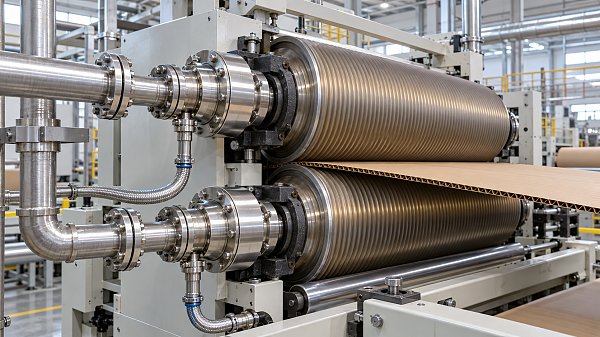
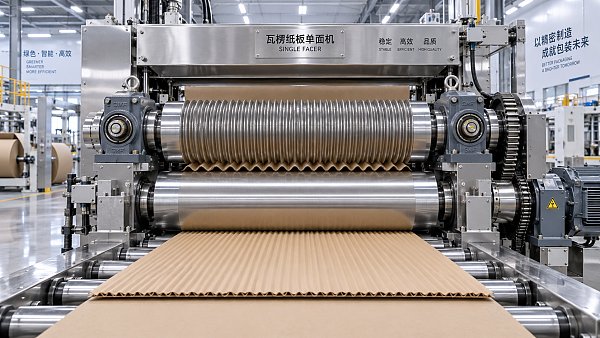
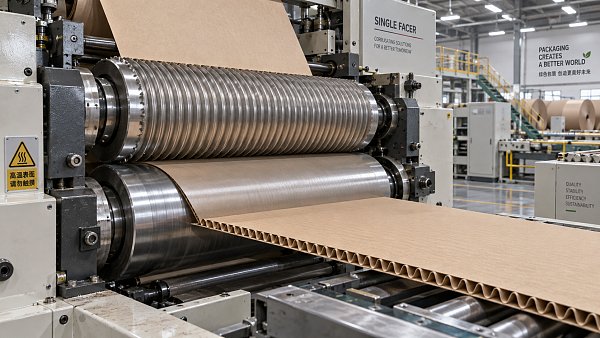
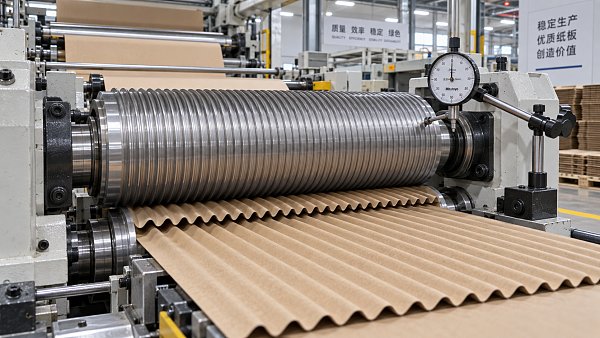
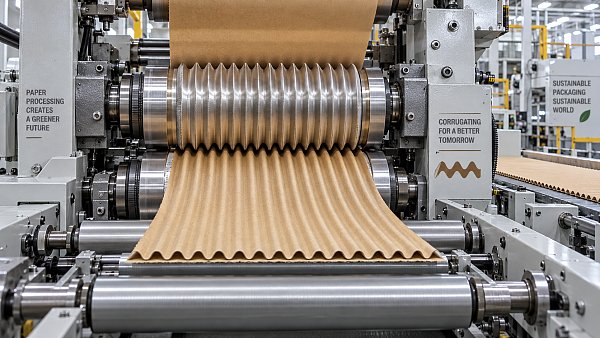
In the single facer, the corrugating rolls form the medium into a defined flute profile while heat, pressure, moisture, and starch application work together to create the single-face web. The profile of the roll teeth determines flute height, pitch, tip shape, and the contact pattern between the medium and liner. Any deterioration in that surface changes the process before the defect becomes obvious on the finished board.
Wear at flute tips can reduce flute height and weaken compression performance. Damage in the flute valleys can disturb medium formation or change how the paper releases from the roll. Uneven coating wear can create variable heat transfer across the machine width. A worn or contaminated surface can also alter traction, causing the medium to slip, wrinkle, or run inconsistently at higher speed.
These problems may be mistaken for paper quality variation, starch issues, steam imbalance, incorrect pressure settings, or operator error. Those variables should be checked, but repeated quality problems that remain after normal process adjustments are a strong reason to inspect the roll set in detail.
The production signs that should trigger a roll assessment
Replacement is rarely triggered by a single defect. More often, the decision emerges from a pattern: quality becomes harder to stabilize, operating windows narrow, and the line requires more intervention to achieve results that were previously routine.
Common warning signs include:
- Reduced or inconsistent flute height. Flattened flute tips, uneven flute formation across the width, or a progressive loss of caliper can indicate profile wear, incorrect roll engagement, bearing movement, or thermal distortion.
- Recurring flute crush. If crush appears despite correct pressure, paper condition, and web tension, worn teeth or uneven nip conditions should be considered. A roll surface that no longer supports the medium correctly can make the process highly sensitive to speed and moisture changes.
- Poor or irregular adhesive bonding. Bond failures are not always caused by starch. Changes in flute geometry affect glue contact and penetration. If bonding is weak in repeated zones or varies across the web, roll wear may be contributing to an unstable glue line.
- Higher paper waste during start-up or grade changes. More rejected material is often an early commercial indicator. If operators need repeated adjustments to obtain acceptable single face, the rolls may no longer provide a stable forming condition.
- Frequent web breaks, medium slipping, or tracking instability. These can arise from several mechanical and process causes, but polished, contaminated, damaged, or unevenly worn roll surfaces are part of the investigation.
- Quality deterioration at normal production speed. A line may still run acceptably at reduced speed while producing defects at its expected operating rate. This is a meaningful warning because slowing the corrugator can conceal the true cost of declining roll performance.
- Increasing adjustment dependence. Repeated changes to pressure, steam, wrap, brake settings, or starch conditions may keep production running temporarily. When these adjustments become routine rather than exceptional, the root cause should be examined.
None of these signs independently proves that replacement is necessary. They do justify a structured inspection, particularly when the same condition is reproduced across multiple paper grades, order types, and operating crews.
Inspect the flute profile, not just the roll surface
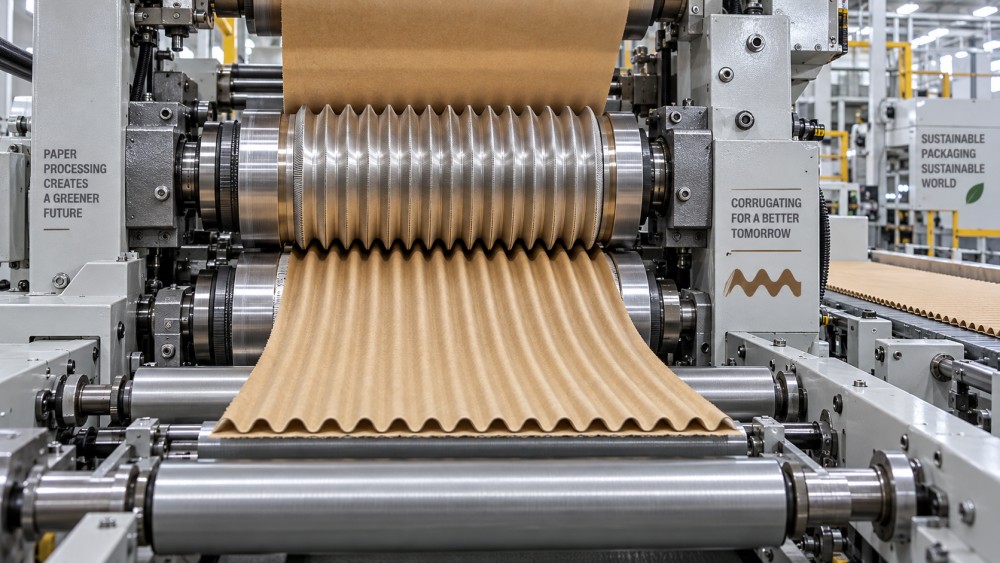
A useful inspection begins with cleaning the rolls thoroughly enough to distinguish deposits from actual damage. Starch residue, paper dust, adhesive build-up, corrosion products, and coating contaminants can obscure the condition of the flute tips and valleys. A roll should not be condemned merely because it looks dark or stained; equally, a cleaned roll should not be accepted just because no deep gouges are visible.
The critical inspection areas are the flute tips, flute valleys, side-to-side consistency, and the condition of any protective coating. The profile should be compared with the original roll specification or with the dimensional limits provided by the roll manufacturer or corrugator OEM. These limits matter because flute types, roll diameters, coatings, paper grades, and machine configurations differ. A generic wear limit is not a reliable basis for a replacement decision.
Profile measurement may involve replicas, dedicated gauges, optical measurement systems, or inspection by a specialist roll service provider. The purpose is to determine whether flute height, tip radius, pitch, and tooth form remain within the tolerances required for the board grades being produced. The most valuable measurement is not a single reading. It is a map across the working width and around the circumference, because local damage and uneven wear are often more damaging than uniform wear.
Particular attention is needed near the edges of the normal running width. Narrow orders, repeated trim patterns, and habitual web positions can produce localized bands of wear. A roll may still appear sound in its center while edge zones create weak bonding, caliper loss, or unstable paper handling on specific order widths.
Check whether the problem is mechanical, thermal, or surface-related
Corrugating rolls are part of a system. Replacing a roll without identifying related causes can shorten the life of the replacement set and leave the original quality problem unresolved.
Mechanical condition includes bearing performance, gear condition, roll parallelism, engagement accuracy, and runout. Bearing wear can allow movement that changes the nip under load. Misalignment can concentrate wear on one side of the flute profile. Excessive runout can create cyclic variation in flute formation and bonding. If a profile is uneven because the rolls have been running out of alignment, a new roll installed into the same mechanical condition will face the same risk.
Thermal condition is equally important. Corrugating rolls depend on controlled heat transfer. Blocked condensate removal, unstable steam supply, internal scaling, leaking rotary joints, or poor temperature control can create hot and cold zones. Uneven thermal expansion affects roll behavior, paper moisture response, and the stability of the flute-forming nip. Thermal checks should therefore accompany dimensional inspection where production defects vary by machine direction or become more pronounced after the line has warmed up.
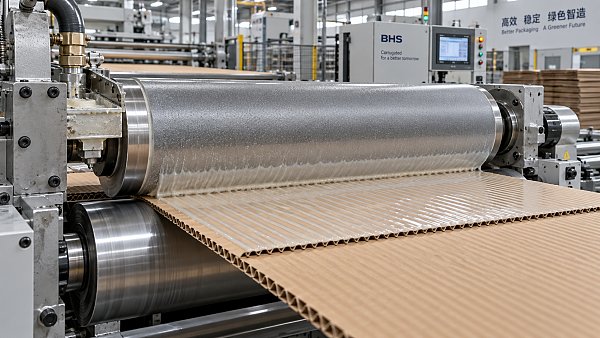
Surface condition includes coating loss, corrosion, scoring, pitting, and material pick-up. Tungsten carbide and other engineered surfaces can extend wear resistance, but coatings do not eliminate the need for inspection. Local coating failure may expose the base material, accelerate wear, and disturb paper release. Deep scoring or pitting can damage the medium repeatedly at the same rotational position, creating a repeating defect pattern in the web.
When regrinding is viable—and when it is not
Replacement does not always mean purchasing a completely new roll. Depending on the roll design and remaining material, regrinding or re-profiling may restore the flute geometry. This option must be evaluated against the original roll dimensions, surface treatment, thermal design, and the requirements of the current production mix.
Regrinding is generally worth assessing when wear is relatively uniform, damage is limited, the roll body remains structurally sound, and sufficient material or coating allowance exists to recreate the required profile. It can be a practical route when the principal issue is gradual profile degradation rather than cracking, severe corrosion, major coating failure, or mechanical damage.
However, regrinding changes dimensions. A reduced roll diameter can affect gear relationships, peripheral speed, engagement settings, pressure behavior, and compatibility with the mating roll. If the profile cannot be restored within approved tolerances, regrinding may only postpone a replacement while narrowing the operating window. The same caution applies to repaired coatings: the repaired surface must match the required profile and release characteristics across the working width, not merely fill visible damage.
A decision between regrinding and replacement should therefore include the full cost of removal, transport, refurbishment, reinstallation, production interruption, and expected service life. The lowest immediate repair cost is not necessarily the lowest operating cost if the refurbished rolls require reduced speed, create excess waste, or need another intervention soon afterward.
Do not wait for catastrophic failure
Waiting until rolls are visibly destroyed or unable to run is usually the most expensive replacement strategy. By that point, losses may already include downgraded board, customer claims, excessive starch consumption, repeated web breaks, damaged bearings, missed delivery commitments, and unplanned downtime. In a high-throughput corrugator, even a modest decline in usable output can outweigh the apparent savings from extending roll service beyond its effective life.
The better trigger is performance-based: replace or refurbish the rolls when the combined cost of quality loss, waste, speed reduction, maintenance intervention, and risk of failure exceeds the cost and disruption of planned work. This requires production and maintenance records to be considered together. A maintenance log alone may show that the rolls are still turning; a quality report alone may identify defects without explaining why. The replacement decision becomes clearer when both records point to the same pattern.
Build replacement timing around measured condition
Hours of operation and tonnes processed are useful planning references, but they should not be treated as automatic replacement rules. Roll life varies with flute type, paper abrasiveness, recycled fiber content, basis weights, operating temperature, line speed, cleaning practices, coating type, maintenance quality, and the number of grade or order changes. A roll set exposed to difficult paper conditions and frequent starts may age differently from one operating continuously on a stable product mix.
A condition-based program should establish baseline data when new or refurbished rolls are installed. Record the flute profile, roll diameter, coating condition, runout, bearing condition, normal operating temperatures, board caliper, bond performance, and process settings associated with stable production. Future inspections then have a meaningful reference point rather than relying on memory or visual judgment.
Inspection frequency should increase when the plant observes more variation in board strength, bonding, caliper, or waste. It should also increase after paper grade changes, mechanical incidents, steam-system problems, or repeated contamination events. Scheduled inspections during planned shutdowns are far less disruptive than emergency troubleshooting during production.
A practical decision sequence before ordering new rolls
Before committing to replacement, confirm that the defect is repeatable and not linked solely to a particular paper reel, adhesive batch, operator setting, or downstream process. Then inspect the rolls and the surrounding mechanical system under both stopped and operating conditions. Compare measured profile data with OEM or specialist service limits, review whether defects occur in corresponding machine-direction or cross-machine locations, and determine whether regrinding can return the rolls to approved geometry.
If replacement is required, the specification should match the actual production strategy rather than simply duplicating an old purchase order. Relevant questions include the flute profile required, paper range, expected line speed, coating selection, roll heating design, compatibility with the existing cassette or single facer, bearing and gear requirements, and the ability to maintain or service the rolls locally. Changes in board mix may justify a different roll configuration, but only if the rest of the corrugator and process controls can support it.
The clearest answer to when should corrugating rolls be replaced? is therefore not a calendar date or a fixed production total. Replacement is due when measured profile loss, surface deterioration, thermal or mechanical instability, and production evidence show that the rolls can no longer deliver consistent flute formation and bonding within the plant’s required quality and efficiency range. Acting at that point protects board performance and avoids turning a manageable maintenance decision into an unplanned production event.
Related News
 How Steam Joints for Corrugator Rolls Prevent Heat LossSteam joints for corrugator rolls prevent heat loss, stabilize roll temperatures, improve condensate drainage, and support consistent board quality. Learn key maintenance practices.Corrugated Thermodynamics Architect
 When to Replace Single Facer Rolls to Prevent Corrugator DowntimeReplacement single facer rolls: learn the warning signs, inspection steps, and planning strategies that prevent corrugator downtime and protect board quality.Corrugated Thermodynamics Architect
 When Replacement Single Facer Rolls Can Restore Board QualityReplacement single facer rolls can restore flute definition, bonding consistency, and board quality. Learn when replacement helps reduce waste, stabilize production, and protect uptime.Corrugated Thermodynamics Architect
 When Wear Resistant Glue Rollers Deliver a Lower Total CostWear resistant glue rollers can reduce total cost by improving adhesive film stability, minimizing downtime, waste, and bond-quality risks.Corrugated Thermodynamics Architect
 When Should You Replace Industrial Single Facer Rolls?Industrial single facer rolls: discover the warning signs that demand replacement, from profile wear and runout to heat loss, quality defects, waste, and costly downtime.Corrugated Thermodynamics Architect
 When Should Corrugating Rolls Be Replaced?When should corrugating rolls be replaced? Discover key wear signs, inspection methods, and cost-saving steps to protect board quality, bonding, and uptime.Corrugated Thermodynamics Architect