What Determines Pressure Rolls Price in Corrugated Board Production
For procurement teams in corrugated board production, pressure rolls price is shaped by more than component size or a supplier quotation.
Material, surface treatment, machining accuracy, loading conditions, heat resistance, maintenance needs, and corrugator compatibility all affect investment value and operating risk.
Buyers should therefore assess pressure rolls as production-critical components, not as simple replacement parts purchased only through the lowest-price comparison.
What Procurement Teams Are Really Buying
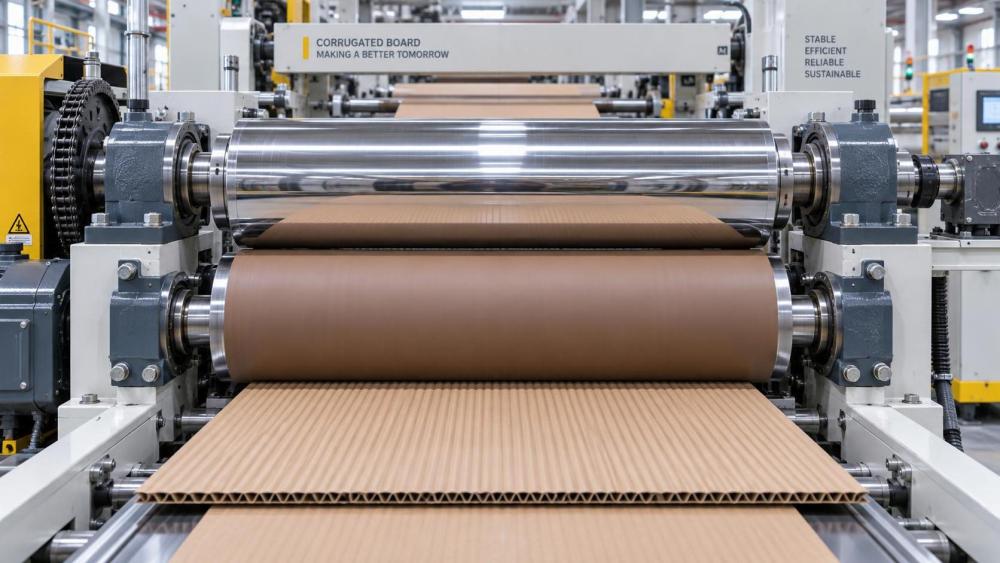
A pressure roll applies controlled force during corrugated board production, helping maintain bonding quality, board flatness, flute protection, and stable web movement.
Its purchase price reflects the roll's ability to perform consistently under heat, moisture, adhesive exposure, high line speeds, and repeated production cycles.
For a low-speed line with standard paper grades, a basic pressure roll may be sufficient and commercially reasonable for the operating conditions.
For high-speed corrugator lines, however, small variations in runout, coating quality, balance, or bearing design can create expensive production consequences.
Those consequences include weak bonding, uneven board thickness, marking, paper breaks, excess waste, emergency maintenance, and slower machine operating speed.
That is why pressure rolls price should be evaluated against the roll's service life, process stability, replacement frequency, and potential downtime cost.
A quotation that appears lower at purchase can become more expensive when frequent resurfacing, premature bearing failure, or board-quality claims are included.
Roll Material Is a Primary Price Driver
The core material is one of the largest contributors to pressure rolls price because it determines stiffness, thermal behavior, wear resistance, and manufacturing complexity.
Carbon steel remains common for many applications because it offers good strength, availability, and cost control when protected by suitable surface treatments.
Alloy steel generally costs more because it can provide higher mechanical strength, improved fatigue performance, and better suitability for demanding loading conditions.
Stainless steel may be selected where corrosion resistance is especially important, particularly in humid environments or processes involving aggressive cleaning chemicals.
Some designs use specialized shells, internal cooling arrangements, or engineered material combinations to manage heat transfer and avoid dimensional instability during operation.
These constructions increase manufacturing cost, but they may support more reliable operation on demanding lines processing lightweight, recycled, coated, or moisture-sensitive papers.
Procurement teams should request the exact roll body material, shaft material, hardness specification, and corrosion-protection approach rather than accepting broad material descriptions.
It is also important to verify whether the quoted material grade matches the original equipment design and the plant's actual operating environment.
A lower-grade steel can reduce initial cost while increasing risks related to deflection, surface damage, corrosion, and shorter refurbishment intervals.
Surface Treatment Changes Both Cost and Performance
The outer surface directly contacts the board or supports pressure transfer, so its finish has a strong influence on both pressure rolls price and production results.
Common options include polished metal surfaces, hard chrome plating, rubber coverings, polyurethane coatings, ceramic treatments, and specially engineered textured finishes.
Each surface option addresses a different balance of grip, wear resistance, contamination resistance, cleanability, pressure distribution, and board-marking prevention.
Hard chrome plating is often valued for hardness and wear resistance, but coating thickness, adhesion quality, and repairability must be confirmed.
Rubber-covered pressure rolls may cost more than plain metal rolls because compound selection, bonding quality, hardness control, and grinding precision require specialized work.
The selected rubber hardness affects pressure distribution and board contact, making it important to match the cover specification to the machine section.
Premium coatings can be justified when they reduce adhesive buildup, minimize paper dust accumulation, improve cleaning intervals, or prevent product damage.
Buyers should ask whether recoating is possible, what the expected coating life is, and whether local service providers can restore the roll.
A surface specification without measurable hardness, roughness, thickness, and operating-temperature data provides limited basis for comparing supplier offers accurately.
Dimensions Alone Do Not Define the Real Cost
Diameter, face width, wall thickness, shaft configuration, and total roll weight affect material consumption, machining time, transport requirements, and installation complexity.
Large-diameter rolls typically command higher prices because they require more raw material, larger machine tools, stricter balancing, and more demanding handling procedures.
However, buyers should avoid assuming that two rolls with similar dimensions deliver equivalent value or will perform the same in production.
Internal construction can differ substantially, including shaft fit, shell design, bearing seats, end-cap design, thermal passages, and reinforcement methods.
A roll designed for wide corrugator lines may require enhanced stiffness to avoid deflection across the working width during sustained loading.
Excessive deflection can produce inconsistent pressure, edge quality problems, uneven bonding, and variation in finished board thickness across the sheet.
Requesting engineering drawings or dimensioned data sheets helps procurement teams confirm whether quoted rolls genuinely meet the machine and process requirements.
It also prevents suppliers from reducing price through hidden changes in wall thickness, shaft dimensions, bearing arrangements, or usable face width.
Machining Accuracy and Balance Protect Board Quality
Precision machining is a major reason why pressure rolls price varies widely between suppliers offering superficially similar specifications and dimensions.
Critical quality measures include total indicated runout, cylindricity, concentricity, face profile, journal accuracy, surface roughness, and dynamic balance grade.
High-precision grinding requires capable equipment, trained operators, inspection instruments, controlled processes, and additional production time, all of which affect cost.
For high-speed corrugated board production, poor roll balance can create vibration that affects bearing life, machine stability, board appearance, and operating speed.
Runout beyond the required tolerance can cause cyclical pressure variation, which may appear as bonding inconsistency, marking, or periodic board defects.
Procurement specifications should state acceptable tolerances rather than relying on descriptions such as precision-ground or high-quality machined.
Suppliers should provide inspection reports showing actual measured values, especially for large replacement rolls intended for critical corrugator positions.
A moderately higher purchase price is often justified when tighter tolerances reduce commissioning adjustments, vibration troubleshooting, and quality losses after installation.
Operating Conditions Determine the Required Design Level
Pressure roll selection must reflect the specific production environment because temperature, moisture, speed, load, paper grades, and adhesive conditions vary widely.
A roll operating near heat sources requires suitable material stability, bearing protection, lubrication design, and coating resistance at the expected temperature range.
High moisture, steam leakage, and starch adhesive contamination can accelerate corrosion and damage surfaces that are not properly protected.
Lines using recycled containerboard may create different dust, contamination, and surface-wear conditions than operations using primarily virgin fiber papers.
Frequent order changes can also increase roll wear if cleaning, adjustment, and machine stoppages are more common than in long-run production.
Procurement teams should provide suppliers with operating speed, line width, loading information, paper range, temperature conditions, and installation position.
Without those details, a supplier may quote a generic roll that appears economical but lacks the required durability for actual service.
Pressure rolls price becomes more meaningful when the quotation clearly identifies the performance assumptions on which the selected construction is based.
Bearings, Journals, and End Assemblies Affect Reliability
Pressure rolls are not only cylindrical bodies; their journals, bearings, seals, housings, and end assemblies determine whether the roll runs reliably.
Premium bearing arrangements can increase initial cost, but they may improve load capacity, reduce vibration, and extend service intervals on continuous production lines.
Journal machining must match existing housings precisely because poor fits can create misalignment, heat buildup, premature wear, and difficult installation work.
Seal design matters where dust, steam, wash water, or adhesive contamination can enter bearing areas and compromise lubrication performance.
Some low-cost quotations exclude bearings, housings, or seals, while others include complete assemblies ready for installation on the corrugator line.
Buyers should compare scope carefully before judging pressure rolls price, because incomplete delivery packages can create unexpected sourcing and assembly costs.
Ask whether bearings are branded, what their load rating is, how lubrication is handled, and whether replacement parts are locally available.
A comprehensive technical offer should identify each supplied component and distinguish new parts from refurbished, reused, or customer-supplied elements.
New, Refurbished, and Recovered Rolls Require Different Comparisons
A new pressure roll usually has the highest upfront cost, but it can provide the clearest specification control, warranty coverage, and expected service life.
Refurbished rolls can offer attractive savings when the core condition is sound and restoration includes proper inspection, grinding, recoating, and balancing.
Recovered or repaired rolls require more caution because their remaining wall thickness, shaft condition, prior damage history, and dimensional integrity may be uncertain.
Procurement teams should ask for a documented refurbishment process rather than accepting a general statement that the roll has been repaired.
A credible repair report should cover incoming inspection, crack testing, dimensional measurements, surface restoration, balancing, final testing, and warranty conditions.
For non-critical positions, a refurbished pressure roll may deliver an appropriate economic outcome when supported by reliable quality documentation and service capability.
For critical production positions, the cost of a failure may justify purchasing a new roll with full traceability and defined performance guarantees.
The decision should depend on risk exposure, not simply on the percentage discount offered against a new replacement component.
Supplier Capability Influences Quotation Quality
Supplier pricing reflects more than production cost; it also reflects engineering support, quality assurance, documentation, packaging, logistics, and after-sales responsiveness.
Original equipment manufacturers may charge more because they have machine-specific drawings, validated tolerances, and direct knowledge of intended operating conditions.
Independent roll manufacturers can be highly competitive when they possess strong engineering capability and can demonstrate equivalent or improved specifications.
The key question is whether the supplier understands the exact corrugator section, roll function, loading requirements, and installation interfaces.
Evaluate suppliers through manufacturing equipment, inspection capability, reference installations, repair capacity, response time, and willingness to provide measurable technical data.
Ask whether the supplier can support installation, troubleshoot startup issues, and investigate failures if board quality changes after replacement.
International sourcing may reduce unit price, but freight, packaging, customs duties, lead times, and communication delays can alter the total purchase cost.
For urgent replacement needs, local inventory, repair turnaround, and service access can be more valuable than a lower ex-works quotation.
How to Compare Pressure Rolls Price in an RFQ
A well-structured request for quotation prevents procurement teams from receiving incomparable offers that hide differences in scope, materials, and performance expectations.
Start with the machine manufacturer, model, roll position, part number, working face width, outside diameter, journal dimensions, and installation drawings.
Add operating details such as line speed, board grades, paper weights, temperature exposure, expected pressure, cleaning method, and production schedule.
Specify required material grade, surface treatment, hardness, roughness, runout tolerance, balance grade, bearing scope, and corrosion protection requirements.
Request separate pricing for the roll body, coating, bearings, packaging, freight, commissioning support, repair options, and any recommended spare components.
Ask suppliers to state manufacturing lead time, warranty duration, inspection documentation, acceptance criteria, and recommended maintenance intervals in writing.
A comparison table should assess price alongside delivery, tolerance compliance, projected life, service availability, repairability, and operational risk.
This approach allows procurement teams to identify the lowest evaluated cost rather than selecting the lowest quoted pressure rolls price.
Total Cost of Ownership Is More Useful Than Unit Price
The most commercially useful calculation considers purchase price together with service life, maintenance cost, downtime exposure, product waste, and replacement frequency.
For example, a roll that costs more but lasts twice as long may reduce the annualized component cost even before downtime savings are considered.
Downtime is especially important on corrugator lines because a failed roll can interrupt upstream and downstream processes across the entire production flow.
Board waste caused by unstable pressure or damaged surfaces may also be significant, particularly when processing expensive papers or customer-specific specifications.
Include labor for replacement, crane or lifting requirements, machine access time, production restart losses, and quality verification after installation.
Maintenance teams can provide historical data on bearing failures, coating wear, roll change intervals, and recurring board defects linked to roll condition.
That operating history helps procurement teams move beyond assumptions and identify which design features create measurable value in their own plant.
Pressure rolls price should ultimately be assessed as part of production economics, where reliability and consistency frequently outweigh a modest initial saving.
When a Higher-Priced Roll Is Justified
A higher-priced roll is usually justified when it protects a critical production bottleneck, supports higher running speeds, or reduces repeated quality-related losses.
It can also be justified when specialized papers, difficult moisture conditions, high temperatures, or demanding customer specifications increase the consequences of roll failure.
Premium construction may be unnecessary for lightly loaded backup equipment, low-volume lines, or applications where replacement can be completed quickly without disruption.
The procurement decision should therefore match the roll specification to the operational criticality of its position within the corrugated board line.
Classifying rolls by criticality helps organizations allocate budget intelligently, standardize approved specifications, and avoid overengineering every replacement purchase.
For each category, define acceptable suppliers, technical minimums, inspection requirements, expected lead times, and preferred repair or replacement strategies.
Final Procurement Takeaway
Pressure rolls price is determined by material, dimensions, coating, precision, balance, bearing design, operating conditions, supplier capability, and delivery scope.
Procurement teams should compare documented technical performance and total operating cost rather than treating all similarly sized rolls as equivalent products.
The strongest buying decision combines a clear machine-specific specification, measurable supplier quality requirements, realistic lifecycle costing, and a practical service plan.
By using this method, corrugated board producers can control component spending while protecting uptime, board quality, maintenance efficiency, and long-term production competitiveness.
Related News
 How Steam Joints for Corrugator Rolls Prevent Heat LossSteam joints for corrugator rolls prevent heat loss, stabilize roll temperatures, improve condensate drainage, and support consistent board quality. Learn key maintenance practices.Corrugated Thermodynamics Architect
 When to Replace Single Facer Rolls to Prevent Corrugator DowntimeReplacement single facer rolls: learn the warning signs, inspection steps, and planning strategies that prevent corrugator downtime and protect board quality.Corrugated Thermodynamics Architect
 When Replacement Single Facer Rolls Can Restore Board QualityReplacement single facer rolls can restore flute definition, bonding consistency, and board quality. Learn when replacement helps reduce waste, stabilize production, and protect uptime.Corrugated Thermodynamics Architect
 When Wear Resistant Glue Rollers Deliver a Lower Total CostWear resistant glue rollers can reduce total cost by improving adhesive film stability, minimizing downtime, waste, and bond-quality risks.Corrugated Thermodynamics Architect
 When Should You Replace Industrial Single Facer Rolls?Industrial single facer rolls: discover the warning signs that demand replacement, from profile wear and runout to heat loss, quality defects, waste, and costly downtime.Corrugated Thermodynamics Architect
 When Should Corrugating Rolls Be Replaced?When should corrugating rolls be replaced? Discover key wear signs, inspection methods, and cost-saving steps to protect board quality, bonding, and uptime.Corrugated Thermodynamics Architect