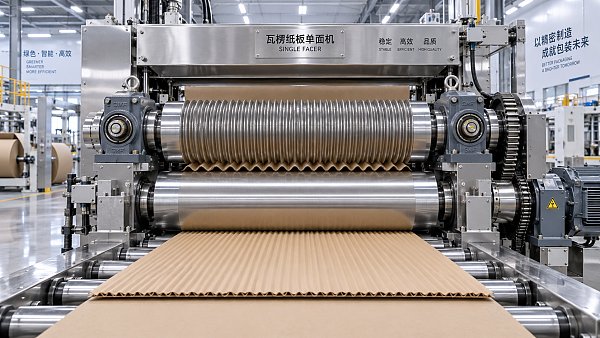
How to Choose a Single Facer Rolls Supplier for Consistent Quality
A single facer rolls supplier should be selected on its ability to deliver a compatible, traceable roll pair that maintains flute geometry under production conditions—not simply on hardness, coating type, or purchase price. Consistent board quality depends on the interaction between roll profile, machining accuracy, surface condition, machine alignment, heat, pressure, and the paper being processed.
The strongest basis for selection is therefore a documented chain of evidence: an agreed application specification, measurable manufacturing acceptance criteria, inspection records tied to the supplied rolls, and a controlled production trial. A supplier that cannot connect its technical claims to those records leaves the buyer carrying the performance risk.
Define the operating conditions before comparing quotations
Quotations are not directly comparable unless suppliers are working from the same machine and production information. A nominal flute designation and roll face length are insufficient. Flute profiles within the same general category can differ in pitch, height, tip radius, and take-up factor, changing paper consumption and forming behavior.
The inquiry should identify the machine manufacturer, model, serial number, roll arrangement, and approved drawings where available. It should also describe the intended operating envelope rather than only the machine’s maximum rated speed.
- Mechanical interfaces: roll diameters, working width, journals, bearing seats, drive connections, mounting dimensions, and cassette interfaces where applicable.
- Process configuration: heating method, steam connections, condensate arrangements, and the machine’s vacuum or pressure-assisted paper-retention system.
- Production requirements: flute profile, paper widths, medium and liner grades, basis-weight range, and expected sustained operating speeds.
- Current limitations: uneven flute formation, bonding variation, vibration, premature wear, or restrictions on particular paper combinations.
Where drawings are unavailable, agree on a dimensional survey and responsibility for approving the resulting drawing. Reverse-engineering a worn roll without accounting for wear can reproduce the wrong profile. Likewise, copying existing dimensions without reviewing operating problems can preserve an unsuitable design.
A technically credible quotation should identify assumptions and missing information. An unconditional promise of interchangeability based only on the machine model is not an adequate compatibility check.
Make flute geometry and accuracy contractual
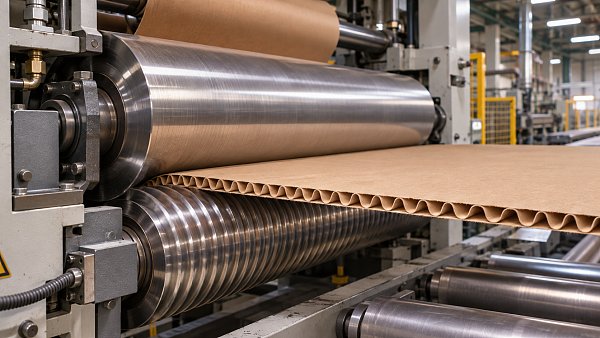
Flute profile affects how the medium forms, how much paper it consumes, and the contact area available for adhesive transfer. A change intended to reduce take-up may also alter forming demands and board properties. Any proposed profile change should therefore be treated as a process change requiring validation, not as an automatic efficiency improvement.
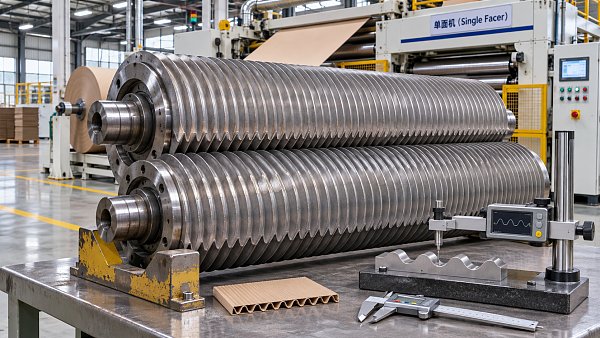
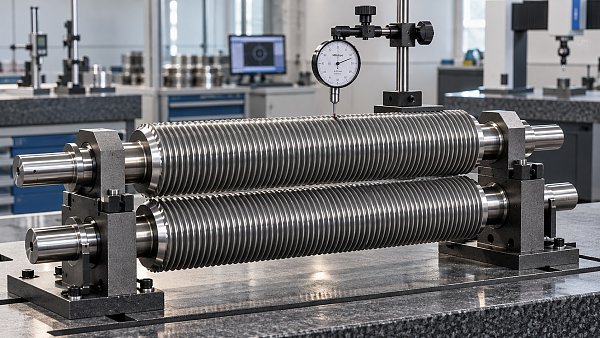
Request a controlled profile drawing covering pitch, flute height, tip and root geometry, and the reference conditions used for measurement. For a matched pair, the supplier should explain how the two rolls are manufactured, inspected, identified, and installed together.
Do not accept “high precision” as an acceptance criterion. Relevant characteristics include profile accuracy, pitch consistency, radial runout, journal concentricity, bearing-seat dimensions, and the specified axial diameter profile or crown. Their limits must be appropriate to the machine design and operating conditions; a universal tolerance copied from another application can be misleading.
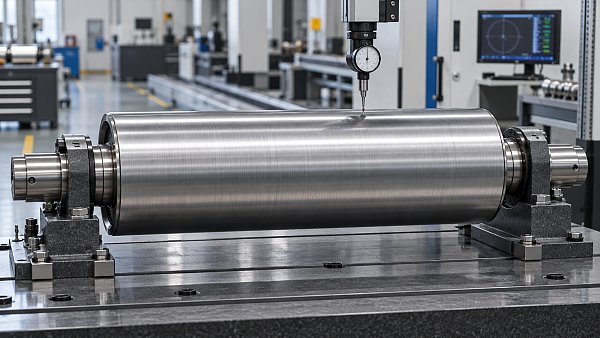
Measurement conditions matter as much as the values. Runout results depend on the reference surfaces and support arrangement. A crown measurement needs a defined axial measurement map. Surface roughness needs an agreed parameter and measurement location. Ask the supplier to state the method, instrument, measurement positions, and acceptance limits for each critical characteristic.
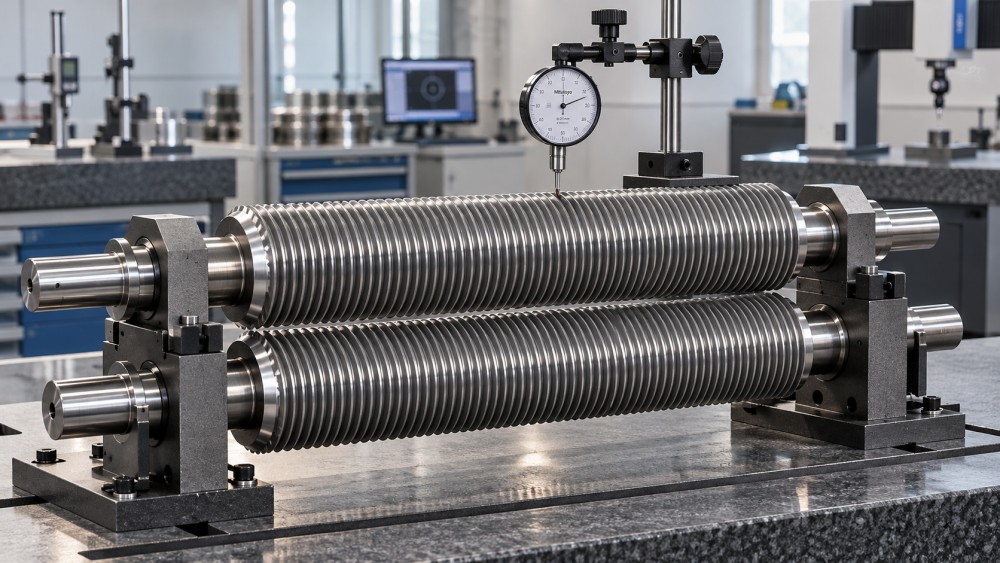
Final geometry should be verified after the manufacturing operations that can change it, including heat treatment, coating, and finishing. A dimensional report produced before coating does not establish the condition of the finished roll.
Evaluate the substrate, heat treatment, and coating as one system
Surface hardness alone does not establish service life. The underlying steel, heat-treatment condition, coating adhesion, surface finish, and operating loads all influence whether a roll retains its profile without cracking, excessive wear, or coating separation.
Ask for the specified steel grade, material traceability, heat-treatment route, and relevant inspection results. Hardness records should identify the test method and measurement locations. Where specified by the design or risk assessment, nondestructive examination can provide additional evidence about substrate integrity, but the method and acceptance criteria must be explicit.
Hard chrome and tungsten carbide-based coatings are established options, but the coating name is not enough to compare offers. Deposition method, thickness, finishing quality, adhesion, and repair requirements affect performance. A harder coating does not compensate for incorrect flute geometry or an unsuitable substrate.
For coated rolls, establish what is guaranteed: coating thickness, finished profile, surface condition, and the handling of defects such as cracking or separation. Ask how the supplier controls variation around the circumference and across the working width, particularly where a coating process could affect the final profile.
Service-life statements need a defined endpoint. “Longer life” is commercially ambiguous unless it means something measurable, such as an agreed wear limit or inability to maintain specified board quality under documented conditions. Paper abrasiveness, contamination, operating pressure, and maintenance practices must also be considered when evaluating a life claim.
Look beyond certificates to roll-specific evidence
A quality-management certificate can support an assessment of a supplier’s procedures, but it does not prove that a particular roll pair meets the purchase specification. The more useful evidence is a manufacturing and inspection package linked to the supplied serial numbers.
Request a sample inspection dossier during qualification, then make the equivalent records a delivery requirement. This distinguishes a supplier that routinely records production quality from one preparing documents only after a problem occurs.
Outsourcing is not automatically a weakness. Heat treatment, coating, or specialized inspection may be performed externally. What matters is whether the supplier controls those operations, maintains traceability, and accepts responsibility for the completed roll pair. Identify the actual manufacturing locations and require approval for changes to critical subcontracted processes.
Use references and trials to test application fit
References are most useful when operating conditions resemble the intended application. A successful installation on a narrower machine, at a lower speed, or with different paper grades provides limited evidence for a more demanding duty.
Where permission allows, ask reference sites about sustained production speed, paper combinations, installation adjustments, wear behavior, and the supplier’s response to problems. Separate the rolls’ performance from broader machine condition: bearings, alignment, steam supply, condensate removal, adhesive settings, and tension control can all affect the result.
A factory acceptance inspection verifies the manufactured component, but it cannot fully demonstrate board-making performance on the destination machine. The purchase agreement should distinguish pre-shipment acceptance from site performance acceptance.
For the production trial, agree on paper grades and widths, speed stages, operating stabilization, sampling positions, and test methods. Depending on the application, checks can cover flute formation, flute height, bonding integrity, visible marking, vibration, and board-property consistency across the web. Final-board strength results should be interpreted alongside paper properties and downstream process conditions, rather than attributed entirely to the rolls.
Record a baseline before replacement where practical. Comparing new rolls with heavily worn rolls may demonstrate improvement, but it does not establish compliance with the new-roll specification. Acceptance must remain tied to agreed requirements.
Clarify who carries installation and performance risk
A technically sound roll pair can perform poorly if installation or machine condition is inadequate. Before shipment, establish who checks bearing condition, alignment, drive interfaces, steam connections, condensate removal, and operating clearances or loading settings.
The supplier should provide installation instructions covering handling, lifting, protection of the flute surface, pair orientation, and commissioning. Where specialist supervision is required, include its availability and cost in the quotation rather than leaving it to a later service negotiation.
Warranty terms deserve particular scrutiny. Determine when coverage starts, whether storage before installation affects coverage, and how manufacturing defects are distinguished from wear or operating damage. For a disputed failure, agree on the evidence required and the process for inspection or independent assessment.
Commercial remedies also need definition. Repair, recoating, replacement, freight, removal, reinstallation, and technical attendance are separate costs. A replacement-roll promise may leave substantial exposure if none of the associated costs are addressed.
For cross-border orders, specify delivery terms, packaging, corrosion protection, documentation, and responsibility for transport damage. Protecting journals and flute surfaces is essential: damage in transit can invalidate otherwise satisfactory factory inspection results.
Compare cost per usable output, not price per pair
The meaningful cost comparison includes purchase price, freight, installation, commissioning, expected maintenance, refurbishment, and the consequences of lost production. A lower-priced pair becomes expensive if it restricts usable speed, increases waste, or requires an extended shutdown for correction.
A practical comparison is total attributable cost divided by accepted saleable output over the evaluation period. Use the plant’s own production and cost assumptions, and test more than one service-life scenario. Supplier life claims should not be treated as guaranteed output unless the contract defines both the operating conditions and the remedy for underperformance.
Take-up factor deserves separate attention because it affects medium consumption. However, paper savings should be evaluated alongside board performance and process stability. A lower theoretical consumption figure has little value if the profile creates unacceptable forming or bonding results.
Refurbishment economics can also change the ranking. Ask how many regrinding or recoating cycles are technically feasible, what geometry changes they introduce, how the pair is rematched, and what dimensions trigger retirement. Do not assume every roll design has the same refurbishment allowance.
Make the award conditional on evidence
Compatibility, traceability, agreed tolerances, and an enforceable acceptance process should be qualification gates rather than weaknesses that a low price can offset. Among suppliers that pass those gates, compare documented application fit, delivery reliability, service capability, and lifecycle cost.
Before placing the order, close every unresolved technical exception and attach the approved drawing, inspection requirements, trial conditions, documentation list, and warranty terms to the contract. Link payment milestones to verifiable deliverables where commercially feasible.
The decisive question is not which supplier promises the hardest surface or longest life. It is which supplier can demonstrate control of the finished roll pair, explain its operating limits, and accept clear responsibility when the delivered result falls outside the agreed specification.
Related News
 When Should Corrugating Rolls Be Replaced?When should corrugating rolls be replaced? Learn the warning signs, inspection steps, and replacement criteria to reduce waste and avoid costly downtime.Corrugated Thermodynamics Architect
 How Do Steel Pressure Rolls Affect Corrugated Board Quality?Discover how steel pressure rolls affect corrugated board bonding, flute strength and caliper, and learn how to identify defects and improve quality.Corrugated Thermodynamics Architect
 How to Choose a Pressure Roll Supplier for Consistent Board QualityChoose a pressure rolls supplier with confidence. Learn how to assess roll geometry, inspection records, and lifecycle costs to support consistent board quality and reduce downtime.Corrugated Thermodynamics Architect
 How to Choose a Single Facer Rolls Supplier for Consistent QualityChoose a single facer rolls supplier with confidence. Learn how to verify compatibility, inspection records, and trial performance to secure consistent quality and reduce costly downtime.Corrugated Thermodynamics Architect
 How Steam Joints for Corrugator Rolls Prevent Heat LossSteam joints for corrugator rolls prevent heat loss, stabilize roll temperatures, improve condensate drainage, and support consistent board quality. Learn key maintenance practices.Corrugated Thermodynamics Architect
 When to Replace Single Facer Rolls to Prevent Corrugator DowntimeReplacement single facer rolls: learn the warning signs, inspection steps, and planning strategies that prevent corrugator downtime and protect board quality.Corrugated Thermodynamics Architect