How Steel Pressure Rolls Improve Corrugator Board Quality
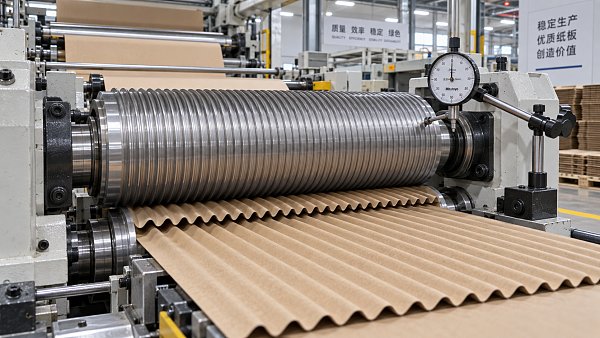
In corrugated board production, steel pressure rolls are not passive mechanical components. They are part of the process system that determines whether the liner and corrugated medium form a stable bond at production speed, whether flute geometry remains intact, and whether the board exits the machine flat enough for converting, printing, and downstream packing operations.
When a board line develops recurring defects such as weak pin adhesion, loose edges, washboarding, crushed flutes, board warp, or uneven caliper, the adhesive formulation is often examined first. That is reasonable, but incomplete. The condition and operating behavior of the pressure roll can determine whether otherwise acceptable paper, starch, heat, and adhesive settings are converted into reliable board quality.
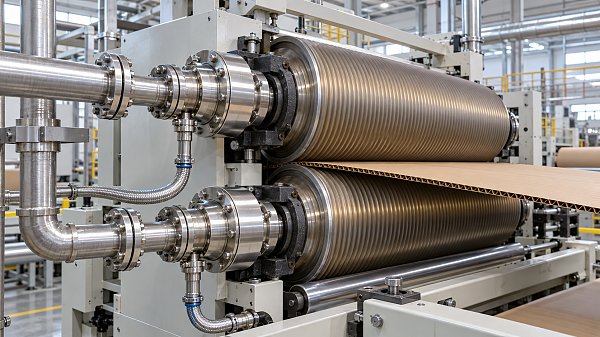
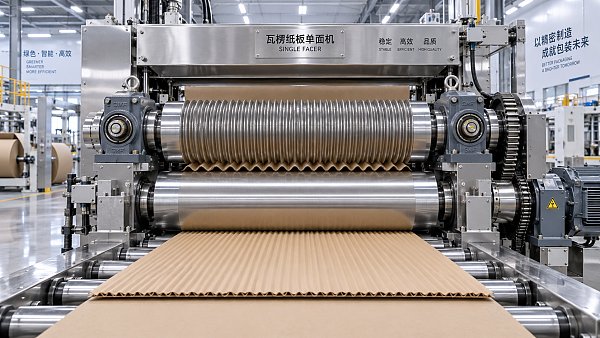
Steel pressure rolls are most closely associated with the single facer, where a liner is pressed against adhesive-applied flute tips on the corrugated medium. Depending on line design, steel rolls may also appear in other pressure, bonding, transfer, or web-contact positions. Their basic purpose is simple: provide controlled, even pressure while material passes through a heated and continuously moving nip. Achieving that purpose consistently is more demanding than it appears, particularly as modern corrugators run lighter papers, wider webs, more recycled fiber, higher speeds, and shorter production orders.
The pressure roll’s role in bond formation
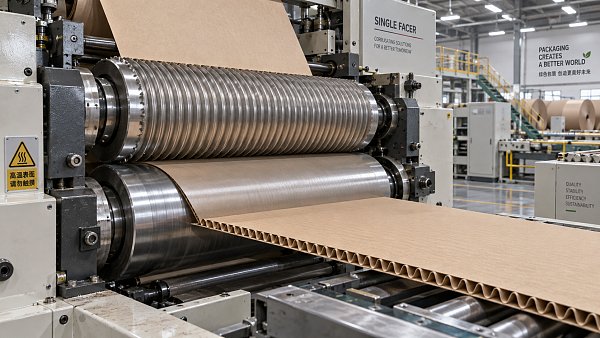
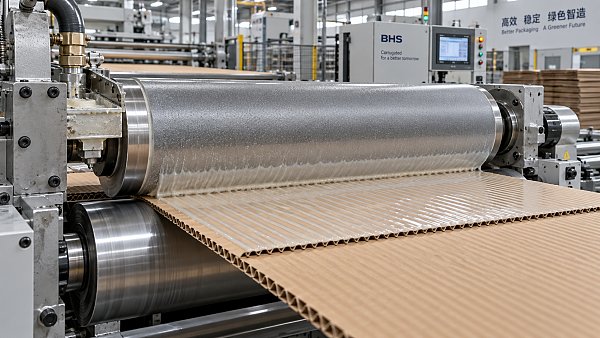
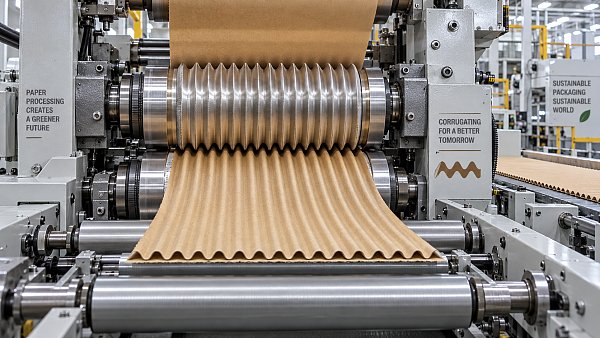
At the single facer, the corrugated medium is formed between corrugating rolls, adhesive is applied to the flute tips, and the liner is brought into contact with the glued medium. The pressure roll applies the force needed to create intimate contact during the early stage of adhesive setting. The process must occur without excessively flattening the flute structure or driving moisture unevenly into the paper.
A sound bond depends on several events happening together:
- The adhesive film must be transferred consistently to the flute tips.
- The liner must contact those flute tips across the full machine width.
- Pressure must be sufficient to wet the liner surface and support starch gelatinization under heat.
- The dwell time in the nip must be compatible with machine speed, paper condition, adhesive solids, and thermal input.
- The formed single face must leave the nip without local compression, slippage, or tension distortion.
The steel pressure roll does not independently control all of these variables. It works with roll temperature, pneumatic or hydraulic loading, corrugating-roll condition, glue roll settings, web tension, wrap geometry, and paper moisture. Yet its surface profile, stiffness, runout, alignment, and loading response have a direct effect on whether pressure is genuinely uniform rather than merely set to a uniform value on the control panel.
A common mistake is to treat pressure as a single number. A machine may display the correct loading pressure while the actual nip force varies from one side of the board to the other. Crown condition, bearing wear, shaft deflection, roll thermal expansion, frame rigidity, and parallelism all influence the contact pattern. The board responds to the local pressure it receives, not to the nominal pressure shown in the recipe.
Why steel is used and where its advantages become conditional
Steel pressure rolls offer rigidity, dimensional stability, long service life, and the ability to maintain a controlled cylindrical geometry under repeated loading. Compared with softer contact surfaces, a properly manufactured steel roll can support accurate nip definition and stable operation in high-duty conditions. These characteristics are especially valuable where pressure repeatability, wide-web consistency, and resistance to mechanical damage are important.
However, the advantages of steel become conditional when paper quality varies or when the process window is narrow. Recycled liners can have uneven formation, lower surface strength, or variable moisture absorption. Lightweight grades can be more susceptible to marking and flute damage. In such cases, the line needs more than a hard and durable roll: it needs a pressure system whose loading, temperature, surface state, and alignment can be kept within a controlled operating range.
Roll surface finish deserves particular attention. The surface should be smooth enough to avoid marking the liner or accumulating contamination, but its functional performance cannot be judged by visual appearance alone. A highly polished roll with adhesive mist, starch build-up, corrosion spots, or localized wear will not deliver uniform contact. Conversely, a roll that has been reground may look satisfactory while having lost its intended crown or while its new diameter affects nip geometry and loading behavior.
Surface condition also affects cleaning discipline. Adhesive deposits can create high-pressure points and alter local heat transfer. Paper dust, coating residues, and fiber accumulation may become embedded in deposits, producing repeating surface defects or localized bond weakness. If these defects appear at a repeating machine pitch, the roll circumference and related rotating elements should be included in the fault investigation rather than relying only on laboratory adhesive tests.
Pressure uniformity is a board-quality issue, not only a maintenance issue
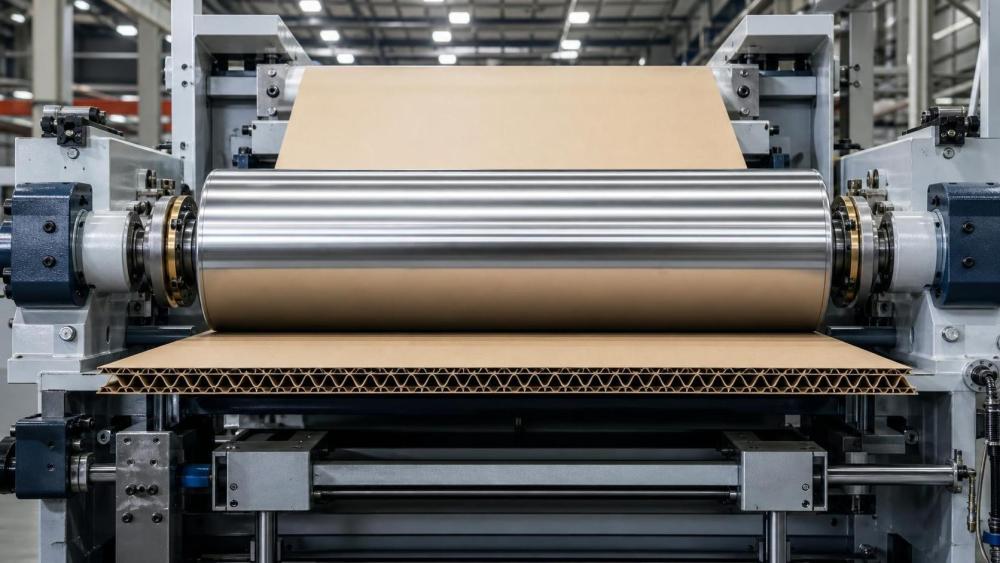
Across a wide corrugator, small mechanical deviations can create significant differences in board behavior. A roll that is not parallel to its mating surface may apply higher pressure at the drive side and lower pressure at the operator side, or the reverse. The result may be an edge-specific defect: stronger bonding on one side, intermittent delamination on the other, uneven flute profile, or a persistent tendency for the web to track incorrectly.
Pressure non-uniformity is particularly difficult to diagnose because it can resemble other process problems. Low bond strength at one edge may be blamed on poor adhesive distribution, insufficient preheat, or wet paper. Those causes are possible, but the investigation should include mechanical evidence: nip checks, bearing condition, roll runout measurement, shaft and journal inspection, loading-cylinder response, and confirmation of roll parallelism under operating conditions.
Static alignment checks are necessary but not always sufficient. A roll can be parallel when cold and unloaded, then shift effectively under heat, pressure, or dynamic vibration. Long production runs at elevated speed may reveal thermal growth, bearing clearance, or frame deflection that a short idle inspection will not show. For this reason, a useful diagnostic approach combines mechanical measurement with production data: bond-test results by cross-machine position, moisture profile, steam and preheater settings, web speed, and defect location over time.
The relationship between pressure, flute integrity, and moisture balance
More pressure is not automatically better. Increasing pressure can improve initial liner-to-flute contact when the process is under-loaded, but excessive force can compress flute tips or distort the corrugated medium. This reduces caliper and may impair the compression performance expected from the finished board. In severe cases, flute crushing becomes visible; in milder cases, the board may pass basic bond checks while still losing stiffness and box performance.
The pressure roll also influences moisture behavior indirectly. Corrugating is a thermal and moisture-driven process. Paper is preconditioned, formed, glued, and heated in a short time window. If pressure is uneven, contact and heat transfer can differ across the web. One area may experience a stronger bond but become drier or more compressed, while another may retain excessive moisture or fail to develop sufficient adhesive penetration.
This is one reason board warp should not be attributed only to paper moisture. Warp is often a system-level outcome involving liner and medium moisture, basis-weight balance, heat exposure, tension, adhesive application, and cross-machine pressure variation. A pressure roll cannot correct poor paper conditioning, but it can either preserve or disrupt the balance achieved by upstream controls.
On lightweight and high-recycled-content grades, the operating window is narrower. Lower compressive resistance makes flute deformation more likely, while variable porosity can change how adhesive and moisture are absorbed. Stable steel roll geometry, accurately controlled loading, and disciplined process adjustment become more important as paper grades become less forgiving.
Roll geometry, crown, and thermal behavior
Pressure-roll geometry should be considered as part of the entire machine design. A perfectly cylindrical roll is not always the correct answer. Depending on roll span, loading arrangement, expected deflection, and mating-roll geometry, a controlled crown may be used to maintain more even pressure across the working width. The appropriate profile is machine-specific; applying a generic crown assumption can worsen rather than solve an existing contact problem.
Regrinding must therefore be managed as an engineering intervention, not simply a cosmetic repair. Before a roll is removed, the plant should document current diameter, runout, surface damage, historical defects, bearing condition, and the machine manufacturer’s permitted dimensional limits. After grinding, diameter reduction may affect nip position, pressure setting, drive synchronization, and the relationship with adjacent rolls. Where a roll has a designed crown, the final profile should be verified against the required specification.
Thermal behavior matters because the roll operates near heated components and in a humid environment. Steel expands predictably, but the practical outcome depends on how evenly the roll, shaft, bearings, and support structure heat up. Uneven temperature distribution can contribute to temporary geometry changes and bearing stress. Plants that experience defects only after the line has been running for a period should investigate thermal conditions rather than assuming the issue is purely related to adhesive preparation.
What to inspect before blaming the pressure roll
Not every bond failure originates at the roll. The single facer is a coupled process, and a structured sequence prevents unnecessary mechanical work. Paper moisture and temperature entering the single facer should be checked first, especially after grade changes or storage-condition changes. Glue viscosity, solids content, carrier condition, application amount, and glue roll-to-metering roll settings must also be within the validated process range.
Once those variables are reasonably stable, attention should shift to mechanical contact. Useful checks include:
- roll surface cleanliness, corrosion, scratches, and adhesive build-up;
- radial runout and evidence of eccentricity;
- bearing temperature, vibration, lubrication condition, and clearance;
- parallelism and actual nip loading across the usable width;
- condition of loading arms, cylinders, pivots, and pressure-control components;
- corrugating-roll wear, flute profile condition, and the quality of adhesive transfer;
- recurring defect intervals that correspond with roll rotation or machine speed.
Bond assessment should also be more specific than a pass-or-fail sample. Record where the sample came from across the web, whether failure occurs at the adhesive interface or through fiber tear, and whether the problem changes at different speeds. Fiber tear generally indicates that the bond exceeds the paper’s internal strength, while clean separation can point toward inadequate adhesion or insufficient contact. Interpretation still requires caution because paper condition and test method can influence the result.
Maintenance practices that protect board consistency
The most effective maintenance approach is preventive and trend-based. Waiting until a roll is visibly damaged or a line produces severe delamination usually means that waste, lost throughput, and customer risk have already accumulated. Routine cleaning should remove adhesive and paper contamination without using methods that scratch or alter the roll surface. Cleaning chemicals must be compatible with adjacent seals, coatings, and lubrication systems.
Condition monitoring should include vibration and bearing-temperature trends where instrumentation is available. A gradual rise in vibration may identify bearing degradation or imbalance before it becomes a quality issue. During planned shutdowns, verify surface condition, diameter, runout, journal wear, and loading-mechanism movement. Maintenance records should connect mechanical observations with actual production symptoms; otherwise, recurring faults remain isolated events rather than usable process knowledge.
For plants managing frequent order changes, recipe discipline is equally important. Different flute profiles, liner combinations, paper weights, and adhesive systems may require different pressure settings. Recipes should not become a substitute for troubleshooting, but they provide a repeatable starting point and reduce the tendency for operators to make large, reactive adjustments. Any pressure change should be reviewed alongside speed, glue application, preheat, and board caliper rather than being made in isolation.
How to evaluate a pressure-roll solution in a corrugator project
When reviewing a new corrugator, retrofit, or replacement roll, the relevant question is not whether the component is simply “steel.” The decision should focus on the fit between roll design and the operating conditions of the line. Required information should include roll body material and construction, surface finish and treatment, diameter and profile tolerance, shaft and bearing design, allowable runout, balancing method, loading arrangement, cleaning requirements, and compatibility with the existing frame and controls.
It is also important to clarify the service model. A technically sound roll can still create extended downtime if local support cannot measure, regrind, balance, or replace it within the plant’s maintenance window. Documentation should define inspection criteria, dimensional limits after regrinding, recommended spares, and commissioning procedures. For international equipment projects, these details matter as much as the initial component specification because they determine whether quality can be maintained over the roll’s full operating life.
Standards can support parts of this evaluation, but they do not replace machine-specific engineering requirements. Corrugated board test methods, safety requirements, and quality procedures may be referenced through applicable national, regional, customer, or internal specifications. The pressure roll itself should be evaluated against the corrugator builder’s design tolerances and the plant’s validated production requirements, particularly where food, pharmaceutical, export, or high-performance packaging grades impose tighter quality expectations.
Steel pressure rolls improve corrugator board quality when they deliver stable, clean, aligned, and repeatable contact within a properly controlled thermal, adhesive, and paper-conditioning process. Their value is not limited to stronger bonding. Correctly engineered and maintained rolls help preserve flute structure, stabilize caliper, reduce edge defects, support moisture balance, and lower the frequency of waste-generating adjustments. In a high-speed corrugator, that makes the pressure roll a practical control point for both board performance and line reliability.
Related News
 How Steam Joints for Corrugator Rolls Prevent Heat LossSteam joints for corrugator rolls prevent heat loss, stabilize roll temperatures, improve condensate drainage, and support consistent board quality. Learn key maintenance practices.Corrugated Thermodynamics Architect
 When to Replace Single Facer Rolls to Prevent Corrugator DowntimeReplacement single facer rolls: learn the warning signs, inspection steps, and planning strategies that prevent corrugator downtime and protect board quality.Corrugated Thermodynamics Architect
 When Replacement Single Facer Rolls Can Restore Board QualityReplacement single facer rolls can restore flute definition, bonding consistency, and board quality. Learn when replacement helps reduce waste, stabilize production, and protect uptime.Corrugated Thermodynamics Architect
 When Wear Resistant Glue Rollers Deliver a Lower Total CostWear resistant glue rollers can reduce total cost by improving adhesive film stability, minimizing downtime, waste, and bond-quality risks.Corrugated Thermodynamics Architect
 When Should You Replace Industrial Single Facer Rolls?Industrial single facer rolls: discover the warning signs that demand replacement, from profile wear and runout to heat loss, quality defects, waste, and costly downtime.Corrugated Thermodynamics Architect
 When Should Corrugating Rolls Be Replaced?When should corrugating rolls be replaced? Discover key wear signs, inspection methods, and cost-saving steps to protect board quality, bonding, and uptime.Corrugated Thermodynamics Architect