How Corrugated Single Facer Rolls Improve Board Quality and Reduce Waste
For project managers responsible for corrugator upgrades, rebuilds, and capacity planning, corrugated single facer rolls are far more than replaceable mechanical components. They influence the moment when liner and medium become a stable single-face web—the foundation on which the rest of the board is built. When that foundation is inconsistent, downstream adjustments often become expensive attempts to compensate for a problem that began at the single facer.
A weak or unstable flute profile can lead to poor bond quality, excessive adhesive use, warp, paper breaks, edge defects, and avoidable trim loss. In contrast, correctly specified, well-maintained rolls support cleaner flute formation, more reliable adhesive transfer, and steadier operation across changing paper grades and production speeds. For an engineering team, the real question is not simply which rolls fit the machine. It is how roll condition, design, and operating control work together to protect board quality while reducing waste over the full life of the corrugator.
The Single Facer Is Where Material Efficiency Begins
In a corrugated board line, the single facer heats, conditions, corrugates, glues, and bonds the medium to the liner. The process happens quickly, under heat and pressure, and often with a wide variation in paper characteristics. Lighter recycled papers, high-performance virgin grades, moisture-sensitive mediums, coated liners, and frequent order changes all make the process less forgiving.
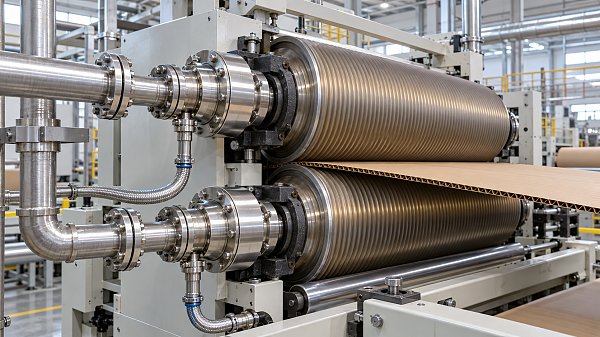
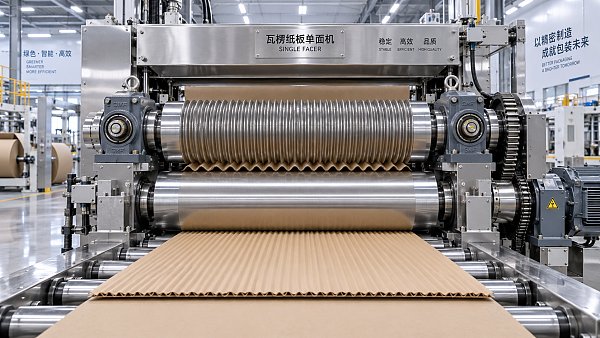
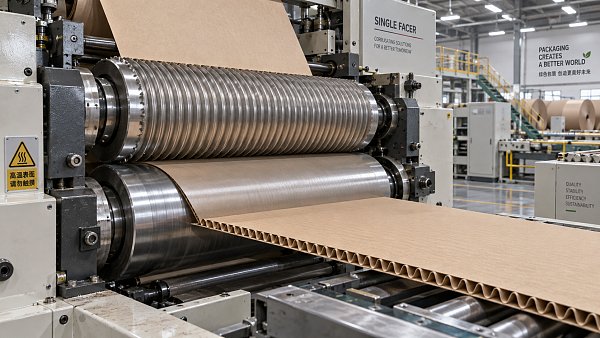
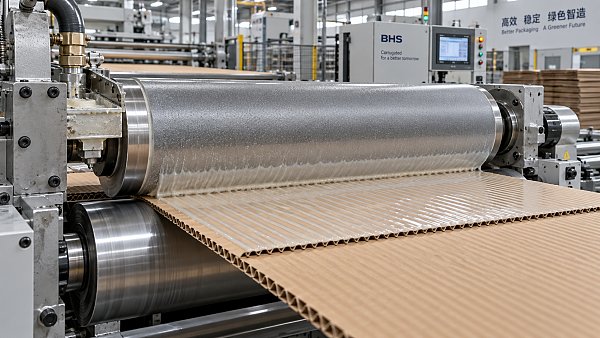
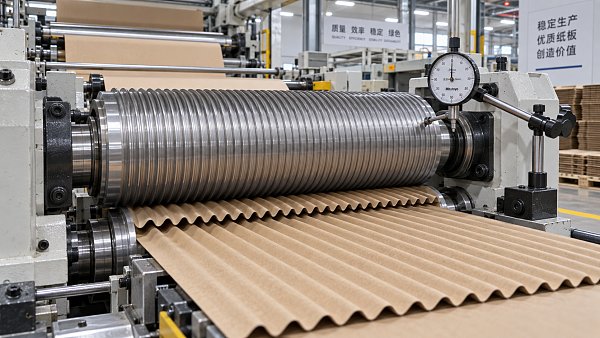
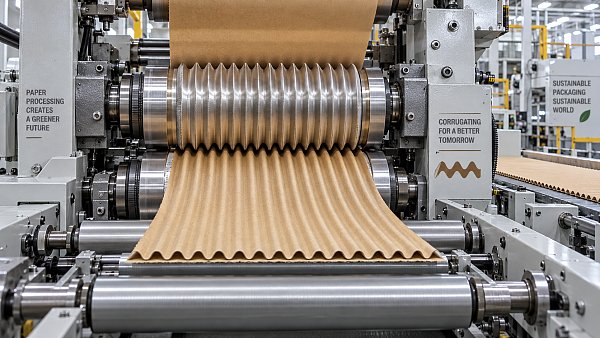
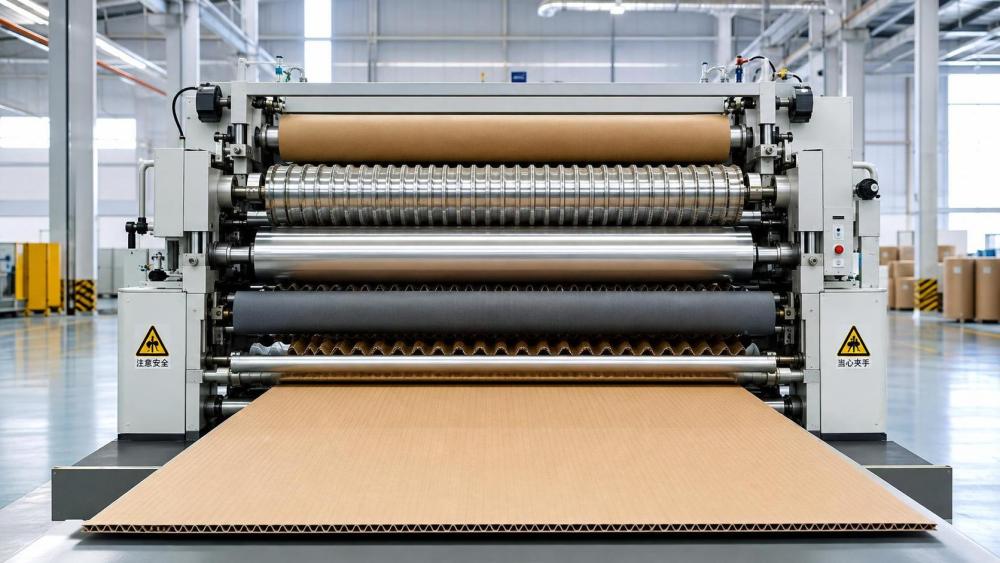
The key working set typically includes corrugating rolls, a pressure roll, and a glue roll system. Among them, the corrugating rolls define the flute geometry and create the contact conditions needed for consistent bonding. Their surface condition affects how the medium travels through the nip, how accurately it holds its formed profile, and how well adhesive is applied to the flute tips before the liner is joined.
That is why a board-quality issue should not automatically be assigned to starch formulation, steam pressure, or operator settings. Those variables matter, but the physical condition of the rolls may be the underlying constraint. A worn flute profile, damaged coating, incorrect nip condition, or uneven temperature response can make process stability difficult even for an experienced crew.
What Good Corrugated Single Facer Rolls Do in Practice
Project discussions sometimes describe roll upgrades in broad terms such as “better performance” or “higher speed.” Those claims become useful only when connected to specific operating outcomes. In practical terms, properly designed corrugated single facer rolls should help the plant maintain three things at once: accurate flute formation, stable bonding, and predictable web handling.
1. They preserve flute geometry under running load
Flute shape is not merely a visual feature. It determines cushioning performance, compression behavior, caliper, adhesive contact area, and how the board behaves through the double facer and converting stages. When roll teeth become rounded, worn, contaminated, or locally damaged, the medium may not form to the intended profile. The result can be crushed flute tips, inconsistent caliper, weak areas in the bond line, or board that appears acceptable at the corrugator but performs poorly during die-cutting or box compression testing.
For projects involving new product mixes, this matters especially when the plant is moving toward lighter-weight papers. Lightweight materials offer savings, but they have less tolerance for unstable heat, pressure, and flute control. A roll set that worked adequately with heavier grades may expose limitations once the specification changes.
2. They support consistent adhesive contact
Adhesive needs to reach the flute tips in a controlled, repeatable pattern. If the flute profile is inconsistent, adhesive application becomes inconsistent as well. Operators may respond by increasing glue application, which can conceal weak bonding temporarily but creates other costs: higher starch consumption, excess moisture, longer drying demand, and a greater risk of warp.
A stable roll surface and correct geometric alignment allow the process to run closer to the intended glue setting. This is one of the clearest ways roll condition contributes to waste reduction. Instead of treating extra adhesive as an insurance policy, the plant can pursue bond reliability through a more controlled mechanical process.
3. They reduce web disturbances that become breaks and scrap
Paper breaks rarely have a single cause. Moisture variation, poor splices, inadequate preheating, tension mismatch, and paper defects all play a part. Yet roll-related disturbances can increase the likelihood that these normal production challenges turn into a break. Uneven surfaces, deposits, damaged flute tips, and poor roll parallelism may create localized stress or irregular traction across the web.
Every break has a larger footprint than the visible scrap at the single facer. It may interrupt the double facer, create unusable board during restart, consume labor, affect delivery sequencing, and push a plant closer to an overtime decision. For project managers reviewing upgrade economics, this chain reaction is often more meaningful than the purchase cost of a roll component alone.
Surface Condition Is Not a Maintenance Detail
Single facer roll performance gradually changes long before a serious failure occurs. Abrasion from paper, adhesive contamination, corrosion, cleaning practices, temperature cycling, and accidental contact can alter the working surface. The process may still run, but it may require more intervention: higher glue settings, slower speeds on sensitive grades, more frequent cleaning, or stricter operator attention.
This slow decline is one reason roll condition is easy to underestimate. A plant may adapt around the problem so successfully that the loss becomes normalized. “That grade always needs more glue” or “that flute profile cannot run at top speed” can become accepted assumptions, even when the underlying issue is mechanical wear.
A useful maintenance review should look beyond whether a roll is visibly damaged. Engineering teams should assess flute profile integrity, coating condition, surface cleanliness, bearing and journal condition, thermal behavior, alignment, and the repeatability of the pressure setting. Records from quality claims, bond tests, glue consumption, web breaks, and waste reports can help identify whether a gradual decline is tied to a specific single facer position or order family.
Signs that justify an earlier inspection
- Increasing reliance on higher adhesive application to maintain bond strength.
- Recurring loose liner, washboarding, or uneven bonding on otherwise comparable paper grades.
- More frequent breaks or unstable tracking at one single facer.
- Board caliper variation that cannot be explained by incoming paper alone.
- Difficulty holding target speed on lightweight or high-recycled-content medium.
- Localized flute damage, streaks, or recurring defects across the board width.
- Operators making repeated pressure or temperature corrections during a routine run.
None of these signals proves that the rolls are the only cause. Together, however, they justify a structured inspection rather than another round of trial-and-error adjustments.
Choosing a Roll Strategy for an Upgrade Project
When a corrugator is being upgraded, project teams often face a difficult timing decision: replace rolls during a planned rebuild, refurbish existing assets, or continue operating until performance declines further. The correct path depends on the actual condition of the equipment, expected product mix, production targets, available shutdown windows, and service support—not just the age of the rolls.
New roll investment is generally easier to justify when the plant is pursuing higher sustained speeds, introducing demanding paper grades, changing flute profiles, or correcting recurring quality and waste issues that have resisted process tuning. Refurbishment may be a reasonable option where the core structure remains sound and a qualified supplier can restore profile accuracy, surface characteristics, and mechanical integrity within the required specification.
However, refurbishment should not be treated as a simple cosmetic repair. Project owners need clarity about the inspection method, profile measurement, coating or surface treatment approach, dimensional tolerances, balancing requirements, expected operating conditions, and post-installation support. A low initial refurbishing price can become costly if the roll does not deliver stable geometry or requires an unplanned rework interval.
Questions to put into the technical review
Rather than asking only for a roll quotation, include operating questions in the project specification:
- Which flute profiles and paper weight ranges must the roll set handle reliably?
- What is the target sustainable speed, not only the machine’s maximum design speed?
- How will the roll surface perform with recycled-content papers and the plant’s adhesive chemistry?
- What heating, steam, condensate, and temperature-control conditions must be verified at installation?
- What inspection data will confirm profile accuracy and alignment before commissioning?
- Can the supplier support emergency service, regrinding, recoating, or future refurbishment?
- What spare-part and handling arrangements are needed to avoid a long production interruption?
These questions shift the decision from component purchasing to risk management. That is the more useful frame for a project manager who will be accountable for startup performance after the installation team has left the site.
Installation Quality Can Protect—or Undermine—the Investment
Even high-quality corrugated single facer rolls cannot compensate for poor installation conditions. Alignment, bearing condition, pressure roll settings, glue-roll metering, doctoring, steam system performance, and web tension must be treated as one operating system. Replacing corrugating rolls without checking adjacent elements may produce a short-lived improvement while leaving the original instability in place.
Commissioning should therefore include more than a successful rotation check. The team should validate roll parallelism, nip loading, thermal response across the working width, adhesive pickup, flute formation, liner contact, and board bond performance at several representative grades. It is also wise to test both normal production settings and the more difficult materials that frequently trigger complaints or slowdowns.
During startup, resist the temptation to judge the project only by immediate speed. A line can reach a headline speed briefly while still showing excessive glue use, edge instability, poor moisture balance, or rising reject levels. Sustainable output is the better measure: stable speed with acceptable bond quality, controlled waste, and no unusual dependence on operator intervention.
Linking Roll Performance to the Factory’s Waste Reduction Plan
Waste reduction in corrugated production is usually discussed through paper purchasing, trim optimization, order scheduling, or automated changeovers. Those areas deserve attention, but single facer performance belongs in the same conversation. Poorly controlled board formation creates material loss upstream, where recovery is limited and defects travel through the rest of the line.
A practical improvement plan can connect roll performance to four measurable production categories:
- Start-up waste: Track the amount of material required to reach acceptable bonding and flute stability after a stop, splice, or order change.
- Running waste: Separate paper breaks, bond-related rejects, flute defects, and moisture-related board problems rather than grouping them under a general scrap code.
- Consumable use: Compare adhesive consumption by grade and flute profile. A gradual increase can reveal a mechanical issue before it becomes a quality claim.
- Speed losses: Record when operators must slow down due to board formation instability, not only when the line stops completely.
With this information, a plant can evaluate roll decisions in terms that finance, operations, and maintenance teams all understand. The purpose is not to assign blame to one component. It is to identify where material, time, and energy are being consumed because the process is no longer operating within its intended window.
A More Balanced View of “Higher Speed”
Higher corrugator speed is often the visible goal behind an equipment project. Yet speed without board stability can increase the cost of problems faster than it increases useful output. A single facer that forms flutes consistently and applies adhesive predictably gives the rest of the line a better chance to run at its designed capability.
For this reason, a roll upgrade should be evaluated by its contribution to stable production rather than by speed alone. Better board formation can reduce the need for compensating glue, prevent disruptions that cause scrap, support more reliable downstream converting, and make it easier to run a broader range of paper grades. Those benefits are particularly valuable in plants handling short runs and frequent order changes, where there is little time to recover from instability.
Turning a Component Decision into a Production Decision
Corrugated single facer rolls sit at a small but decisive point in the corrugating process. Their impact reaches beyond flute shape: it affects bond quality, paper usage, energy demand, runnability, and the confidence operators have in the line. For project leaders, the most effective approach is to connect roll condition with operating data, maintenance planning, paper strategy, and startup validation.
Before approving a replacement or refurbishment plan, define the production problems the project must solve, inspect the complete single facer system, and establish how success will be measured after commissioning. When the roll strategy is matched to real production conditions, it becomes a practical route to stronger board quality and lower waste—not simply another line-item expense in a corrugator upgrade budget.
Related News
 How Steam Joints for Corrugator Rolls Prevent Heat LossSteam joints for corrugator rolls prevent heat loss, stabilize roll temperatures, improve condensate drainage, and support consistent board quality. Learn key maintenance practices.Corrugated Thermodynamics Architect
 When to Replace Single Facer Rolls to Prevent Corrugator DowntimeReplacement single facer rolls: learn the warning signs, inspection steps, and planning strategies that prevent corrugator downtime and protect board quality.Corrugated Thermodynamics Architect
 When Replacement Single Facer Rolls Can Restore Board QualityReplacement single facer rolls can restore flute definition, bonding consistency, and board quality. Learn when replacement helps reduce waste, stabilize production, and protect uptime.Corrugated Thermodynamics Architect
 When Wear Resistant Glue Rollers Deliver a Lower Total CostWear resistant glue rollers can reduce total cost by improving adhesive film stability, minimizing downtime, waste, and bond-quality risks.Corrugated Thermodynamics Architect
 When Should You Replace Industrial Single Facer Rolls?Industrial single facer rolls: discover the warning signs that demand replacement, from profile wear and runout to heat loss, quality defects, waste, and costly downtime.Corrugated Thermodynamics Architect
 When Should Corrugating Rolls Be Replaced?When should corrugating rolls be replaced? Discover key wear signs, inspection methods, and cost-saving steps to protect board quality, bonding, and uptime.Corrugated Thermodynamics Architect