Why Woven Pressure Belts Slip and How to Restore Reliable Web Tension
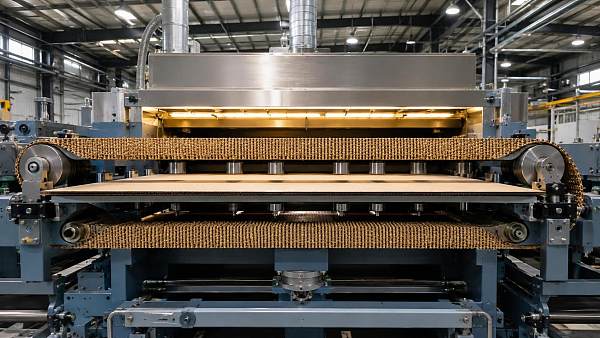
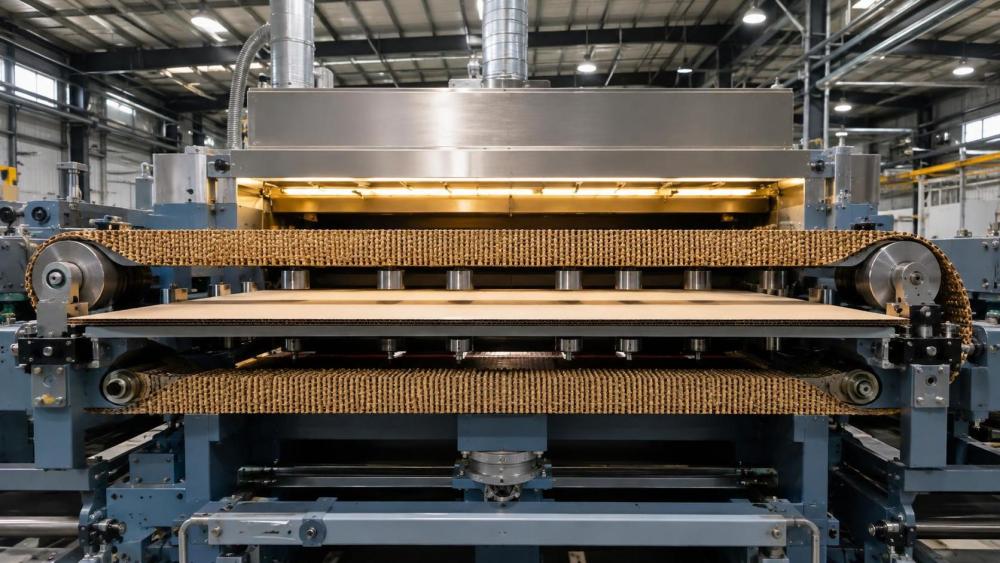
Slipping woven pressure belts deserve immediate attention because they can quickly turn into a board-quality and uptime problem. On a corrugator, the belt must transmit pressure consistently while helping carry the web through a heated bonding section. When it loses grip, the visible symptom may be belt wander or unstable speed. The more costly effects often appear downstream: uneven bonding, warped board, poor moisture balance, edge lift, weak adhesion, and waste during grade or order changes.
A slipping belt is not automatically a worn-out belt. Replacing it before checking the drive, tensioning system, contamination, and machine geometry may only hide the fault for a short time. The practical objective is to identify whether the belt is failing to grip the drive, failing to hold its intended tension, or being pulled out of alignment by another mechanical condition.
First, distinguish slip from tracking and board-handling problems
Operators often use “slip” to describe several different conditions. Separating them early prevents the wrong corrective action.
- True drive slip: the drive roll rotates but the woven pressure belt does not maintain the same surface speed. This may be visible as polished belt areas, heat marks, intermittent surging, or a belt that slows under load.
- Tension loss: the belt remains broadly aligned but feels soft, moves unevenly, or cannot maintain pressure through changing temperatures and load conditions.
- Tracking instability: the belt moves toward one side, repeatedly activates steering corrections, or rubs against guides. It may still have adequate drive traction at first.
- Web or board drag: the belt itself is stable, but the sheet hesitates, wrinkles, skews, or exits with inconsistent bonding. The resistance may be coming from paper condition, adhesive buildup, roll condition, or an upstream transfer issue.
The distinction matters because adding tension can temporarily reduce visible movement while increasing belt stress, bearing load, and tracking sensitivity. A belt that tracks poorly due to a misaligned roll will rarely become reliable simply because the tension setting is raised.
Before changing settings, observe the machine at the lowest stable production condition and again under normal load. Check whether the symptom begins at startup, after the heating section reaches operating condition, only on heavier board grades, or only after a changeover. The timing often narrows the cause faster than a broad inspection.
Contamination and surface condition are frequent causes
Woven pressure belts depend on their surface condition and their contact with drive and support rolls. Starch adhesive, paper dust, oil mist, grease, condensate, and cleaning residues can all reduce effective grip. Contamination may be obvious on the belt surface, but it is equally important to inspect the drive roll and nearby rolls. A clean replacement belt running on a glazed or contaminated drive roll can slip almost as quickly as the old one.
Adhesive contamination deserves particular attention in corrugated production. Excess adhesive, unstable application, splash near the bonding zone, or buildup transferred from board edges can harden in local areas of the belt. The result is not always a uniform reduction in traction. Some sections can become stiff or polished while adjacent areas retain a different texture, creating pulsing contact and uneven pressure.
Oil contamination requires a different response. It may come from an over-lubricated bearing, leaking seal, gearbox issue, or airborne mist rather than an operator error at the belt. Cleaning the visible surface without finding the source leaves the same exposure in place. If contamination reappears after cleaning, inspect the surrounding mechanical components before treating the belt as the root cause.
Cleaning should follow the belt supplier's approved method and the plant's safety procedure. Aggressive solvents, scraping tools, or high-pressure washing can damage fibers, alter the belt surface, drive moisture into the construction, or weaken splices and edges. A belt may look cleaner yet lose the dimensional stability needed for dependable running.
Incorrect tension is often a symptom of a larger issue
Insufficient tension reduces wrap pressure and can allow the drive roll to lose traction, especially during acceleration, speed changes, or heavy production. Excess tension creates another set of problems: stretched belt structure, higher loads on bearings and shafts, reduced tolerance for roll misalignment, and accelerated edge wear. A belt that stops slipping only when it is tightened beyond its normal operating range should be treated as a diagnostic warning.
Use the machine's intended tensioning method rather than setting tension by feel alone. On systems with pneumatic, hydraulic, spring-loaded, or automatic tension control, verify that both sides respond evenly and that the control mechanism can travel through its operating range. A seized pivot, unequal cylinder pressure, sticking valve, restricted air supply, or worn linkage can make the displayed setting misleading.
Temperature complicates this assessment. Woven pressure belts operate near heated components and can respond to thermal changes differently from steel frames, rolls, and tension assemblies. A belt that appears correctly tensioned when cold may run soft after the machine stabilizes. Conversely, a belt adjusted tightly during a hot condition may be over-tensioned after cooling. Record observations at comparable operating conditions, especially when troubleshooting a problem that appears only after extended running.
Check tension across the full belt width
A tension issue is not always uniform. Uneven tension across the width can lead to one-sided tracking, irregular pressure, and localized slip. Look for a belt edge that is looser, a tension roll that is not parallel, unequal actuator movement, or a crowned drive condition that is not compatible with the belt path. This is also where visual marks become useful: shiny strips, frayed edges, or repeating wear zones often indicate where contact pressure is changing.
Inspect the drive path before condemning the belt
Worn or glazed drive rolls are common contributors to poor traction. Their surfaces can become smooth from prolonged contact, adhesive residue, corrosion, or unsuitable cleaning. Damage may be localized, so a roll should be inspected around its full circumference rather than only at the accessible position. A repeating slip pattern can correspond to one damaged area on a roll.
Roll alignment and parallelism affect both grip and tracking. If the belt is forced to steer continuously, part of its available tension is being consumed by side loading. That can create edge wear and unstable drive contact even where the drive surface itself appears acceptable. Check idler rolls, pressure rolls, guide rolls, tension rolls, and the drive roll as a system. A single displaced roll can alter the running behavior of the entire belt path.
Bearings also deserve attention. A rough, tight, or intermittently binding roll may introduce load fluctuations that look like belt slip. Operators may notice a vibration, unusual sound, periodic belt movement, or a change that becomes more pronounced at higher line speed. These are mechanical clues, not merely belt symptoms.
Look beyond the belt when board resistance changes
Pressure belts can appear to be the source of a problem when they are actually responding to excessive resistance in the process. A wetter-than-usual web, unstable steam condition, incorrect adhesive volume, board curl, edge buildup, or poor transfer through an adjacent section can increase the load on the belt. If slip occurs only with a specific paper combination, flute, board width, or running speed, investigate the operating condition before making a permanent mechanical adjustment.
For example, a sudden increase in drag at the bonding section can cause a marginal drive condition to become visible. Tightening the belt may recover production temporarily, but it does not explain why the load rose. The better sequence is to establish whether the belt's traction margin has been reduced, whether the web resistance has increased, or whether both conditions are present.
Monitor board symptoms together with belt behavior. Weak or inconsistent bonding, blistering, warped board, irregular moisture profiles, or marks that repeat across the sheet can indicate uneven pressure or transfer. If board quality remains stable while the belt slips intermittently, the problem may still be at an early stage. That is the most useful time to correct it, before heat and friction create irreversible belt damage.
A practical recovery sequence
When production permits, a disciplined sequence is more reliable than immediate replacement or repeated tension adjustments.
- Reduce to a safe, stable condition and confirm whether the belt speed matches the drive condition under load.
- Inspect the belt surface, edges, splice or joint area, and both sides of the belt path for adhesive, dust, oil, glazing, hard spots, or physical damage.
- Clean using the approved procedure, then inspect drive and idler roll surfaces for buildup, damage, and uneven contact marks.
- Verify tension-system operation on both sides, including actuator movement, pressure supply, linkage condition, and available travel.
- Check roll rotation, bearing condition, alignment, and belt steering response. Correct mechanical causes before making final tension adjustments.
- Run at controlled speed while observing tracking, heat generation, sound, and board quality. Increase load gradually rather than returning immediately to maximum output.
Document the conditions under which the fault appeared: product grade, paper width, speed, temperature state, adhesive setting, and recent maintenance or belt cleaning. This does not need to be a complex reporting exercise. A concise shift record helps distinguish a recurring process pattern from an isolated mechanical event, particularly when several operators share the line.
When replacement is the right decision
Cleaning and adjustment cannot restore a belt whose structure has been materially damaged. Replacement should be considered when the belt has persistent glazing that returns after cleaning, broken or weakened weave, severe edge fraying, delamination, heat damage, permanent distortion, splice deterioration, or repeated loss of tension within normal adjustment limits.
There is a common temptation to keep a marginal belt in service because it can still run at reduced speed. That decision should account for the quality risk and the secondary damage it can create. A slipping belt can accelerate wear on rolls, strain the tensioning system, worsen board waste, and make process diagnosis harder during later faults. The cost is often measured in unstable output rather than in the belt alone.
When fitting a replacement, inspect and correct the supporting conditions first. Confirm that the belt specification matches the machine and operating environment, that the drive surfaces are clean and sound, and that the tension and steering systems are within their intended operating range. A new woven pressure belt should provide a baseline for stable operation, not serve as a substitute for unresolved drive-path problems.
Reliable web tension comes from the condition of the whole running system: belt construction, traction surfaces, tension control, roll geometry, and the resistance created by the board process. Treating those elements together gives operators a clearer route back to stable sheet handling and consistent corrugator output.
Related News
 What to Check Before Selecting a Sheet Stackers SupplierChoose a sheet stackers supplier with confidence. Discover key checks for throughput, stack quality, automation, layout, service support, and long-term operating value.Corrugated Thermodynamics Architect
 What Determines Rewinders Price in High-Speed Converting LinesRewinders price depends on speed, tension control, winding method, automation, and integration. Discover what drives cost and how to specify a high-speed converting line.Corrugated Thermodynamics Architect
 How to Evaluate an Unwind Stands Factory for Reliable SupplyUnwind stands factory evaluation guide: compare engineering, tension control, testing, delivery capability, and after-sales support for reliable web handling.Corrugated Thermodynamics Architect
 Why Woven Pressure Belts Slip and How to Restore Reliable Web TensionWoven pressure belts slipping? Discover practical causes, proven inspection steps, and recovery methods to restore reliable web tension, board quality, and corrugator uptime.Corrugated Thermodynamics Architect
 What to Evaluate Before Investing in Shaftless RewindersShaftless rewinders: evaluate tension control, roll quality, safety, integration, and lifecycle costs to choose a solution that improves converting productivity.Corrugated Thermodynamics Architect
 Are Shaftless Rewinders Worth the Cost in High Speed Converting LinesShaftless rewinders can boost high-speed converting lines by cutting roll change time, reducing waste, and improving stability. Learn when the premium cost truly pays off.Corrugated Thermodynamics Architect