What to Evaluate Before Investing in Shaftless Rewinders
What Business Evaluators Should Examine Before Investing in Shaftless Rewinders
Before investing in shaftless rewinders, business evaluators need to look beyond purchase price and rated speed. A rewinder may appear to be a relatively contained part of a printing, converting, coating, or paper-based packaging line, yet its performance can affect the whole production flow. Poor roll formation, unstable tension, difficult core loading, or slow roll changes can turn into waste, downstream stoppages, customer complaints, and avoidable operator pressure.
The right shaftless rewinder should support stable web handling, practical material flexibility, safe operation, automation compatibility, and predictable lifecycle costs. In corrugated packaging, commercial printing, label converting, flexible packaging, and paper converting operations, the decision is rarely about choosing the machine with the highest nameplate specification. It is about determining whether the system can produce usable rolls consistently under the real conditions of the plant.
For a business review team, that distinction matters. A high maximum speed has little value if the rewinder cannot maintain roll quality across changing substrates, widths, core sizes, and order patterns. The most useful evaluation begins with the production reality: what materials run today, what jobs are expected next year, where waste occurs now, and which interruptions are costing the business time.
Start with the roll, not the machine brochure
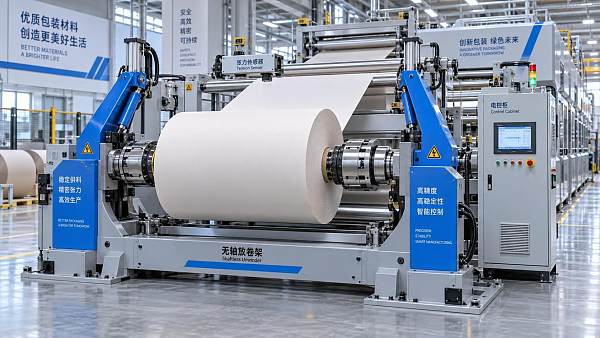
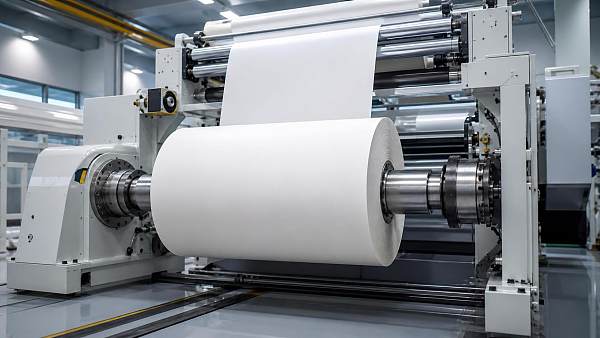
A shaftless rewinder uses chucking units or expandable mechanical interfaces to support the roll core from both sides, rather than relying on a full-length winding shaft. This arrangement can reduce manual shaft handling and make roll changes more convenient, especially where roll widths, diameters, or weights vary. It can also be a strong fit for converting lines that need frequent changes and better access around the winding section.
However, “shaftless” is not a universal answer to every winding problem. The equipment must suit the finished roll specification and the behavior of the web being processed. An evaluator should define the required output roll before comparing suppliers.
- Minimum and maximum web width
- Finished roll diameter and expected roll weight
- Core inside diameter, core material, and allowable core tolerance
- Substrate range, including paper, film, coated stock, linerboard, foil, or laminated materials
- Target roll hardness, edge profile, and winding appearance
- Whether rolls are for internal use, customer shipment, or a sensitive downstream process
- Frequency of job changes and the proportion of short-run work
These details reveal whether the proposed chuck design, arm construction, drive capacity, and tension-control range are truly appropriate. A system designed around a narrow product mix may struggle when a plant begins processing lighter papers, wider webs, or more demanding laminated structures. For packaging producers, a roll that looks acceptable at the rewinder but telescopes or loosens during transport is still a poor result.
Core engagement deserves particular attention. The chucks should grip the core securely without crushing it, slipping under torque, or creating excessive point loading. If the operation uses multiple core grades or recycled-paper cores with variable strength, a trial should include those real cores. A demonstration using only ideal, new cores can hide an important operating risk.
Web tension is where productivity and waste often meet
Many investment discussions focus on speed, but controlled tension is normally the more meaningful measure of winding capability. The rewinder must manage tension from the start of the roll through the increasing roll diameter, while accommodating acceleration, deceleration, splice passages, and normal variation in material properties.
For paper-based packaging materials, tension that is too high may stretch the web, damage coatings, deform lightweight cores, or create hard rolls that later cause converting difficulties. Tension that is too low can produce loose layers, air entrapment, wrinkles, and uneven edges. Filmic or laminated materials may introduce additional concerns, including gauge variation, static electricity, curl, and sensitivity to heat or pressure.
Ask how the shaftless rewinder controls winding tension in practice. Is tension managed through a closed-loop feedback system? Which sensors are used, and where are they positioned? Can operators establish repeatable job recipes? Does the machine provide taper-tension control as roll diameter grows? Is a lay-on roller, rider roller, nip arrangement, or web spreader needed for the intended materials?
The answers should be connected to the plant’s actual quality criteria. “Stable tension” is too vague for an investment decision. A stronger requirement states the materials to be tested, the operating speeds, the acceptable roll characteristics, and the conditions under which the line must remain stable. This gives engineering, production, and finance teams a common basis for comparing proposals.
Do not overlook acceleration and stopping behavior
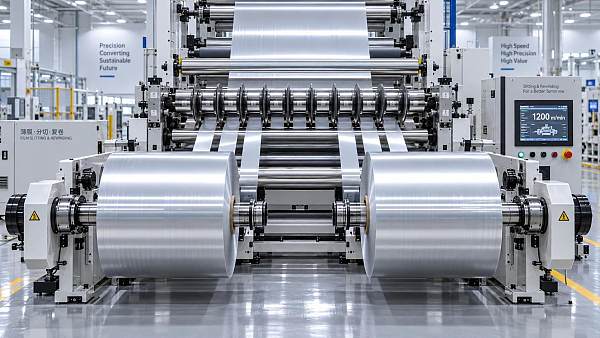
Web breaks and roll defects are not always caused at steady-state speed. Rapid starts, emergency stops, deceleration before a splice, and speed changes between process sections can expose weaknesses in a winding system. The drive and control architecture should synchronize effectively with upstream equipment such as slitter rewinders, flexographic presses, coating stations, laminators, or inspection modules.
Review the available torque across the roll build, not only the maximum motor rating. A machine may run well at a moderate diameter but lose control as the roll approaches its maximum weight. Likewise, a large motor alone does not guarantee good winding; mechanical rigidity, feedback quality, tuning, and roller design all play a part.
Rated speed should be tested against usable production speed
A supplier’s rated speed is a reference point, not a complete business case. Usable production speed depends on substrate behavior, unwind quality, slitting conditions, roll diameter, changeover time, operator confidence, and the capability of linked equipment. In a packaging plant handling frequent order changes, the line’s effective output may depend more on setup discipline and restart stability than on its top speed.
During supplier discussions, request a clear separation between maximum mechanical speed and the expected operating window for each material class. Ask what conditions limit speed: roll weight, web width, core size, adhesive residue, print coverage, coating level, or thickness variation. This conversation can be more revealing than a broad claim of “high-speed performance.”
For business evaluators, the useful question is: How many saleable rolls can the operation produce per shift with normal job changes and normal material variation? That question naturally brings together throughput, downtime, waste, and labor.
Evaluate mechanical design for daily access, not only installation day
Shaftless rewinders are often selected partly because they can simplify roll handling. The benefit is real only when the loading and unloading sequence is practical within the available plant space. Consider where finished rolls will be removed, whether a hoist, roll cart, lift table, or automated handling system is required, and how safely operators can reach chuck controls, knives, guides, and web paths.
The frame, swing arms, bearing arrangement, and chuck positioning system should be assessed in relation to maximum roll mass and repeated operating cycles. Excessive deflection can affect roll alignment. Inadequate clearance can make threading awkward. If the machine will run printed webs, the layout should also support inspection and cleaning without forcing operators into difficult positions.
Maintenance access is just as important. A design that is easy to service will usually reduce the chance that small issues become extended stoppages. Review access to bearings, gearboxes, motors, sensors, pneumatic components, electrical cabinets, and lubrication points. Ask which parts are considered wear items, how frequently they are normally inspected, and whether replacements are standard components or proprietary items with long lead times.
Safety should be examined as a workflow issue
Roll handling is a high-consequence activity. A heavy finished roll, rotating chucks, moving arms, and an exposed web path require safeguards that operators can work with rather than around. Safety evaluation should cover guarding, interlocked doors, emergency-stop locations, controlled movement during setup, roll retention, and procedures for clearing jams or removing damaged material.
A useful review also considers the human side of the workflow. Can one trained operator complete a changeover safely, or does the process require two people? Is visibility sufficient when aligning the core? Are controls positioned so that an operator can confirm the roll is secure before rotation begins? Does the interface provide clear fault messages rather than generic alarms?
Where automated roll handling is planned, responsibility at the handoff points must be unambiguous. The rewinder, conveyor, robotic handling cell, and plant safety system should be treated as one operating zone. This is particularly relevant for packaging factories pursuing end-of-line automation and reduced manual material movement.
Check whether the controls fit the wider production system
Modern converting and packaging operations increasingly depend on production data, recipe management, traceability, and faster job transitions. A shaftless rewinder does not need to be a standalone island. Its controls should be reviewed for integration with the existing line and with the plant’s longer-term digital plans.
Relevant questions include whether the system can store repeatable job settings, communicate running status and alarms to supervisory systems, and provide meaningful production data. Depending on the application, useful data may include roll length, diameter, running speed, tension trends, break events, downtime causes, energy consumption, and maintenance alerts.
For printed packaging, compatibility with web inspection and marking systems may also be important. If a defect is identified upstream, the production team may need to trace its location within a finished roll. The value is not simply more data; it is faster investigation when a quality issue appears and better control of rework or customer risk.
Automation only pays when the exceptions are understood
Automatic core positioning, recipe recall, web guiding, roll transfer, and tension adjustment can reduce routine effort. Yet evaluators should ask how the machine behaves when conditions are not routine: an out-of-round core, an imperfect splice, a wrinkled web, a sensor fault, or a material that differs from its specification. Operators need a clear and safe way to recover the line without relying on specialist intervention for every exception.
Compare lifecycle cost through a realistic operating model
The purchase price of shaftless rewinders is visible at the start of the project. The less visible costs emerge over years of operation: power use, compressed air demand, consumables, preventive maintenance, spare parts, training, roll damage, setup time, and lost output during failures.
A practical total-cost review does not require uncertain promises or overly complex calculations. It should identify the main cost drivers in the intended application and compare them consistently across suppliers.
Be careful with payback models that assume every minute saved becomes additional sales. In some plants, recovered time creates capacity; in others, it improves schedule resilience, lowers overtime, or makes short-run orders easier to manage. These outcomes all have value, but they should be described honestly.
Use acceptance testing to turn claims into evidence
Before issuing a final order, define a factory acceptance test and, where appropriate, a site acceptance test. The test plan should reflect the difficult jobs, not just the easiest material. Include representative web widths, core types, roll diameters, production speeds, and changeover scenarios. If the line will process lightweight paper, printed board, coated substrates, or materials with variable stiffness, those conditions should be visible in the evaluation.
Acceptance criteria may cover roll build quality, edge alignment, tension consistency, maximum operating speed under stated conditions, changeover sequence, safety functions, alarm response, and the availability of operating documentation. The goal is not to create an adversarial supplier relationship. It is to ensure that everyone shares the same definition of a successful installation.
Training should be part of this discussion. A rewinder’s technical capability is only fully realized when operators understand tension settings, recipe management, routine inspection, and the early signs of poor winding. For many buyers, a structured handover process is more valuable than an impressive demonstration that cannot be reproduced after installation.
A balanced investment decision
The strongest shaftless rewinder investment is usually the one that fits the plant’s materials, order profile, labor model, and quality expectations without adding unnecessary complexity. It should make roll handling safer, support repeatable winding, and integrate sensibly with upstream and downstream processes. It should also remain serviceable when production schedules are demanding and experienced operators are not always available.
For commercial print and corrugated packaging decision-makers, the right evaluation moves from broad equipment claims to a disciplined review of web behavior, roll quality, automation needs, maintenance realities, and operating cost. When those factors are examined together, shaftless rewinders can be assessed not as an isolated purchase, but as a practical investment in more stable converting performance and more dependable packaging production.
Related News
 What to Check Before Selecting a Sheet Stackers SupplierChoose a sheet stackers supplier with confidence. Discover key checks for throughput, stack quality, automation, layout, service support, and long-term operating value.Corrugated Thermodynamics Architect
 What Determines Rewinders Price in High-Speed Converting LinesRewinders price depends on speed, tension control, winding method, automation, and integration. Discover what drives cost and how to specify a high-speed converting line.Corrugated Thermodynamics Architect
 How to Evaluate an Unwind Stands Factory for Reliable SupplyUnwind stands factory evaluation guide: compare engineering, tension control, testing, delivery capability, and after-sales support for reliable web handling.Corrugated Thermodynamics Architect
 Why Woven Pressure Belts Slip and How to Restore Reliable Web TensionWoven pressure belts slipping? Discover practical causes, proven inspection steps, and recovery methods to restore reliable web tension, board quality, and corrugator uptime.Corrugated Thermodynamics Architect
 What to Evaluate Before Investing in Shaftless RewindersShaftless rewinders: evaluate tension control, roll quality, safety, integration, and lifecycle costs to choose a solution that improves converting productivity.Corrugated Thermodynamics Architect
 Are Shaftless Rewinders Worth the Cost in High Speed Converting LinesShaftless rewinders can boost high-speed converting lines by cutting roll change time, reducing waste, and improving stability. Learn when the premium cost truly pays off.Corrugated Thermodynamics Architect