What to Check Before Selecting a Sheet Stackers Supplier
Selecting a sheet stackers supplier is rarely just a matter of choosing a machine at the end of a production line. For a corrugated sheet plant, carton converter, or commercial printing operation, the stacker influences how smoothly finished sheets move into the next process, how much manual intervention is required, and how often production loses rhythm at the delivery end.
This becomes especially important when upstream equipment is operating at high speed. A corrugator, flexographic press, die-cutter, or sheet-fed converting line may have strong output capacity, but poorly controlled stacking can create uneven piles, damaged edges, sheet misalignment, blocked conveyors, or labor-intensive rehandling. The right sheet stackers supplier should therefore be assessed as a production partner—not simply as a source of delivery equipment.
For business evaluators, the most useful question is not “Which supplier offers the lowest quotation?” It is “Which supplier can provide a stacking system that fits our real production conditions, labor model, maintenance capability, and future capacity plan?”
Start with the sheets, not the supplier brochure
Supplier presentations often focus on maximum speed, automation options, and machine construction. Those details matter, but they should come after a clear understanding of the sheets that will actually pass through the system.
A stacker designed for uniform corrugated sheets may behave differently when handling lightweight board, warped sheets, coated folding carton stock, digitally printed substrates, or short-run jobs with frequent size changes. Sheet dimensions, thickness range, moisture condition, flute type, print surface, curl tendency, and edge quality all affect stacking performance.
Before approaching a supplier, prepare a practical sheet profile that includes:
- Minimum and maximum sheet length and width
- Typical and extreme board grades or paper weights
- Maximum stack height and preferred pallet format
- Expected line speed under normal production, not only peak speed
- Frequency of job changes and mixed-order production
- Whether sheets arrive printed, die-cut, scored, coated, or unprocessed
- Known issues such as curl, bow, dust, static, warped board, or crushed edges
This preparation protects the purchasing team from vague promises. A supplier that asks detailed questions about material behavior and order mix is generally more useful than one that responds with a standard configuration before understanding the application.
Check speed compatibility across the complete line
“High speed” is one of the most misunderstood claims in end-of-line equipment procurement. A sheet stacker may be rated for a particular speed under stable conditions, but that rating alone does not show whether it can maintain orderly stacks during frequent changes in sheet size, board quality, or production flow.
Evaluate the stacker against the output characteristics of the upstream line. On a corrugated board line, for example, cross-cutting output, slitting patterns, reject handling, and order changeover behavior can create variable sheet flow. A stacker must not merely receive sheets quickly; it must decelerate, align, count, separate, and discharge them without becoming the bottleneck.
Ask the supplier to explain how the machine performs in the situations that disrupt daily output:
- What happens when production speed changes rapidly?
- How does the system manage different sheet lengths within consecutive orders?
- Can it maintain stack squareness when board quality varies?
- How are partial stacks, rejected sheets, and order separation handled?
- Does the machine require manual adjustment during common format changes?
- What is the recovery process after a jam or unplanned line stop?
These questions move the discussion beyond nameplate capacity. In many plants, the cost of unstable flow is not visible in a purchase order, but it appears later as overtime, lower usable output, additional forklift movement, and operators constantly correcting stacks by hand.
Stack quality is a commercial issue, not only an operational detail
A neat stack may seem like a simple housekeeping outcome. In reality, stack quality affects downstream converting accuracy, warehouse efficiency, material protection, and shipment readiness. Misaligned stacks can lead to edge damage, sheet collapse, inaccurate feeding into later machines, and more waste before a carton or display package ever reaches the customer.
For printed sheets, especially those intended for premium retail packaging, clean handling also protects the visual value created earlier in the process. Scuffing, marking, or excessive pressure on printed surfaces can turn an otherwise acceptable production run into a quality discussion with a brand buyer.
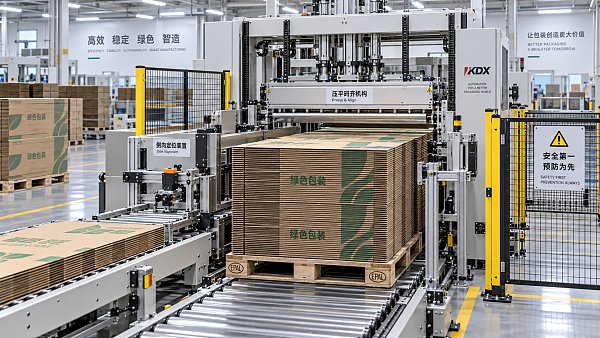
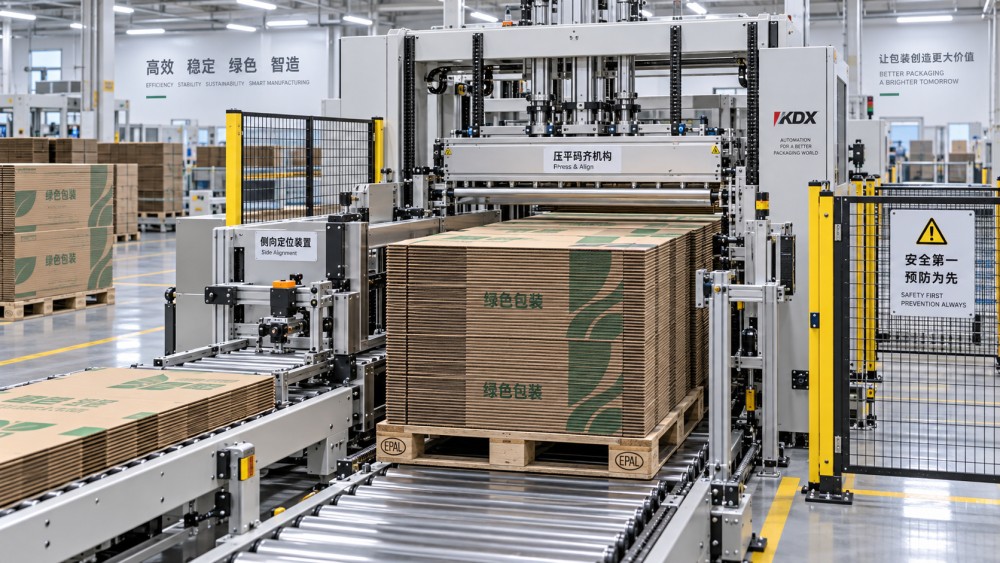
When comparing a sheet stackers supplier, look carefully at the design features that govern stack formation. These may include side alignment, front-stop control, stack compression, sheet braking, air-management systems, joggers, delivery conveyors, pallet handling, and automatic stack discharge. The right combination depends on the substrate and workflow; more features do not automatically mean a better solution.
What matters is whether the supplier can explain why a specific arrangement is appropriate for your material. A manufacturer handling heavy double-wall corrugated board has different priorities from a folding-carton plant running printed SBS or coated board. If a supplier recommends the same machine layout for every environment, the evaluation should go deeper.
Examine automation as a workflow decision
Automation is often presented as a direct route to lower labor cost. It can be, but the business case is stronger when automation removes a genuine workflow constraint rather than adding complexity to an already manageable process.
Consider where human involvement currently occurs. Operators may be manually straightening stacks, placing pallets, separating orders, moving finished loads, applying labels, or coordinating with forklifts. Some tasks are repetitive and physically demanding; others require judgment that may still be valuable in a variable production environment.
A suitable stacker system may include automatic pallet supply, stack discharge, conveyor transfer, barcode-based order identification, stack counting, and links to palletizing or warehouse movement. In a more integrated packaging plant, it may also exchange status information with production scheduling software, inspection systems, or digital production management tools.
However, every automated function should be reviewed against three questions:
- Does it remove a recurring source of delay, handling damage, or labor dependency?
- Can the plant maintain it without waiting excessively for specialist support?
- Will it remain useful if order sizes, pallet formats, or factory layout change?
For plants facing short runs and frequent job changes, fast and reliable changeover may be more valuable than maximum automation. In high-volume, repeatable production, automated discharge and pallet handling may have a clearer operational return. The supplier should be able to model the logic of both environments instead of treating automation as an all-or-nothing upgrade.
Do not separate the stacker from plant layout
A sheet stacker can look compact in a proposal drawing yet become difficult to operate once safety zones, pallet access, maintenance clearance, operator paths, and forklift circulation are considered. Layout errors are expensive because they are discovered after delivery, when relocation may require new conveyors, electrical changes, civil work, or compromised workflow.
Provide suppliers with an accurate layout of the available area, including columns, doors, overhead obstructions, floor loading limits, existing conveyors, electrical supply, compressed air, and material traffic routes. If the stacker will receive output from a corrugator or converting machine, confirm the elevation, transfer direction, and space needed for safe sheet flow.
The review should also include less obvious operational details. Can an operator access controls without crossing a forklift lane? Is there room to remove a worn belt, replace a sensor, or service moving components? Where will rejected sheets go? Can finished stacks be removed without interrupting the next stack cycle?
A capable sheet stackers supplier will ask for these details early and may identify layout compromises before they become installation problems. That early engineering dialogue is often more valuable than a polished machine catalog.
Service response and spare parts deserve the same scrutiny as machine specifications
For a business evaluator, downtime risk is part of the acquisition cost. Even a mechanically sound stacker depends on sensors, drives, controls, pneumatic components, belts, bearings, and software settings. When a problem occurs, production teams need practical support quickly, not a generic troubleshooting document.
Ask suppliers to describe their service model in concrete terms. Is technical support available remotely? Are local or regional service engineers available? Which wear parts are recommended for on-site stock? How are software updates managed? Can plant technicians receive commissioning and maintenance training?
It is also worth checking the sourcing strategy for major components. Standard, widely supported electrical and pneumatic parts can simplify long-term maintenance, provided they are properly matched to the system. Proprietary components are not automatically a concern, but the supplier should be transparent about lead times, replacement procedures, and inventory availability.
Maintenance should be assessed from the operator’s point of view. A system that requires frequent difficult adjustments, complex calibration, or hard-to-reach service points may create hidden labor cost even if its purchase price is attractive. Request a preventive maintenance schedule and use it to estimate the real burden on your maintenance department.
Compare quotations on total operating value
Two quotations can appear similar while covering very different scopes. One may include installation supervision, commissioning, operator training, safety guarding, integration controls, spare parts, documentation, and acceptance testing. Another may quote only the base equipment. A lower initial figure can become less attractive once these elements are added later.
Create a comparison sheet that separates capital cost from operating exposure. Useful categories include:
- Base machine configuration and stated capacity range
- Format-change features and automation options
- Conveyor, pallet, and downstream integration scope
- Safety systems and compliance responsibilities
- Installation, commissioning, and acceptance conditions
- Training for operators, electricians, and maintenance teams
- Recommended spare-parts package and consumable items
- Expected energy, air, and routine maintenance requirements
- Remote support, warranty coverage, and service travel terms
The goal is not to force every supplier into an identical format. It is to make exclusions visible. Procurement decisions become more defensible when stakeholders can see why one offer has a higher cost and whether that difference reduces future operational risk.
Request evidence from comparable applications
References are most useful when they resemble your production environment. A supplier may have extensive experience in paper handling, yet a reference from a low-speed sheet operation may not answer questions relevant to a high-output corrugated line or a highly automated print finishing department.
Ask for examples that are comparable in material type, sheet size, speed range, and degree of automation. During reference discussions, focus less on whether the buyer is “satisfied” and more on practical lessons: How stable is the stack quality? How often are adjustments needed? What caused early issues? Was commissioning smooth? How responsive was support after installation?
If possible, arrange a factory visit or material trial using representative sheets. A demonstration should include ordinary production conditions, not only ideal samples. Different board grades, smaller formats, maximum formats, and transition conditions may reveal more than a short run at a single steady speed.
Watch for warning signs during supplier evaluation
Certain signals do not automatically disqualify a supplier, but they should prompt further investigation. These include unclear definitions of capacity, limited discussion of material variability, missing integration drawings, vague service commitments, and quotations that exclude essential commissioning details.
Another concern is an overly simple return-on-investment claim. Labor savings may be real, but they should be tied to actual shift patterns, current handling steps, staffing constraints, and production volume. A stacker is more likely to create value through a combination of smoother flow, reduced handling damage, safer work, better stack consistency, and less dependence on manual correction.
Be cautious when a supplier focuses only on mechanical specifications while avoiding control architecture, spare-part access, training, or long-term support. Modern packaging plants increasingly depend on connected equipment, production data, inspection signals, and traceability. The stacker does not need to be a complex digital platform, but it should fit sensibly into the plant’s wider operating model.
A final selection framework for business evaluators
The best sheet stackers supplier is usually not the one with the most impressive headline speed or the lowest machine price. It is the supplier that demonstrates a clear understanding of sheet behavior, line dynamics, plant layout, operator needs, and ownership cost.
A strong final decision can be made by weighting suppliers across five areas: application fit, stack quality and throughput stability, integration capability, service readiness, and commercial clarity. Involve production, maintenance, quality, safety, and finance teams before selection. Each group sees a different risk, and the most expensive surprises often emerge where those perspectives were not connected.
In corrugated packaging and commercial printing, end-of-line performance is part of the product’s journey, not an afterthought. Selecting the right supplier can help transform stacking from a recurring source of interruption into a dependable link between production, converting, storage, and delivery.
Related News
 What to Check Before Selecting a Sheet Stackers SupplierChoose a sheet stackers supplier with confidence. Discover key checks for throughput, stack quality, automation, layout, service support, and long-term operating value.Corrugated Thermodynamics Architect
 What Determines Rewinders Price in High-Speed Converting LinesRewinders price depends on speed, tension control, winding method, automation, and integration. Discover what drives cost and how to specify a high-speed converting line.Corrugated Thermodynamics Architect
 How to Evaluate an Unwind Stands Factory for Reliable SupplyUnwind stands factory evaluation guide: compare engineering, tension control, testing, delivery capability, and after-sales support for reliable web handling.Corrugated Thermodynamics Architect
 Why Woven Pressure Belts Slip and How to Restore Reliable Web TensionWoven pressure belts slipping? Discover practical causes, proven inspection steps, and recovery methods to restore reliable web tension, board quality, and corrugator uptime.Corrugated Thermodynamics Architect
 What to Evaluate Before Investing in Shaftless RewindersShaftless rewinders: evaluate tension control, roll quality, safety, integration, and lifecycle costs to choose a solution that improves converting productivity.Corrugated Thermodynamics Architect
 Are Shaftless Rewinders Worth the Cost in High Speed Converting LinesShaftless rewinders can boost high-speed converting lines by cutting roll change time, reducing waste, and improving stability. Learn when the premium cost truly pays off.Corrugated Thermodynamics Architect