What Determines Rewinders Price in High-Speed Converting Lines
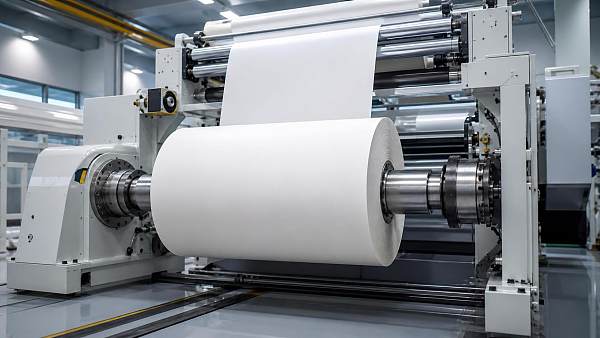
Rewinders price in a high-speed converting line is shaped by the work the machine must perform at full production speed, not simply by its frame size or stated maximum speed. Two rewinders with similar dimensions can sit in very different cost ranges when one must produce saleable, tightly wound rolls from sensitive film at frequent job changes while the other handles a stable paper grade with relaxed roll-quality requirements.
The quoted machine price should therefore be read as the cost of a defined operating envelope: web width, roll diameter, material range, winding method, automation scope, inspection needs, safety configuration, and integration responsibility. A low initial quotation can become expensive when it excludes the controls, handling equipment, or commissioning work required to reach the intended output.
Speed capability is a system requirement
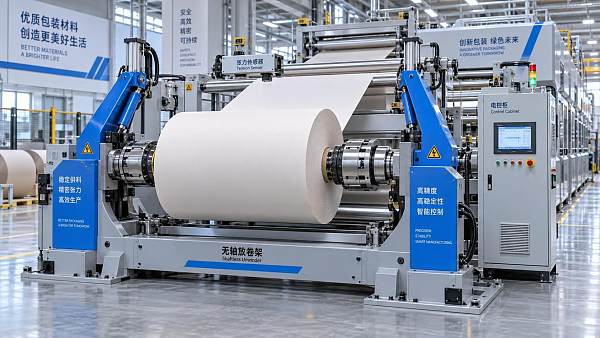
Maximum speed affects more than the drive rating. At higher line speeds, the unwinder, web guide, tension zones, splice handling, slitting section, rewinding shafts, and finished-roll discharge must respond together. A rewinder that is stable at a moderate speed may show telescoping, loose edges, wrinkle formation, or tension spikes when acceleration and deceleration become more demanding.
Higher-speed machines commonly require stronger mechanical construction, larger or more responsive motors, regenerative drive arrangements, precision encoders, and a control system capable of coordinating several axes. The cost also rises when the line must maintain product quality during speed changes rather than only sustain a peak speed under ideal conditions.
Quoted speed needs careful interpretation. A supplier may state a mechanical maximum, while the practical speed is lower for thin extensible film, narrow slit widths, pressure-sensitive materials, coated paper, or rolls with strict hardness limits. The meaningful comparison is the speed at which the specified material can be slit and rewound repeatedly with acceptable roll build, trim quality, and waste.
Web tension control often separates basic and production-grade machines
Tension is the link between material behavior and rewind quality. It affects roll density, slit-edge stability, registration through downstream processes, and the chance of breaks during a run. The required control architecture depends on whether the web is forgiving kraft paper, moisture-sensitive paperboard, aluminum foil, laminated film, stretchable polyethylene, nonwoven material, or a multilayer substrate with variable friction.
A basic system may use a simple braking arrangement and limited feedback. A more capable design can include load cells, dancer rolls, closed-loop control, independent winding zones, diameter calculation, and programmed taper-tension profiles. These components add cost, but their value is most visible where roll diameter changes quickly, material thickness varies, or the finished roll must unwind smoothly on a printing, coating, laminating, pouching, or packaging line.
Taper tension deserves particular attention during comparison. Reducing winding tension as roll diameter grows can prevent an excessively hard core or crushed lower layers. Yet the correct taper profile differs by substrate and roll construction. A system priced for basic constant-tension work may not have the sensing, recipe capacity, or drive response needed to control winding density across a broader material portfolio.
Winding method changes the machine specification
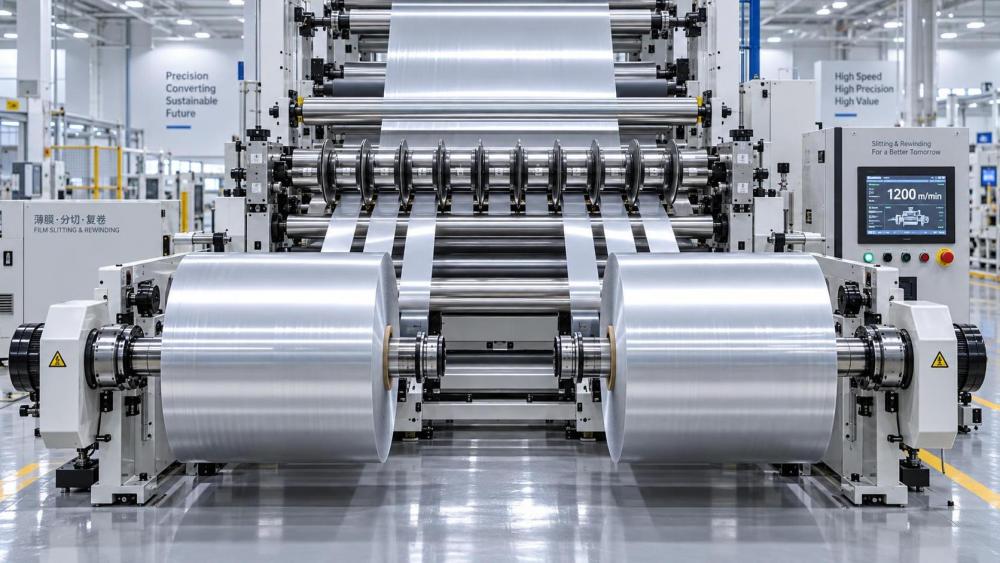
Center winding, surface winding, center-surface winding, and turret rewinding solve different production problems. A center-wound rewinder applies torque through the core and can provide precise tension control, but core quality and shaft design become important. Surface winding uses a contact roll to influence roll build and is often selected where roll hardness and outer-layer handling require close control. Combined systems add flexibility, along with mechanical and control complexity.
The roll itself defines much of the required hardware. Larger finished diameters increase load capacity, guarding dimensions, shaft stiffness, and discharge requirements. Heavy rolls may require hydraulic lifting, rail-mounted handling, hoists, automatic core loading, or automated roll removal. These are not minor accessories when the rewinder is installed in a continuous high-speed line; manual handling can limit throughput even when the rewind section has sufficient speed.
Core diameter range also affects price. Supporting one common core size is straightforward. Frequent use of several core diameters, expandable shafts, differential shafts, narrow slit rolls, or coreless winding calls for additional tooling and more refined clamping or torque distribution. Differential winding is particularly relevant when multiple slit rolls build at different effective diameters. Without independent torque compensation, some rolls can become loose while others are over-tightened.
Slitting configuration is part of the rewinders price
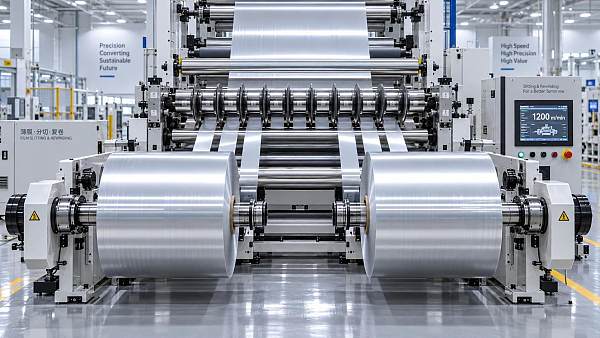
A rewinder is often priced as a combined slitting and winding unit. The choice between razor slitting, shear slitting, crush cutting, or specialized blade systems affects the quoted scope because each arrangement has different knife holders, positioning mechanisms, dust behavior, and maintenance demands.
Shear slitting generally requires accurate upper and lower knife engagement, stable web paths, and precise lateral positioning. It is suited to applications where cut quality matters, but the arrangement is more elaborate than a basic fixed-knife setup. Razor slitting can be effective for selected films and lighter materials, although blade wear, web tension, and cutting angle become more sensitive. Crush cutting may fit certain paper, nonwoven, or adhesive constructions, but it can create edge deformation on materials that require a clean, controlled cut.
Automatic knife positioning increases purchase cost because it adds servo axes, positioning references, software, safety measures, and an interface for entering slit patterns. Its commercial value depends on order frequency and setup complexity. On a line running long campaigns at one slit pattern, manual positioning may be adequate. On short-run work with many widths and recurring jobs, the time spent setting knives and verifying positions can outweigh the apparent saving of a simpler configuration.
Material range is more expensive than a single-material promise
Suppliers can quote attractively when the material specification is narrow and stable. Price rises when the machine must handle substantial variation in thickness, coefficient of friction, stiffness, coating, moisture content, curl, static charge, or width. A rewinder intended for paper may need different rollers, nip design, dust extraction, and braking behavior than a unit that processes thin metallized film. Adhesive-coated materials introduce another set of concerns, including roller surface selection, web release behavior, and cleaning access.
Static control is a useful example. It can appear as an optional line item, yet static charge may attract dust, disturb web tracking, cause material to cling to rollers, or complicate roll transfer. Where films, labels, or lightweight substrates are involved, ionizing equipment and suitable grounding may be essential to stable operation. The same applies to web-cleaning devices, edge trimming, dust extraction, and anti-wrap rollers. Their necessity should be judged from the substrate and defect tolerance rather than treated as generic add-ons.
Material samples alone do not define the duty. The quotation basis should state the widest and narrowest web, minimum and maximum thickness, roll weight, parent-roll condition, core type, coating side, splice type, and expected defect level. A machine that handles a clean trial roll may behave differently when supplied with telescoped parent rolls, uneven tension from an upstream coater, or material with inconsistent caliper.
Automation cost should be tied to a bottleneck
Automation ranges from a simple length counter to a turret rewinder with automatic roll change, automatic core insertion, glue or tape application, cut-off sequence control, labeling, discharge conveyors, and data exchange with upstream equipment. Each function increases the capital cost and introduces integration and maintenance requirements. The right scope depends on whether the bottleneck is roll change time, manual handling, identification accuracy, or line synchronization.
A turret arrangement is often evaluated for its ability to reduce stopped time between rolls. That benefit is real only when the upstream process can continue through the transfer and the downstream logistics can clear finished rolls without delay. If roll removal remains manual, or if the line must stop for quality inspection and splice verification, a high-end turret may not deliver its expected production advantage.
Recipe management is another feature that needs a practical definition. Saving tension settings, slit patterns, roll lengths, acceleration profiles, and material-specific parameters can reduce setup variation. However, stored recipes have limited value unless the sensors, actuators, and mechanical references are repeatable. A price comparison should distinguish between an interface that stores settings and an engineered system that reliably returns the machine to those settings.
Quality controls can cost less than downstream rejects
Some rewinders require only basic length measurement and visual observation. Others need web inspection, print-mark detection, splice detection, defect mapping, roll hardness measurement, edge alignment monitoring, or barcode and label verification. These functions vary widely in price because the hardware, software, lighting, data storage, and reject logic vary widely.
Inspection scope should follow the cost of a defective roll in its next process. A roll used internally for a tolerant operation may need a different level of control than a roll shipped to a converter where print defects, contamination, or length errors cause production disruption. It is also important to define what the system does after a defect is detected. Detection without marking, reporting, or controlled stopping may offer limited operational value.
Scope gaps distort an apparently low machine price
The rewinder itself is only one portion of the installed system. Freight, export packing, lifting plans, site access, foundations, electrical supply, compressed air, extraction, guarding, installation labor, commissioning, spare parts, and acceptance testing may be priced separately. A high-speed line also needs clear interface responsibility with the preceding and following equipment.
Electrical and controls scope is a frequent source of misunderstanding. The quotation should identify cabinet location, cable supply, field wiring, power requirements, control protocol, emergency-stop architecture, and responsibility for line-level interlocks. A machine can be mechanically complete while still requiring substantial site engineering before it can run safely with the rest of the converting line.
Acceptance criteria should be connected to material and output, not expressed only as a general statement that the equipment will operate. Useful criteria describe the agreed substrate, web width, slit pattern, roll diameter, length accuracy expectation, roll appearance, speed conditions, and testing duration. This gives both sides a common basis for factory trials and site commissioning.
Service design belongs in the capital comparison
Service cost is influenced by component selection, remote diagnostic access, documentation quality, availability of wear parts, and the time required to reach knives, rollers, shafts, sensors, and pneumatic elements. A compact layout may conserve floor space but create lengthy maintenance work if routine components are difficult to access.
Consumables also differ by configuration. Blades, shear knives, contact rollers, shaft chucks, brake elements, filters, belts, and web-guide sensors have different replacement patterns. The relevant question is not whether a rewinder has consumable parts; it is whether their condition can be monitored, changed predictably, and sourced without extended production disruption.
A sound comparison begins with a common operating specification and then separates the quotation into base machine, material-specific features, automation, quality controls, site integration, and service items. That structure exposes where rewinders price reflects genuine production capability and where it reflects omissions that will reappear as installation cost, lost time, material waste, or unstable finished rolls.
Related News
 What to Check Before Selecting a Sheet Stackers SupplierChoose a sheet stackers supplier with confidence. Discover key checks for throughput, stack quality, automation, layout, service support, and long-term operating value.Corrugated Thermodynamics Architect
 What Determines Rewinders Price in High-Speed Converting LinesRewinders price depends on speed, tension control, winding method, automation, and integration. Discover what drives cost and how to specify a high-speed converting line.Corrugated Thermodynamics Architect
 How to Evaluate an Unwind Stands Factory for Reliable SupplyUnwind stands factory evaluation guide: compare engineering, tension control, testing, delivery capability, and after-sales support for reliable web handling.Corrugated Thermodynamics Architect
 Why Woven Pressure Belts Slip and How to Restore Reliable Web TensionWoven pressure belts slipping? Discover practical causes, proven inspection steps, and recovery methods to restore reliable web tension, board quality, and corrugator uptime.Corrugated Thermodynamics Architect
 What to Evaluate Before Investing in Shaftless RewindersShaftless rewinders: evaluate tension control, roll quality, safety, integration, and lifecycle costs to choose a solution that improves converting productivity.Corrugated Thermodynamics Architect
 Are Shaftless Rewinders Worth the Cost in High Speed Converting LinesShaftless rewinders can boost high-speed converting lines by cutting roll change time, reducing waste, and improving stability. Learn when the premium cost truly pays off.Corrugated Thermodynamics Architect