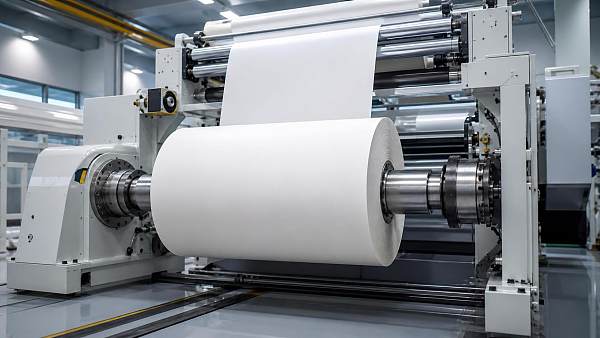
How to Evaluate an Unwind Stands Factory for Reliable Supply
An unwind stand can look like a simple upstream machine: hold the roll, feed the web, and keep production moving. In practice, it sets the conditions for everything that follows. A poorly matched stand can create unstable tension, web wander, wrinkles, registration variation, splice interruptions, and unnecessary waste long before the material reaches a press, laminator, slitter, or corrugating process.
That is why evaluating an unwind stands factory should begin with production fit, not with a quotation comparison. The supplier must be able to build equipment around the actual roll, substrate, speed range, control architecture, operator workflow, and maintenance capacity of the line. Reliable supply means more than receiving a machine on schedule. It means receiving equipment that can be installed, commissioned, supported, and kept productive under real operating conditions.
Start With the Application, Not the Unwind Stand Catalog
Before reviewing factories, define what the unwind system must do in the intended line. “Paper roll handling” is not a sufficiently useful specification. Kraft linerboard, medium paper, coated paper, film, foil, and laminated web materials behave differently under tension. A stand that runs ordinary paper reliably may not provide enough control for a lightweight, extensible, moisture-sensitive, or highly printed web.
The operating requirement should describe the full job range rather than one ideal product. Include the smallest and largest roll diameters, maximum roll weight, core sizes, web widths, material grades, anticipated production speed, acceleration and deceleration patterns, and how often the line changes orders. Also identify whether the machine will run continuously, handle frequent roll changes, support splicing, or feed a process where registration and web stability are especially sensitive.
For a corrugated board line, unwind performance influences paper tension entering preheaters and the single facer. Unstable control can contribute to web breaks, poor tracking, and inconsistent conditions downstream. In flexographic or digital converting lines, tension variation can affect print registration, die-cut accuracy, barcode placement, and finished-packaging consistency. The same basic frame design may be used in several markets, but the control and handling requirements should not be assumed to be identical.
A capable supplier will ask for these conditions early. If a factory gives a confident recommendation without reviewing material data, roll geometry, line layout, and interface requirements, the proposal may be based on a generic configuration rather than the actual application.
Assess Engineering Capability Through the Proposed Solution
Factory size and polished sales materials are weak indicators of engineering depth. The more useful question is whether the supplier can explain why each major design decision fits the line.
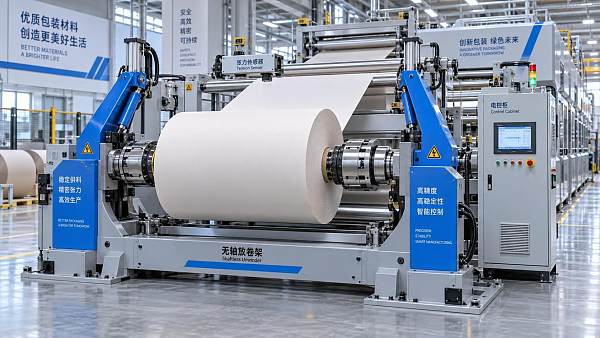
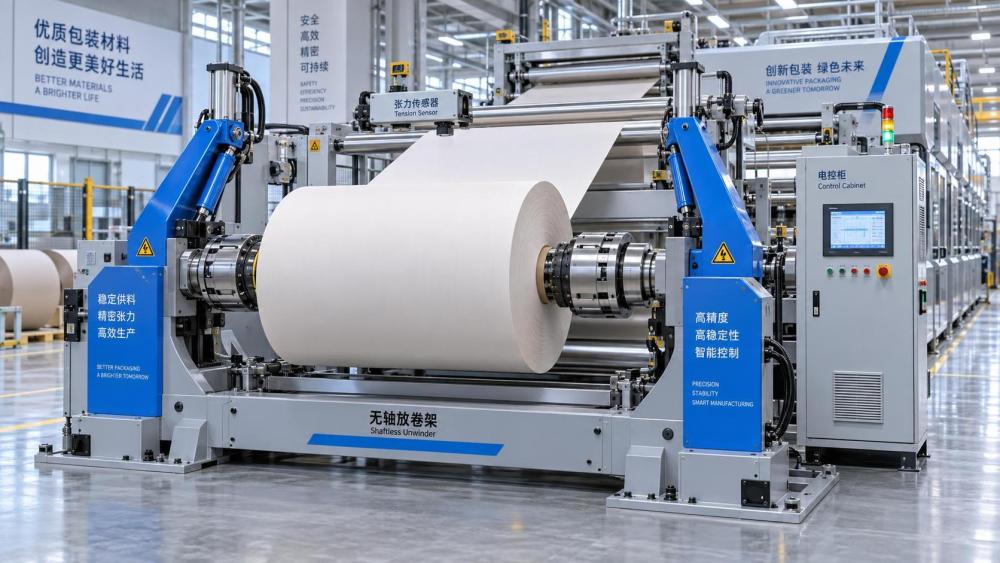
Review the proposed unwind structure first. The frame must support the required roll load without excessive deflection or vibration. Shafted and shaftless designs each have valid uses. Shafted systems can be suitable where roll formats are standardized and changeovers are manageable. Shaftless chucks can simplify loading of larger rolls and reduce handling effort, but their expansion, centering, and gripping method must match the core condition and roll weight.
Pay attention to the parts that transfer force into the roll: chucks, shafts, arms, bearings, brakes, gearboxes, and lift mechanisms. These are not minor component choices. Poor concentricity, insufficient gripping force, or unsuitable bearing selection can lead to roll movement, uneven tension, premature wear, and operator safety concerns. Ask the factory to describe how it handles worn or damaged cores, uneven roll build, and the maximum practical load during routine use, not only under ideal conditions.
The supplier should also address web path design. The position of idler rollers, dancer rollers, load cells, web guides, and splice tables affects response quality and accessibility. A compact layout is helpful only if operators can safely thread material, remove waste, inspect components, and perform maintenance without creating repeated downtime.
Automation Must Match the Process, Not Just the Specification Sheet
Unwind systems range from manually braked stands to servo-driven systems with closed-loop tension control, automatic roll loading, web guiding, splicing support, and line communication. More automation is not automatically better. The correct level depends on the production pattern and the cost of interruptions.
For lower-speed production with stable materials and limited job variation, a straightforward brake control arrangement may be practical and easier to maintain. For high-speed printing, coating, laminating, or converting, closed-loop tension control is usually more important because the line must respond to changing roll diameter, speed variation, and material behavior without constant manual correction.
Ask the factory to explain the tension-control method in operational terms. Does the system use dancer feedback, load cells, motor torque control, or a combination of these? How does it compensate as the roll diameter decreases? How does it behave during start-up, stopping, splicing, and emergency deceleration? How are control settings saved and recalled for different substrates or jobs?
A supplier that can only state that its equipment has “automatic tension control” has not provided enough information for a purchasing decision. The review should establish how the control system behaves in the situations most likely to create waste.
Evaluate Material Compatibility as a Risk Question
Material compatibility is often discussed as a broad promise, yet it should be tested through specific operating questions. Paper width, basis weight, moisture condition, surface treatment, stiffness, roll hardness, and winding quality can all affect unwinding. The factory does not need to manufacture every substrate itself, but it should understand the practical limits of its design and request representative material information when needed.
For example, lightweight paper may require careful tension settings to avoid stretching or breaks. Heavier linerboard requires adequate structural strength and reliable braking torque. Printed or coated webs may be more sensitive to scratches from rollers, guides, or poorly maintained contact surfaces. Materials with variable roll build can cause tension fluctuations that a basic system may not correct smoothly.
Ask whether rollers are selected and finished for the web being processed, how the supplier controls roller balance, and what measures are used to prevent marking or web damage. Where static electricity, dust, adhesive residue, or fiber accumulation may affect operation, the factory should be able to discuss provisions for cleaning, grounding, access, and component protection.
It is also useful to separate “can run” from “can run reliably.” A trial with one well-formed roll does not prove that the equipment will handle normal variation in incoming materials. The evaluation should focus on the range of materials and roll conditions that the plant expects to receive over time.
Use Factory Review to Verify Build Quality and Process Control
A factory visit, remote inspection, or structured technical review should look beyond the finished machine. Reliable equipment is usually supported by controlled fabrication and assembly practices: documented sourcing of critical components, repeatable welding and machining, traceable electrical assembly, inspection during build, and functional testing before shipment.
During the review, examine how the manufacturer controls alignment. Misalignment in the unwind section can create tracking problems that appear to be a control issue but are actually mechanical. Ask how frames are checked, how rollers are aligned, how moving arms are tested, and how sensors are positioned and calibrated.
Electrical design deserves equal attention. The cabinet layout, labeling, cable protection, grounding, controller selection, and alarm logic should be understandable to the plant team that will operate the machine. For integrated packaging lines, clarify communication needs with upstream and downstream equipment. A standalone unwind stand may only require local controls; an automated line may need speed reference signals, interlocks, fault status, recipe exchange, and safety coordination.
Do Not Treat Factory Acceptance as a Formality
A factory acceptance test should confirm the agreed operating sequence, not simply show that motors turn and arms move. The test plan should reflect the risks in the application: loading and centering a roll, web threading, tension response across relevant speed changes, stopping behavior, safety functions, alarms, and the interface with connected equipment where applicable.
When representative material is available, it is valuable to use it. This is especially relevant when the web is thin, sensitive, unusually wide, or subject to demanding registration requirements. If the exact material cannot be used, the supplier should clearly explain what has been tested and what commissioning adjustments may still be needed on site.
Acceptance criteria should be practical. They may cover the agreed configuration, direction of operation, control functions, safety devices, visible mechanical quality, documentation, and resolution of identified issues. Avoid relying on vague statements such as “stable running” without defining the operating context in which stability matters.
Compare Delivery Capability Beyond the Promised Lead Time
Delivery reliability depends on whether the factory controls its own engineering, fabrication, assembly, purchasing, and testing sequence. A short stated lead time has little value if custom drawings are not finalized, critical components are not secured, or the supplier depends on loosely coordinated subcontractors.
Ask for a project schedule that shows the design approval point, major procurement milestones, assembly period, testing stage, shipment preparation, and expected commissioning support. The purpose is not to force unnecessary reporting. It is to identify when delays are most likely to affect the project and who is responsible for resolving them.
Custom projects require particular discipline. Changes to roll dimensions, safety requirements, electrical standards, or line interfaces after drawings are approved can affect more than the delivery date. They can alter component selection, programming, installation work, and acceptance testing. A dependable factory will define how changes are documented, priced, approved, and incorporated into the final build.
After-Sales Support Is Part of the Equipment Decision
An unwind stand is often expected to run for many years, so its service model matters as much as its initial build quality. Review the availability of wear parts, brake components, sensors, bearings, pneumatic items, electrical parts, and controller backups. A factory should be able to identify which components need routine inspection and which spares are sensible to hold locally.
Support quality also depends on documentation. Operators need clear start-up, shutdown, threading, and safety instructions. Maintenance personnel need lubrication points, adjustment guidance, electrical drawings, parts identification, and fault descriptions that are specific enough to support diagnosis. Generic manuals with little connection to the delivered configuration create avoidable dependence on the supplier.
For international projects, establish the practical support route before purchase: remote troubleshooting, local service partners where available, spare-parts shipping arrangements, language requirements for documents and controls, and the responsibility for commissioning. These details are particularly important for automated converting and packaging plants, where a stopped unwind section can halt a larger production system.
A More Useful Way to Compare Quotes
Price comparison becomes meaningful only after technical scope has been normalized. One quotation may include web guiding, tension feedback, roll lifting, safety guarding, control integration, spare parts, and commissioning support, while another may list a basic mechanical stand. The lower initial price may therefore represent a different level of capability and project responsibility.
Create a comparison sheet that separates the core machine, roll handling, tension-control package, automation, safety scope, electrical interface, testing, documentation, installation support, warranty terms, and recommended spares. Then compare the factory’s response to the actual production requirement rather than comparing a single total number.
For packaging converters and print operations, this approach aligns with the broader system-based investment view used across corrugated, printing, and finishing equipment. A web handling decision affects waste, operating stability, changeover efficiency, maintenance workload, and the performance of downstream equipment. Resources such as Global Commercial Print & Corrugated Packaging Intelligence can help project teams place the unwind section within that wider production context instead of reviewing it as an isolated purchase.
Make the Final Decision on Evidence, Not Assurances
The strongest candidate is not necessarily the factory offering the most elaborate machine. It is the one that can translate the application into a clear configuration, identify the limits of that configuration, demonstrate controlled build and testing practices, and provide a workable plan for delivery and long-term support.
Before placing an order, confirm four points in writing: the full operating envelope of the material and roll, the agreed tension and control architecture, the test and acceptance scope, and the post-installation support responsibilities. Those four decisions expose most of the gaps that later become production problems. A reliable unwind solution begins with a supplier that treats web handling as a production-critical system rather than a standard accessory.
Related News
 What to Check Before Selecting a Sheet Stackers SupplierChoose a sheet stackers supplier with confidence. Discover key checks for throughput, stack quality, automation, layout, service support, and long-term operating value.Corrugated Thermodynamics Architect
 What Determines Rewinders Price in High-Speed Converting LinesRewinders price depends on speed, tension control, winding method, automation, and integration. Discover what drives cost and how to specify a high-speed converting line.Corrugated Thermodynamics Architect
 How to Evaluate an Unwind Stands Factory for Reliable SupplyUnwind stands factory evaluation guide: compare engineering, tension control, testing, delivery capability, and after-sales support for reliable web handling.Corrugated Thermodynamics Architect
 Why Woven Pressure Belts Slip and How to Restore Reliable Web TensionWoven pressure belts slipping? Discover practical causes, proven inspection steps, and recovery methods to restore reliable web tension, board quality, and corrugator uptime.Corrugated Thermodynamics Architect
 What to Evaluate Before Investing in Shaftless RewindersShaftless rewinders: evaluate tension control, roll quality, safety, integration, and lifecycle costs to choose a solution that improves converting productivity.Corrugated Thermodynamics Architect
 Are Shaftless Rewinders Worth the Cost in High Speed Converting LinesShaftless rewinders can boost high-speed converting lines by cutting roll change time, reducing waste, and improving stability. Learn when the premium cost truly pays off.Corrugated Thermodynamics Architect