Are Shaftless Rewinders Worth the Cost in High Speed Converting Lines
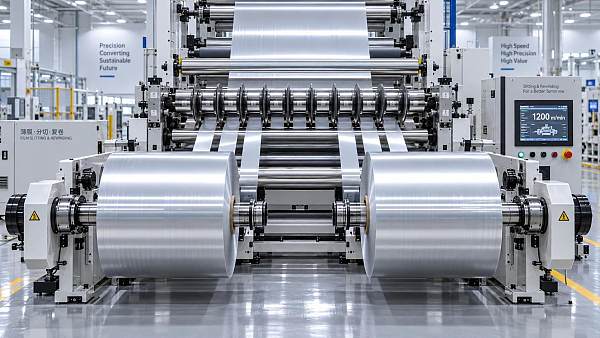
In a high-speed converting line, the purchase price of a shaftless rewinder rarely tells the full story. The practical question is whether the machine removes enough delay, waste, and running instability to justify the extra capital compared with a shafted design. In many paper, film, label, and packaging applications, the answer depends on roll handling frequency, line speed, core variation, and the cost of every unplanned stop. A shaftless system usually earns attention when the line is already sensitive to changeover time, tension disturbance, or labor-intensive roll loading.
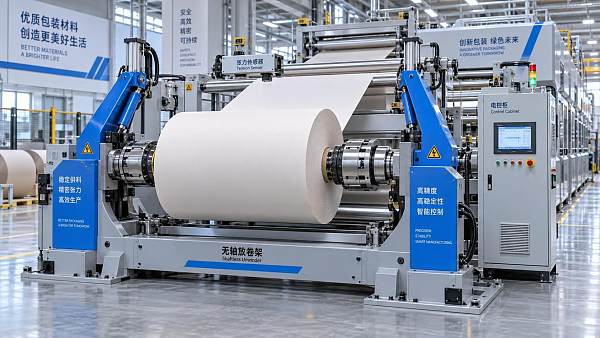
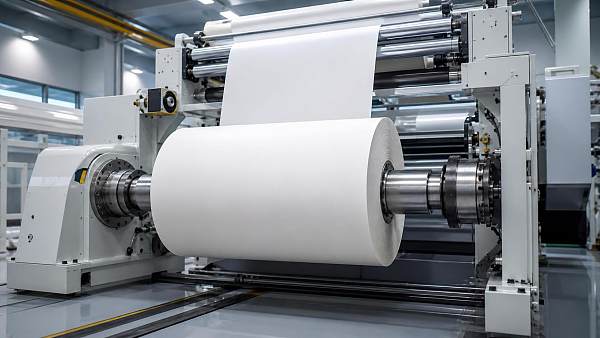
The strongest argument for shaftless unwind and rewind technology is straightforward: it reduces the mechanical steps required to move from one roll to the next. Instead of lifting, aligning, inserting, locking, and removing shafts for each parent roll or finished roll, the machine grips the core directly through chucks or expanding support arms. That sounds like a small difference on paper, but on a fast converting line the change touches several operating points at once. Roll exchange can become faster. The risk of shaft mismatch can drop. Heavy shafts no longer need to be staged, transported, and tracked as consumable tooling. When jobs change often, those small savings accumulate into real production time.
That does not automatically make shaftless rewinders the right choice. They can cost more to buy, require more precise chuck maintenance, and place greater importance on core quality. If the plant runs long campaigns on stable substrates with few roll changes, the improvement may be harder to recover in financial terms. A slower line converting low-value material may not benefit enough from a premium unwind or rewind architecture, especially if current shaft handling is already organized and downtime is not a major loss point.
Where the cost difference actually comes from
Buyers often compare only frame price and overlook the surrounding hardware. A shaftless rewinder may include hydraulic or pneumatic chuck systems, roll loading arms, dancer or load-cell tension control, edge guiding, automatic splice preparation, and a more rigid control package to stabilize the web during acceleration and deceleration. The added cost is not just “shaftless” as a label. It usually reflects a broader machine configuration designed for higher throughput and more repeatable roll handling.
Installation can also be different. Floor loading, roll presentation space, core chuck access, and safety guarding need to match the actual diameter and weight range of the rolls being processed. On some retrofits, the machine fits physically but the material flow around it does not. If fork trucks, roll carts, or overhead handling systems were planned around shaft loading, a shaftless machine may require aisle changes, revised loading positions, or additional buffering space. Those secondary changes are often ignored in early quotations and then appear later as project friction.
Productivity gains are real only under certain line conditions
The value case becomes stronger when the line sees frequent order changes, multiple web widths, or short production runs. In those conditions, every roll change interrupts output, and the lost minutes are often more expensive than the difference between machine options. Packaging converters working with printed paper, laminates, barrier films, release liners, or coated substrates often discover that the rewinder is not isolated equipment; it influences upstream printing, coating, slitting, inspection, and downstream packing rhythm. When the rewinder slows down the line, every connected process pays for it.
High-speed lines also expose small handling problems very quickly. A shaft inserted slightly off center, a worn journal, or a damaged locking cone may be tolerated at lower speed and become a vibration source at higher speed. Shaftless designs do not remove every alignment issue, but they can eliminate some shaft-related variables. Better centering at the core, combined with stable tension control, may produce tighter roll builds and fewer telescoping or tracking problems. That matters when finished rolls must feed cleanly into later slitting, pouching, printing, or packaging operations.
On the other hand, shaftless systems are not automatically more forgiving. If cores arrive crushed, out of round, split, or inconsistent in wall thickness, direct chuck gripping can become a weak point. A shaft may sometimes mask poor core quality by spreading support across the roll. A shaftless chuck depends more heavily on the core end condition. If incoming rolls are sourced from multiple suppliers with uneven core tolerances, the line may need tighter material specifications before the machine performs as expected.
Roll change time is only one part of the equation
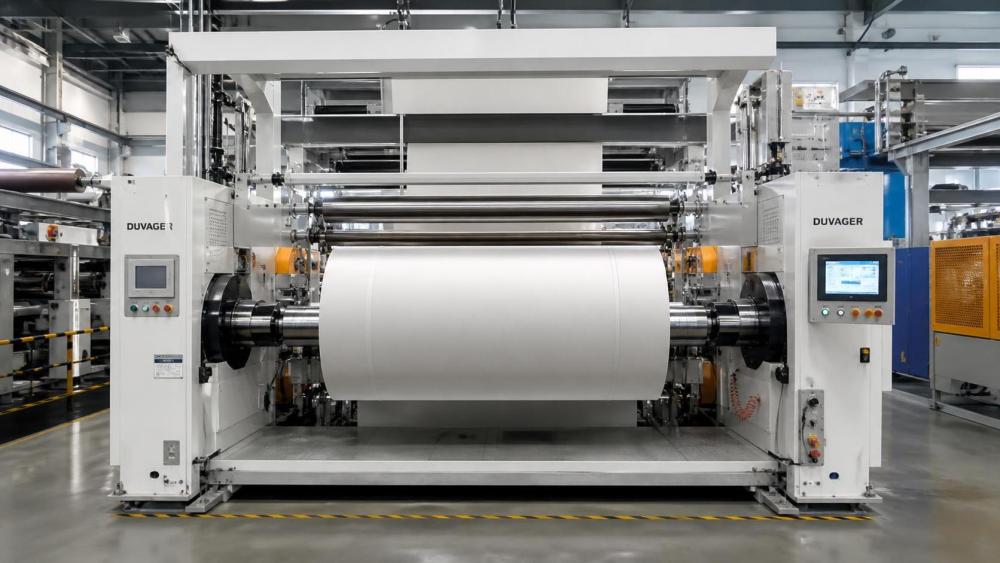
Many quotations emphasize quick loading, but the real operating gain depends on what happens before and after loading. A fast mechanical chuck means little if the operator still needs extra time to square the roll, rethread the web path, stabilize tension, trim damaged edges, and wait for registration recovery downstream. A useful evaluation looks at the complete stop-to-stable-run sequence: stopping the line, removing the finished roll, presenting the next roll, chuck engagement, web threading, tension stabilization, restart, speed ramp, and scrap generated until acceptable output is reached.
In some lines, the biggest loss is not the loading event itself but the web disturbance after restart. If the shaftless rewinder includes responsive tension zones, closed-loop diameter calculation, and accurate brake or drive control, it may reduce startup waste enough to justify the cost. If it is a simpler configuration with limited control precision, the time saved in mechanical changeover may be partly lost in setup instability.
Maintenance shifts rather than disappears
A common purchasing mistake is to assume that removing shafts reduces maintenance in every area. It often reduces one category while increasing attention in another. There are fewer shafts to bend, misplace, or refurbish, which is helpful. At the same time, the chuck faces, gripping elements, seals, cylinders, hydraulic circuits, and alignment points become more important. If those components wear, core slippage and uneven winding can appear quickly.
Maintenance access deserves close review during equipment selection. Some machines provide open access to chucks, sensors, and side-frame components; others make simple replacement work awkward, especially in compact layouts. If a chuck assembly requires major disassembly for routine service, the theoretical labor savings of the shaftless design can erode over time. Availability of replacement parts should also be checked carefully, particularly for custom chuck sizes or proprietary gripping profiles.
Cleanliness matters more than some plants expect. Dust from paper converting, adhesive mist, coating residue, and fine trim particles can affect chuck movement and sensor reliability. In corrugated and paper-based packaging environments, maintenance routines must reflect the actual contamination load around the rewinder. A machine that runs well in a clean film plant may require a different service frequency in a dusty converting hall.
Material range can either support or weaken the investment case
If the line processes a narrow set of materials with consistent core dimensions, the shaftless option is easier to justify technically. If the line regularly switches between lightweight papers, heavier board-related webs, films with different stretch behavior, coated stock, or moisture-sensitive materials, the question becomes more detailed. The rewinder must manage the full tension envelope, roll weight range, and core format without frequent adjustment problems.
For paper-based packaging and print-related converting, web stability is often influenced by more than machine speed. Moisture variation, splice quality from upstream rolls, coating slip, edge damage, and wound-in air can all affect running behavior. A shaftless rewinder may improve loading and support, but it cannot compensate for weak upstream roll formation. If the parent rolls arrive with uneven hardness or poor edge condition, the line may still struggle regardless of the mounting method.
This is why trials should focus on the most troublesome materials, not the easiest ones. A demonstration on a clean, uniform substrate can create false confidence. A better test includes the web grades that generate wrinkles, tracking drift, crushed cores, or start-stop tension spikes. That is where the value of the machine becomes visible.
Questions that matter more than brochure speed
Maximum line speed is easy to advertise and easy to misunderstand. A rewinder may be mechanically rated for a high speed that is rarely achieved in production because the real limit comes from web behavior, core holding stability, splice reliability, or downstream synchronization. Useful evaluation points include whether the machine can hold stable tension near the low and high ends of the diameter range, whether roll changes remain consistent with heavy rolls, and whether the rewind structure stays tight across full-width and partial-width jobs.
- Ask how the chuck system handles slight variation in core inside diameter, wall thickness, and end damage, because this affects daily running more than nominal speed.
- Review the actual roll weight and diameter limits at the intended operating width, not just the highest number listed in general specifications.
- Look at threading path complexity, especially if the line runs frequent short jobs where repeated webbing-up time becomes a hidden labor cost.
- Confirm whether brake, drive, and tension components are sized for the heaviest substrate and the lightest web without excessive manual tuning.
These points often reveal whether the machine was engineered for continuous production or merely configured to meet a quotation target.
Where shaftless rewinders tend to be worth the premium
The premium is easier to defend when a converting line has one or more of the following characteristics: frequent roll changes, heavy parent rolls, limited labor around the line, repeated shaft handling delays, unstable restart conditions, or finished roll quality problems linked to inconsistent support. In those environments, the gain comes from fewer interruptions and smoother flow through the line rather than from any single dramatic improvement.
The case is also stronger where material waste carries secondary cost. In printed packaging work, startup scrap may involve not just substrate loss but ink, coating, laminate, inspection time, and missed delivery sequencing. In traceability-sensitive production, a poor restart can trigger coding mismatches or extra segregation work. When those indirect losses are present, a rewinder that improves stability may have more value than a simple price comparison suggests.
Where the extra cost may not return quickly
If runs are long, product mix is narrow, roll changes are infrequent, and operators already manage shafts efficiently, a shaftless rewinder may deliver only modest benefit. The same applies when line speed is constrained elsewhere, such as curing, die-cutting, inspection, or downstream packing. In that situation, the rewinder is unlikely to unlock significant extra throughput because another station remains the true bottleneck.
There is also a risk of overbuying. Some plants specify a highly automated shaftless system because it appears future-proof, but the current order profile does not justify the complexity. If automation features remain unused, the project carries unnecessary capital, training, and spare parts burden. Buying for realistic operating conditions usually produces a better result than buying for an idealized future line speed that may never become routine.
Commercial evaluation should include the surrounding workflow
A sound comparison between shafted and shaftless equipment should include more than machine price, because the rewinder interacts with logistics, staffing, maintenance, and floor layout. If shaft storage, shaft transport, and shaft change labor are already cumbersome, shaftless architecture may simplify the entire area. If the site already owns a large shaft inventory and has efficient handling tools in place, the operational gap may narrow.
Vendor discussions should therefore move past generic claims and into operating detail: expected core range, roll presentation method, line stop pattern, cleaning frequency, spare part lead times, control integration with upstream and downstream sections, and the actual webs that create the most waste. The answer to whether shaftless rewinders are worth the cost is usually found there, not in the headline specification.
When a high-speed converting line loses money mainly through slow roll changes, unstable restarts, heavy manual shaft handling, or inconsistent rewind quality, the extra cost can be justified. When those losses are minor or originate elsewhere, the premium may remain difficult to recover.
Related News
 What to Check Before Selecting a Sheet Stackers SupplierChoose a sheet stackers supplier with confidence. Discover key checks for throughput, stack quality, automation, layout, service support, and long-term operating value.Corrugated Thermodynamics Architect
 What Determines Rewinders Price in High-Speed Converting LinesRewinders price depends on speed, tension control, winding method, automation, and integration. Discover what drives cost and how to specify a high-speed converting line.Corrugated Thermodynamics Architect
 How to Evaluate an Unwind Stands Factory for Reliable SupplyUnwind stands factory evaluation guide: compare engineering, tension control, testing, delivery capability, and after-sales support for reliable web handling.Corrugated Thermodynamics Architect
 Why Woven Pressure Belts Slip and How to Restore Reliable Web TensionWoven pressure belts slipping? Discover practical causes, proven inspection steps, and recovery methods to restore reliable web tension, board quality, and corrugator uptime.Corrugated Thermodynamics Architect
 What to Evaluate Before Investing in Shaftless RewindersShaftless rewinders: evaluate tension control, roll quality, safety, integration, and lifecycle costs to choose a solution that improves converting productivity.Corrugated Thermodynamics Architect
 Are Shaftless Rewinders Worth the Cost in High Speed Converting LinesShaftless rewinders can boost high-speed converting lines by cutting roll change time, reducing waste, and improving stability. Learn when the premium cost truly pays off.Corrugated Thermodynamics Architect