What Drives Folder Gluer Line Cost and How to Budget Accurately
What Drives Folder Gluer Line Cost and How to Budget Accurately
Understanding folder gluer line cost requires more than comparing machine quotations. A low initial price can become expensive if the line struggles with the carton formats a plant actually runs, needs frequent manual adjustment, consumes excessive adhesive, or cannot maintain stable output during long shifts. At the other extreme, a heavily automated line may be difficult to justify when order volumes are modest and product variation is limited.
The practical question is not simply, “What does a folder gluer cost?” It is, “What production problem is this line expected to solve, and what will it cost to solve it reliably over time?” For folding carton converters, corrugated box producers, commercial printers entering packaging, and investors reviewing plant capacity, that distinction changes the budget process.
A folder gluer is often positioned late in the converting workflow, but its performance affects the entire job. Die-cut quality, crease consistency, board stiffness, printed surface condition, glue behavior, delivery arrangement, packing method, and downstream palletizing all influence the result. A line that looks capable on a specification sheet may still be poorly matched to the production floor.
The Machine Price Is Only One Layer of the Investment
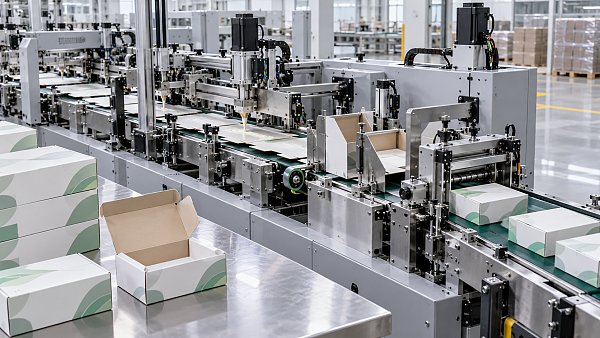
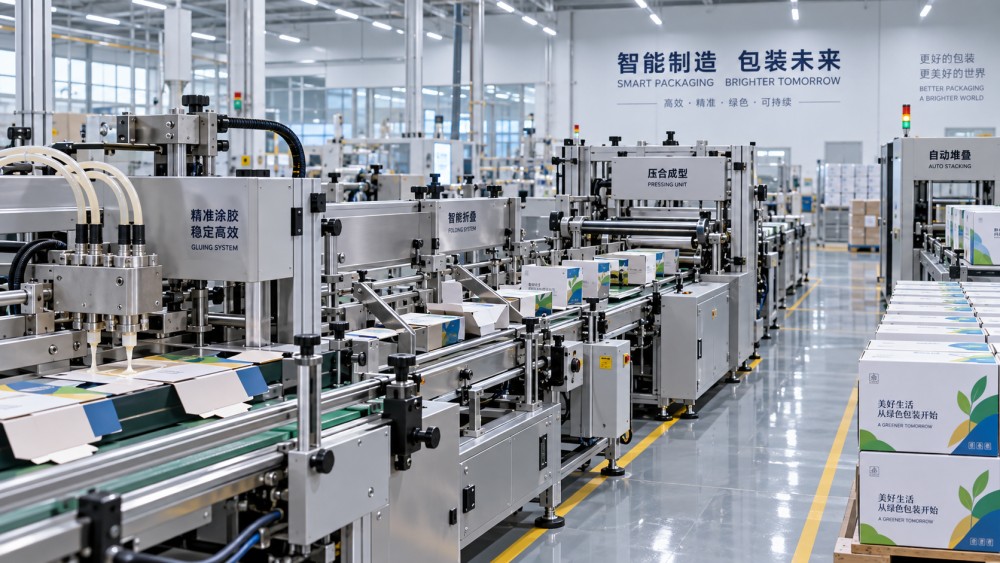
Supplier quotations usually begin with a base configuration: feeder, folding sections, gluing system, compression section, delivery, and basic controls. This provides a starting point, not a complete capital budget. The final folder gluer line cost is shaped by the carton styles, material range, required speed, inspection expectations, automation scope, regional electrical requirements, installation work, and support package.
A straight-line carton machine intended for standard side-seam work is fundamentally different from a line configured for crash-lock bottoms, four- and six-corner cartons, double-wall structures, sleeves, or specialty packaging. Complex formats require additional folding devices, hooks, carriers, servo-controlled motions, and longer setup procedures. Their higher price is not merely a premium for features; it reflects the mechanical and control complexity needed to fold and glue a carton repeatably at production speed.
Likewise, “high speed” should be interpreted carefully. Maximum mechanical speed is not the same as sustained saleable output. In a real production environment, performance is affected by blank quality, carton geometry, board curl, varnish or laminate conditions, operator setup, adhesive setting behavior, and the frequency of job changes. A procurement review should ask suppliers to distinguish between rated speed, expected operating speed for representative jobs, and the conditions required to achieve either figure.
The Cost Drivers That Matter Most
Carton format range and substrate behavior
The first budget input should be the actual job mix, not a generic machine category. Gather finished carton dimensions, open blank sizes, board grades, calipers, grain direction, coatings, window patches, embossing, and any unusual structural features. A line designed around a narrow format band can be economical and productive for a stable product family. If the factory expects frequent variation, a wider and more flexible configuration may prevent expensive workarounds later.
Special surfaces deserve particular attention. UV-coated, laminated, metallized, textured, or heavily varnished cartons may alter adhesive performance and compression requirements. Folding performance can also change with humidity, score quality, and board stiffness. These issues do not always require a more expensive line, but they do require testing and a clear agreement on the operating conditions behind the quotation.
Feeding, alignment, and folding control
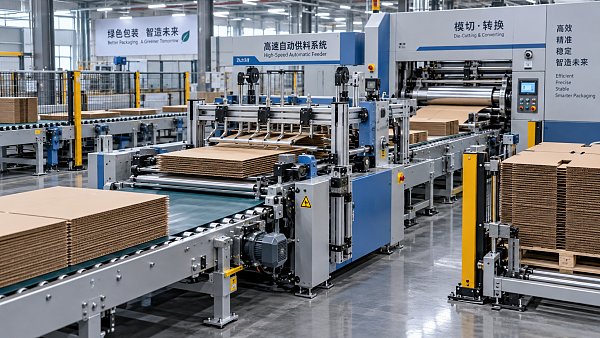
The feeder is easy to underestimate. Poor feeding creates downstream problems that no compression section can fully correct. Depending on the application, cost may rise with more capable belt arrangements, vacuum assistance, pre-feeding systems, servo controls, side-register adjustment, and devices intended to manage warped or lightweight blanks. For short runs and frequent changeovers, the value of repeatable settings can be greater than a marginal increase in top speed.
Folding sections add cost when they must accommodate complex carton paths or when precise servo control is required. Buyers should not treat every motorized adjustment as automatically beneficial. The useful question is whether it reduces setup time, prevents operator-dependent variation, or makes a demanding format commercially viable. If it does none of these, it may be an option with little operational return.
Glue systems and quality assurance
Cold glue systems, hot-melt application, glue detection, and electronic monitoring can materially affect both capital cost and running cost. The right choice depends on the carton design, material surface, required bond strength, production speed, and customer quality expectations. Adhesive equipment should be evaluated as a system: applicators, hoses, nozzles, controllers, cleaning needs, spare parts, and the availability of technically suitable glue in the operating region.
Inspection options deserve a similarly disciplined review. Vision systems, code verification, glue presence detection, and reject mechanisms can reduce the chance that defective cartons move downstream, particularly where traceability or print accuracy is commercially sensitive. Yet an inspection system only delivers useful protection when the defect criteria, reject logic, data handling, and response process have been defined. Buying cameras without deciding what action follows an alarm is a common form of under-planning.
Delivery, packing, and end-of-line integration
Many budgets stop at the folder gluer discharge. That can hide a bottleneck. If finished cartons require manual counting, bundling, packing, or transfer to pallets, labor demand may rise precisely where the line is intended to create capacity. Automatic counting, batch separation, conveyor integration, case packing interfaces, and robotic palletizing can be sensible additions, but only after the expected output rhythm and packaging method are understood.
For a plant moving toward connected production management, the line may also need interfaces for job data, production reporting, maintenance alerts, or quality records. Compatibility should be clarified early. Retrofitting communication functions can be possible, but it is often less straightforward than including requirements in the original project scope.
A More Useful Budget Structure
A reliable budget separates the equipment price from project costs and operational commitments. This avoids the misleading comfort of a quotation that appears complete but excludes the work required to put cartons into stable production.
The budget should also include a defined contingency for items that cannot be finalized until the layout, utility conditions, local requirements, shipping arrangements, and project responsibilities are confirmed. This is not a license for vague supplier pricing. It is a recognition that packaging equipment projects involve interfaces between machine supplier, plant engineering, electrical contractors, adhesive suppliers, logistics providers, and production teams.
Comparing Quotations Without Creating a False Comparison
Two folder gluer quotations can look comparable while describing materially different scope. One may include installation supervision and operator training; another may list them separately. One may include a glue system, safety guards, spare parts, and format tools; another may assume the buyer already has them. Delivery terms can also shift responsibility for freight, insurance, customs handling, unloading, and site movement.
The most effective comparison method is to build a single requirement matrix before asking for final commercial offers. Give every supplier the same carton samples or technical drawings, expected job mix, material information, utility details, quality requirements, and desired acceptance conditions. Require each supplier to state exclusions, assumptions, lead-time basis, and the exact items included in commissioning.
Acceptance criteria should be specific enough to be useful but realistic enough to reflect production conditions. Instead of relying on a broad statement such as “machine must run at full speed,” define representative carton types, adhesive type, blank condition, required folding quality, sample inspection approach, and the practical duration of the run. The result may still need adjustment during technical negotiations, but it prevents a dispute caused by undefined expectations.
Where Buyers Commonly Underestimate Cost
Underestimating changeover is one of the most persistent errors. A machine may perform well on long, repeated orders but deliver disappointing economics when the factory runs many short jobs. The relevant cost is not only lost minutes during setup. It includes make-ready waste, glue adjustments, trial cartons, operator attention, delayed dispatch, and the possibility of a job leaving production before settings are fully optimized.
Another issue is maintenance planning. Folder gluers rely on belts, bearings, moving guides, folding devices, sensors, glue components, and electrical controls that need inspection and replacement over time. Buyers should ask which wear parts are critical, whether recommended spares are included, what documentation accompanies the line, and how remote or onsite service is organized. The least expensive purchase can become costly if a modest component causes prolonged downtime and local support is unclear.
Operator capability also has a financial effect. More automation may reduce manual intervention, but it does not remove the need for trained personnel who understand carton behavior, glue adjustment, fault recovery, and quality checks. Training should cover normal operation as well as startup, format changeover, cleaning, preventative maintenance, and safe response to faults.
Use Total Cost of Ownership, Not Just Payback Language
A total cost of ownership view does not require speculative forecasts. It requires disciplined inputs. Estimate the expected production hours, product mix, staffing pattern, changeover frequency, expected reject categories, adhesive use, maintenance needs, and downstream handling. Then compare how each proposed configuration changes those inputs. Where values are uncertain, use a range and identify the assumption rather than presenting a single precise figure.
This approach often reveals a useful middle path. The best investment may not be the smallest base machine or the most automated configuration. It may be a line with the format flexibility required for planned work, enough automation to stabilize frequent changeovers, inspection only where defect risk justifies it, and a realistic support arrangement for the plant’s location.
CPCS examines folder gluers within this wider converting environment: upstream die-cutting and creasing, adhesive application, inspection, delivery handling, and factory data flow. That perspective matters because equipment economics are created across the production system, not at a single machine station.
A Sound Next Step Before Releasing a Purchase Order
Before approving a folder gluer project, review the proposal against real production samples and confirm what happens before and after the line. Check whether the quoted configuration can run the cartons that generate revenue today, as well as the formats the business expects to add. Clarify site responsibilities, service coverage, spare-parts planning, training, acceptance testing, and the treatment of software or inspection interfaces.
Accurate budgeting is less about finding one definitive folder gluer line cost than about making hidden costs visible early. When scope, carton requirements, operating assumptions, and support obligations are clear, procurement teams can compare offers on their real commercial value rather than on a headline number alone.
Related News
 What Determines Compression Section Price in Corrugator ProjectsCompression section price depends on width, speed, pressure control, heating, automation, and integration. Learn how to compare quotes and maximize corrugator ROI.Corrugated Thermodynamics Architect
 How a Servo Driven Folder Gluer Machine Improves Carton AccuracyDiscover how a servo driven folder gluer machine improves carton accuracy through synchronized motion, repeatable folding, precise glue placement, and faster changeovers.Corrugated Thermodynamics Architect
 How Carton Making Machines Improve Output in High-Mix PlantsCarton Making Machines help high-mix plants increase sellable output with faster changeovers, lower waste, reliable quality control, and smoother workflow integration.Corrugated Thermodynamics Architect
 Corrugator Control Systems That Improve Board Quality and UptimeCorrugator Control Systems improve board quality, reduce waste, and increase uptime with coordinated heat, moisture, tension, glue, and speed control.Corrugated Thermodynamics Architect
 How High Speed Feeder Systems Support Faster Corrugator OutputHigh speed feeder systems help corrugator plants improve stable throughput, reduce feeding delays, protect board quality, and maximize converting efficiency.Corrugated Thermodynamics Architect
 Heavy Duty Unwind Stands That Stabilize High-Speed CorrugatorsHeavy duty unwind stands stabilize high-speed corrugators with precise tension control, secure reel handling, and smoother roll changes. Discover how to reduce breaks, waste, and downtime.Corrugated Thermodynamics Architect