What Drives Corrugator Belts Price and How Buyers Compare Options
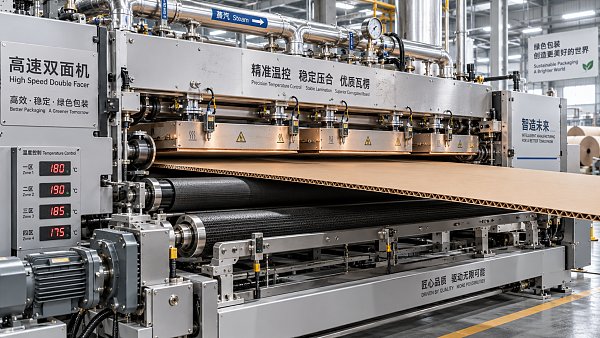
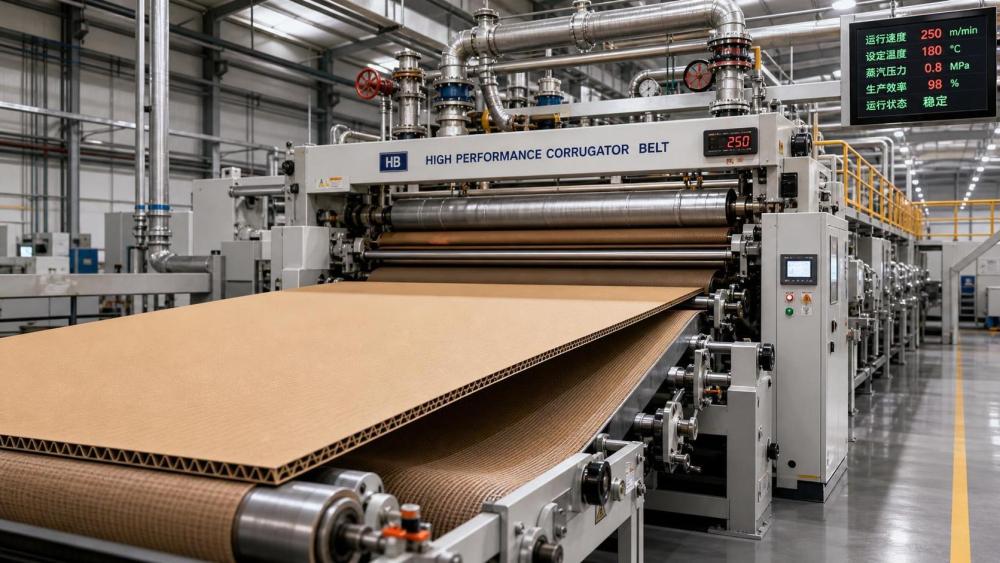
Understanding corrugator belts price takes more than lining up quotations and picking the lowest number. In most sheet plants, the belt sits in the double facer section, but its commercial impact reaches much further. It affects heat transfer, board bonding stability, machine speed, paper marking risk, tracking behavior, cleaning frequency, and how often production has to stop for correction or replacement. A belt that looks cheaper on paper can become expensive very quickly if it creates warp, uneven bonding, or avoidable downtime.
That is why experienced procurement teams rarely evaluate corrugator consumables as isolated parts. They compare them in the context of line speed, paper grades, steam and temperature conditions, belt tensioning systems, order mix, maintenance capability, and the plant’s tolerance for unplanned stoppages. In corrugated operations, purchase price is visible. Operating cost usually is not—until the line starts losing output.
Why belt prices vary more than many buyers expect
On the surface, two belts may appear similar: same application, similar dimensions, same basic description from different suppliers. The price gap often comes from what is harder to see in a quotation sheet.
Material construction is usually the first driver. Corrugator belts are expected to operate under heat, moisture, pressure, and continuous friction. Suppliers may use different fiber blends, weaving methods, edge reinforcement designs, and surface treatments. Those choices influence how the belt handles temperature, how stable it remains under tension, and how resistant it is to stretching or deformation over time. A belt built for high-speed lines and heavier duty cycles will usually cost more because its design is meant to hold performance under more demanding conditions.
Heat resistance is another major factor. In the double facer, heat transfer and moisture removal directly affect starch curing and final board quality. A belt that maintains contact and performance under elevated temperature is not only a material question; it is a process question. Plants running higher board speeds or more varied flute and liner combinations often place greater demands on the belt than a lower-speed plant with stable product mix.
Then there is dimensional precision. Width tolerance, thickness consistency, joint quality where applicable, and running stability all matter. If a belt tracks poorly or behaves inconsistently across its width, the plant may spend time adjusting guides and tension settings instead of producing saleable board. Better manufacturing control generally raises the selling price, but it can reduce hidden production losses.
Supplier support also affects pricing. Some quotations include installation guidance, startup recommendations, splicing support, or troubleshooting help. Others only cover the belt itself. For procurement, these offers are not directly comparable even if the product description looks similar.
The cheapest belt is often compared against the wrong benchmark
A common buying mistake is comparing belt cost against belt cost alone. In practice, the better benchmark is cost per stable production hour, or cost per usable board output over the belt’s service life. That changes the conversation.
If a lower-cost belt needs more frequent cleaning, loses tracking stability sooner, or performs poorly when order sizes get shorter and changeovers become more frequent, its true cost can exceed that of a higher-priced alternative. This matters even more in plants where labor is tight and maintenance windows are limited. A belt that requires constant operator attention effectively adds labor dependency to the line.
CPCS often frames equipment and consumable evaluation this way across the wider corrugated value chain: not just by acquisition price, but by uptime stability, material utilization, setup efficiency, and long-term operating cost. That mindset is especially useful for corrugator belts because their commercial effect is spread across quality, speed, and maintenance rather than one single invoice line.
What procurement teams should ask before requesting quotes
A quote request that only includes belt width and length is usually too thin to produce a meaningful comparison. Suppliers may price to different assumptions, and buyers end up reviewing numbers that are not based on the same operating reality.
Before asking for pricing, it helps to define a few plant conditions clearly:
- Corrugator speed range and typical operating speed
- Board grades and flute mix
- Temperature and moisture conditions in the double facer area
- Current belt issues, such as tracking drift, contamination, wear pattern, or bonding inconsistency
- Line configuration, tensioning arrangement, and any known mechanical limitations
- Expected service support, lead time, and installation assistance
This level of detail does two things. It reduces the chance of under-specification, and it helps reveal whether a supplier is simply offering a commodity replacement or actually matching the belt to the process requirement.
A practical way to compare options
For procurement teams, comparison becomes easier when the belt is treated as an operating package rather than a single unit price item. The table below is not a technical standard, but it is a useful commercial checklist.
Seen this way, a higher price is not automatically expensive, and a lower one is not automatically economical.
Where hidden costs usually appear
Most overspend does not happen at purchase. It happens later, in forms that are harder to assign to the belt but still trace back to it.
One hidden cost is reduced line speed. Plants sometimes lower speed to stabilize board quality when the belt is not performing consistently under heat and load. Another is paper waste from bonding defects, warp, or marking. In a corrugated plant, material waste often outweighs the apparent saving from a cheaper consumable. There is also the cost of reactive maintenance: emergency replacement, unscheduled labor, and the knock-on effect on delivery commitments.
Procurement may not directly own these losses, but good procurement decisions should make them visible. That is one reason specialized industry platforms such as CPCS are increasingly useful. As corrugated packaging investment becomes more system-oriented, buyers need to connect component cost with process behavior, not just compare line items from different vendors.
How plant conditions change the right price point
There is no universal “correct” corrugator belts price because the right buying level depends on how the line is used.
A plant producing a stable mix of standard transport packaging on a moderate-speed line may not need the same belt specification as a plant handling frequent order changes, wider paper variation, and tighter delivery schedules. Likewise, factories running older equipment may need a belt that is more forgiving of mechanical variation, while newer high-speed lines may demand stronger dimensional stability and heat performance to protect throughput.
This is where buyers should be careful with generic market comparisons. A price that looks high in one project may be normal in another because the operational risk is different. The more demanding the production environment, the less useful bare price comparison becomes.
Questions worth asking suppliers during evaluation
Useful supplier discussions usually move beyond catalog claims. A few questions tend to reveal the practical fit quickly:
- What operating conditions is this belt designed for, and where are its limits?
- How does the supplier recommend tensioning, cleaning, and break-in?
- What common failure modes should the plant watch for?
- What installation support is available if tracking or bonding problems appear after startup?
- What lead time applies to replacement orders, not just the first order?
These are not aggressive questions. They are practical ones, and strong suppliers are usually prepared to answer them clearly.
Buying for long-term cost, not quote-day optics
Procurement teams are often under pressure to show immediate savings, but corrugator belt decisions should be defended with a broader cost view. If one option offers more reliable uptime, lower cleaning burden, and a better fit to the plant’s speed and board profile, the higher initial price may be commercially sound. That is especially true when downtime costs are high or production planning is tight.
In corrugated packaging, smart buying usually means defining the process requirement first and pricing second. The plants that do this well are not necessarily paying the least. They are paying for the level of belt performance their line actually needs—and avoiding the far more expensive problem of discovering the mismatch during production.
If a quote review is coming up, the most useful next step is simple: verify the operating conditions, document the current pain points, and ask every supplier to respond to the same technical and service assumptions. That makes price comparison more honest, and it gives procurement a stronger basis for choosing a belt that works in the real corrugator, not just in the spreadsheet.
Related News
 How Steam Pressure and Capacity Affect Boiler Prices for CorrugatorsCompare steam boiler price factors for corrugators. Learn how pressure, capacity, and peak loads affect installed costs—and choose the right system without overspending.Corrugated Thermodynamics Architect
 What Determines Compression Section Price in Corrugator ProjectsCompression section price depends on width, speed, pressure control, heating, automation, and integration. Learn how to compare quotes and maximize corrugator ROI.Corrugated Thermodynamics Architect
 How a Servo Driven Folder Gluer Machine Improves Carton AccuracyDiscover how a servo driven folder gluer machine improves carton accuracy through synchronized motion, repeatable folding, precise glue placement, and faster changeovers.Corrugated Thermodynamics Architect
 How Carton Making Machines Improve Output in High-Mix PlantsCarton Making Machines help high-mix plants increase sellable output with faster changeovers, lower waste, reliable quality control, and smoother workflow integration.Corrugated Thermodynamics Architect
 Corrugator Control Systems That Improve Board Quality and UptimeCorrugator Control Systems improve board quality, reduce waste, and increase uptime with coordinated heat, moisture, tension, glue, and speed control.Corrugated Thermodynamics Architect
 How High Speed Feeder Systems Support Faster Corrugator OutputHigh speed feeder systems help corrugator plants improve stable throughput, reduce feeding delays, protect board quality, and maximize converting efficiency.Corrugated Thermodynamics Architect