What Determines the Price of a Corrugator Control System?
The corrugator control system price depends on more than the control panel itself. For procurement teams, factors such as line configuration, automation scope, sensor and drive requirements, integration with existing equipment, and commissioning support can significantly affect the total investment. Software capabilities, supplier service, and ongoing maintenance also matter. Understanding these cost drivers helps buyers compare quotations on a consistent basis and select a system that supports production efficiency, board quality, and long-term operating goals.
A useful starting point is to ask what the quoted system is expected to control. One proposal may cover a replacement operator interface and programmable logic controller, or PLC. Another may include coordinated line speed, order changes, production data and interfaces with equipment from several manufacturers. Both may be described as a corrugator control system, but they are not equivalent purchases.
The scope of control is the biggest pricing question
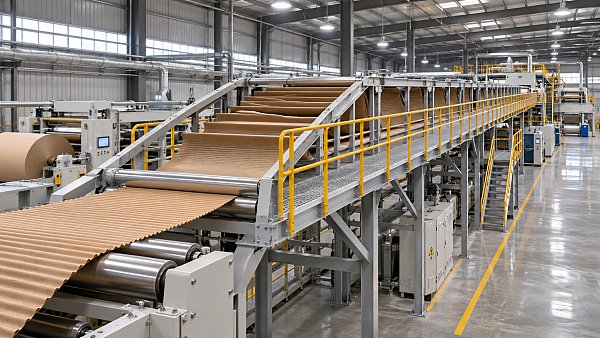
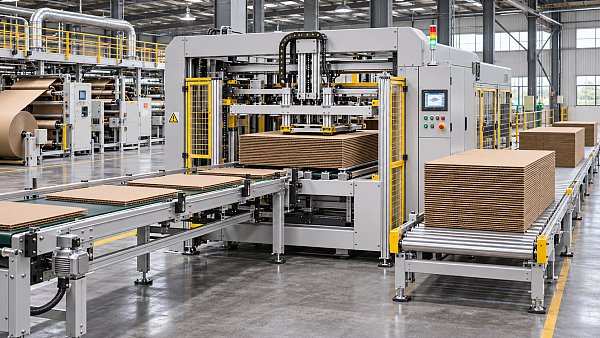
A corrugator brings together wet-end processes, including paper handling, single facer operation and bonding, with dry-end functions such as slitting, scoring, cutting and stacking. A control project may address one station, several connected stations or the coordination of the entire line. Each additional control area can add engineering, hardware, testing and commissioning work.
For example, a basic upgrade might replace an obsolete controller while retaining existing drives and field devices. A broader project could add automatic speed coordination, recipe management, order-change logic and production reporting. The difference is not merely the number of screens: the supplier must understand how each machine behaves and how changes at one point affect the rest of the line.
Buyers should request a station-by-station scope, including which functions are controlled automatically, which remain manual and which depend on equipment supplied by others. Terms such as “full automation” are too broad to serve as a purchasing specification.
Line configuration and existing equipment affect engineering cost
Line width, operating speed, board grades, the number of single facers and the arrangement of the dry end all influence system design. A line handling frequent order changes may place different demands on scheduling and changeover logic than a plant running longer, repeat jobs. The price also depends on whether the system must coordinate one complete line or communicate with stand-alone machines.
Existing equipment is often the less predictable variable. Older drives, undocumented wiring, unavailable PLC programs or proprietary communication protocols can make an otherwise straightforward retrofit more complex. Even if a supplier plans to retain a component, its condition and ability to exchange reliable signals still need to be checked.
A site survey can reduce uncertainty, but it does not eliminate it. Ask how the quotation treats discoveries made after panels are opened or commissioning begins. A clear change-order process is more useful than an apparently fixed price that excludes all unforeseen integration work.
Retain or replace existing hardware?
Retaining serviceable drives, motors and sensors can reduce initial expenditure. It can also leave the plant dependent on obsolete parts or limit the functions the new software can deliver. Replacing everything removes some compatibility questions but may add unnecessary cost and extend the shutdown.
The decision should be made component by component. Ask the supplier to identify what will be reused, its assumed condition, available spares and the consequences if it fails after the upgrade. A lower quote based on reuse is not necessarily cheaper if key components must be replaced during installation.
Sensors, drives and control cabinets are only part of the bill
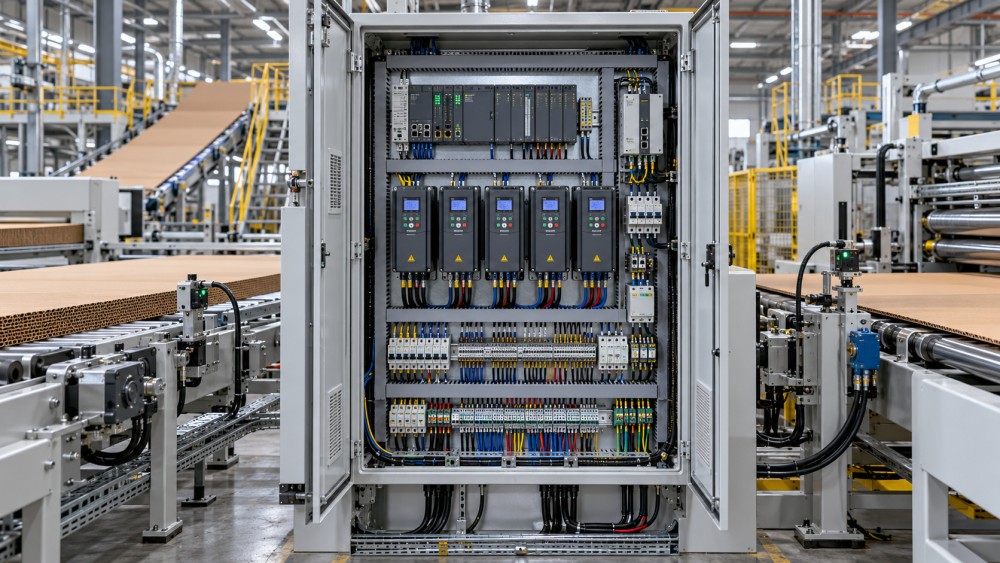
The hardware package may include PLCs, operator terminals, industrial network equipment, sensors, encoders, variable-frequency drives, safety devices, cabinets and wiring. Cost depends on quantities, selected components, electrical requirements and the environmental conditions at each installation point. Steam, heat, dust and vibration make placement and protection relevant procurement questions, not just engineering details.
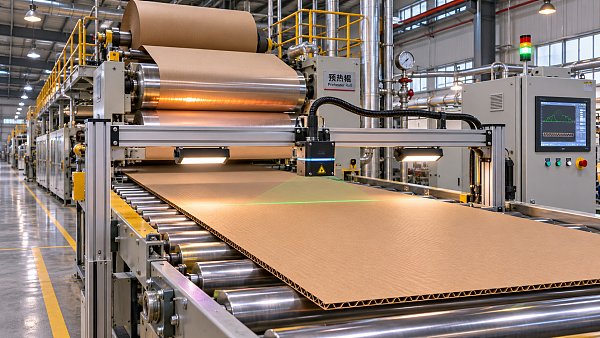
Additional measurement points can support closer process control, but a sensor alone does not guarantee better board. Its usefulness depends on where it is installed, how the signal is calibrated and whether the equipment can act on the information. For instance, a system that displays a process value is different from one that automatically adjusts an actuator in response to it.
Ask for an equipment list that distinguishes supplied hardware from existing devices assumed to be suitable. It should also identify field cabling, cable routes, electrical installation materials and any power-supply modifications. These items can otherwise move from the supplier’s quote to the factory’s project budget without being obvious.
Software and integration can change the quotation substantially
Software costs reflect more than the operator interface. Depending on the project, they can include machine-control logic, alarms, recipes, order management, historical data, production dashboards and interfaces with factory systems. Some functions require additional licenses or recurring support agreements; others are included in the initial price.
Integration with scheduling or production management deserves particular attention. A supplier may offer an interface capable of exchanging data, while the factory still needs another party to map fields, configure the receiving system and test complete order flows. Confirm who is responsible for each side of the connection and what happens if the network or external system is unavailable.
Procurement should also establish who can access and modify the program after handover. Clarify whether backups, source files, configuration tools and administrator credentials are included, subject to the agreed intellectual-property terms. A plant does not need unrestricted access to every supplier development tool, but it should understand what routine maintenance it can perform without waiting for outside support.
Installation and commissioning are material project costs
A system that works in a workshop still has to work on the corrugator, with actual paper grades, steam conditions, machine speeds and operators. Installation and commissioning may involve electrical work, network configuration, drive tuning, safety checks, production trials and training. Travel, accommodation, local contractors and extended site support may be priced separately.
The shutdown plan can be as important as the invoice. A short installation window may require preparatory wiring, extra personnel or staged cutovers. Conversely, a low-cost proposal that needs an extended stoppage can carry a significant production cost. Ask suppliers to state the expected sequence, their assumptions about site readiness and who provides electricians, lifting equipment and production staff.
Safety responsibilities must also be explicit. Replacing control components can affect existing interlocks and stopping functions. The buyer and supplier should agree who assesses the changes, verifies the safety functions and supplies the required documentation in accordance with applicable local requirements. Do not assume a standard control upgrade automatically includes a complete machine safety assessment.
Compare quotations on the same boundary
When proposals differ sharply, investigate the exclusions before negotiating the price. The following comparison points often reveal why two offers are not directly comparable:
- Equipment scope: Which line sections, controllers, drives and field devices are included or reused?
- Engineering: Are site surveys, electrical drawings, software configuration and interface development included?
- Installation: Who supplies cabling, mechanical adaptations, local labor and disposal of removed equipment?
- Commissioning: How many site visits are included, and what conditions trigger additional charges?
- Software: Are licenses perpetual or recurring, and are backups, updates and remote access included?
- Acceptance: What tests demonstrate the agreed functions, and what production conditions are needed to perform them?
- Support: What is covered by warranty, where are spare parts held, and how is urgent assistance requested?
Commercial terms matter as well. Check currency, payment milestones, taxes, freight, import responsibilities and quote validity. If one proposal excludes local installation and another includes it, adjust both to the same project boundary before deciding which is less expensive.
Evaluate operating value without assuming savings
A control upgrade may be justified by reduced obsolescence risk, fewer manual adjustments, better visibility of stoppages or more consistent order changes. It may also support lower waste or improved throughput, but those outcomes depend on the condition of the line and how the plant operates. Controls cannot compensate for every mechanical, paper-quality or steam-system limitation.
Build the investment case using the plant’s own baseline: current downtime, changeover time, waste, maintenance spending and production mix. Then identify which losses the proposed functions can reasonably influence. Separate expected benefits from those that can be verified during acceptance testing.
A practical calculation compares the installed project cost and recurring expenses with the value of the specific improvements expected over the chosen evaluation period. Include spare parts, software support, training and planned maintenance. Avoid counting the same benefit twice—for example, treating time saved during an order change as both additional production time and a separate labor saving unless staffing actually changes.
Prepare a stronger request for quotation
Before requesting a firm price, assemble the line layout, equipment list, available electrical drawings, controller and drive details, network information and a description of current operating problems. Include the board grades and order patterns that matter most, as well as any planned equipment changes. Where information is missing, identify it as an open issue rather than letting each supplier make a different assumption.
Define the required results in operational terms. “Improve automation” is difficult to price or accept. A more useful requirement specifies, for example, which order information should reach the slitter scorer and cutoff, what operators must confirm, and how an interrupted changeover should be handled. Agree on test procedures and responsibilities before finalizing the purchase order.
CPCS covers corrugator processes and packaging factory automation from this system-level perspective: controls should be assessed alongside machine condition, paper utilization, production requirements and maintenance capability. For the next quotation round, the most productive step is to turn those considerations into a shared scope document. It gives suppliers a consistent basis for pricing and gives the plant a clearer way to judge what it will actually receive.
Related News
 KPS to Acquire 70% of MM Packaging at €2.4 Billion Enterprise ValueKPS will acquire 70% of MM Packaging at a €2.4 billion enterprise value. Explore what the deal means for the packaging business and its customers.Corrugated Thermodynamics Architect
 How to Size Bridge Conveyors for a Corrugator LineSize Bridge Conveyors for your corrugator line with practical guidance on web accumulation, sheet throughput, layout, and controls. Avoid costly bottlenecks.Corrugated Thermodynamics Architect
 Nine Dragons Paper Raises Chongqing Corrugated Paper Price by 50 Yuan per TonneNine Dragons Paper raises Chongqing corrugated paper prices by 50 yuan per tonne. See when the increase takes effect and what it means for packaging costs.Corrugated Thermodynamics Architect
 How Automatic Warp Control Systems Improve Corrugated Board FlatnessDiscover how automatic warp control systems improve corrugated board flatness, reduce production waste and support more reliable converting.Corrugated Thermodynamics Architect
 How to Evaluate a Sheet Stackers Factory for Your Production LineEvaluate a sheet stackers factory with confidence. Compare capacity, line integration, acceptance tests and service to choose the right supplier for your production line.Corrugated Thermodynamics Architect
 What to Ask a Starch Mixer Manufacturer Before OrderingChoosing a starch mixer manufacturer? Ask these essential questions about capacity, pricing, automation and support before you order.Corrugated Thermodynamics Architect