What Determines Compression Section Price in Corrugator Projects
What Determines Compression Section Price in Corrugator Projects
Understanding compression section price is essential for project managers planning a corrugator investment. The quoted amount reflects far more than a machine frame or pressure belt.
Working width, speed target, heat transfer design, automation, board specifications, installation conditions, and support expectations all influence the final commercial scope and lifecycle value.
Start with the Production Requirement, Not the Lowest Quote
For most corrugator projects, the compression section price should be evaluated against production requirements before comparing supplier quotations line by line.
A lower initial price can become expensive when the section cannot maintain bonding quality, support planned speeds, or handle the intended paper range reliably.
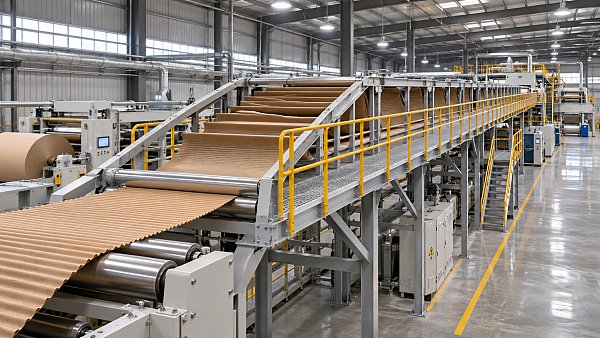
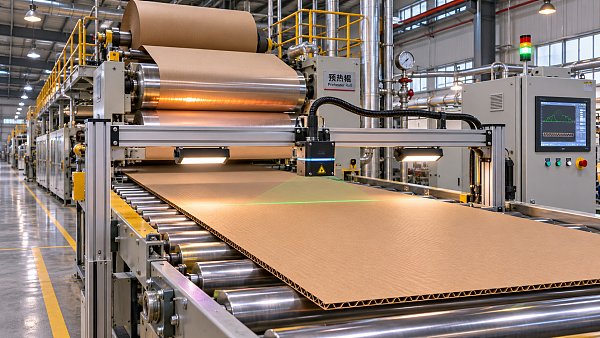
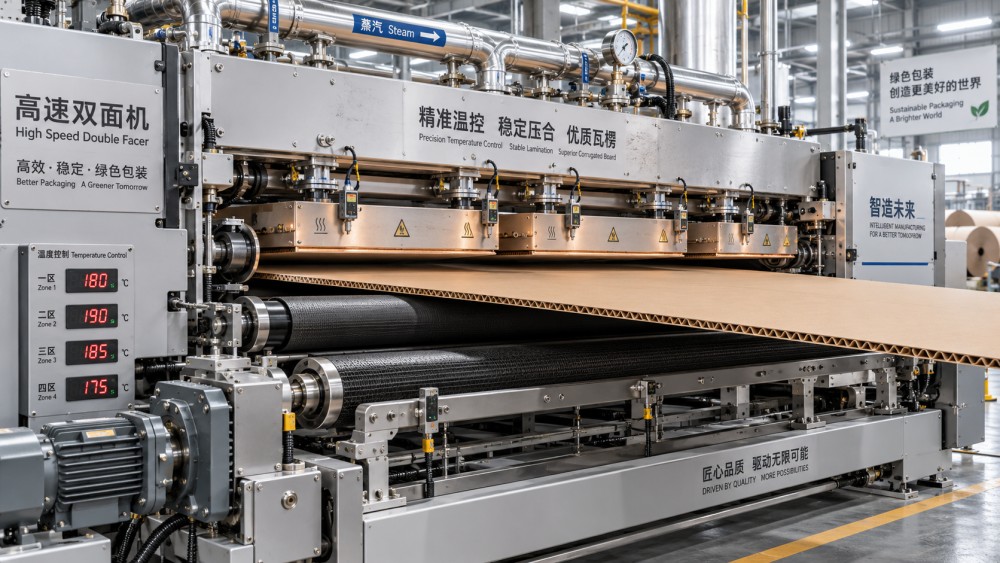
The compression section is normally part of the double backer area, where liners, medium, adhesive, heat, and pressure combine to form stable corrugated board.
Its performance affects bond strength, moisture balance, warp control, flatness, board appearance, and the maximum practical speed available to the entire corrugator.
Project managers should first define expected annual output, board mix, flute profiles, paper weights, order patterns, and required operating hours before requesting technical proposals.
These operating parameters determine whether a basic compression arrangement is sufficient or whether a higher-capacity system with advanced controls is commercially justified.
When suppliers receive incomplete production assumptions, they often price different technical solutions, making a direct compression section price comparison misleading and risky.
A useful request for quotation should state the desired board width, design speed, production speed, paper grades, adhesive system, utilities, and automation interfaces.
Working Width and Design Speed Create the Main Cost Base
Working width is one of the most visible factors behind compression section price because wider machines require larger frames, belts, heating zones, and drive components.
A section designed for 2,800 millimeters of board width uses substantially more material and engineering capacity than one built for narrower regional formats.
Design speed also changes the mechanical and thermal requirements. Faster lines need more stable pressure distribution, stronger drives, better tracking, and responsive control systems.
High-speed operation leaves less tolerance for uneven pressure, poor belt condition, insufficient heat, or delayed moisture adjustment across the machine width.
Suppliers may quote the same nominal speed while offering different sustained operating capability. Project teams should distinguish between maximum design speed and stable production speed.
A 400-meter-per-minute line is not automatically comparable with another 400-meter-per-minute proposal unless board specifications, paper grades, and quality conditions are equivalent.
Higher design speeds commonly require more sophisticated pressure zones, additional temperature monitoring, improved ventilation, and tighter integration with upstream glue and steam controls.
For investment review, calculate the value of usable output at realistic speed rather than assuming every available meter per minute will generate sellable board.
Pressure System Design Changes Both Quality and Capital Cost
The compression method is central to pricing because it determines how consistently the board receives pressure while adhesive cures through the double backer process.
Common configurations include weighted systems, pneumatic pressure systems, hydraulic arrangements, belt-based compression systems, and multi-zone controlled pressure designs.
Basic systems may suit stable, limited product ranges, but their performance can decline when projects require frequent grade changes, lighter papers, or demanding board specifications.
More advanced pressure control systems increase the compression section price because they add actuators, sensors, control hardware, safety functions, and commissioning work.
However, better control can reduce bond failures, edge defects, delamination, and waste caused by inconsistent pressure during startup, acceleration, and order changes.
Multi-zone pressure adjustment is especially relevant for wide corrugators, where cross-machine differences in moisture, temperature, paper tension, or adhesive behavior can affect quality.
Engineering teams should ask how pressure is applied, how zones are controlled, what feedback is measured, and whether operators can store repeatable product settings.
The right selection depends on the cost of poor-quality board. Plants serving demanding converters or brand owners usually benefit from more consistent process control.
Heating, Steam, and Moisture Control Are Often Underestimated
Compression sections rely on controlled heat transfer to cure adhesive efficiently, so heating design is another major contributor to the total equipment quotation.
Heated plates, steam chests, hot-water systems, condensate handling, insulation, and temperature-control components vary significantly between suppliers and project locations.
A lower-priced configuration may provide fewer heating zones, simpler controls, or reduced insulation. These choices can affect energy consumption and board stability over time.
Steam pressure, condensate removal, and heating-surface condition directly influence temperature consistency. Uneven heat can create weak bonds, warp, excessive moisture, or production instability.
Plants operating in humid climates, using recycled papers, or processing broad paper-weight ranges often need stronger thermal control than standard quotations assume.
Project managers should review utility requirements carefully, including steam quality, pressure range, condensate return capacity, compressed air quality, and electrical load availability.
Upgrading utilities after installation can cause schedule delays and unplanned civil work. A complete project budget should include these requirements beyond the compression section price.
Ask suppliers to explain how their system maintains heat uniformity across width and through speed changes, rather than accepting only nominal plate temperature specifications.
Board Mix and Paper Grades Determine the Required Technical Level
The intended board portfolio has a direct impact on compression section configuration. Heavy-duty shipping cases, lightweight e-commerce grades, and coated liners behave differently in production.
Lightweight papers may require careful pressure and moisture management because they are more sensitive to crushing, warp, adhesive penetration, and unstable web behavior.
Heavy grades need sufficient thermal capacity and compression force to maintain bond quality without reducing speed or creating uneven board structure.
Operations producing single-wall board only may accept a simpler arrangement than plants planning double-wall, triple-wall, specialty flute, or high-performance packaging grades.
Recycled-content papers can introduce additional variation in moisture, surface properties, and strength. This often increases the value of responsive controls and stable heat distribution.
Frequent changes between paper suppliers or paper grades also raise process complexity. The equipment must support adjustment without excessive trial production or operator intervention.
During specification review, create a board matrix listing flute combinations, liners, mediums, basis weights, target speeds, and quality tolerances for each planned product family.
This matrix gives suppliers a practical basis for sizing the compression section and allows project managers to identify where premium options create measurable operational value.
Automation Level Influences Price, Labor, and Changeover Risk
Automation can materially increase compression section price, but its value depends on job frequency, labor availability, production discipline, and the cost of unstable changeovers.
Entry-level systems rely on manual settings for pressure, temperature, belt tracking, and process adjustments. They may be suitable for predictable, longer production runs.
Automated systems can store recipes, adjust operating parameters, monitor temperatures, record alarms, and communicate with line controls or production management software.
For plants handling short runs, frequent order changes, or diverse board specifications, recipe-based control can reduce setup time and improve repeatability between shifts.
Automation also helps engineering teams trace recurring defects. Historical data can show whether poor bonding correlates with speed, paper grade, steam conditions, or pressure settings.
Not every digital feature delivers equal value. Buyers should prioritize functions that improve uptime, reduce waste, protect quality, or simplify corrective maintenance decisions.
Request a clear list of included sensors, actuators, human-machine interface functions, remote support capabilities, and integration responsibilities for each automation package.
Without this detail, suppliers may use similar automation language while offering very different levels of practical control, diagnostics, cybersecurity support, and data accessibility.
Integration Scope Can Change the Project Price More Than Expected
The compression section does not operate independently. Its performance depends on upstream single facer output, glue application, paper conditioning, tension control, and downstream conveying.
Therefore, project managers should separate the equipment price from the integration scope when assessing a compression section proposal and overall corrugator budget.
Integration may include mechanical interfaces, electrical cabinets, PLC communication, safety circuits, steam piping, condensate systems, ventilation, platforms, and operator access equipment.
Supplier responsibilities should be documented carefully. Ambiguity around site piping, foundations, cable routes, controls integration, or lifting equipment often causes avoidable project disputes.
A new compression section installed into an existing corrugator may require more engineering than a complete new line because legacy equipment creates interface constraints.
Existing controls may use outdated communication protocols, limited cabinet capacity, or undocumented wiring. These issues can increase commissioning time and electrical modification costs.
Physical space also matters. Maintenance clearance, belt replacement routes, platform access, steam-header locations, and safety guarding must be reviewed during the layout stage.
A technically attractive equipment quote is incomplete if installation, integration, and shutdown costs are excluded or assigned to the buyer without accurate estimates.
Reliability Features Affect Total Cost of Ownership
Project managers should evaluate compression section price alongside maintenance needs because unplanned downtime can outweigh a modest difference in initial capital cost.
Belts, bearings, drive components, heating surfaces, tracking systems, sensors, and pneumatic parts all require inspection, adjustment, and eventual replacement.
Higher-quality components may increase the purchase price, yet they can improve service life, reduce emergency repairs, and support more predictable maintenance planning.
Ask suppliers for recommended spare parts, expected replacement intervals, consumable costs, service response arrangements, and the availability of local technical support.
Maintenance accessibility should be reviewed during design. Operators need safe access to inspect belts, clean components, replace sensors, and perform routine adjustments efficiently.
Systems that are difficult to maintain may appear economical during procurement but gradually create longer stoppages, higher labor requirements, and greater operational risk.
Remote diagnostics can be valuable when local expertise is limited, especially for plants operating multiple shifts or located far from the machinery supplier.
Lifecycle analysis should include scheduled maintenance, critical spares, energy demand, expected waste reduction, labor effects, and downtime exposure over a realistic operating period.
How to Compare Supplier Quotations Fairly
A fair comparison starts with a common technical specification. Ask every supplier to price the same width, speed, board mix, utility conditions, and integration boundaries.
Then build a comparison table that separates base equipment, optional controls, installation services, utilities, commissioning, training, spare parts, and warranty provisions.
Do not rely only on total quoted price. Compare the configuration of heating zones, pressure control, drive design, belt type, sensors, and automation functions.
Suppliers should also state guaranteed conditions for speed, bond quality, paper grades, energy use, acceptance testing, and service response after commissioning.
Performance guarantees need defined measurement methods. Terms such as high speed, stable quality, and low energy consumption have limited value without test conditions.
Review references from plants with similar board specifications and operating patterns. A successful installation in a different product environment may not predict local performance.
Site visits can reveal important details, including operator workload, maintenance accessibility, actual waste levels, changeover routines, and the supplier’s support quality after handover.
Finally, evaluate commercial risk. Payment milestones, delivery dates, liquidated damages, commissioning support, documentation quality, and spare-parts commitments all influence project security.
Build a Business Case Around Output and Risk Reduction
The best compression section price is not necessarily the lowest number. It is the cost that delivers required capacity, board quality, and reliability with acceptable project risk.
Build the business case using incremental sellable output, reduced waste, lower rework, fewer quality claims, energy impact, labor requirements, and expected maintenance costs.
For example, a premium pressure-control package may be justified when it prevents recurring delamination on high-value orders or reduces paper waste during frequent changeovers.
Likewise, additional heating zones may create value when they allow stable production across seasonal humidity changes or support lightweight paper grades at target speeds.
Not all plants need maximum automation or the highest technical specification. Oversizing can create unnecessary capital cost and more complexity than the operation can use.
The appropriate solution is the one matched to the plant’s current requirements, realistic growth plan, available utilities, workforce capability, and product quality commitments.
Project managers should involve production, maintenance, quality, finance, and engineering teams early. Each function identifies different risks that affect total investment value.
This cross-functional review prevents procurement decisions from being based solely on equipment price while operational consequences are discovered only after startup.
Conclusion: Treat Compression Section Price as a Performance Decision
Compression section price is shaped by width, speed, pressure design, heating capacity, automation, board mix, integration work, reliability features, and supplier support.
For corrugator projects, the most useful question is not simply how much the section costs, but what stable production result it can deliver.
A disciplined comparison should connect each technical option with measurable outcomes: sellable output, bond quality, waste reduction, changeover efficiency, energy demand, and maintenance exposure.
When project teams define operating requirements clearly and compare complete lifecycle costs, they can select a compression section that protects both budget discipline and long-term competitiveness.
Related News
 KPS to Acquire 70% of MM Packaging at €2.4 Billion Enterprise ValueKPS will acquire 70% of MM Packaging at a €2.4 billion enterprise value. Explore what the deal means for the packaging business and its customers.Corrugated Thermodynamics Architect
 How to Size Bridge Conveyors for a Corrugator LineSize Bridge Conveyors for your corrugator line with practical guidance on web accumulation, sheet throughput, layout, and controls. Avoid costly bottlenecks.Corrugated Thermodynamics Architect
 Nine Dragons Paper Raises Chongqing Corrugated Paper Price by 50 Yuan per TonneNine Dragons Paper raises Chongqing corrugated paper prices by 50 yuan per tonne. See when the increase takes effect and what it means for packaging costs.Corrugated Thermodynamics Architect
 How Automatic Warp Control Systems Improve Corrugated Board FlatnessDiscover how automatic warp control systems improve corrugated board flatness, reduce production waste and support more reliable converting.Corrugated Thermodynamics Architect
 How to Evaluate a Sheet Stackers Factory for Your Production LineEvaluate a sheet stackers factory with confidence. Compare capacity, line integration, acceptance tests and service to choose the right supplier for your production line.Corrugated Thermodynamics Architect
 What to Ask a Starch Mixer Manufacturer Before OrderingChoosing a starch mixer manufacturer? Ask these essential questions about capacity, pricing, automation and support before you order.Corrugated Thermodynamics Architect