What Affects Starch Mixer Price for Corrugated Board Production?
Starch mixer price depends on the scope of the adhesive preparation system, its usable output, and the control needed to reproduce an approved glue recipe. Two quotations with similar tank capacities can cover very different equipment: one might include a mixing vessel and basic controls, while another includes ingredient weighing, automatic preparation, storage, circulation, and connections to the corrugator. A useful comparison starts by establishing exactly where each supplied system begins and ends.
The lowest equipment price does not necessarily produce the lowest installed cost or cost per usable batch. Equally, additional automation has limited value if adhesive demand is modest and the existing preparation process is stable. The investment needs to match peak glue consumption, recipe requirements, available utilities, and the consequences of interrupted supply.
Establish what the quotation actually includes
The term “starch mixer” is used for equipment ranging from a standalone mixing tank to a complete starch kitchen. This naming difference creates a major source of price confusion. A quotation for a mixer alone cannot be compared directly with a package that receives starch, measures ingredients, prepares adhesive, and transfers it to storage.
Define the supply boundary around physical connection points. Identify whether starch arrives at a manual charging opening, a bag unloading station, or a bulk feed connection. At the discharge end, establish whether the package stops at the mixer outlet, the storage tank, or the corrugator supply header. Pumps, filters, pipework, valves, insulation, and electrical installation between those points can materially change project cost.
Tank volume is an incomplete measure of capacity
Compare guaranteed usable adhesive output under the proposed recipe and operating conditions. Nominal vessel volume includes space that is unavailable for normal production because mixing requires freeboard. The practical batch size also depends on agitator coverage, viscosity, and the sequence in which ingredients enter the vessel.
Hourly output depends on the complete batch cycle: ingredient charging, heating where required, mixing, measurement, adjustment, discharge, and any cleaning between recipes. A large vessel with slow water filling or restricted discharge can deliver less usable adhesive per hour than a smaller system with a shorter cycle. Supplier capacity statements need to identify which activities are included.
Demand should reflect the corrugator’s production mix. Board width, running speed, flute combinations, glue application settings, and the number of bonding stations affect consumption. Average daily usage can conceal periods when several glue stations draw heavily at once. Storage provides a buffer, but excessive storage also increases adhesive holding time and complicates temperature and viscosity management.
The sizing calculation should therefore connect peak consumption, batch cycle time, and usable storage. Oversizing the mixer without considering minimum batch size can create difficulties during short runs or low-demand shifts.
Preparation technology changes the equipment requirement
Starch adhesive systems must be evaluated against the intended formulation. In a carrier process, part of the starch is gelatinized to suspend the remaining starch. Other preparation methods use a different sequence or degree of starch treatment. These differences affect vessel arrangements, mixing intensity, heating duty, ingredient addition, and control logic.
A quoted premium is easier to assess when it is tied to a defined process requirement. For example, controlled heating and accurate alkali addition affect development of the carrier portion. Mixing must distribute ingredients consistently throughout the working volume. More motor power does not automatically establish better preparation: impeller design, vessel geometry, mixing sequence, and operating time also determine the result.
Recipe flexibility adds value when the production plan actually requires it. Different starch sources, adhesive solids levels, and water-resistant formulations can change preparation and cleaning requirements. A system demonstrated with one formulation should not be assumed to handle every proposed recipe at the same output.
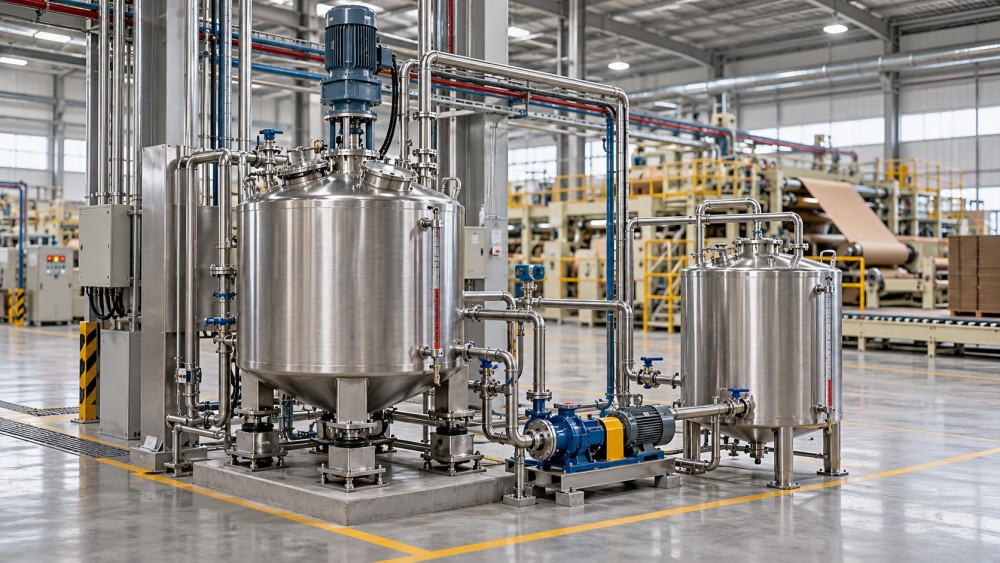
A process flow drawing is particularly useful here. It should show ingredient entry, weighing points, preparation stages, storage, and the supply and return circuits. This reveals whether a higher quotation purchases additional processing capability or simply includes equipment omitted elsewhere.
Pay for measurable dosing and control performance
Automation raises starch mixer price through weighing equipment, instruments, actuated valves, electrical controls, software, and commissioning. Its value depends on which sources of variation it controls. Automatic recipe selection offers limited protection if ingredient quantities remain dependent on inconsistent manual measurement.
Accuracy claims require a defined measurement basis. A percentage of full scale can represent a different allowable error from the same percentage of the ingredient dose. Small additions deserve particular attention because a weighing arrangement suitable for bulk starch or water may provide insufficient resolution for a much smaller chemical quantity.
Installed weighing performance also depends on mechanical design. Rigid pipe connections, vibration, and material resting on the vessel assembly can disturb load-cell readings. The proposal should explain how the weighing system is isolated and how calibration is performed after installation.
Useful control functions include recording actual additions, preventing an incorrect sequence, and identifying an incomplete batch. Automatic viscosity measurement needs further definition: measurement temperature, sampling location, instrument cleaning, and correlation with the agreed laboratory method all affect its usefulness. An instrument label alone does not establish reliable recipe correction.
Construction details affect service life and maintenance cost
Material selection needs to reflect the actual adhesive chemistry, cleaning agents, temperature, and exposure conditions. “Stainless steel construction” is too broad for quotation comparison. The specification should identify the material grades and distinguish wetted components from frames, covers, and other external parts.
Fabrication quality matters where adhesive collects. Poor drainage, inaccessible corners, and unsuitable valve arrangements retain material and increase cleaning work. Shaft seals, pump seals, and connections require attention because leakage and dried adhesive can make routine maintenance difficult. Access to the agitator, heating surfaces, and instruments affects how long repairs take.
A higher material or fabrication specification is justified when it addresses a defined operating condition. Paying for an unspecified “heavy-duty” design offers little basis for evaluating value. Drawings, component schedules, and maintenance access arrangements provide stronger evidence than general descriptions of durability.
Integration can outweigh the difference in mixer prices
A new preparation unit must work with the existing glue delivery system. Pump capacity, pipe diameter, transfer distance, elevation, return flow, and adhesive viscosity influence delivery performance. A mixer can meet its batch specification while the corrugator still experiences inadequate supply because the downstream circuit restricts flow.
Storage and circulation arrangements deserve particular attention when replacing existing equipment. Residual adhesive in tanks and return lines can affect the properties of a fresh batch. Connecting a new mixer to an unchanged circuit therefore requires an assessment of how the combined system manages inventory, temperature, and recipe transitions.
Site utilities also alter installed cost. Heating arrangements need to match the available supply, and the quotation should state required water pressure, electrical capacity, compressed air, and any steam conditions. Inadequate utility flow can lengthen the batch cycle even when the mixer itself performs correctly.
Transport access, lifting, foundations, drainage, and installation space belong in the commercial comparison. Replacement projects also need a workable cutover arrangement. The cost of temporary adhesive supply or a planned production interruption can erase an apparent saving in the equipment quotation.
Compare operating cost using the same production assumptions
A useful total-cost model includes equipment, delivery, installation, commissioning, utilities, maintenance, cleaning, and adhesive losses over an agreed evaluation period. Each proposal should use the same production hours, recipe basis, labor assumptions, and utility rates. Otherwise, differences in the spreadsheet may come from assumptions rather than equipment performance.
Energy comparison requires a clear boundary. Agitator motor rating does not represent total consumption, and a short mixing time does not automatically mean lower energy use. Include heating, transfer, circulation, and the actual operating cycle. Where suppliers make consumption claims, request the recipe, batch size, starting conditions, and measurement method behind them.
Potential savings from adhesive consistency need evidence. Stable preparation can reduce corrective additions and discarded batches, but board bonding also depends on paper characteristics, heat transfer, glue application, and corrugator settings. Assigning every bonding defect or speed restriction to the starch kitchen exaggerates the possible return.
Maintenance comparisons should include seal and pump service, calibration, instrument cleaning, and the availability of control components. Software access, backup procedures, licensing, and technical support terms also affect the cost of restoring production after a control failure.
Make the price difference testable before placing the order
The final quotation should connect its price to acceptance criteria that can be demonstrated. Broad promises such as “consistent glue quality” leave too much room for interpretation. A workable agreement defines the recipe, ingredient conditions, usable batch size, complete cycle time, and the adhesive properties to be measured.
- Batch repeatability should be assessed across consecutive preparations using agreed sampling and measurement methods, including temperature conditions for viscosity testing.
- If several recipes are required, the acceptance scope needs to identify which formulations will be demonstrated and what changeover work is included.
- Delivery performance requires a separate test at the agreed connection point. Successful mixing inside the vessel does not establish adequate flow at the corrugator.
- Recovery from an interrupted batch needs a defined procedure, especially where automatic dosing could otherwise leave uncertainty about quantities already added.
Payment milestones and commissioning responsibilities should follow this scope. The contract needs to state who supplies trial ingredients, utilities, laboratory measurements, and any external pipework required for testing. Unresolved interfaces frequently become variation charges once installation begins.
A higher starch mixer price is defensible when the proposal demonstrates required output, repeatable preparation, and compatibility with the installed glue circuit. Where two systems meet the same verified requirements, the remaining comparison rests on installed cost, maintenance obligations, and the expense of keeping adhesive available throughout production.
Related News
 KPS to Acquire 70% of MM Packaging at €2.4 Billion Enterprise ValueKPS will acquire 70% of MM Packaging at a €2.4 billion enterprise value. Explore what the deal means for the packaging business and its customers.Corrugated Thermodynamics Architect
 How to Size Bridge Conveyors for a Corrugator LineSize Bridge Conveyors for your corrugator line with practical guidance on web accumulation, sheet throughput, layout, and controls. Avoid costly bottlenecks.Corrugated Thermodynamics Architect
 Nine Dragons Paper Raises Chongqing Corrugated Paper Price by 50 Yuan per TonneNine Dragons Paper raises Chongqing corrugated paper prices by 50 yuan per tonne. See when the increase takes effect and what it means for packaging costs.Corrugated Thermodynamics Architect
 How Automatic Warp Control Systems Improve Corrugated Board FlatnessDiscover how automatic warp control systems improve corrugated board flatness, reduce production waste and support more reliable converting.Corrugated Thermodynamics Architect
 How to Evaluate a Sheet Stackers Factory for Your Production LineEvaluate a sheet stackers factory with confidence. Compare capacity, line integration, acceptance tests and service to choose the right supplier for your production line.Corrugated Thermodynamics Architect
 What to Ask a Starch Mixer Manufacturer Before OrderingChoosing a starch mixer manufacturer? Ask these essential questions about capacity, pricing, automation and support before you order.Corrugated Thermodynamics Architect