How to Choose an Unwind Stands Supplier for a Corrugator
When a corrugator loses time at reel changes or struggles to run a new paper grade, a low-priced unwind stand can become an expensive purchase. Choose an unwind stands supplier by first confirming that its equipment can handle your actual reels and integrate with your line, then compare tension control, safety, service support and total installed cost. A quoted top speed alone is not enough to establish a good fit.
The decision becomes especially important when a stand is being replaced on an existing line. The available floor space, downstream splicer, control system and reel-handling method may limit the options. Give suppliers the same operating information and ask them to identify exclusions before comparing their offers.
Start with the reels and the line, not the quotation
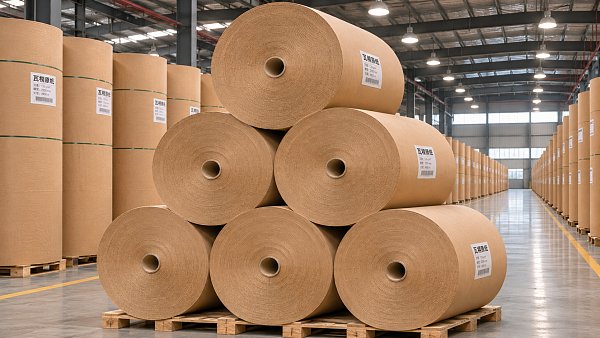
Prepare a specification based on the paper the plant runs today and the range it reasonably expects to run during the equipment’s life. Nominal reel width and weight are only part of the picture. The supplier also needs to know the core dimensions, maximum and minimum reel diameters, paper grades and any restrictions on reel condition or loading orientation.
Ask suppliers to confirm the full operating envelope rather than treating each maximum as an independent guarantee. For example, a stand may accept a maximum reel width and a maximum reel weight, but the quotation should state whether it can handle both together at the required diameter and line speed. Confirm whether the capacity is rated per reel position and whether there are limits on reel positioning or lateral movement.
- Paper range: liner and medium grades, basis weights, reel widths and any particularly tension-sensitive materials.
- Reel details: core size and type, diameter, maximum weight, storage orientation and loading method.
- Line conditions: design speed, typical operating speed, acceleration and deceleration requirements, and available space.
- Connections: downstream splicer or preheater arrangement, electrical supply, compressed air and any hydraulic requirements.
- Production pattern: expected reel-change frequency, shift coverage and whether orders require frequent width changes.
Separate mandatory limits from desirable capacity. Overspecifying every dimension can add cost or restrict the supplier pool, while buying to an average reel can leave the plant unable to run a heavier or wider material later. Where a future requirement remains uncertain, request a separately priced option and its installation implications.
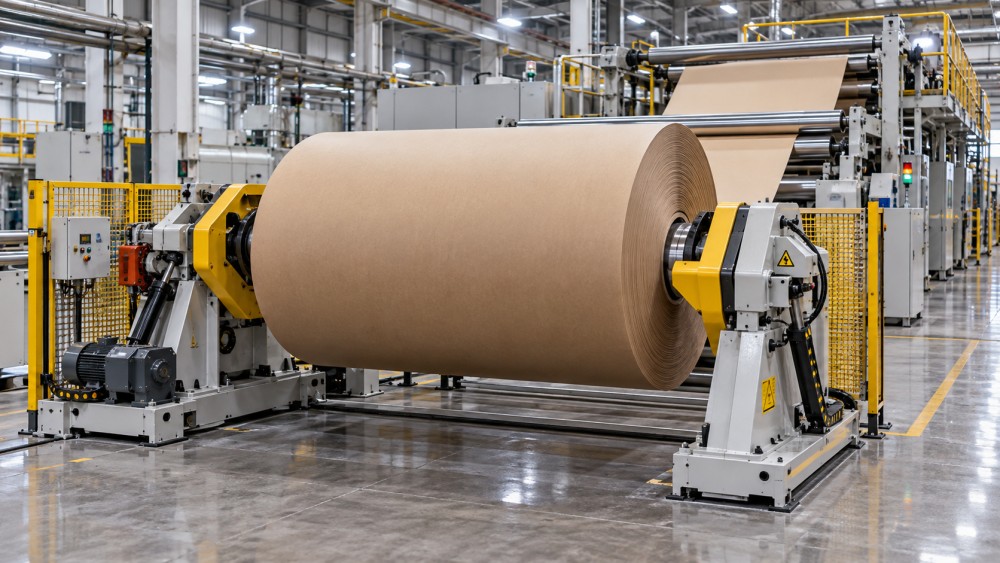
Examine reel handling and tension control
A stand must support the reel securely and feed the web at a controlled tension as reel diameter changes. Poor control can contribute to web breaks, unstable splices or difficulties downstream. The stand is not necessarily the sole cause of those symptoms, so ask suppliers to explain how their system works with the rest of the line rather than promising that a stand alone will eliminate waste.
Clamping, lifting and reel changes
Check whether the proposed shaftless arms, chucks and clamping arrangement suit your core types and reel weights. Ask how the operator centers the reel, how damaged cores are handled and what prevents a reel from being released unintentionally. Confirm the lifting range and the clearance needed for the largest reel, including access for a reel cart or other loading equipment.
For a dual-position stand, establish what work can be done on the idle position while the other reel is running. A second position does not by itself guarantee a flying splice: the splicer, controls and operating sequence must also support the intended changeover. Request a description of the sequence from loading a new reel through removing the spent core.
Braking across the reel’s working diameter
The braking system must provide suitable control from a full reel down to the chosen minimum diameter. Ask the supplier to describe the brake type, how braking is adjusted as the reel unwinds, and how tension settings are changed for different paper grades. Clarify whether tension is controlled directly by measurement or indirectly through a calculated or operator-set value; these approaches have different instrumentation and integration needs.
Discuss heat management and brake wear under the proposed duty cycle, particularly if the line runs heavy reels at sustained speed or makes frequent stops. Request the recommended inspection intervals and expected replacement items, but treat any life estimate as dependent on actual operating conditions. Also ask what happens to the web and brake when power or air pressure is lost.
Match the stand to the existing corrugator
A mechanically suitable machine can still be costly to install if the interface scope is unclear. Obtain a layout showing the web path, pass line, reel-loading side, maintenance clearances and positions of guards and controls. Compare it with the existing splicer and downstream equipment, not just the empty footprint of the old stand.
The controls discussion should cover the signals needed for line start and stop, speed reference, tension settings, splice preparation, alarms and emergency stops. Identify which party will provide and program each interface, and whether changes to the existing machine are included. An integration responsibility matrix is useful when the stand supplier, corrugator supplier and plant engineering team are different parties.
Existing equipment may also determine the practical choice between a replacement stand and a broader reel-handling upgrade. A new stand attached to an incompatible or unreliable splicer may leave the original bottleneck largely unchanged. Ask for the interfaces and assumptions to be documented before approving either scope.
Compare safety provisions as part of the design
Reels are heavy, and moving arms, rotating reels and braking components create hazards during loading, threading, operation and maintenance. Review the supplier’s guarding layout, access points, emergency-stop arrangement and procedures for isolating stored energy. Confirm how operators can observe clamping and threading without entering hazardous areas.
Request a description of the safety functions and the documentation supplied with the machine, including the risk assessment and instructions relevant to installation and use. Applicable requirements depend on the installation location and the complete line configuration; agree who is responsible for assessing the final integrated system. Do not assume that a supplier’s standard machine configuration automatically resolves site-specific risks.
Put competing offers on the same cost basis
The purchase price should be only one line in the comparison. Some quotations include installation supervision, commissioning and training; others cover the machine at the factory gate. Differences in guarding, chucks, brake controls, electrical cabinets or spare parts can also make two apparently similar offers difficult to compare.
Include the expected production interruption in the project estimate. The replacement window may need time for removal of the old stand, installation, alignment, control changes and trial running. Ask each supplier for an installation schedule with dependencies; compare those assumptions with the plant’s available shutdown window rather than accepting a schedule without checking site readiness.
For operating cost, use the plant’s own estimates for energy, maintenance labor, consumables and downtime. Suppliers can provide equipment-specific inputs, but a calculation is only comparable when the same production hours, paper mix and accounting assumptions are applied to each offer. Keep uncertain items visible as ranges rather than presenting them as guaranteed savings.
Test service capability before placing the order
A supplier’s response to a technical problem matters after commissioning. Ask who provides support in the installation region, which languages and hours are covered, and how remote diagnosis is handled. Determine whether the plant can obtain mechanical components, brake consumables and control parts locally or must order them from another location.
Request a recommended startup spare-parts list with part numbers, quantities and current lead-time assumptions. Distinguish routine wear items from components whose failure would stop production. Where proprietary control hardware or software is used, establish who can access it, what backups are supplied and whether changes require a service visit.
Warranty terms deserve the same scrutiny. Check the start date, duration, exclusions, claim process and responsibility for travel, freight and labor. A long warranty is less useful if the parts or service needed to resolve a fault are difficult to obtain.
Turn the specification into acceptance criteria
Before contract award, agree on what the supplier must demonstrate and under which conditions. A factory test can check functions and documentation before shipment, but it may not reproduce the plant’s complete web path or paper mix. Site acceptance should therefore address the installed system and identify the reels, operating conditions and personnel needed for the test.
- Confirm the agreed reel dimensions, weights, core types and loading sequence using representative materials available for the test.
- Check lifting, clamping, centering, braking, operator controls and relevant safety functions against the agreed procedure.
- Run the line at agreed speeds and operating conditions, including acceleration, deceleration and reel changes where the integrated equipment permits.
- Record outstanding defects, responsibilities and deadlines, and verify delivery of manuals, electrical drawings, spare-parts information and training.
Define measurable limits where the parties have enough information to do so, including the test method and how results will be recorded. Avoid accepting an undefined claim such as “suitable for high-speed operation.” If a required paper grade or reel size will not be available during commissioning, agree in advance how that capability will be verified and how unresolved issues will be handled.
The strongest offer is the one that makes its technical boundaries and commercial responsibilities clear. Before issuing the purchase order, reconcile the final quotation, layout, interface matrix and acceptance procedure so that essential items have not been left between suppliers or moved into unpriced site work.
Related News
 KPS to Acquire 70% of MM Packaging at €2.4 Billion Enterprise ValueKPS will acquire 70% of MM Packaging at a €2.4 billion enterprise value. Explore what the deal means for the packaging business and its customers.Corrugated Thermodynamics Architect
 How to Size Bridge Conveyors for a Corrugator LineSize Bridge Conveyors for your corrugator line with practical guidance on web accumulation, sheet throughput, layout, and controls. Avoid costly bottlenecks.Corrugated Thermodynamics Architect
 Nine Dragons Paper Raises Chongqing Corrugated Paper Price by 50 Yuan per TonneNine Dragons Paper raises Chongqing corrugated paper prices by 50 yuan per tonne. See when the increase takes effect and what it means for packaging costs.Corrugated Thermodynamics Architect
 How Automatic Warp Control Systems Improve Corrugated Board FlatnessDiscover how automatic warp control systems improve corrugated board flatness, reduce production waste and support more reliable converting.Corrugated Thermodynamics Architect
 How to Evaluate a Sheet Stackers Factory for Your Production LineEvaluate a sheet stackers factory with confidence. Compare capacity, line integration, acceptance tests and service to choose the right supplier for your production line.Corrugated Thermodynamics Architect
 What to Ask a Starch Mixer Manufacturer Before OrderingChoosing a starch mixer manufacturer? Ask these essential questions about capacity, pricing, automation and support before you order.Corrugated Thermodynamics Architect