How a High Speed Carton Ejector Improves Corrugator Line Output
How a High Speed Carton Ejector Improves Corrugator Line Output
For a corrugator upgrade project, the most visible machinery is usually the wet end, double facer, cut-off, or stacker. Yet many output losses originate further downstream, where finished board, carton blanks, or converted packs must be separated, transferred, and cleared without interrupting the next production cycle. A high speed carton ejector addresses this less glamorous but very practical part of the line.
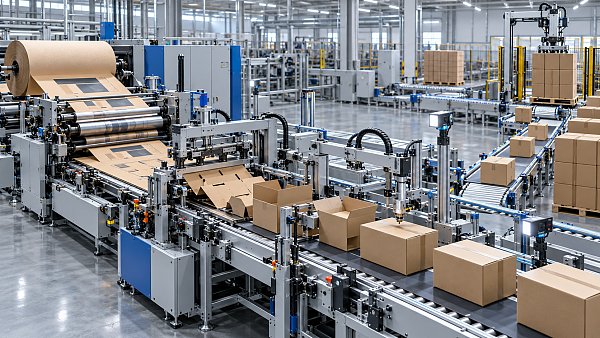
Its job is not simply to push material away. In a properly engineered system, the ejector creates a controlled handoff between production and downstream handling. It removes completed cartons or bundles at the required moment, maintains spacing, prevents accumulation in a critical zone, and gives conveyors, stackers, palletizing cells, or operators enough time to receive the product. When this handoff is unstable, a corrugator can be mechanically capable of running faster than the surrounding process can absorb.
That distinction matters for project managers. Nameplate speed is useful, but usable line speed depends on the slowest reliable section of the production flow. A carton ejector will not correct poor paper conditioning, unstable starch bonding, weak score control, or an overloaded cut-off. It can, however, remove a recurring bottleneck that forces operators to slow the line, intervene manually, or accept avoidable damage at the delivery end.
The downstream bottleneck is often hidden in normal production
On a steady long run, downstream handling may appear adequate. The problem usually becomes obvious during real production conditions: mixed order sizes, lightweight grades, warped board, frequent order changes, short delivery windows, and several downstream machines competing for material. A small delay in carton removal can become a compressed queue. The queue becomes an operator intervention. The intervention becomes a short stop, and repeated short stops can affect the practical output of the entire corrugator line.
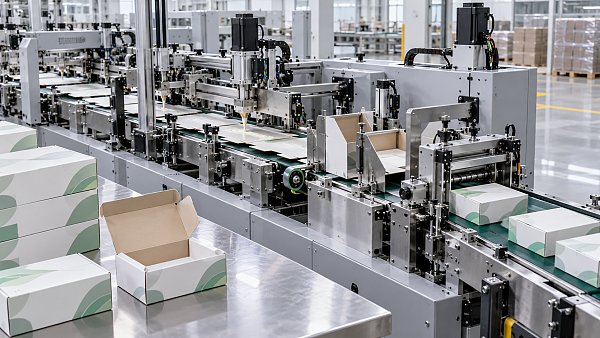
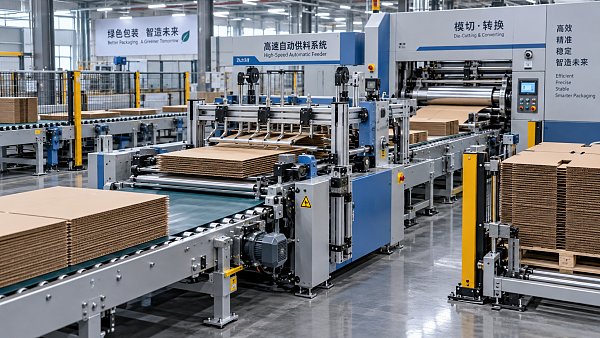
In corrugated operations, the word “carton ejector” can describe different arrangements depending on the plant layout. In some cases, it refers to equipment that diverts or clears finished carton blanks after converting. In others, it handles bundles or sheets after cutting, stacking, or a downstream flexo folder gluer. The engineering principle remains the same: remove the intended product safely and consistently while keeping the main material path moving.
This is why a high speed carton ejector should be evaluated as part of an integrated material-flow system, not as an isolated accessory. Its performance depends on what enters the ejector, what receives the product afterward, and how controls communicate across those sections. A fast ejection motion without adequate receiving conveyor capacity merely moves the congestion downstream.
What changes when ejection becomes controlled rather than manual
Manual clearing is flexible, but it is rarely consistent at high production rates. Operators must judge timing, carton position, bundle stability, and available space at the same time. That can work during slower runs or unusual jobs. It becomes a weak point when throughput rises, especially where sheets have low stiffness, cartons are narrow, or downstream equipment requires reliable gaps between units.
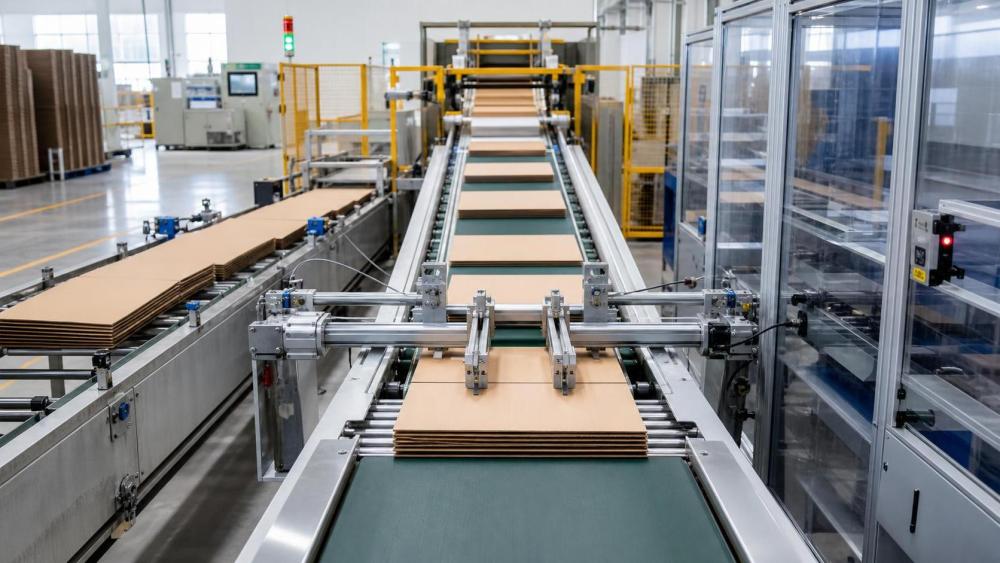
A well-matched automated ejector uses position sensing and machine logic to trigger removal at a repeatable point in the cycle. Depending on the design, it may use a pusher, belt-based transfer, controlled diverter, vacuum-assisted movement, or a servo-driven mechanism. The appropriate method depends on carton format, surface condition, production speed, orientation, and whether the material must be ejected, diverted, rejected, or transferred in sequence.
The immediate benefit is smoother flow. The more important benefit is predictability. A downstream conveyor or automated palletizing system can be designed around known product spacing and direction. Quality inspection equipment has a more stable presentation surface. Operators can focus on exception handling and quality checks rather than repeatedly rescuing material from an accumulation point.
This also protects board quality. Corrugated cartons are vulnerable to edge crush, scuffing, score cracking, and deformation when they collide, drag, or sit under pressure in an unplanned pile-up. These defects may not always be noticed at the delivery end. They can appear later during printing, die-cutting, folding, gluing, or filling, where a slightly damaged blank causes registration issues or poor carton formation. Preventing congestion is therefore partly an output issue and partly a yield issue.
The real output gain comes from fewer micro-stoppages
Projects are sometimes justified on the assumption that an ejector will increase maximum machine speed. That may happen if the old delivery section is the limiting factor, but it is not the most reliable way to frame the investment. The stronger operational case is often a reduction in small interruptions: waiting for an operator to clear material, re-aligning a displaced bundle, restarting after a jam, or slowing a run because delivery is becoming unstable.
These losses are easy to underestimate because they are distributed through the shift. A production report may show reasonable average speed while hiding frequent decelerations and short stops. For an upgrade review, it is worth separating major breakdowns from repeatable delivery-side interruptions. If the same problem appears across multiple shifts and product formats, it is usually a system constraint rather than an operator issue.
A high speed carton ejector can support better output when it is sized for the actual operating envelope, not merely the fastest product. The ejector must cope with the smallest and largest cartons expected, variations in flute profile and board grade, different bundle heights where applicable, and the friction characteristics of coated or printed surfaces. A mechanism tuned only for a rigid, standard-size carton may become unreliable when production moves to lightweight e-commerce shippers or short-run retail formats.
Integration with the corrugator controls matters more than the mechanism alone
The mechanical design attracts attention, but controls integration usually determines whether an ejector is genuinely useful. The system should know which order is running, the relevant carton length or blank dimensions, the line state, and whether the receiving zone is available. It should also provide clear fault feedback rather than leaving operators to interpret a generic stop condition.
For lines with automatic order changeovers, synchronization is particularly important. The ejector must respond correctly as product dimensions and delivery logic change. If an old setting carries into the first units of a new order, the plant may create jams precisely when the line is already in its most sensitive transition period. Changeover reliability deserves the same scrutiny as running speed.
A useful project specification should therefore go beyond “high speed.” It should define the product range, required ejection or transfer direction, expected cycle pattern, acceptable carton orientation, downstream accumulation allowance, interface signals, safety conditions, and access requirements for maintenance. Where vision inspection, coding, or traceability systems are present, the team should confirm whether ejection must preserve product identity or segregate rejected material without mixing it into good output.
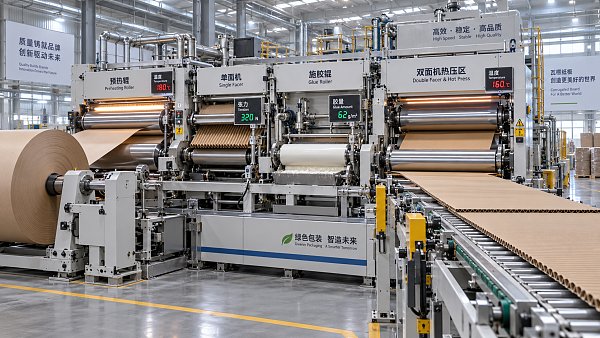
CPCS frequently examines packaging automation through this systems lens. On a corrugated board line, paper preheating, single facer performance, adhesive control, slitting, scoring, cross-cutting, stacking, conveying, and end-of-line handling are connected. The delivery section cannot compensate for upstream defects, but a weak delivery section can erase the output benefit of a stable upstream process.
Where projects can go wrong
One common mistake is treating the ejector as a simple labor-reduction device. Reduced manual handling can be valuable, particularly where staffing is tight or repetitive work creates ergonomic concerns. But removing an operator without confirming the downstream flow can make a line less forgiving. Operators often compensate for poorly designed spacing, inconsistent carton presentation, or insufficient buffer capacity. Automation should eliminate that instability, not conceal it.
Another mistake is selecting an overly aggressive ejection method. Higher force is not automatically better. Thin board, freshly converted cartons, high-graphic surfaces, or partially cured inks may need gentler contact and more controlled acceleration. The right design balances speed with product integrity. A cleanly ejected carton that later shows crushed edges or visible scuffing is not a successful result.
Maintenance access is also easy to overlook in layout drawings. Sensors become dusty, belts wear, guides require adjustment, and pneumatic or servo components need routine inspection. If the ejector is placed where technicians cannot safely access it, a small adjustment becomes a disruptive event. During design review, teams should check guarding, lockout procedures, component access, spare-part strategy, and how faults can be cleared without creating unsafe manual work.
A practical way to assess the upgrade
Before committing to a solution, map the actual flow from cut-off or converting discharge through to final collection, palletizing, or the next machine. Observe several job types rather than one ideal run. Note where operators touch the product, where cartons accumulate, which formats need speed reductions, and what happens during order transitions. Production data is helpful, but direct observation often reveals details that reports do not capture: cartons skewing at one guide rail, delayed response from a receiving conveyor, or a stack that becomes unstable only after a specific board grade is introduced.
The resulting specification should be based on stable output through normal variability, not a demonstration run under perfect conditions. Suppliers can then assess whether the existing layout supports the proposed motion, whether buffering is needed, and whether upstream or downstream modifications are required. This reduces the risk of buying a technically fast device that creates a new constraint elsewhere.
Output is a line-level result
A high speed carton ejector is most valuable when it is used to protect continuity: continuity of material flow, carton quality, order transitions, and downstream automation. It can reduce dependence on constant manual intervention and give a corrugator line a more stable operating rhythm. But its contribution should be judged against the full production chain, including conveyors, stackers, inspection, converting, and end-of-line handling.
For an upgrade team, the sensible question is not simply whether the ejector can move cartons quickly. It is whether the complete system can receive, identify, separate, transfer, and recover from faults at the pace the corrugator is expected to sustain. That is the point at which a delivery-side improvement becomes a credible output improvement rather than another isolated piece of equipment.
Related News
 How Steam Pressure and Capacity Affect Boiler Prices for CorrugatorsCompare steam boiler price factors for corrugators. Learn how pressure, capacity, and peak loads affect installed costs—and choose the right system without overspending.Corrugated Thermodynamics Architect
 What Determines Compression Section Price in Corrugator ProjectsCompression section price depends on width, speed, pressure control, heating, automation, and integration. Learn how to compare quotes and maximize corrugator ROI.Corrugated Thermodynamics Architect
 How a Servo Driven Folder Gluer Machine Improves Carton AccuracyDiscover how a servo driven folder gluer machine improves carton accuracy through synchronized motion, repeatable folding, precise glue placement, and faster changeovers.Corrugated Thermodynamics Architect
 How Carton Making Machines Improve Output in High-Mix PlantsCarton Making Machines help high-mix plants increase sellable output with faster changeovers, lower waste, reliable quality control, and smoother workflow integration.Corrugated Thermodynamics Architect
 Corrugator Control Systems That Improve Board Quality and UptimeCorrugator Control Systems improve board quality, reduce waste, and increase uptime with coordinated heat, moisture, tension, glue, and speed control.Corrugated Thermodynamics Architect
 How High Speed Feeder Systems Support Faster Corrugator OutputHigh speed feeder systems help corrugator plants improve stable throughput, reduce feeding delays, protect board quality, and maximize converting efficiency.Corrugated Thermodynamics Architect