How Single Facers Shape Corrugated Board Speed and Consistency
On a corrugator, the single facer is often where the character of the board is decided. A line may have capable cut-off equipment, efficient stacking, and sophisticated production controls, yet it will still struggle to deliver consistent board if the first web cannot be formed and bonded reliably. The single facer turns liner and medium into a single-face web, creating the flute profile and adhesive bond that every downstream process depends on.
For plant managers, engineers, and equipment researchers, this makes Single Facers much more than one station within a corrugated board line. Their design influences achievable speed, flute quality, moisture balance, warp tendency, adhesive consumption, paper waste, and the stability of later bonding at the double facer. Understanding these relationships is a practical starting point for anyone assessing corrugator capacity or investigating recurring board-quality issues.
What Single Facers Actually Do in a Corrugator
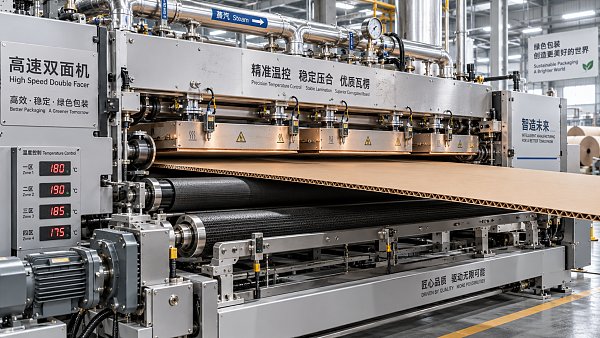
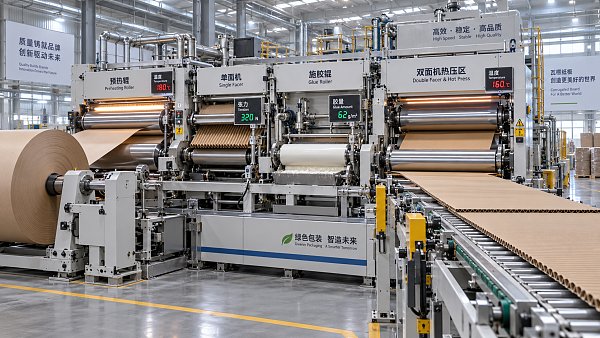
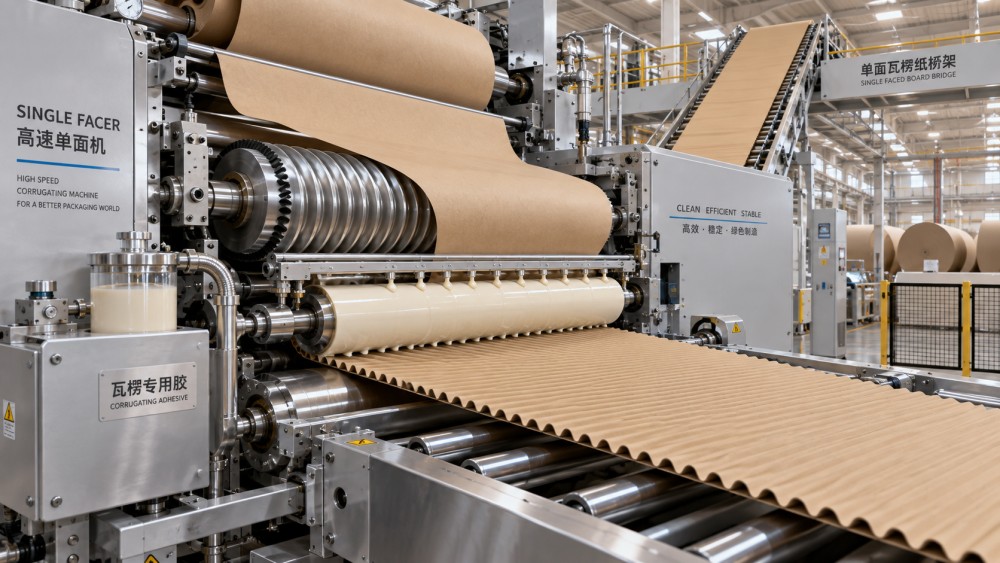
A single facer combines corrugating medium with one linerboard. The medium passes through corrugating rolls, where it is shaped into flutes. Starch adhesive is then applied to the flute tips, and a pressure roll brings the liner into contact with the glued medium. The output is a continuous single-face web, usually carried onward by a bridge conveyor until it joins the second liner at the double facer.
The process sounds straightforward, but it takes place under conditions that are difficult to hold steady: paper temperatures vary, moisture changes from reel to reel, steam response is not instantaneous, and recycled-content papers can behave differently across a single roll. At low speed, a minor imbalance may be manageable. At high speed, that same imbalance can become poor flute formation, uneven glue transfer, delamination, or web breaks within minutes.
The single facer therefore sits at the intersection of mechanical precision, thermal control, adhesive management, and web handling. Its role is not simply to make flutes; it must make them repeatedly, at the required speed, while accommodating the paper grades and order mix a plant actually runs.
Speed Is Not Just a Number on the Machine Specification
When suppliers describe a high-speed corrugator, the stated line speed attracts attention. Yet the more useful question is: At what speed can the single facer maintain stable flute geometry and bond quality with the plant’s typical papers? Maximum mechanical speed and dependable production speed are not always the same thing.
At faster running conditions, paper has less time to absorb heat and condition before entering the corrugating rolls. Adhesive application must remain accurate despite rapid roll rotation. The pressure system has to support bonding without crushing flutes. Small variations in web tension or temperature become amplified because there is less process time available to correct them.
A reliable single facer supports speed by keeping these variables in a narrow operating window. This does not mean running every order at the same rate. Lightweight papers, high recycled-content medium, demanding flute profiles, and difficult ambient conditions may require different settings. Consistency comes from the ability to reach the right operating window quickly and hold it there—not from forcing every grade through at a headline speed.
For this reason, plants evaluating Single Facers should look beyond nominal meters per minute. They should ask how the equipment performs during acceleration, deceleration, splice events, paper-grade changes, and longer production runs. Those are the moments when real process capability becomes visible.
The Four Conditions That Shape Board Consistency
1. Heat and moisture must arrive in balance
Paper needs sufficient conditioning before it enters the corrugating rolls. Preheaters, wrap arms, steam showers, and related systems influence the temperature and moisture state of both medium and liner. If the medium is too dry or insufficiently heated, it may resist forming, crack along the flute structure, or produce irregular flute height. If it carries too much moisture, the sheet can become unstable and create downstream drying challenges.
Heat control is especially important because paper is not a uniform material. Seasonal humidity, storage conditions, basis weight, fiber composition, and supplier variation all affect its response. A well-designed system gives operators meaningful control over wrap angle, heating exposure, and steam application. Just as important, it provides feedback that helps them see when conditions are drifting before poor board reaches the stacker.
The best thermal setting is not necessarily the hottest setting. Excessive heat can contribute to over-drying, curl, unnecessary energy use, and brittle paper behavior. The goal is conditioned paper that forms cleanly and bonds efficiently.
2. Corrugating roll condition defines the flute
The corrugating rolls give the medium its shape. Their flute profile, surface condition, alignment, and temperature control affect flute height, flute pitch, compression resistance, and the contact area available for adhesive bonding. Wear in the roll surface can gradually change the process long before a major mechanical fault is obvious.
Operators may notice symptoms such as less uniform flute formation, increased glue demand, more edge defects, or a growing need for process adjustment to maintain results. These are not always adhesive problems. They can indicate that roll condition or roll alignment deserves closer attention.
Roll selection also needs to match the product strategy. Different flute types serve different packaging requirements, balancing cushioning, compression performance, printability, material consumption, and converting behavior. A plant focused on lightweight e-commerce shippers may prioritize a different operating profile from one producing heavy-duty industrial board. The single facer must support that intended mix rather than being judged in isolation.
3. Pressure must bond the web without damaging it
After adhesive reaches the flute tips, the pressure roll brings the liner and corrugated medium together. Too little effective pressure can result in incomplete contact and weak bonding. Too much pressure may crush flutes, reduce caliper, or create a board structure that looks bonded but has lost part of its performance potential.
The challenge becomes sharper with changing paper grades. A heavy liner and a lightweight liner do not react identically, while stiff virgin-fiber medium and softer recycled medium may need different handling. Modern pressure systems are valuable not because they eliminate operator judgment, but because they make adjustment more controlled and repeatable.
In practical terms, plant teams should monitor both immediate bond appearance and downstream evidence. A web may seem acceptable at the single facer but reveal weak adhesion, washboarding, or uneven board thickness after it passes through the rest of the corrugator. Looking at the whole process prevents teams from treating each symptom as an isolated event.
4. Web tension has to be calm, not merely tight
Paper handling is a frequent source of variation. Tension that is too low can allow wandering and unstable engagement with the rolls. Tension that is too high can stretch the web, contribute to breaks, distort flute formation, or worsen curl behavior. The desired condition is stable tension matched to the paper’s strength, width, and moisture condition.
Brake performance, reel stand response, splice quality, dancer systems, web guides, and conveyor coordination all matter. In a busy plant, a single facer rarely receives perfectly identical input rolls. It must cope with the reality of changing reel diameters, paper characteristics, and operator interventions without creating avoidable waste.
Adhesive Control: Small Deviations, Large Consequences
Starch adhesive is central to corrugated board integrity, but more adhesive is not automatically safer. Excess glue can increase drying demand, encourage warp, raise starch consumption, and create messy buildup. Too little glue, or poor transfer to the flute tips, can lead to delamination and poor pin adhesion.
Effective glue control depends on formulation, viscosity, temperature, solids content, applicator roll condition, metering settings, and the cleanliness of the glue system. It also depends on the incoming paper. Absorbent or irregular medium may react differently from a dense, smooth grade, even when the glue kitchen is operating normally.
A useful discipline is to connect adhesive adjustments to observable board outcomes. Rather than increasing glue whenever bonding looks questionable, teams should ask whether the issue is caused by paper conditioning, flute formation, pressure, contamination, or drying capacity. This process view helps avoid a common mistake: using adhesive volume to compensate for a mechanical or thermal problem.
Why Single-Face Quality Travels Through the Whole Line
The single-face web enters the bridge before it reaches the double facer. If it is uneven in moisture, tension, or flute profile, the double facer inherits a more difficult job. Later stages may then show warp, poor bonding, uneven caliper, score cracking, inaccurate die-cutting, or inconsistent box compression performance.
This is why a quality conversation should not begin only at final inspection. Board defects have a history. A warped sheet at the delivery end may have started with uneven heat exposure; a converting issue may trace back to crushed flutes; an apparent double-back bond failure may be connected to single-face moisture imbalance. Following the defect upstream often produces a more durable correction.
For packaging factories handling short runs and frequent order changes, this relationship is even more important. Every grade transition creates a risk of temporary instability. Fast recipe recall, responsive heat control, well-maintained rolls, and clear operating procedures reduce the amount of transition board that must be downgraded or discarded.
How to Evaluate Single Facers for a New Line or Upgrade
Information researchers comparing corrugator equipment can benefit from a practical evaluation framework. Instead of asking which model is “best,” begin with the production environment and the constraints that matter most.
- Paper range: What liner and medium basis weights, recycled-content levels, and paper widths will be run most often?
- Product mix: Which flute profiles, board grades, and order lengths are commercially important?
- Stable operating speed: What output can be sustained with representative paper, rather than ideal test material?
- Changeover behavior: How quickly can settings for heat, pressure, glue, and web handling be adjusted or recalled?
- Maintenance access: Are roll changes, cleaning, inspection, and routine servicing practical within the plant’s maintenance resources?
- Control integration: Can the single facer exchange useful data with the corrugator control system, production scheduling tools, and quality monitoring processes?
- Energy and steam demand: How does the design support efficient conditioning without making quality overly dependent on manual intervention?
It is also wise to distinguish between equipment capability and factory capability. A sophisticated single facer cannot fully compensate for poorly stored paper, unstable steam supply, inconsistent adhesive preparation, or weak preventive maintenance. Investment decisions should consider the complete system: paper logistics, utilities, process controls, operator training, and the downstream bottlenecks that determine whether higher single-face output becomes sellable board.
Common Misunderstandings Worth Avoiding
One misunderstanding is that board consistency is mainly a double facer issue. The double facer is critical, but it cannot entirely repair an unstable single-face web. Another is that higher pressure or more glue will solve every bond problem. Both interventions can hide the real cause and introduce new defects.
It is also risky to view automation as a substitute for process knowledge. Sensors, recipe systems, and data collection can make a corrugator easier to manage, particularly during frequent job changes. Their value depends on sound operating standards and a team that understands what the data means. A temperature reading, for example, is useful only when connected to paper condition, speed, adhesive behavior, and resulting board quality.
A Foundation for Reliable Corrugated Production
Single Facers shape the first critical bond in corrugated board manufacturing. Their effect reaches far beyond the machine frame, influencing how smoothly the corrugator runs, how much paper is wasted, how predictable the finished board becomes, and how confidently a plant can meet demanding delivery schedules.
For anyone learning about corrugator systems, the most useful perspective is to see the single facer as a controlled process rather than a standalone component. When heat, moisture, roll condition, pressure, adhesive application, and web tension work together, speed becomes more sustainable and quality becomes less dependent on constant correction. That is the foundation packaging producers need as board specifications tighten, order patterns become more variable, and operating margins leave less room for waste.
Related News
 What Determines Compression Section Price in Corrugator ProjectsCompression section price depends on width, speed, pressure control, heating, automation, and integration. Learn how to compare quotes and maximize corrugator ROI.Corrugated Thermodynamics Architect
 How a Servo Driven Folder Gluer Machine Improves Carton AccuracyDiscover how a servo driven folder gluer machine improves carton accuracy through synchronized motion, repeatable folding, precise glue placement, and faster changeovers.Corrugated Thermodynamics Architect
 How Carton Making Machines Improve Output in High-Mix PlantsCarton Making Machines help high-mix plants increase sellable output with faster changeovers, lower waste, reliable quality control, and smoother workflow integration.Corrugated Thermodynamics Architect
 Corrugator Control Systems That Improve Board Quality and UptimeCorrugator Control Systems improve board quality, reduce waste, and increase uptime with coordinated heat, moisture, tension, glue, and speed control.Corrugated Thermodynamics Architect
 How High Speed Feeder Systems Support Faster Corrugator OutputHigh speed feeder systems help corrugator plants improve stable throughput, reduce feeding delays, protect board quality, and maximize converting efficiency.Corrugated Thermodynamics Architect
 Heavy Duty Unwind Stands That Stabilize High-Speed CorrugatorsHeavy duty unwind stands stabilize high-speed corrugators with precise tension control, secure reel handling, and smoother roll changes. Discover how to reduce breaks, waste, and downtime.Corrugated Thermodynamics Architect