How Industrial Steam Boilers Improve Energy Efficiency in Corrugation
Energy efficiency in corrugation is not achieved by installing a larger boiler or simply reducing fuel consumption. It depends on whether heat reaches each process point at the right pressure, dryness, and response speed. Industrial steam boilers sit at the center of that system. When boiler output, steam distribution, condensate recovery, and corrugator demand are properly matched, the plant can maintain stable board quality while using less energy per usable square meter of board.
The practical benefit is broader than a lower utility bill. Stable steam helps preheat liner and medium paper consistently, supports starch gelatinization, maintains double facer bonding conditions, and reduces the need to slow the corrugator when paper moisture or board flatness becomes unstable. A steam system that wastes heat or delivers uneven pressure can create quality losses that are more expensive than the fuel itself.
Why Steam Performance Directly Affects Corrugator Efficiency
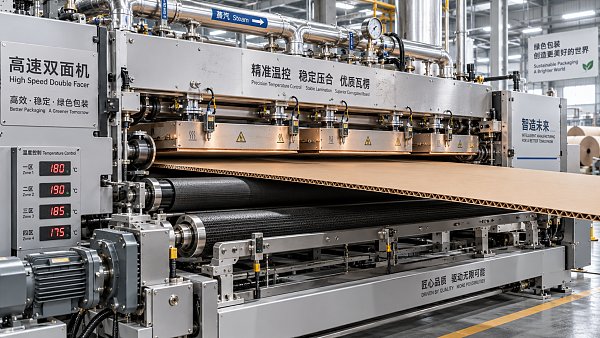
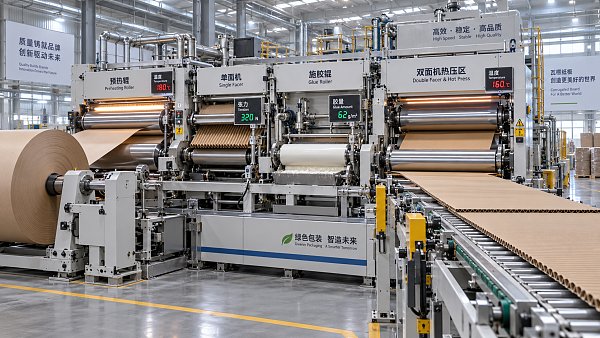
A corrugator uses steam because paper must be heated and conditioned before, during, and after fluting and bonding. Preheaters bring paper closer to the temperature needed for forming. The single facer requires controlled heat to shape the medium and support adhesive application. The double facer uses heat and pressure to complete bonding and drive excess moisture out of the board.
These processes are connected. If steam pressure drops when production speed rises, paper may enter the single facer or double facer at an inconsistent condition. Operators may compensate by changing wrap angles, brake settings, starch application, machine speed, or hot plate pressure. Those adjustments can keep the line moving, but they often increase paper waste, create warped board, weaken bonds, or cause uneven flute formation.
Industrial steam boilers improve energy efficiency when they provide usable steam reliably rather than merely generating a high volume of steam. The difference matters. A boiler can appear adequate on a nameplate basis yet still perform poorly if its controls cannot follow load changes, its steam headers are undersized, its traps fail, or condensate is discarded instead of returned.
For a corrugation project, the question is therefore not “How much steam can the boiler make?” It is “Can the complete steam system supply each machine section with stable heat under the production conditions that matter most?”
Where Energy Is Commonly Lost
Boiler fuel use is visible, but the largest operating losses may occur after steam leaves the boiler room. A project that replaces only the boiler can miss the parts of the system that determine whether new equipment produces meaningful savings.
The most expensive mistake is to judge the project only by fuel consumption at the boiler. Corrugator productivity, board reject rate, rework, and downtime must be included. A lower firing rate has limited value if the line repeatedly loses speed because steam pressure cannot recover during a demanding order.
Match the Boiler to the Real Load, Not the Largest Theoretical Number
Steam demand in a corrugated board plant is variable. It changes with line speed, board grade, paper moisture, flute profile, operating width, order mix, ambient conditions, and whether the plant runs one or multiple corrugators. Startup behavior can also be very different from stable production.
That is why boiler selection should begin with a load profile. The engineering team should map normal load, expected high-load periods, startup load, low-production operation, and future expansion. This does not require pretending that every condition can be predicted perfectly. It requires identifying the operating pattern that the boiler and distribution system must handle without forcing the corrugator into avoidable compromises.
An oversized steam generator is not automatically a conservative choice. If it spends much of its operating time at a low, unstable load, cycling and standby losses can work against efficiency. Conversely, a system sized too close to a single average demand may struggle when multiple heating zones call for steam at once. The useful design target is stable turndown and fast, controlled response across the plant’s realistic operating range.
For larger or more variable sites, staged boiler capacity can be worth evaluating. Multiple units can allow one boiler to cover lower demand while additional capacity comes online during heavy production. This approach is not always necessary, and it adds control and maintenance considerations, but it can suit facilities with changing schedules, multiple lines, or phased capacity expansion.
Do Not Treat Steam Pressure as an Isolated Boiler Setting
Pressure is a distribution and process-control issue as much as a boiler issue. High pressure at the boiler outlet does not guarantee stable pressure at the corrugator. Long pipe runs, undersized headers, restrictive valves, poor pressure reduction, and condensate accumulation can all reduce usable pressure at the point of demand.
Each process zone may also need a different pressure condition. A well-designed system uses pressure-reducing stations and control valves to supply process equipment appropriately, while keeping the boiler and main header operating within a stable range. The goal is controlled heat transfer, not maximum pressure everywhere.
When a corrugator suffers from uneven bonding or fluctuating board moisture, teams often focus first on starch chemistry or paper quality. Those factors matter, but pressure stability and condensate removal should be checked at the same time. Inconsistent heat transfer can look like a glue problem because the finished symptom appears at the bond.
Condensate Recovery Is an Operating Strategy, Not a Secondary Utility Detail
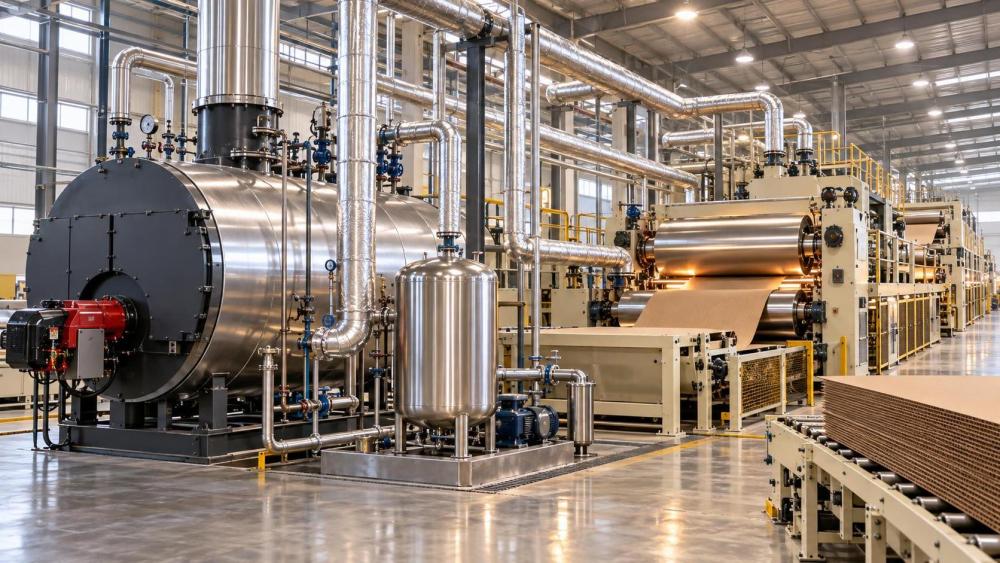
After steam gives up its latent heat in a preheater, roll, or hot plate, it becomes condensate. That condensate is still hot and usually has value. Returning it to the boiler system reduces the energy required to heat incoming water and reduces the amount of treated makeup water needed.
However, condensate return only improves results when the system is designed for the actual conditions of the corrugator. Poorly routed lines, inadequate pumping, backpressure, failed traps, or uncontrolled flash steam can prevent condensate from leaving process equipment efficiently. When condensate backs up inside a heating surface, heat transfer falls. Operators may respond by raising steam pressure, which can increase consumption without solving the underlying restriction.
The project scope should identify which condensate streams are clean enough to return, where return pressure may create difficulties, and how flash steam can be managed. Some sites have process conditions or water-quality risks that limit direct return from certain sources. The appropriate design is the one that protects boiler-water quality while recovering practical heat, not the one that pursues the highest possible return rate on paper.
Condensate temperature and return flow also provide useful operating signals. A sudden change can point to a trap failure, a process change, a leaking valve, or an issue in the return network. Connecting those indicators to routine maintenance makes energy monitoring more useful than a monthly fuel total.
Controls Matter Most During Production Changes
A corrugator rarely operates at one fixed condition throughout the day. Changes in paper grade, order length, target board construction, and running speed alter steam demand. Short-run production makes this more frequent because setup and changeover periods represent a larger share of the shift.
Boiler controls should respond to these changes without causing large pressure swings. At the same time, corrugator process controls should avoid demanding more heat than the web and production conditions require. A system with connected production and utility data can help teams see whether energy consumption rises because of a genuine production requirement or because the line is compensating for an avoidable process instability.
Useful data points include steam pressure at the boiler and key machine sections, fuel use, boiler firing status, feedwater temperature, condensate return behavior, line speed, board grade, and reject or rework events. The purpose is not to create a complicated dashboard. It is to make cause and effect visible. If fuel use rises after an order change, the team should be able to distinguish between a heavier board specification, a longer warm-up period, poor condensate removal, and a control issue.
This is where packaging plant management and equipment decisions meet. CPCS covers corrugated production systems alongside energy monitoring, maintenance alerts, and production data management because boiler efficiency cannot be separated from corrugator uptime, process stability, and material utilization.
Common Project Assumptions That Create Problems Later
“A new boiler will solve board-quality variation.” It may help, but only if the root cause is insufficient or unstable steam supply. Paper condition, starch preparation, roll condition, web tension, and machine settings can produce similar symptoms. The project should establish baseline conditions before assigning all quality issues to the boiler.
“The boiler supplier can define the entire steam requirement.” The supplier can contribute essential thermal and equipment knowledge, but corrugator demand must be developed with the machine supplier, plant engineering team, and operating personnel. Boiler sizing without process data is incomplete.
“Recovering more condensate is always better.” Recovery is beneficial when it is reliable and does not introduce contamination or backpressure problems. A poorly managed return system can reduce heat-transfer performance and create maintenance burden.
“Steam piping is a standard installation item.” Pipe diameter, slope, separation, drainage, insulation, supports, expansion allowance, and valve access affect long-term performance. These details are often less visible than a new boiler package, yet they shape pressure stability and maintenance time for years.
“Energy savings can be assessed after commissioning.” Baseline measurement should begin before the upgrade. Without a clear view of fuel use, production volume, board mix, downtime, and reject patterns, it becomes difficult to separate actual improvement from changes in operating conditions.
A Practical Scope for a Corrugator Steam Upgrade
A useful upgrade plan connects the boiler room to the machine floor. The following sequence helps prevent a technically sound boiler installation from becoming an incomplete energy project.
- Document the operating baseline. Record production conditions, typical line speed, board grades, steam-pressure behavior, fuel use, condensate return, and quality problems that occur during normal work.
- Map steam demand by process section. Identify the major consumers, the timing of peak demand, existing pressure-reduction points, and areas where operators routinely compensate for heat instability.
- Inspect the distribution and return network. Include insulation, headers, steam traps, separators, valves, drainage, condensate pumps, and maintenance access.
- Define the control philosophy before procurement. Clarify how boilers will sequence, how pressure will be controlled, what alarms matter, and which production signals should be visible to utilities personnel.
- Set acceptance criteria that include production behavior. Commissioning should assess stable operation during realistic corrugator conditions, not only boiler output during a static test.
- Assign ongoing ownership. Boiler operations, corrugator operations, and maintenance teams need shared review points. Steam losses frequently persist when each group sees only its own equipment boundary.
This approach is particularly useful when a plant is also upgrading a high-speed corrugator, adding automation, or planning future capacity. The steam system should be designed around the production system it serves, including expected changeovers and paper-grade flexibility, rather than treated as an isolated utility purchase.
What to Confirm Before Selecting Equipment
Before comparing boiler proposals, project teams should have clear answers to a small set of practical questions: What is the steam demand at normal and peak production? How rapidly does demand change? What pressure is required at each corrugator section? What condition are the current steam and condensate networks in? Which parts of the system can be retained, and which parts would limit a new boiler? Is the plant adding new lines or changing its order mix? How will energy and production performance be measured after startup?
These questions improve supplier discussions because they move the comparison beyond capacity, fuel type, and purchase price. A boiler package with strong combustion performance still needs appropriate piping, control integration, water treatment, and condensate handling to deliver its expected value in corrugation.
The best outcome is a steam system that lets the corrugator run according to production needs, not according to utility limitations. When heat is stable, condensate is managed, and controls respond to real demand, energy efficiency becomes part of consistent board production rather than a separate cost-reduction exercise.
Related News
 What Determines Compression Section Price in Corrugator ProjectsCompression section price depends on width, speed, pressure control, heating, automation, and integration. Learn how to compare quotes and maximize corrugator ROI.Corrugated Thermodynamics Architect
 How a Servo Driven Folder Gluer Machine Improves Carton AccuracyDiscover how a servo driven folder gluer machine improves carton accuracy through synchronized motion, repeatable folding, precise glue placement, and faster changeovers.Corrugated Thermodynamics Architect
 How Carton Making Machines Improve Output in High-Mix PlantsCarton Making Machines help high-mix plants increase sellable output with faster changeovers, lower waste, reliable quality control, and smoother workflow integration.Corrugated Thermodynamics Architect
 Corrugator Control Systems That Improve Board Quality and UptimeCorrugator Control Systems improve board quality, reduce waste, and increase uptime with coordinated heat, moisture, tension, glue, and speed control.Corrugated Thermodynamics Architect
 How High Speed Feeder Systems Support Faster Corrugator OutputHigh speed feeder systems help corrugator plants improve stable throughput, reduce feeding delays, protect board quality, and maximize converting efficiency.Corrugated Thermodynamics Architect
 Heavy Duty Unwind Stands That Stabilize High-Speed CorrugatorsHeavy duty unwind stands stabilize high-speed corrugators with precise tension control, secure reel handling, and smoother roll changes. Discover how to reduce breaks, waste, and downtime.Corrugated Thermodynamics Architect