How High Traction Pressure Belts Affect Corrugator Stability and Output
In corrugated board production, operators usually notice high traction pressure belts only when something starts going wrong: sheets drift, warp increases, glue bonding becomes less consistent, or the line struggles to stay stable at speeds that were previously routine. That is why searches around this topic are rarely about definition alone. In practice, people want to know whether belt condition, belt design, or pressure behavior is affecting daily output, and whether a belt change can solve problems that are often blamed on steam, paper variation, or operator settings.
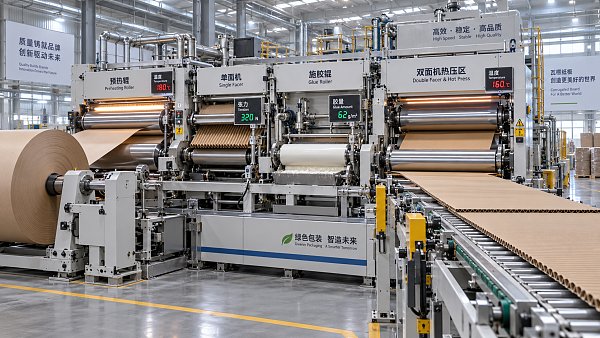
That question matters because on a modern corrugator, belt performance is not an isolated mechanical detail. It sits in the middle of heat, pressure, moisture, traction, and sheet transport. When belts hold board firmly and evenly through the double facer, the line can maintain straighter travel, more predictable bonding, and fewer interruptions downstream. When they do not, the effects spread quickly: speed reductions, unstable board profile, knife and stacker issues, and more waste during order changes.
Why operators pay attention to traction belts only after output starts slipping
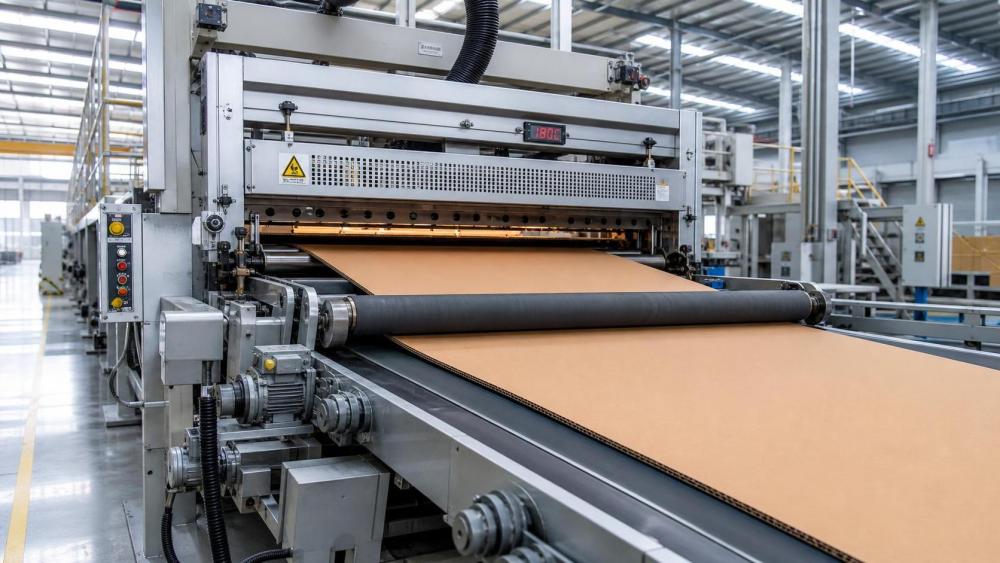
The practical role of high traction pressure belts is simple to describe but harder to manage in production. They must grip the board well enough to carry it through the heating and bonding section without slippage, while also applying consistent pressure across width and along machine direction. That sounds straightforward until production shifts from one flute profile to another, paper moisture changes, starch behavior drifts, or the plant begins running lighter papers at higher speed.
Under those conditions, belts stop being a background component and become part of process control. If traction is too low, the board may not stay aligned or may move unevenly relative to the hot plates. If traction is strong but pressure distribution is uneven, operators can still see crush risk, bonding inconsistency, or board shape defects. In other words, “high traction” is not automatically “better.” The useful question is whether traction, compressibility, heat resistance, permeability, and pressure uniformity match the current production mix.
What these belts actually influence inside the corrugator
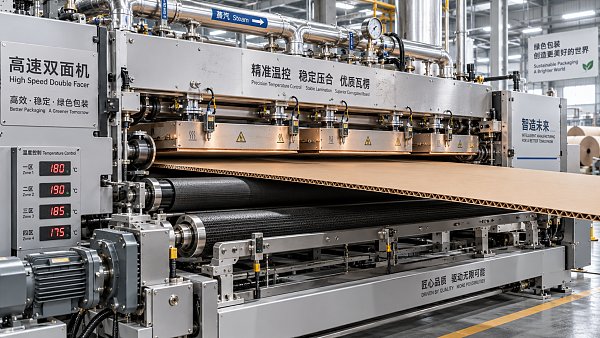
In the double facer section, the board is still stabilizing. Glue is curing, heat is driving moisture change, and the combined paper structure is settling under pressure. The belt system helps determine how steadily the board moves across this zone and how evenly contact is maintained with the heating surface. That has several direct consequences.
- Board tracking: Stable traction helps keep the sheet moving straight, reducing side drift and registration issues downstream.
- Bonding stability: Uniform pressure improves contact between liners and medium while glue sets, supporting more reliable bond formation.
- Heat transfer consistency: Good belt contact helps maintain even exposure across the board surface, which matters for drying and warp control.
- Speed retention: A belt system that stays stable at higher line speed allows fewer slowdowns caused by slip, vibration, or handling defects.
- Downstream flow: Straighter, flatter board is easier for slitter-scorers, cut-off units, stackers, and transfer systems to handle.
Operators tend to experience these effects indirectly. They may see more frequent edge-lift, score instability, cut-off timing problems, or stack quality deterioration without immediately tracing the issue back to the pressure belt system. That is one reason belt-related losses are often underestimated.
Where the “high traction” claim can be misleading
A common market claim is that a higher-traction belt automatically improves corrugator performance. In reality, that statement is incomplete. Higher traction can improve sheet control, especially on high-speed lines or with lightweight papers, but only if the full belt behavior supports the process.
For example, a belt with aggressive surface grip may improve transport but also behave differently under heat and contamination. Glue splash, paper dust, condensate, and starch residue can alter the friction profile over time. A belt that performs well in clean test conditions may behave differently after long production runs. Likewise, a belt with strong grip but poor pressure uniformity may create local stress points rather than improving overall stability.
Another point that gets oversimplified is belt life. Long service life is valuable, but not if the belt gradually loses dimensional stability, surface consistency, or air and moisture handling characteristics before visible wear becomes obvious. Many plants continue running belts that are technically still usable but no longer performing at the level needed for higher output.
That is why operators and maintenance teams should evaluate belts as process components, not just consumables.
How belt condition shows up on the production floor
When high traction pressure belts start affecting stability, the symptoms usually appear in patterns rather than single failures. The line may still run, but it becomes less tolerant. A board grade that was stable last month now needs closer watching. Speed increases become harder to hold. Warp correction becomes more sensitive. Order changes produce more setup scrap. The plant may respond by adjusting steam, glue, pressure, or tension more frequently, while the root cause remains partly mechanical.
Typical warning signs include:
- board drifting or inconsistent tracking through the double facer
- higher tendency toward washboarding, warp, or bonding variation
- more frequent speed reductions on lighter or recycled paper grades
- uneven sheet handling across machine width
- belt contamination that returns quickly after cleaning
- hot spots, glazing, hardening, or visible surface variation
- unstable performance after splice passages or grade changes
None of these signs proves the belt is the only cause. Corrugator stability is always multi-factor. But when several of these conditions appear together, belts should be inspected alongside steam balance, hot plate condition, glue system consistency, and paper input variation.
Why belt performance matters more on today’s production mix
The pressure on corrugated plants has changed. Many operations are dealing with shorter runs, more frequent job changes, higher expectations for uptime, and broader paper variation than in the past. E-commerce and transport packaging demand have pushed producers to look for more throughput, but not always with the stable grade mix that older corrugator setups were built around.
That environment makes belt behavior more commercially important than it may have seemed before. A plant running long, repetitive jobs on a narrow grade range can sometimes absorb modest belt inconsistency. A plant switching often between board profiles, basis weights, and customer requirements has less tolerance. In those cases, traction belt performance influences not only peak speed, but also how quickly the line settles after a changeover and how much waste is generated before quality becomes repeatable.
For operators, this means the right question is no longer just “Can the belt run fast?” It is “Can the belt help the line return to stable conditions quickly across changing jobs?” That is the more useful measure in many factories.
What to check before blaming operators or changing settings again
When output falls or board quality becomes erratic, plants often start by adjusting familiar variables: glue gap, steam pressure, wrap angle, temperature, pressure loading, or speed profile. Those checks are necessary, but if the same settings no longer deliver the same result, the belt system deserves closer review.
A practical inspection should include:
- Surface condition: Look for glazing, uneven wear, contamination build-up, or hardening that changes traction behavior.
- Dimensional stability: Check whether tracking and tension behavior remain consistent across the full operating cycle.
- Pressure distribution: Review whether loading is uniform across machine width, especially if edge quality differs from center quality.
- Thermal behavior: Confirm the belt is still performing under actual temperature and moisture conditions, not only at startup.
- Compatibility with board mix: Assess whether the current belt specification still fits lighter papers, recycled content, or frequent flute changes.
- Cleaning and maintenance practice: Determine whether routine cleaning is preserving performance or simply restoring it temporarily.
This is also where maintenance and operations need to compare notes. A belt may look acceptable during shutdown inspection but still behave poorly under dynamic load at production speed. If possible, observations should be linked to specific jobs, speeds, and paper combinations rather than general impressions.
Selection should be based on the plant’s real bottlenecks
For plants evaluating replacement belts or considering an upgrade, selection should begin with the production constraint that actually costs money. Some sites need better grip at higher speed. Others need improved warp stability on mixed paper grades. Some need more predictable behavior during short-run changeovers. Without that diagnosis, belt selection can become too generic.
A useful supplier discussion should go beyond broad claims and focus on operating conditions:
In many cases, the best choice is not the most aggressive or longest-lasting belt on paper. It is the one that produces the most stable output under the plant’s actual run conditions.
Standards matter less than process fit, but documentation still counts
Users searching with technical intent often expect clear standards or universal benchmarks. In this area, some specifications can be compared, but belt performance is still highly application-dependent. Material construction, permeability, friction behavior, thickness tolerance, heat resistance, and wear pattern all matter, yet not always in the same way from one line to another. Publicly comparable standards may be limited or require supplier-side interpretation 【待核实】.
That does not mean selection should be subjective. It means plants should ask for documented performance information tied to operating conditions, trial support where possible, and clear maintenance guidance. If a supplier cannot explain how the belt behaves under heat, moisture, load, and contamination typical of corrugator production, the risk shifts back to the user.
For larger investments or line upgrades, it is also worth checking whether the belt recommendation aligns with hot plate configuration, pressure system design, board grade plan, and target speed strategy. A belt cannot compensate for every upstream or downstream weakness.
What operators should watch after a belt change
A new belt often improves performance quickly, which can create a false sense that the issue is fully solved. The more important phase is the first production period after installation. Operators should track whether improvements hold across different orders, not just during initial runs.
What deserves attention is not only top speed, but repeatability:
- Does the line recover stable board quality faster after job changes?
- Do warp and bonding behavior stay more consistent across shifts?
- Are operators making fewer corrective adjustments during steady production?
- Has downstream handling become smoother at equivalent speed?
- Is waste reduction visible over several order cycles rather than one trial job?
Those observations are more valuable than a single headline result. In a corrugator environment, true output improvement means the line stays usable at a higher performance level with less intervention.
The bigger decision is not about belts alone
High traction pressure belts affect corrugator stability and output because they influence the point where transport, pressure, and heat come together. That makes them more important than many plants assume, but also less magical than some sales language suggests. They can improve board control, help protect speed, and reduce process sensitivity, yet only when matched to the line condition, board mix, and maintenance discipline.
For operators and production teams, the practical takeaway is straightforward: if the corrugator has become harder to stabilize, and routine adjustments are producing smaller returns than before, the belt system should be reviewed as part of the process, not after every other cause has been exhausted. In many plants, that is where a hidden output problem starts becoming visible.
Related News
 What Determines Compression Section Price in Corrugator ProjectsCompression section price depends on width, speed, pressure control, heating, automation, and integration. Learn how to compare quotes and maximize corrugator ROI.Corrugated Thermodynamics Architect
 How a Servo Driven Folder Gluer Machine Improves Carton AccuracyDiscover how a servo driven folder gluer machine improves carton accuracy through synchronized motion, repeatable folding, precise glue placement, and faster changeovers.Corrugated Thermodynamics Architect
 How Carton Making Machines Improve Output in High-Mix PlantsCarton Making Machines help high-mix plants increase sellable output with faster changeovers, lower waste, reliable quality control, and smoother workflow integration.Corrugated Thermodynamics Architect
 Corrugator Control Systems That Improve Board Quality and UptimeCorrugator Control Systems improve board quality, reduce waste, and increase uptime with coordinated heat, moisture, tension, glue, and speed control.Corrugated Thermodynamics Architect
 How High Speed Feeder Systems Support Faster Corrugator OutputHigh speed feeder systems help corrugator plants improve stable throughput, reduce feeding delays, protect board quality, and maximize converting efficiency.Corrugated Thermodynamics Architect
 Heavy Duty Unwind Stands That Stabilize High-Speed CorrugatorsHeavy duty unwind stands stabilize high-speed corrugators with precise tension control, secure reel handling, and smoother roll changes. Discover how to reduce breaks, waste, and downtime.Corrugated Thermodynamics Architect