How Do Heat Resistant Pressure Belts Perform in Corrugators?
Heat resistant pressure belts help maintain contact between corrugated board and heated plates in the double facer while starch adhesive develops its bond. Their performance, however, cannot be judged by temperature resistance alone. Pressure distribution, dimensional stability, moisture transport, wear, tracking, and compatibility with operating speeds and paper grades all influence the result. A belt that survives the heat but produces uneven contact or requires frequent adjustment can still be a poor choice.
What the belt does inside the double facer
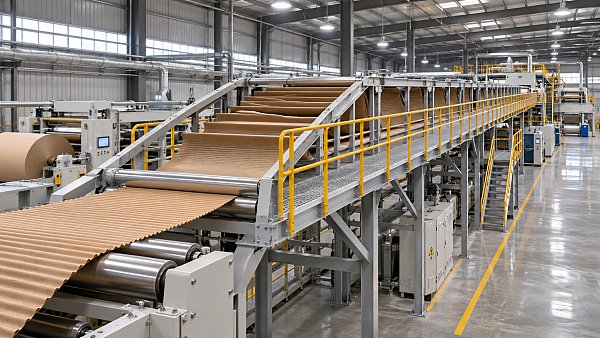
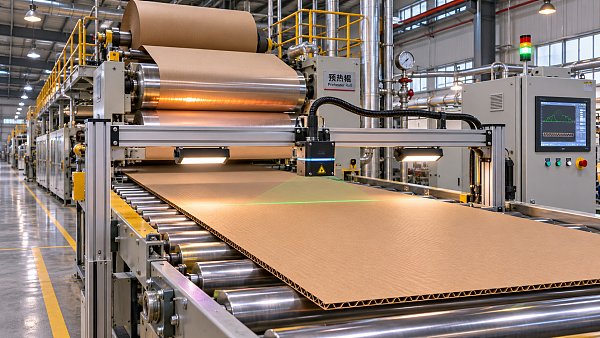
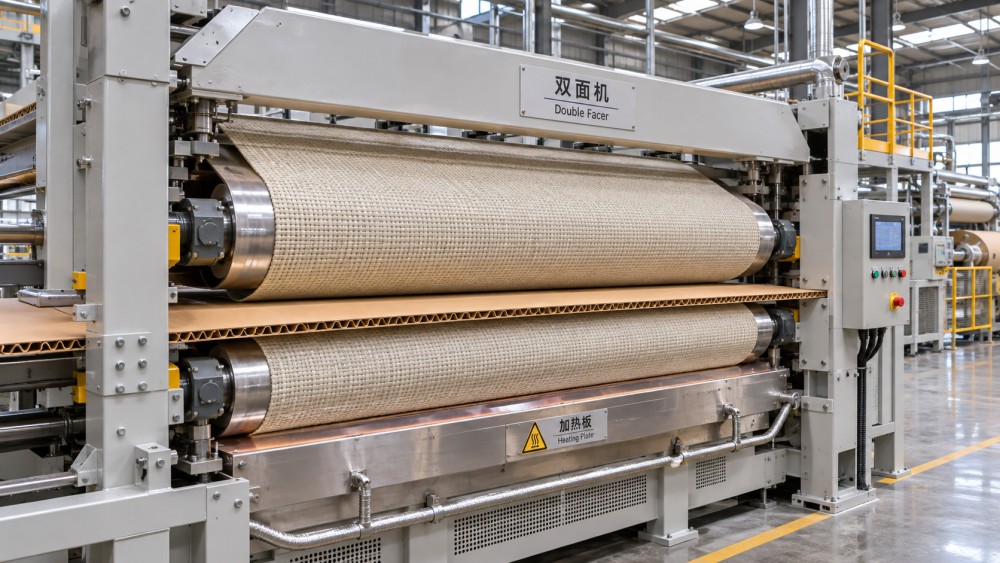
In a conventional double facer, single-faced web and an outside liner come together after adhesive has been applied to the exposed flute tips. Heated plates supply energy through the liner, while the upper belt carries the developing board through the heating and drying sections. Depending on the machine design, pressure rollers, shoes, or other loading elements act through the belt to keep the layers in contact.
That contact needs to be controlled rather than simply maximized. Too little effective pressure can leave inconsistent glue contact; too much can damage flute structure, particularly with lighter papers or board that is still soft and moist. The useful question is not whether a belt can apply high pressure, but whether the belt and loading system can deliver enough uniform pressure without compromising caliper.
The belt also operates in a changing thermal and moisture environment. It may encounter hot board, water vapor, adhesive deposits, cleaning agents, and repeated flexing around rolls. Its construction affects how it handles those conditions over time—not just how it behaves when newly installed.
Temperature resistance is a starting point, not a specification by itself
A supplier’s temperature rating is useful only when its test conditions are understood. Ask whether the figure describes continuous exposure or a short excursion, where temperature was measured, and whether the belt was under tension and cyclic bending during assessment. A hot-plate setpoint, steam temperature, board-surface temperature, and belt temperature are different measurements; treating them as interchangeable can lead to the wrong material selection.
Heat exposure may change stiffness, tensile properties, surface condition, or seam integrity. A belt can therefore remain physically intact while becoming less effective at following the machine and distributing load. The practical concern is performance after repeated heating and cooling, including stops when the normal movement of board and belt may be interrupted.
Review the machine builder’s stop and restart procedures as well as the belt supplier’s limits. A high temperature rating does not authorize leaving a stationary belt in contact with hot equipment, and it does not replace the safeguards specified for the corrugator.
Pressure distribution, permeability, and board quality
Belt thickness, surface condition, flexibility, and construction influence how the loading system’s force reaches the board. An unevenly worn belt may contribute to local differences in contact, but a belt is only one part of the pressure path. Roller condition, loading settings, plate alignment, belt tension, and the board’s own profile also matter.
This distinction is useful when a plant sees weak bonding near one edge. Replacing the belt may be justified if inspection reveals localized damage or uneven thickness. But the same symptom can arise from an uneven glue application, a loading problem, moisture variation, or heat distribution across the machine. Without checking those variables, a belt change can become an expensive diagnostic experiment.
Air permeability and moisture transport are also relevant, although the desired characteristics depend on the machine and its operating window. A belt that restricts vapor movement differently from the existing belt may change drying behavior. Conversely, selecting for permeability alone is risky if the construction cannot maintain the required wear life, stability, or contact characteristics. Compare candidate belts using the same test method and sample condition; values obtained by different methods are not necessarily comparable.
Board flatness deserves similar care. Warp can reflect moisture and temperature imbalances across the combined sheet, as well as paper and process differences. The belt can influence contact and drying, but it should not automatically be blamed for every flatness problem appearing after the double facer.
Speed changes the available bonding window
At higher line speed, board spends less time over a given length of heated plate. Heat transfer, adhesive behavior, paper moisture, and contact pressure must work within that shorter dwell time. A belt that runs reliably at a lower speed is not necessarily unsuitable for faster production, but its behavior needs to be assessed at the intended operating point.
Consider a line moving between lightweight liner and heavier grades during a shift. The heavier combination may need a different thermal and adhesive balance, while the lighter board may be more sensitive to flute damage. The belt should accommodate the range, but operators still need approved adjustments to heat, glue, pressure, and speed. No belt construction can make a single setting ideal for every grade.
When comparing options, distinguish the corrugator’s rated mechanical speed from the speed at which the plant can consistently produce acceptable board. The more meaningful measure is stable production across the actual order mix, including changeovers and periods after restart.
Tracking and wear often decide service life
A belt that tracks poorly can rub against machine components, fray at the edges, trigger guide corrections, or require repeated operator attention. Tracking depends on more than the belt: roll alignment, cleanliness, tension, guide response, and the condition of the belt edges all influence its path. Persistent drift should be investigated before tension is increased to force the belt into position.
Inspect the belt across its width, not just at accessible edges. Adhesive buildup, glazed areas, cuts, localized thinning, and changes around the seam can affect contact or indicate a separate machine fault. If deposits recur in the same position, trace them back to the glue system, board path, or a contaminated roll before treating cleaning as the entire solution.
Cleaning is a compatibility question. Brushes, scrapers, water, and chemicals can damage some constructions if used incorrectly or at the wrong temperature. Obtain written cleaning limits from the belt supplier and reconcile them with the corrugator manufacturer’s instructions. Isolation and access procedures remain essential: inspection or cleaning near moving belts and hot plates presents serious hazards.
How to compare belt proposals on a technical basis
A useful specification begins with the installed machine, not a generic claim of heat resistance. Provide the supplier with the corrugator model, belt dimensions and construction of the current belt, installation arrangement, loading system, normal and maximum operating speeds, typical paper grades, and known process problems. Include temperature measurements with their locations and operating conditions where available.
Ask each supplier to identify the test method and conditions behind its declared properties. The following points tend to reveal more than a single headline temperature:
- Thermal capability: continuous versus short-duration limits, exposure conditions, and any restrictions during stops.
- Dimensional and mechanical behavior: thickness tolerance, elongation under a stated load, recommended tension, and suitability for the machine’s roll diameters.
- Surface and transport properties: measured permeability, test method, surface characteristics, and compatibility with the loading arrangement.
- Joint details: seam type, installation requirements, and any expected effect on tracking or board contact.
- Maintenance requirements: approved cleaning methods, inspection points, repair options, and replacement criteria.
Where a supplier refers to an industry standard, request the exact designation, edition, relevant test procedure, and results for the proposed construction. A test standard can describe how a property is measured without establishing a universal pass value for every corrugator. Machine-specific acceptance limits should be agreed with the equipment manufacturer, belt supplier, and plant.
A field trial needs a baseline
Before replacing a functioning belt, record its condition and the process settings under representative orders. Capture paper grades, board construction, line speed, applicable heat and pressure settings, glue conditions, ambient or paper moisture information where available, and existing defect patterns. Note whether the old belt was nearing the end of its service life: a new belt of any construction may look better than a severely worn one.
During the trial, compare bond quality and board caliper using the plant’s documented methods, and record warp, tracking interventions, cleaning frequency, stoppages, and waste by reason. Examine results by grade and operating condition rather than relying only on a shift average. Where settings must change to run the new belt safely or effectively, document those changes; otherwise, the belt and process adjustments become impossible to separate.
Downstream behavior matters too. Board that appears acceptable at the corrugator can still create feeding or registration difficulties in printing and converting if flatness or caliper varies. Linking the trial to those observations reflects the system-wide approach used in corrugated equipment evaluation, rather than treating the double facer as an isolated purchase.
The best comparison is therefore not the lowest belt price or the highest stated temperature. It is the option that maintains acceptable bonding and board structure across the required order mix, tracks predictably, and can be inspected and cleaned within the plant’s maintenance routine. If the operating conditions or test methods remain unclear, resolve those gaps before committing to a replacement specification.
Related News
 KPS to Acquire 70% of MM Packaging at €2.4 Billion Enterprise ValueKPS will acquire 70% of MM Packaging at a €2.4 billion enterprise value. Explore what the deal means for the packaging business and its customers.Corrugated Thermodynamics Architect
 How to Size Bridge Conveyors for a Corrugator LineSize Bridge Conveyors for your corrugator line with practical guidance on web accumulation, sheet throughput, layout, and controls. Avoid costly bottlenecks.Corrugated Thermodynamics Architect
 Nine Dragons Paper Raises Chongqing Corrugated Paper Price by 50 Yuan per TonneNine Dragons Paper raises Chongqing corrugated paper prices by 50 yuan per tonne. See when the increase takes effect and what it means for packaging costs.Corrugated Thermodynamics Architect
 How Automatic Warp Control Systems Improve Corrugated Board FlatnessDiscover how automatic warp control systems improve corrugated board flatness, reduce production waste and support more reliable converting.Corrugated Thermodynamics Architect
 How to Evaluate a Sheet Stackers Factory for Your Production LineEvaluate a sheet stackers factory with confidence. Compare capacity, line integration, acceptance tests and service to choose the right supplier for your production line.Corrugated Thermodynamics Architect
 What to Ask a Starch Mixer Manufacturer Before OrderingChoosing a starch mixer manufacturer? Ask these essential questions about capacity, pricing, automation and support before you order.Corrugated Thermodynamics Architect