How Compression Sections Improve Board Strength and Reduce Waste
At full corrugator speed, board quality is often decided in a place that receives less attention than the single facer, glue kitchen, or cut-off: the compression section. A sheet may enter the double backer with correct flute formation and an apparently acceptable adhesive pattern, yet still leave the machine with weak bonding, warp, washboarding, blistering, or uneven caliper. The difference is frequently found in how the board is heated, pressed, supported, and guided while the adhesive bond develops.
For technical evaluators, Compression Sections should not be treated as a simple “pressure zone.” They are a controlled curing environment within the corrugator. Belt condition, thermal profile, loading distribution, steam performance, web tension, board dwell time, and paper moisture all interact here. When those variables are aligned, the result is stronger board with less glue-related rework, fewer downgraded sheets, and more stable output across changing paper grades and order specifications.
Why the Compression Section Has Such a Large Effect on Board Strength
In a conventional corrugator process, the single facer produces a web consisting of linerboard bonded to fluted medium. That web then receives adhesive on the exposed flute tips before it enters the double backer, where the second liner is joined. The starch adhesive does not become a durable bond merely because it touches the paper. It must receive enough heat to gelatinize, enough controlled pressure to create contact between flute tips and liner, and enough residence time for the bond to set without crushing the flute structure.
The compression section performs the difficult middle task: it converts a wet, heat-sensitive assembly into a stable corrugated board structure. Its job is not to apply maximum pressure. Excessive pressure can reduce flute height, weaken edge crush performance, create visible marking, and increase the risk of board defects. Insufficient or uneven pressure, meanwhile, may leave glue bridges incomplete or allow local delamination after conversion.
The practical target is uniform contact pressure across the board width and along the machine direction, matched to the thermal and moisture condition of the materials. This is why board strength cannot be assessed by pressure settings alone. A pressure value that works for a lightweight recycled liner may not be appropriate for a heavier kraft grade, a coated liner, a high-moisture sheet, or a demanding double-wall construction.
Bond Development Is a Time–Heat–Pressure Balance
Technical teams often investigate bonding problems by looking first at adhesive solids, viscosity, or application rate. Those factors matter, but they are only part of the picture. In the compression zone, adhesive performance depends on whether the board receives a workable combination of heat transfer, contact force, and dwell time.
- Heat raises the adhesive and paper interface to a level where starch can gelatinize and begin forming a stable bond.
- Pressure brings the liner into consistent contact with the adhesive-coated flute tips.
- Time allows the bond to develop while moisture is driven through the board in a controlled way.
If the board moves too quickly through an underperforming compression section, the sheet may appear bonded at the delivery end but fail during slitting, die-cutting, printing, or box compression testing. If the thermal input is too aggressive, the board may leave dry on one side and damp on the other, producing warp or poor dimensional stability. The goal is not simply faster curing; it is predictable bond formation at the speed required by the order schedule.
What Happens Inside Modern Compression Sections
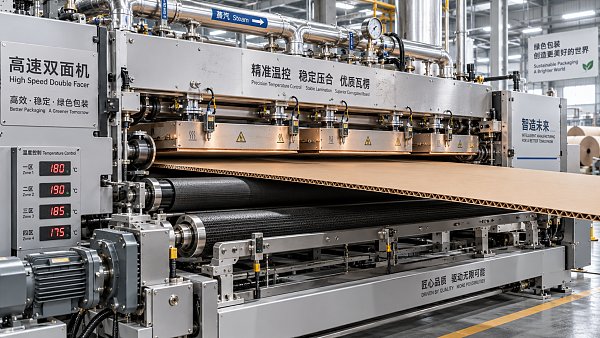
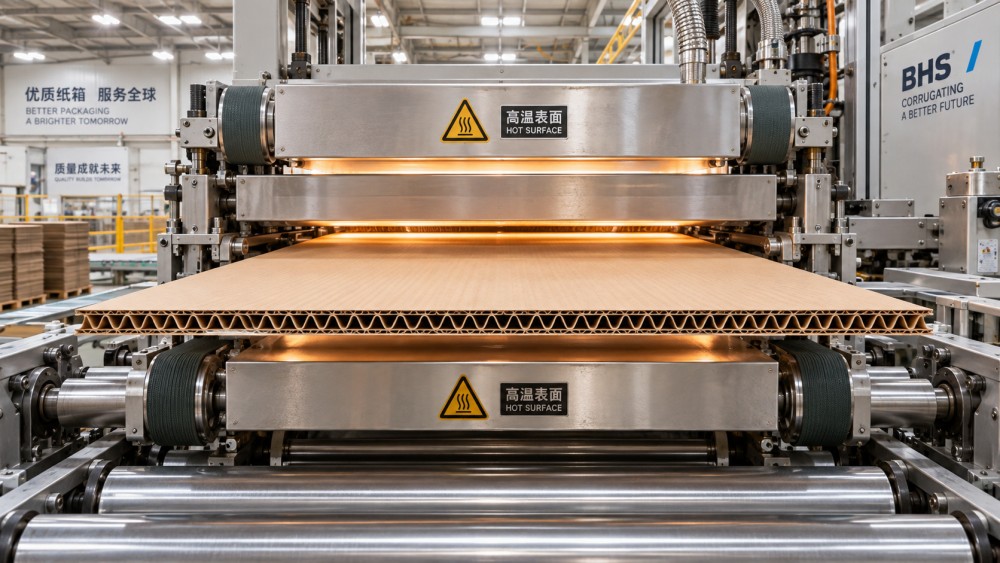
Depending on the corrugator configuration, the compression area may include heated hot plates, pressure shoes, weighted rollers, press belts, steam-heated elements, and a driven belt system that carries the board through the double backer. Each component contributes to the final result, but their interaction is more important than any individual part.
Hot plates transfer heat through the lower liner and help activate the adhesive. Pressure elements push the board against the heated surface. The belt provides continuous restraint and helps maintain contact while moving the web forward. In advanced systems, loading can be zoned so that pressure is distributed differently at the entry, middle, and exit of the section. This allows a gentler initial nip, followed by sufficient consolidation as the bond develops.
A useful way to evaluate the system is to think in profiles rather than settings. A stable process has a heat profile, a pressure profile, a moisture profile, and a speed profile. When one of these changes abruptly—for example, after a grade change, a speed increase, or a steam-pressure fluctuation—the other profiles may no longer be appropriate.
The Entry Zone: Securing Contact Without Damaging the Flute
The first portion of the compression section is especially sensitive. The adhesive is still wet, and the board has not yet developed much structural stability. Too little contact in this zone can lead to skips, loose edges, and incomplete bonding. Too much localized force can flatten flute tips or create a board that appears thin and dense without delivering the desired compression strength.
Pressure uniformity across the width matters greatly here. If one side of the machine carries more load because of belt tracking issues, uneven rollers, worn shoes, or mechanical misalignment, the board can develop side-to-side variation. Operators may then compensate by increasing overall pressure, which can mask the original problem while making flute crush and material waste worse.
The Middle Zone: Managing Moisture and Adhesive Cure
As the board travels further through the double backer, heat penetrates the paper layers and moisture begins to migrate. The middle zone is where the process must maintain firm, even contact while avoiding an uncontrolled moisture imbalance. This is particularly challenging with mixed paper combinations, recycled-content liners, high-basis-weight papers, or orders that require frequent grade changes.
Board warp is often blamed on the paper supplier or the glue formula, but compression performance deserves equal scrutiny. A board can warp when the liners experience different moisture or temperature histories. An unstable belt-to-board contact pattern may cause uneven heating; a poorly controlled steam system can intensify the effect. The resulting sheet may be acceptable immediately after the corrugator but distort after cooling, stacking, or printing.
The Exit Zone: Preserving Flatness Through Delivery
Near the end of the compression section, the bond should be sufficiently developed, but the board is still vulnerable to stress release. Sudden changes in pressure, temperature, or tension can affect flatness. The delivery system must carry the board without introducing drag, skew, or inconsistent cooling conditions. A technically sound compression section therefore extends beyond hot plates and loading devices; it includes the board path into slitting, scoring, cut-off, stacking, and downstream conveying.
Where Waste Begins When Compression Is Not Under Control
Waste from poor compression performance is not always recorded under a single fault code. It may appear as increased trim loss, more rejected sheets at the stacker, extra glue consumption, slower operating speeds, customer complaints after converting, or unexplained quality variation between shifts. For an evaluator reviewing corrugator efficiency, this makes the issue easy to underestimate.
Common symptoms include:
- delamination at flute tips or along board edges;
- soft spots that become visible during die-cutting or box forming;
- flute crush, reduced caliper, or lower edge crush resistance;
- persistent washboarding or surface irregularity;
- single-face or double-face warp caused by uneven moisture removal;
- glue streaks, blistering, and localized bonding failures;
- higher setup scrap after changes in speed, paper grade, or flute profile.
Each symptom points to a different combination of possible causes. That is why “add more pressure” is rarely a reliable corrective action. More pressure may improve adhesion in one area while damaging the flute structure elsewhere. Likewise, increasing glue application can conceal poor contact temporarily but raises cost, adds moisture, and may create drying problems downstream.
A Practical Evaluation Framework for Technical Teams
When reviewing a corrugator’s Compression Sections, the most useful question is not whether the machine has a certain number of hot plates or a stated maximum speed. The better question is whether the system can maintain consistent board conditions across the real mix of papers, flute types, order lengths, and operating speeds used by the plant.
1. Examine Pressure Distribution, Not Just Nominal Loading
Confirm how pressure is applied across the width and through the length of the section. Is loading zoned? Can operators adjust pressure profiles by grade or order? Are the mechanisms mechanically stable under continuous production? Check whether the design allows reliable pressure at both the center and edges of wide board.
It is also important to understand the response to narrow orders. When only part of the width is running, thermal and loading behavior may differ from full-width production. A system that performs well on broad sheets may show edge lift, uneven heat transfer, or belt wear when the production mix shifts toward narrow, short-run jobs.
2. Treat Belt Condition as a Process Variable
A pressure belt is not merely a consumable component. Its cleanliness, permeability, tracking, tension, surface condition, and wear pattern influence contact stability and heat transfer. A contaminated belt can reduce friction or create irregular pressure transmission. A belt that tracks poorly may cause uneven loading and side-to-side quality differences. Excessive tension can increase stress on components, while insufficient tension may allow slip and unstable board transport.
Maintenance planning should include routine belt inspection, cleaning practices appropriate to the adhesive environment, alignment checks, and clear replacement criteria. Waiting until visible damage occurs can be expensive, because quality loss often begins before a belt reaches obvious failure.
3. Verify Thermal Control at the Board Interface
Steam pressure alone does not describe thermal performance. Evaluators should review condensate removal, hot plate condition, heat uniformity, temperature monitoring, preheater effectiveness, and the relationship between machine speed and available energy. Poor condensate management can create cold areas that reduce bond consistency. Worn or contaminated plate surfaces may limit heat transfer even when upstream steam readings appear normal.
Where feasible, compare board quality across the machine width and between different operating speeds. If bond strength falls sharply when speed increases, the issue may be insufficient available heat, inadequate dwell time, poor pressure contact, or a combination of all three.
4. Connect Compression Control to Upstream Variables
The compression section cannot correct every upstream problem. Paper entering with unstable moisture, excessive curl, poor tension control, or inconsistent preheating will place greater demands on the double backer. Similarly, uneven glue application from the glue machine can create defects that pressure cannot repair.
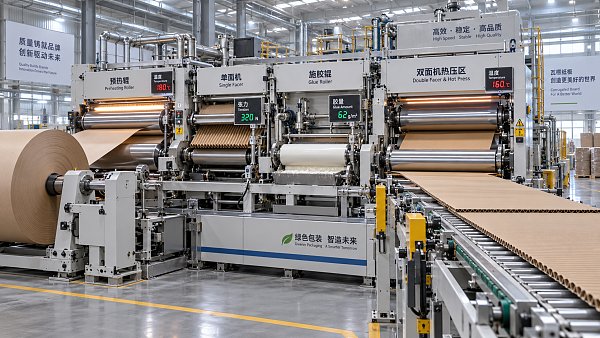
A useful evaluation therefore follows the board path: incoming paper conditioning, preheat wrap, single facer formation, glue roll condition, adhesive application, bridge storage, double backer compression, and delivery. This broader view prevents teams from replacing or upgrading a compression component when the real limitation is elsewhere in the process.
Automation Makes the Section More Repeatable—If the Data Is Used Properly
Modern packaging plants increasingly rely on automated recipe control, order scheduling, production data collection, and condition monitoring. In Compression Sections, this can turn operator experience into a more repeatable production method. Recipes can link paper combination, flute type, board grade, speed range, pressure zones, preheat settings, and adhesive conditions. Instead of adjusting from memory after every changeover, the operator begins from a validated process window.
However, digital control is only as useful as the process discipline behind it. If sensor calibration is poor, if production teams override settings without recording the reason, or if defect data is not connected to machine conditions, the system becomes a display rather than a decision tool. The most valuable production data is data that helps explain a quality event: what paper ran, at what speed, with what pressure pattern, thermal condition, glue setting, and subsequent test result.
For plants handling short runs and frequent order changes, this connection is particularly important. The greatest waste often occurs during transitions, when residual heat, changing paper moisture, and new operating recipes do not yet align. Better recipe management and traceable adjustment records can reduce the trial-and-error period without forcing operators to slow every job unnecessarily.
Standards and Tests That Give Compression Performance Meaning
Compression performance should ultimately be linked to measurable board requirements. Depending on the market and product application, technical teams may review bond strength, edge crush resistance, flat crush resistance, board caliper, moisture content, warp, and visual surface quality. Test methods may be guided by customer specifications, regional standards, or internal quality systems.
The important point is that no single test tells the whole story. A board may achieve acceptable adhesion while suffering flute crush. It may meet caliper targets but show weak edge bonding. It may pass at the corrugator and fail after printing or die-cutting. Evaluators should use a combination of tests that reflects the actual converting and end-use demands of the packaging.
For shipping cases, preserving flute geometry is central to stacking performance. For printed retail cartons and displays, flatness and surface stability may carry greater weight. For e-commerce packaging, board consistency matters because automated packing, labeling, and distribution systems expose weak bonds and dimensional variation quickly.
Better Compression Is Not About Running Harder
The strongest operating philosophy is not “maximize pressure” or “maximize speed.” It is to create a stable operating window where board strength, flatness, adhesive cure, and material use remain predictable. That window may shift with paper prices, recycled-fiber content, seasonal humidity, or the changing order mix. A well-designed and well-maintained compression section gives the plant room to adapt without turning every new job into a waste risk.
For technical evaluators, the value of Compression Sections lies in this quiet but decisive control over the final board structure. When pressure, heat transfer, belt performance, and process data are treated as one system, corrugator teams can reduce avoidable scrap, protect flute integrity, improve bonding consistency, and make board quality less dependent on constant manual correction. In a business where paper remains the largest material cost, that level of control is not a minor equipment detail—it is a direct contributor to operational resilience.
Related News
 What Determines Compression Section Price in Corrugator ProjectsCompression section price depends on width, speed, pressure control, heating, automation, and integration. Learn how to compare quotes and maximize corrugator ROI.Corrugated Thermodynamics Architect
 How a Servo Driven Folder Gluer Machine Improves Carton AccuracyDiscover how a servo driven folder gluer machine improves carton accuracy through synchronized motion, repeatable folding, precise glue placement, and faster changeovers.Corrugated Thermodynamics Architect
 How Carton Making Machines Improve Output in High-Mix PlantsCarton Making Machines help high-mix plants increase sellable output with faster changeovers, lower waste, reliable quality control, and smoother workflow integration.Corrugated Thermodynamics Architect
 Corrugator Control Systems That Improve Board Quality and UptimeCorrugator Control Systems improve board quality, reduce waste, and increase uptime with coordinated heat, moisture, tension, glue, and speed control.Corrugated Thermodynamics Architect
 How High Speed Feeder Systems Support Faster Corrugator OutputHigh speed feeder systems help corrugator plants improve stable throughput, reduce feeding delays, protect board quality, and maximize converting efficiency.Corrugated Thermodynamics Architect
 Heavy Duty Unwind Stands That Stabilize High-Speed CorrugatorsHeavy duty unwind stands stabilize high-speed corrugators with precise tension control, secure reel handling, and smoother roll changes. Discover how to reduce breaks, waste, and downtime.Corrugated Thermodynamics Architect