How Carton Making Machines Improve Throughput Without Sacrificing Quality
A carton line does not become more productive simply because its maximum speed is higher. A machine can run fast for a few minutes and still produce less saleable output over a full shift if operators spend too long on setup, sheets drift out of register, glue application varies, or defects are discovered only after a pallet is complete.
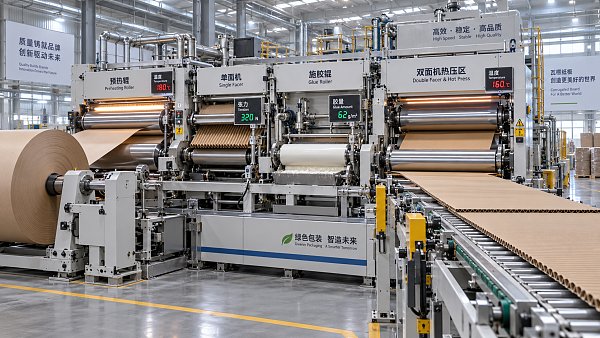
That is why the most effective Carton Making Machines improve throughput by making each production stage more stable, repeatable, and connected. The goal is not to push every unit to its stated top speed. It is to increase the volume of cartons that meet specification, reach dispatch on time, and do not require rework or replacement.
For a factory handling changing board grades, short runs, printed work, retail-ready packs, or demanding delivery windows, this distinction matters. A balanced production system reduces the time and material lost between orders while protecting the dimensions, print quality, crease performance, and glue integrity that customers actually pay for.
Throughput Should Be Measured as Good Output, Not Machine Speed
A practical view of throughput starts with finished, acceptable cartons per shift. This includes the effects of startup waste, planned and unplanned stoppages, job changes, rejected sheets, and downstream bottlenecks. A high-speed die-cutter, for example, cannot create useful capacity if its feeder requires frequent adjustment or if the folder gluer cannot process the output at the same pace.
Quality losses are often hidden in production reports. A line may appear busy while operators sort warped blanks, remove poorly stripped waste, correct registration errors, or quarantine cartons with inconsistent codes. Those activities consume capacity even when the main machine is technically running.
Modern carton production equipment addresses this problem through controlled automation: stable feeding, accurate sheet positioning, automatic register correction, preset job parameters, monitored glue systems, and inspection at the point where an error can still be corrected. In practice, these features matter more than an isolated speed claim because they reduce the interruptions that prevent continuous production.
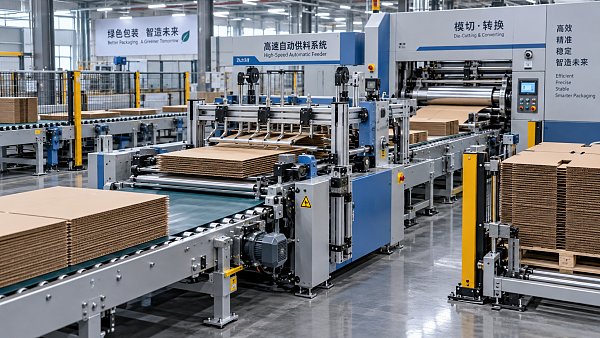
Stable Feeding Is the Foundation of Faster Converting
Most carton quality problems become harder to solve once the sheet has entered the machine. If board arrives skewed, double-fed, curled, or inconsistently spaced, the result may be off-register printing, inaccurate die-cutting, uneven creasing, or folding defects. Increasing speed under these conditions simply creates defective cartons more quickly.
Reliable feeding systems use controlled separation, alignment, and transport to present each sheet consistently to the next operation. On corrugated packaging lines, this may involve vacuum-assisted feeding, belt systems, side registration, or settings designed for the flute profile and board stiffness. On folding carton work, sheet surface condition, grain direction, coating, and static can also affect feeding behavior.
The important purchasing question is not whether a feeder is automated in name. It is whether it can hold position and timing across the material mix the plant actually runs. A line dedicated to uniform, long-run shipping cases has different needs from a converter processing varied printed sheets, small cartons, or irregular die-cut layouts.
Material variation should be part of equipment trials. Evaluate common board grades, lightweight and heavy sheets, recycled-content materials where relevant, coated stock, and the formats that generate the most setup difficulty. A demonstration using ideal sample material does not reveal how the equipment will behave during ordinary production.
Precision Control Prevents Speed From Becoming Scrap
Faster carton conversion increases the need for mechanical accuracy. Small position changes at the feeder or print unit can become visible defects at the die-cutting, creasing, folding, or gluing stage. Precision controls keep those errors within a manageable range before they turn into waste.
In flexographic printing, stable registration supports consistent artwork placement, readable barcodes, and brand-critical graphics. This depends on more than the press itself. Anilox roller selection, ink condition, doctor blade performance, plate mounting, drying, and board surface all influence the final result. A press with automatic registration helps maintain position, but it cannot compensate for poor process control elsewhere.
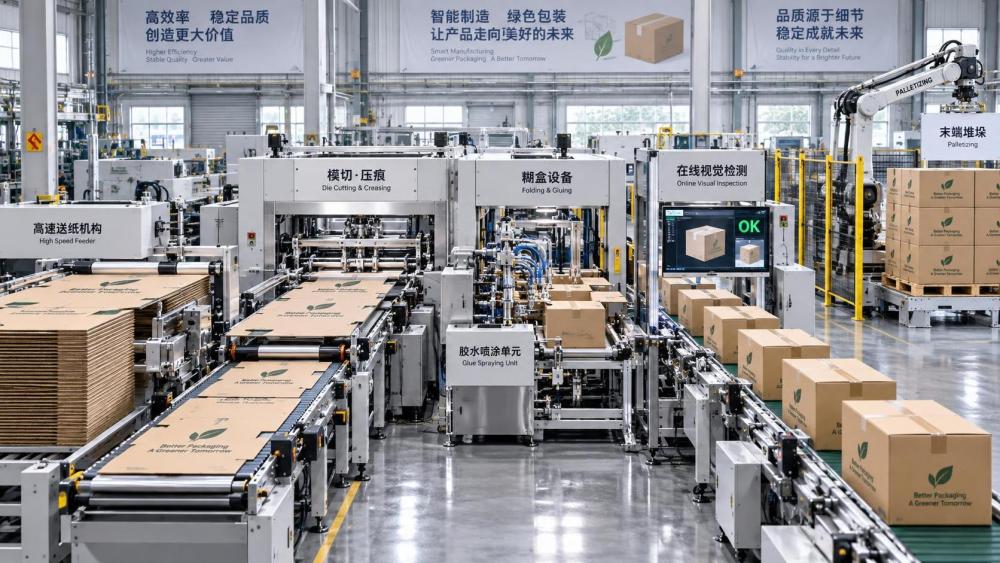
In die-cutting and creasing, accurate sheet registration and a stable cutting or creasing section reduce problems such as uneven folds, weak score lines, cracked outer liners, and poor carton squareness. The correct approach depends on the job. Rotary die-cutting can suit high-volume repeat work where continuous speed is valuable. Flatbed die-cutting can be more appropriate for complex carton structures, detailed stripping requirements, or work where the tooling and format demand a different level of control.
Neither approach is automatically better. The decision should follow the product mix, run lengths, changeover frequency, die complexity, board construction, and acceptable tolerance for the finished pack. Buying a high-output machine for work that changes constantly can leave much of its theoretical capacity unused.
Changeover Time Is Often the Largest Recoverable Capacity Loss
Many plants focus on improving run speed while accepting slow order changes as unavoidable. That assumption is expensive when the schedule includes multiple SKUs, seasonal designs, short promotional runs, or varied carton sizes. A few extra minutes between jobs may appear minor until it is repeated throughout the day.
Carton Making Machines improve this part of the workflow through digital job storage, servo-driven adjustment, motorized guides, preset pressure settings, automatic wash-up functions where applicable, and guided setup sequences. These features reduce reliance on individual memory and make a repeat job more likely to start from a proven baseline.
However, automation only delivers consistent changeovers when the factory has organized job data. A stored recipe should include the settings that matter for the job: sheet dimensions, feeder positions, print registration references, die-cut parameters, crease settings, glue patterns, folding path adjustments, and inspection criteria. Operators still need to validate the first acceptable product, but they should not have to rebuild every setup from scratch.
There is a common mistake here: treating automatic changeover as a standalone machine feature. Its value depends on upstream scheduling and downstream readiness. If the next material is not staged, tooling is unavailable, or finished goods have nowhere to go, the machine remains idle. Capacity gains come from preparing the whole changeover, not only moving settings electronically.
Quality Inspection Must Move Closer to Production
End-of-shift sampling is too late to protect throughput on high-volume carton work. By the time a print defect, missing code, color variation, wrong blank, or glue issue is discovered, the factory may already have produced a large quantity requiring inspection and rework.
Inline vision inspection changes the role of quality control. Instead of relying entirely on people to spot every defect after production, the system can compare cartons against defined requirements while the line is running. Depending on the application, inspection may focus on print registration, barcode readability, variable data, codes, graphic defects, or the presence of required components.
This does not eliminate the need for process discipline. Inspection systems require appropriate lighting, camera placement, reject handling, defect thresholds, and a clear response when an issue is detected. If every minor visual variation is classified as a failure, the system can create unnecessary stops. If tolerances are too broad, it may allow meaningful defects to pass. The inspection plan should reflect the carton’s function and the customer’s actual quality requirements.
Traceability is particularly useful where cartons carry batch information, variable codes, regulated product information, or customer-specific artwork. Linking inspection events to job data helps isolate affected production rather than placing an entire output at risk. That reduces the commercial impact of a quality event without weakening control.
Folding, Gluing, and Packing Need the Same Attention as Printing and Die-Cutting
A visually correct blank is not yet a usable carton. Weak glue bonds, uneven application, incorrect folds, damaged edges, or poorly formed cartons can stop packing lines and create failures after delivery. These risks increase when a plant raises upstream speed but leaves finishing operations dependent on manual intervention.
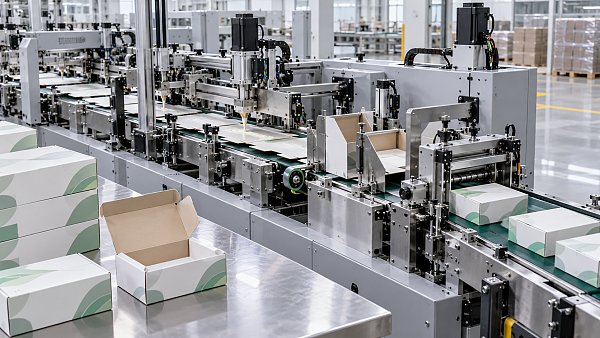
Folder gluers improve output when they maintain a controlled path through alignment, pre-folding, adhesive application, compression, and delivery. The suitable configuration depends on carton geometry, substrate behavior, adhesive type, required open time, and the complexity of the fold sequence. Straight-line cartons, crash-lock bottoms, multi-point cartons, and window-patched work place different demands on the system.
Glue control deserves particular attention. More adhesive does not necessarily create a stronger result. Excess glue can cause contamination, visible squeeze-out, and handling issues, while insufficient or poorly placed adhesive creates weak bonds. A repeatable application system, together with planned checks of bond performance, supports speed because operators are not constantly compensating for inconsistent results.
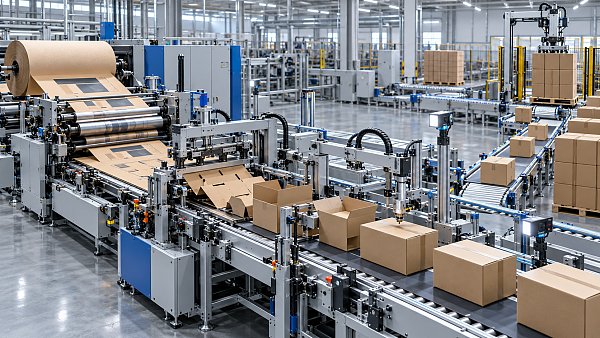
At the end of the line, automatic counting, bundling, conveying, case packing, and palletizing can remove a bottleneck that is easy to overlook during a machine purchase. When cartons accumulate at delivery, operators may slow the upstream equipment to manage the backlog. End-of-line automation is most valuable where finished cartons are repetitive enough to handle predictably and labor availability creates a recurring constraint.
Build the Investment Around the Plant’s Constraint
The right investment is rarely “replace the slowest machine” without further analysis. The apparent bottleneck may be caused by downtime, material shortages, long setups, quality holds, or poor handoff between departments. A machine audit should follow a typical order from incoming board or sheets through printing, converting, finishing, packing, and dispatch.
Review where waiting occurs, which defects lead to rework, how often operators intervene, and whether the schedule is limited by long runs or frequent changes. This creates a more useful distinction between a capacity problem and a control problem.
- Long, repeatable runs: Prioritize continuous running stability, automatic material handling, dependable delivery, and maintenance access that limits stoppages.
- High SKU complexity: Prioritize quick setup, stored job parameters, flexible tooling, accurate registration, and reliable short-run inspection.
- Brand-sensitive printed cartons: Prioritize color management, registration control, barcode or code verification, and defect detection before packing.
- Corrugated shipping cases: Prioritize board handling, crease quality, die-cut consistency, glue performance, and integration with corrugator or sheet supply.
- Labor-constrained operations: Prioritize automation where manual handling repeatedly interrupts machine flow, especially at loading, delivery, packing, and palletizing.
Maintenance should be assessed as part of throughput planning, not as a separate service issue. Equipment that is difficult to clean, adjust, inspect, or access can lose more capacity through minor stops than through major breakdowns. Ask how wear parts are managed, which adjustments remain manual, how faults are diagnosed, and whether routine tasks can be completed without disrupting the entire line.
Use Production Data to Improve the System After Installation
Machine connectivity and production data management are useful when they answer operational questions, not when they create another reporting layer. Useful measures include accepted output, waste by cause, setup duration, downtime reason, repeat-job performance, and defects detected before shipment. These show whether a change genuinely improved the process.
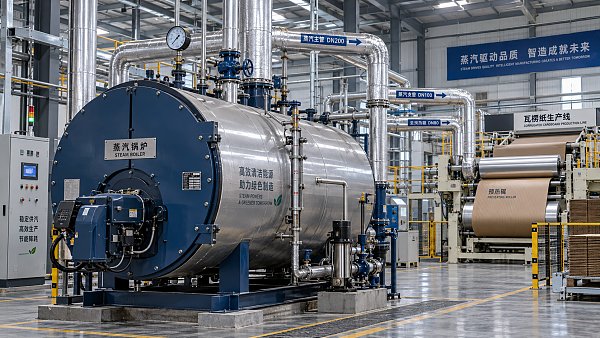
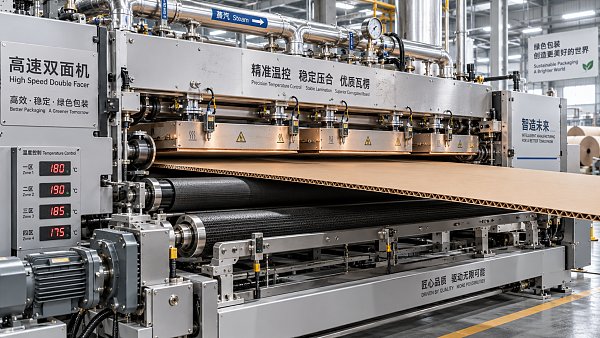
A practical review also separates losses that equipment can solve from losses caused by planning or materials. A new folder gluer cannot fix inconsistent blank quality from upstream die-cutting. A vision system cannot solve poor color control if the press process is unstable. A corrugator cannot maintain board quality if paper condition, steam balance, tension, or starch application are not controlled.
This system-level view is central to the equipment analysis supported by Global Commercial Print & Corrugated Packaging Intelligence (CPCS). Corrugator performance, printing stability, converting accuracy, inspection, and end-of-line handling should be evaluated as connected operating conditions rather than isolated specifications.
The strongest next step is to map one representative production route and identify where good cartons are lost: during setup, feeding, printing, die-cutting, folding, inspection, or dispatch. Match the investment to that constraint, validate it with real production materials and job conditions, and define quality acceptance criteria before commissioning. That is how higher throughput becomes a durable operating improvement rather than a short-lived increase in machine speed.
Related News
 How Steam Pressure and Capacity Affect Boiler Prices for CorrugatorsCompare steam boiler price factors for corrugators. Learn how pressure, capacity, and peak loads affect installed costs—and choose the right system without overspending.Corrugated Thermodynamics Architect
 What Determines Compression Section Price in Corrugator ProjectsCompression section price depends on width, speed, pressure control, heating, automation, and integration. Learn how to compare quotes and maximize corrugator ROI.Corrugated Thermodynamics Architect
 How a Servo Driven Folder Gluer Machine Improves Carton AccuracyDiscover how a servo driven folder gluer machine improves carton accuracy through synchronized motion, repeatable folding, precise glue placement, and faster changeovers.Corrugated Thermodynamics Architect
 How Carton Making Machines Improve Output in High-Mix PlantsCarton Making Machines help high-mix plants increase sellable output with faster changeovers, lower waste, reliable quality control, and smoother workflow integration.Corrugated Thermodynamics Architect
 Corrugator Control Systems That Improve Board Quality and UptimeCorrugator Control Systems improve board quality, reduce waste, and increase uptime with coordinated heat, moisture, tension, glue, and speed control.Corrugated Thermodynamics Architect
 How High Speed Feeder Systems Support Faster Corrugator OutputHigh speed feeder systems help corrugator plants improve stable throughput, reduce feeding delays, protect board quality, and maximize converting efficiency.Corrugated Thermodynamics Architect