How Can Starch Adhesive Reduce Delamination at High Speed?
Keeping the Bond Window Open on a Fast Corrugator
Delamination at high corrugator speed is rarely solved by simply applying more starch adhesive. Excess glue can raise moisture, distort the board, contaminate rolls, increase drying demand, and still leave weak bonds if the adhesive does not gelatinize at the right moment. Starch adhesive reduces delamination when its formulation and application are matched to the available heat, paper condition, flute profile, and dwell time in the bonding section.
At lower speeds, a process can sometimes absorb small variations in glue viscosity, paper moisture, or steam pressure because the web spends longer under heat and pressure. As speed rises, that tolerance narrows. The adhesive must transfer consistently to the flute tips, wet the liner surface without soaking it, gelatinize quickly enough, and develop an initial bond before the board leaves the pressure zone. A weakness in any one of those steps can appear as loose flute tips, liner separation after converting, or intermittent bond failure across the sheet.
The practical objective is therefore not to maximize adhesive solids, viscosity, or pickup in isolation. It is to create a stable bonding window: enough adhesive in the correct physical condition, delivered uniformly, with sufficient heat and contact time to form a reliable starch film.
Why speed changes the adhesive problem
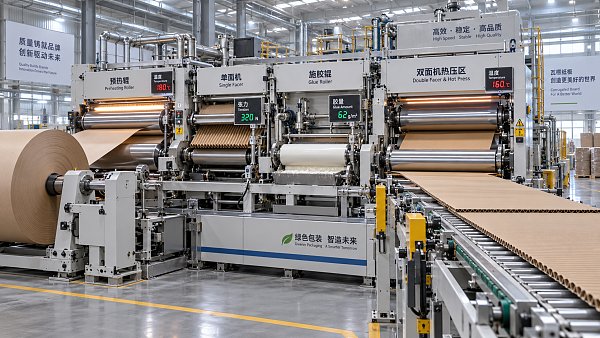
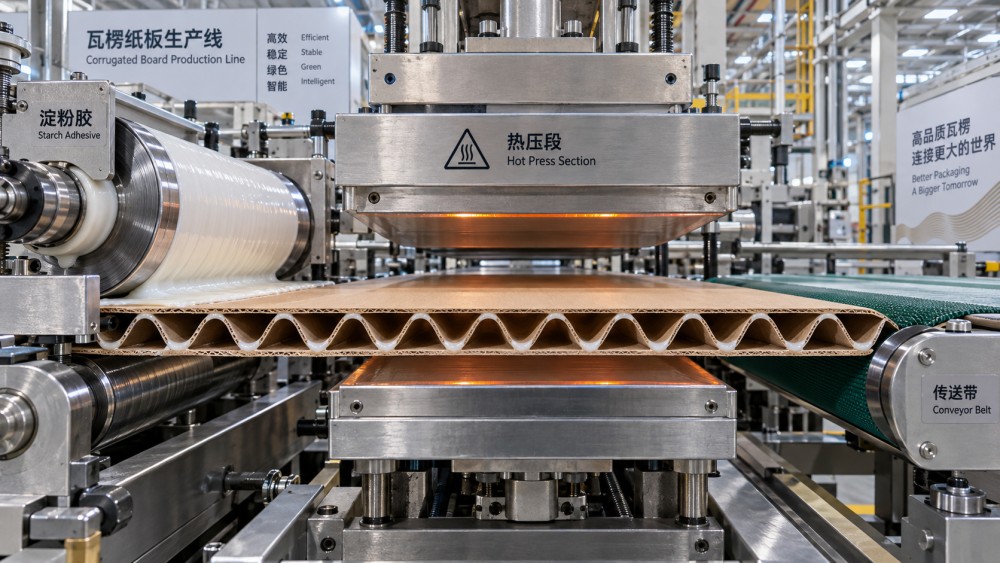
Starch adhesive bonding depends on a controlled sequence. The adhesive is metered onto the flute tips, the sheet enters a heated and pressurized zone, water and heat activate the starch, and the adhesive gelatinizes to join the medium and liner. High speed shortens the available time for this sequence. It also makes process variation more visible because a short interruption in steam balance, paper temperature, or glue transfer can affect a large quantity of board before operators can respond.
Delamination may occur at the single facer bond, the double backer bond, or both. The visual symptom can look similar, but the causes may differ. Separation between medium and liner near the flute tips often points toward glue transfer, flute formation, preconditioning, or single facer heat and pressure. Weakness on the double backer may be associated with adhesive application, liner moisture, hot plate heat transfer, belt pressure, or insufficient dwell time. A plant should identify where the failure begins before adjusting the adhesive kitchen.
Paper grade changes add another layer. Recycled liners, lightweight papers, heavily sized sheets, variable porosity, and high-moisture paper do not accept adhesive in the same way. A formula that runs well on one combination may require adjustment when the medium, liner, flute, or board construction changes. High-speed production makes those transitions harder because the process has less time to recover from material variation.
Formulate for fast gelatinization, not maximum viscosity
A typical corrugating adhesive contains a carrier portion and a main starch portion, along with alkali and borax or other formulation controls depending on the adhesive system. The carrier helps suspend the raw starch and contributes to viscosity and application behavior. The main starch must gelatinize under the heat delivered at the corrugator. For high-speed running, the relationship between gel temperature, solids, viscosity, and water demand matters more than any single target value.
A lower gelatinization temperature can help the adhesive set within a shorter heating cycle. But lowering it aggressively is not automatically beneficial. If the adhesive begins to gel too early, it can build on application equipment, lose transfer consistency, or create operating instability. If gel temperature is too high for the available thermal conditions, the board can leave the double backer before a strong bond develops. The useful formulation is one that remains stable in circulation and gels predictably within the machine's actual heat profile.
Higher solids may improve bond development by reducing the amount of water that must be removed, which can be useful at speed. Yet high solids can also raise viscosity, complicate pumping and metering, and limit wetting if the adhesive is not properly prepared. Conversely, diluting adhesive to improve flow may create a board moisture burden that the hot plates cannot remove at production speed. The appropriate solids range depends on the adhesive system, paper combination, applicator design, and available heat, so it should be established through controlled trials rather than copied from another line.
Viscosity deserves similar caution. Operators often respond to weak bonding by increasing viscosity, assuming thicker glue will improve the bond. That can work only where adhesive pickup is genuinely too low. If the root cause is poor temperature balance or inadequate contact, thicker adhesive may simply deposit unevenly and add water. A stable, repeatable viscosity within the operating range matters more than a high reading. The measurement method also needs consistency, since different cups, temperatures, and timing practices can produce misleading comparisons.
Adhesive preparation discipline has a direct effect on high-speed reliability. Incomplete starch dispersion, poor chemical addition sequence, inconsistent batch temperature, excessive holding time, and contamination can all change how the adhesive behaves at the machine. The glue kitchen should be treated as a production control point, with repeatable batch procedures and traceable checks for the variables that affect application and gelatinization.
Control glue pickup at the flute tips
Good bonding requires adhesive where the board needs it: at the flute tips, in a consistent pattern across the web. A visually wet glue line is not evidence of a sound bond. Too little pickup leaves dry or intermittent contact points. Too much pickup can bridge between flutes, wet the liner excessively, and increase the energy required to dry the board.
At high speed, glue roll condition and metering stability become especially important. Worn roll surfaces, poor roll parallelism, build-up, damaged doctor components, fluctuating roll speed, and inconsistent gap settings can all create cross-machine variation. The board may pass a quick visual check while containing localized weak zones that emerge later during die-cutting, folding, printing, or box compression.
Plants should inspect the actual transfer pattern when delamination appears, rather than adjusting formula settings first. Useful checks include:
- Whether adhesive covers flute tips consistently across the machine width.
- Whether application changes at the operator and drive sides.
- Whether glue pickup shifts after an order change, wash-up, or speed increase.
- Whether the applicator is clean and mechanically stable at the target speed.
- Whether flute tips are properly formed and presented to the glue roll.
The amount of adhesive should be adjusted in relation to paper weight, porosity, board construction, and machine thermal capacity. A lightweight, absorbent paper combination may need a different transfer strategy from a dense, highly sized liner. The aim is uniform contact with enough water and starch to form a continuous bond, while avoiding a wet board that cannot be cured within the available distance.
Heat, moisture, and pressure must support the formula
Starch adhesive cannot compensate for an unstable heat balance. Before application, paper must be conditioned so it can receive adhesive and reach bonding temperature quickly. Preheating affects the temperature of the web entering the single facer or double backer; wrap angle and web contact determine how much heat is actually transferred. A cold liner can delay gelatinization even when steam pressure appears normal elsewhere on the machine.
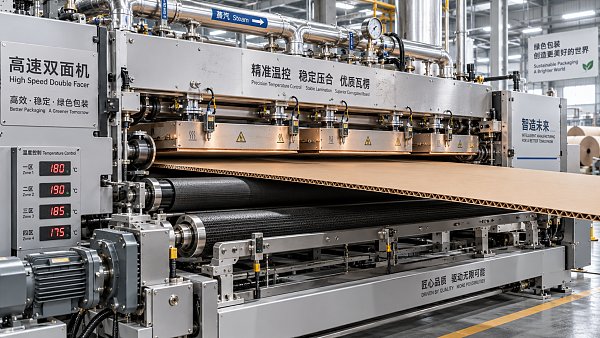
Heat must also be uniform. A hot plate section with uneven temperature distribution, poor condensate removal, or inadequate pressure can cause bond variation from side to side or along the sheet. Condensate management is particularly important because retained condensate reduces heat-transfer efficiency and creates temperature instability. Raising steam pressure without confirming heat transfer may conceal the real issue and increase the risk of board warp or overdrying.
Paper moisture is equally consequential. Very dry paper may absorb water from the adhesive too quickly, reducing the adhesive's ability to flow and form a complete bond. Excessively moist paper adds drying load and can prevent the starch film from setting before the board exits the machine. The best moisture condition is not a universal number; it is the range in which the chosen paper combination can be bonded and dried consistently at the intended speed.
Pressure and dwell time complete the system. On the double backer, belt condition, loading, hot plate contact, and board travel determine whether the liner and flute tips remain in effective contact while the adhesive develops. Increasing belt pressure can improve contact in some cases, but excessive pressure can crush flutes, affect caliper, or introduce other quality problems. Any mechanical adjustment should be assessed alongside the resulting board structure, not only the immediate bond result.
Diagnose delamination by pattern before changing the recipe
Random recipe changes consume starch, increase waste, and often make root-cause analysis harder. The failure pattern usually offers a more efficient starting point. If delamination begins immediately after a speed increase, the line may have crossed a heat-transfer or dwell-time limit. If it appears only on a certain paper grade, adhesive wetting, paper porosity, or moisture conditioning may be the priority. If it is confined to one side of the board, mechanical alignment, steam distribution, or cross-machine application uniformity deserves attention.
A controlled trial should change one meaningful variable at a time and record line speed, paper combination, adhesive condition, machine heat settings, and bond observations. The purpose is not to create a large data project. It is to avoid confusing correlation with cause when several settings move together. For example, if solids, viscosity, steam settings, and glue gap are all changed during one run, a later improvement cannot be reliably repeated.
Use bond quality as an operating limit, not a final inspection result
High-speed corrugating is often managed around output targets, but delamination should be treated as an early signal that the process margin is shrinking. Waiting for severe separation, customer complaints, or converting failures means the line has already produced material at risk. Frequent checks of flute-tip bond, board moisture, flatness, and application consistency allow the operating team to identify drift before it becomes a large waste event.
That does not require a single adhesive specification for every order. It requires defined operating windows for the paper combinations and board grades that matter most. For each common construction, the plant should understand the practical relationship between speed, adhesive condition, preheat, steam performance, and acceptable board quality. When a run falls outside that window, operators can decide whether to reduce speed temporarily, adjust conditioning, modify glue settings, or escalate a mechanical issue.
Starch adhesive can materially reduce delamination at high speed, but only as part of a coordinated corrugator process. A well-designed formula gives the machine a wider bonding window. Accurate application places adhesive at the flute tips. Stable heat, moisture, pressure, and web handling allow that adhesive to gelatinize before the board leaves the bonding section. When those conditions are controlled together, speed increases are less likely to be paid for later through rework, downgraded board, and unstable converting performance.
Related News
 What Determines Compression Section Price in Corrugator ProjectsCompression section price depends on width, speed, pressure control, heating, automation, and integration. Learn how to compare quotes and maximize corrugator ROI.Corrugated Thermodynamics Architect
 How a Servo Driven Folder Gluer Machine Improves Carton AccuracyDiscover how a servo driven folder gluer machine improves carton accuracy through synchronized motion, repeatable folding, precise glue placement, and faster changeovers.Corrugated Thermodynamics Architect
 How Carton Making Machines Improve Output in High-Mix PlantsCarton Making Machines help high-mix plants increase sellable output with faster changeovers, lower waste, reliable quality control, and smoother workflow integration.Corrugated Thermodynamics Architect
 Corrugator Control Systems That Improve Board Quality and UptimeCorrugator Control Systems improve board quality, reduce waste, and increase uptime with coordinated heat, moisture, tension, glue, and speed control.Corrugated Thermodynamics Architect
 How High Speed Feeder Systems Support Faster Corrugator OutputHigh speed feeder systems help corrugator plants improve stable throughput, reduce feeding delays, protect board quality, and maximize converting efficiency.Corrugated Thermodynamics Architect
 Heavy Duty Unwind Stands That Stabilize High-Speed CorrugatorsHeavy duty unwind stands stabilize high-speed corrugators with precise tension control, secure reel handling, and smoother roll changes. Discover how to reduce breaks, waste, and downtime.Corrugated Thermodynamics Architect