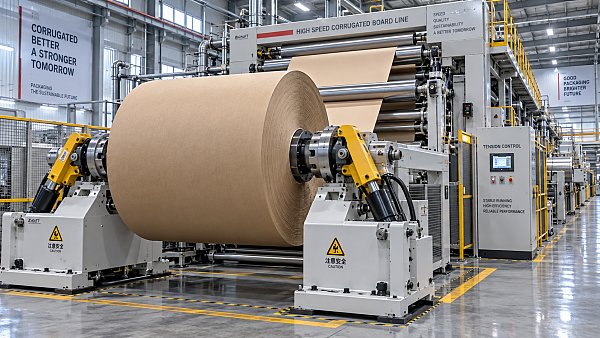
Does Low-Quality Corrugated Medium Cause More Board Breaks?
Does low-quality corrugated medium increase board breaks? In many corrugated plants, the answer is yes—but not in the simplistic sense that “bad paper always breaks.” Web breaks usually emerge from an interaction between paper properties, moisture condition, reel preparation, machine settings, operating speed, and the way a particular order is run. Still, corrugated medium with inconsistent strength, moisture, formation, or winding can make a corrugator noticeably less forgiving.
That matters because a medium break does more than stop one web. It can disrupt flute formation at the single facer, create a pile of off-spec board, delay downstream printing and converting, consume operator time, and complicate delivery planning. On a plant running frequent short orders, the lost time may be more damaging than the waste itself. The practical question is not whether the medium is “cheap” or “premium,” but whether its actual runnability matches the corrugator, flute profile, speed target, and finished-board requirement.
Why corrugated medium is more sensitive than it looks
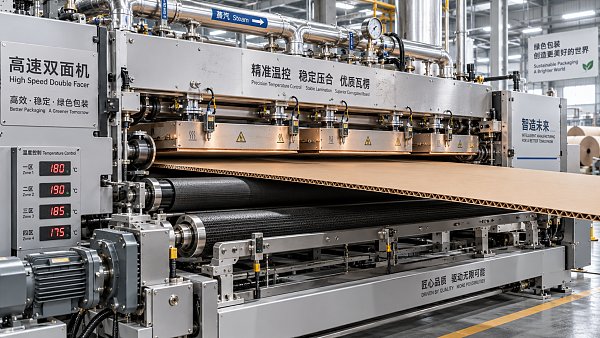
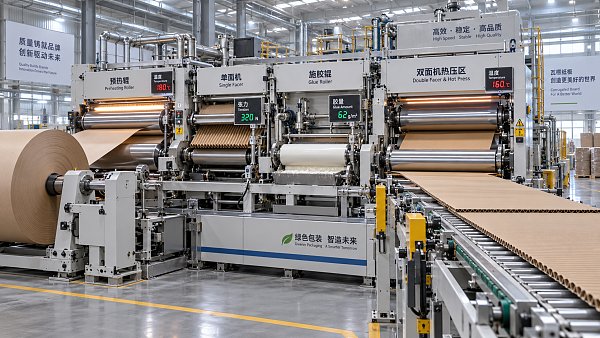
Corrugated medium is asked to perform several jobs at once. It must travel through the unwind and web-control system without tearing, accept heat and moisture during preconditioning, form consistently between corrugating rolls, hold the flute shape, receive starch adhesive, and remain stable while being bonded to linerboard. A weakness at any stage can show up as a break, a poorly formed flute, a bond problem, or reduced board strength later in the process.
In a stable production environment, operators can often compensate for moderate paper variation through tension, wrap angle, preheater settings, steam application, brake response, or speed adjustment. The limits become obvious when the paper varies within the reel or from reel to reel. A medium that runs acceptably at a slower speed may become unreliable when the plant tries to maintain a higher output rate. That is why quality discussions should be tied to the operating window, not just to a supplier’s basic grade description.
A common mistake is to evaluate medium quality only after the finished board fails a strength test. By then, the plant may already have dealt with unstable running, excess trim waste, emergency splices, and inconsistent production speed. Board performance and machine runnability are related, but they are not exactly the same issue. A reel can meet certain supplied specifications and still create problems because of winding condition, moisture profile, edge damage, or local weak spots.
The paper characteristics most likely to contribute to breaks
Not every defect has the same production consequence. Some properties mainly affect compression performance in the finished box; others immediately affect the web’s ability to survive the wet end. When operators ask whether low-quality corrugated medium causes more board breaks, they are often seeing one or more of the following conditions.
Tensile behavior is usually the first concern when breaks occur at the reel stand or before the single facer. However, tensile strength alone does not explain every event. A medium may appear strong in a laboratory strip test but still fail at damaged edges, near a poor splice, or after uneven heating and moisture addition. In real production, the web is not tested under one clean, static load. It is exposed to changing tension, heat, vibration, and mechanical contact.
Moisture is especially easy to underestimate. Medium that is too dry may become brittle and less tolerant of bending or transient tension spikes. Medium that carries excessive or uneven moisture can become unstable, distort under heat, or interfere with consistent flute geometry. Plants often encounter this after seasonal weather changes, long storage periods, or uneven warehouse conditions. The same nominal grade can behave differently when it arrives in a different moisture state.
Where the break occurs tells you a great deal
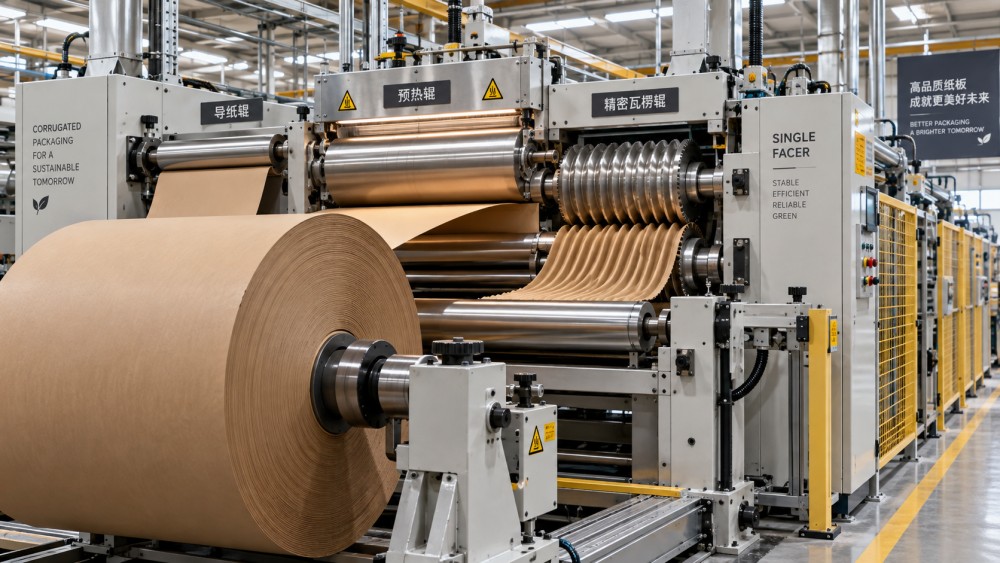
The position and timing of the break are more useful than a general complaint that “the medium is weak.” If the web repeatedly tears at the edge soon after reel startup, inspect reel damage, alignment, paper tracking, and the condition of the reel stand before concluding that the grade is unsuitable. If breaks occur during acceleration, tension-control response and brake tuning deserve attention. A web that fails after steam application or close to the single facer points more strongly toward moisture, thermal conditioning, or paper response to the wet end.
Breaks that occur only with a particular flute profile are also revealing. Fine-flute production can place different demands on paper handling and flute formation than heavier transport-board grades. Medium selection should therefore be linked to the actual board design. A grade that runs reliably in one application may be less stable in another, particularly where lightweight papers, high-speed operation, or demanding print requirements narrow the process margin.
Operators should also distinguish a clean, straight tear from a ragged or progressive tear. A clean tear can suggest a sharp tension event or an existing localized weakness. Ragged tearing may indicate edge damage, contamination, or material inconsistency. It is not a substitute for paper testing, but it gives maintenance, quality, and purchasing teams a more useful starting point than assigning blame based on the supplier name alone.
How to determine whether the medium is the root cause
The most reliable approach is to treat recurring breaks as a controlled troubleshooting exercise. Start by recording the reel identification, supplied grade, width, break location, running speed, machine section, weather or warehouse condition where relevant, and operator actions immediately before the event. A basic production record is often enough to reveal a pattern: perhaps the issue follows one delivery batch, one reel width, a particular shift condition, or a certain speed range.
Then compare like with like. If possible, run a known stable medium of similar intended specification under the same order conditions. Do not change tension, steam, adhesive settings, and speed all at once, or the comparison becomes meaningless. If the stable reel runs normally while the suspect reel repeatedly fails under equivalent conditions, the material becomes a more credible cause. If both reels break, the plant should look harder at equipment condition and process settings.
A useful investigation normally includes the following checks:
- Inspect reel edges, winding tightness, telescoping, crushed areas, and visible splice quality at receiving and before loading.
- Review whether breaks cluster near the reel start, at a splice, near the core, or at random positions through the reel.
- Check web tension through startup, acceleration, deceleration, and steady production rather than looking only at one setpoint.
- Verify preheater, steam, and wrap settings against the medium’s actual condition, not merely the normal recipe.
- Inspect corrugating rolls, guides, brakes, web-control components, and reel stands for mechanical sources of damage.
- Retain a sample from the break area where practical, together with a sample from unaffected material for comparison.
This is where a structured information approach has value. Corrugated plants are increasingly managing paper quality, machine availability, order scheduling, inspection data, and waste as connected operating issues. Platforms such as Global Commercial Print & Corrugated Packaging Intelligence (CPCS) focus on making those links easier to understand: the corrugator is not just a collection of sections, and paper procurement is not separate from conversion yield, delivery reliability, or long-term operating cost.
Do not “solve” paper problems by overcorrecting the machine
When breaks become frequent, there is a natural temptation to lower speed, add more steam, increase adhesive application, or loosen tension. Each adjustment may provide temporary relief, but each also has a cost. Excessive moisture can create bonding, warp, or drying issues. Too little tension can hurt web control. Extra adhesive may not compensate for poor flute formation and can introduce other quality problems. Running permanently below a line’s practical capacity may protect the web while quietly raising unit cost.
The better objective is to find a stable operating window. That may mean changing the paper grade for a demanding job, revising the process recipe for a seasonal condition, improving incoming-reel inspection, or addressing a mechanical weakness that only becomes visible with lighter-weight medium. These are different decisions, and treating them as one “paper quality” issue tends to waste time.
There is also a purchasing lesson here. Lowest purchase price is not always the lowest paper cost. A medium that produces repeated stops, downgraded board, excess waste, or weak conversion performance can be expensive even if its invoice price is attractive. This does not mean a plant must buy the highest-grade medium for every order. It means procurement should evaluate usable output and production stability alongside paper price, especially for high-speed lines and time-sensitive packaging work.
A practical decision for plant teams
Low-quality corrugated medium can absolutely increase the likelihood of board breaks, but it is rarely the only explanation. Material weaknesses become most visible when the process has little margin: high line speed, lightweight grades, aggressive changeovers, variable ambient conditions, or equipment that is not fully tuned. The same reel may appear acceptable on one line and troublesome on another.
For production teams, the immediate priority is to document where and when the break occurs. For quality and purchasing teams, the priority is to compare repeatable material behavior against agreed specifications and actual manufacturing conditions. For equipment planners, recurrent break patterns may indicate that tension control, preconditioning, reel handling, maintenance visibility, or production-data capture need more attention.
A corrugator runs best when paper, process recipe, machine condition, and board requirement are treated as one system. If a plant keeps adjusting the machine to accommodate inconsistent medium, it may be masking the problem rather than solving it.
Related News
 What Determines Compression Section Price in Corrugator ProjectsCompression section price depends on width, speed, pressure control, heating, automation, and integration. Learn how to compare quotes and maximize corrugator ROI.Corrugated Thermodynamics Architect
 How a Servo Driven Folder Gluer Machine Improves Carton AccuracyDiscover how a servo driven folder gluer machine improves carton accuracy through synchronized motion, repeatable folding, precise glue placement, and faster changeovers.Corrugated Thermodynamics Architect
 How Carton Making Machines Improve Output in High-Mix PlantsCarton Making Machines help high-mix plants increase sellable output with faster changeovers, lower waste, reliable quality control, and smoother workflow integration.Corrugated Thermodynamics Architect
 Corrugator Control Systems That Improve Board Quality and UptimeCorrugator Control Systems improve board quality, reduce waste, and increase uptime with coordinated heat, moisture, tension, glue, and speed control.Corrugated Thermodynamics Architect
 How High Speed Feeder Systems Support Faster Corrugator OutputHigh speed feeder systems help corrugator plants improve stable throughput, reduce feeding delays, protect board quality, and maximize converting efficiency.Corrugated Thermodynamics Architect
 Heavy Duty Unwind Stands That Stabilize High-Speed CorrugatorsHeavy duty unwind stands stabilize high-speed corrugators with precise tension control, secure reel handling, and smoother roll changes. Discover how to reduce breaks, waste, and downtime.Corrugated Thermodynamics Architect