Are Corrugated Board Lines Worth Upgrading for 2026 Demand
Before 2026, upgrading Corrugated Board Lines is worth it for many plants, but not for every plant in the same way. The right answer depends on whether current assets can still protect output, waste, compliance, and margin under faster demand cycles.
For business evaluators, the decision is mainly economic. If a line already struggles with downtime, setup loss, board variability, labor dependence, or energy intensity, an upgrade often delivers better returns than stretching aging equipment.
At the same time, a full replacement is not always necessary. In many cases, selective upgrades to controls, steam systems, starch kitchens, splicers, inspection, and data visibility can raise OEE enough to defer major capital spending.
Why 2026 Demand Changes the Upgrade Question
The market context around Corrugated Board Lines has shifted. E-commerce growth continues to raise demand for short lead times, mixed box formats, and consistent board performance across more volatile order patterns.
Sustainability regulation is also tightening. Rules such as the EU PPWR push converters and packaging buyers toward recyclable paper-based formats while increasing pressure to document material efficiency, traceability, and lower waste.
At the same time, cost pressure is becoming less forgiving. Energy, starch, paper, labor, and unplanned downtime all erode margins faster when buyers expect stable pricing and faster service.
That means the upgrade question is no longer just about adding speed. It is about whether the existing line can support a competitive cost position while meeting modern quality, compliance, and delivery expectations.
What Business Evaluators Are Really Trying to Determine
Most decision makers are not asking whether new technology is impressive. They are asking whether upgrading Corrugated Board Lines will produce measurable gains that justify capital, implementation risk, and disruption.
The practical questions are straightforward. Can the upgrade increase sellable output, reduce waste, stabilize quality, lower energy use, and reduce dependence on scarce operator skill within a reasonable payback window?
They also want to know whether the line will remain commercially relevant through 2026 and beyond. A machine that runs today but limits future board grades, digital integration, or compliance reporting becomes a strategic liability.
In other words, the decision is about resilience. Plants need Corrugated Board Lines that can absorb demand variability without turning every production change into excess spoilage, overtime, or customer risk.
When an Upgrade Usually Makes Strong Financial Sense
An upgrade case becomes compelling when current performance losses are persistent and expensive. Repeated wet-end instability, warp issues, bonding inconsistency, flute crush, and frequent stops typically signal value trapped inside the line.
High setup spoilage is another strong indicator. If order fragmentation is increasing and changeovers generate large paper losses, upgrading automation and process control can recover material cost surprisingly quickly.
Plants with strong demand but constrained throughput also benefit. If the converting side is waiting for board, or sales opportunities are being limited by line speed or reliability, the lost contribution margin matters more than the maintenance bill.
Labor exposure matters too. Older Corrugated Board Lines often depend on a few highly experienced operators to hold quality together. That creates fragile operations when hiring and retention are difficult.
Energy intensity is increasingly important. Steam, condensate recovery, drive efficiency, and heat management can materially change cost per square meter, especially where utility prices remain elevated or carbon pressure is rising.
What Parts of Corrugated Board Lines Deliver the Highest Upgrade Value
Not all upgrade dollars produce equal returns. For many plants, the best value sits in the systems that influence uptime, board consistency, and waste at the process level rather than purely increasing rated speed.
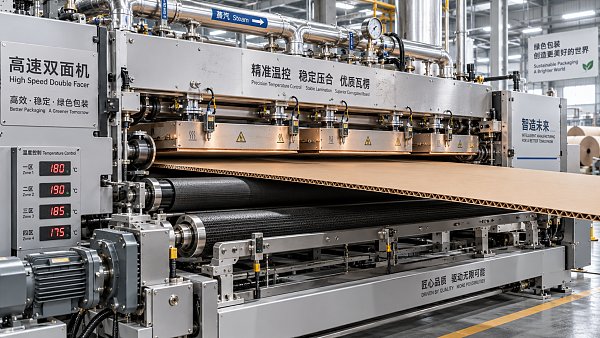
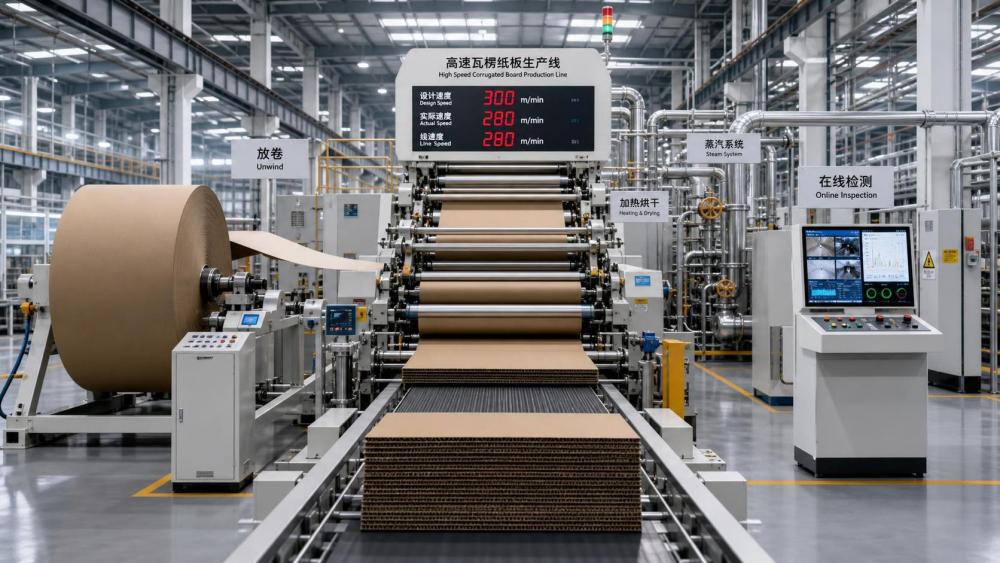
Control systems are often the first place to look. Modern automation improves recipe management, repeatability, alarm visibility, and coordination between heating, tension, speed, and bonding conditions.
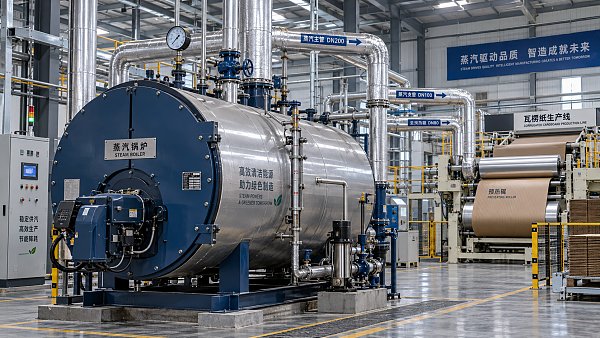
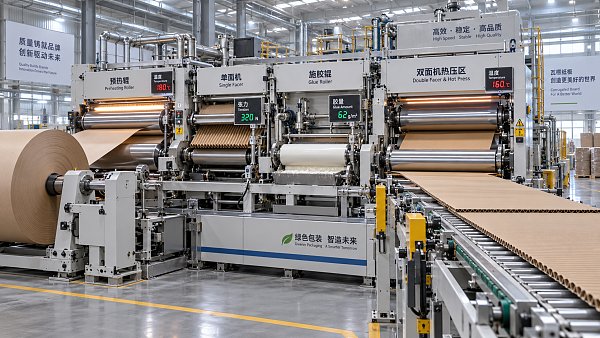
Wet-end improvements can be especially powerful. Single facer upgrades, better steam and condensate control, and moisture management help stabilize flute formation and adhesive bonding while reducing warp and rejects.
Starch kitchen modernization also matters more than many buyers expect. Better viscosity control, temperature consistency, and dosing precision can improve bond quality and reduce over-application that adds cost without adding performance.
Splicers, reel stands, and web handling systems affect both speed and continuity. Cleaner splicing and better tension control reduce stoppages and support more stable operation at commercially useful output levels.
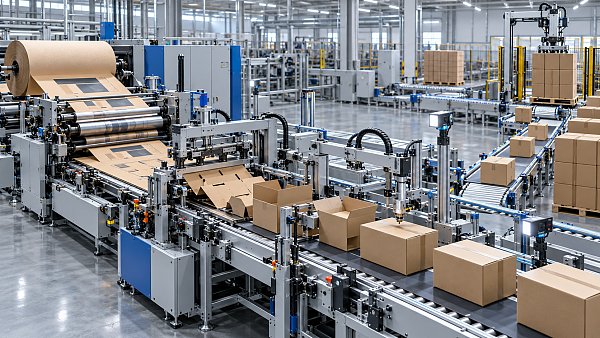
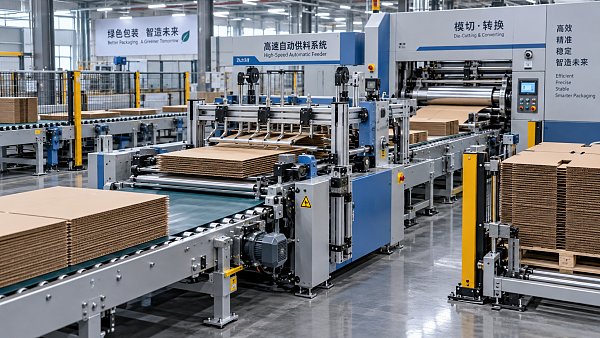
Dry-end automation, slit-scorer precision, and cutoff control can also raise yield. These upgrades help maintain dimensional accuracy and reduce trim loss, especially when product mixes become more varied.
Finally, data and inspection systems create management value. Real-time quality monitoring and OEE analytics allow plants to identify hidden losses, prove improvement, and make future capital decisions with better evidence.
Full Line Replacement or Selective Modernization
For business evaluators, this is usually the most important strategic choice. A full replacement offers the highest ceiling for speed, automation, and lifecycle support, but it also carries the largest capital exposure and implementation burden.
Selective modernization is often the more disciplined option when the mechanical frame remains sound. It allows a plant to target the biggest performance bottlenecks while preserving usable assets and limiting shutdown duration.
The right route depends on asset condition and the scale of the performance gap. If a line has structural wear, obsolete controls, chronic reliability problems, and limited vendor support, piecemeal upgrades may only delay replacement.
However, if the core machine still runs well but suffers from outdated automation, steam control, splicing performance, or data visibility, modernization can deliver a large share of the benefit for much less capital.
Buyers should resist binary thinking. The strongest business case often comes from sequencing upgrades over time, starting with modules that cut waste and downtime fastest, then expanding if demand and returns hold.
How to Build a Serious ROI Case
A credible ROI model for Corrugated Board Lines should start with current losses, not vendor promises. The baseline must include actual downtime, setup waste, speed loss, quality claims, energy cost, maintenance burden, and labor intensity.
From there, evaluators should estimate gains in three categories. The first is throughput improvement, measured as additional sellable output rather than theoretical top speed. The second is waste reduction across startup, changeover, and defect scrap.
The third is cost stability. This includes lower emergency maintenance, reduced operator dependence, lower energy consumption, and fewer customer service disruptions caused by inconsistent board quality or missed delivery windows.
It is also important to model the product mix honestly. A plant running short, varied orders needs different economics than one producing long, stable runs. Automation value often grows as scheduling complexity increases.
Payback expectations vary, but many evaluators look for a clear path to recovery within two to four years for targeted upgrades. Full line replacement usually requires a broader strategic case tied to capacity, customer access, and lifecycle economics.
Risks That Can Undermine the Upgrade Decision
Even a technically strong project can disappoint if execution is weak. One common problem is underestimating integration complexity between new modules and legacy line sections, especially where controls and data architectures are inconsistent.
Another risk is buying for nameplate speed instead of process stability. If the plant cannot sustain moisture balance, bonding quality, or downstream synchronization, advertised speed gains will not convert into profitable output.
Training is another frequent blind spot. New automation only pays back when operators, supervisors, and maintenance teams understand how to use it consistently and troubleshoot without reverting to old workarounds.
Evaluators should also test vendor support depth. Parts access, remote diagnostics, commissioning capability, and local service responsiveness can matter as much as the original equipment specification.
Finally, do not ignore shutdown planning. Production loss during installation can erase a meaningful part of early gains if sequencing, inventory buffering, and customer communication are poorly managed.
Questions Buyers Should Ask Before Approving Capital
Decision quality improves when evaluators ask operationally specific questions. Which losses are largest today: waste, downtime, speed instability, labor dependence, or energy cost? Which upgrade modules directly attack those losses?
They should also ask what measurable KPI changes are expected. A serious proposal should define target improvements in OEE, setup spoilage, adhesive consumption, steam use, board quality consistency, and maintenance hours.
Another useful question is whether customer demand truly requires the upgrade now. If commercial growth, sustainability positioning, or service-level commitments are increasing, delay may carry a hidden cost beyond simple deferred spending.
It is equally important to ask what happens if no action is taken. In many plants, the status quo is not neutral. It means rising maintenance expense, harder staffing, more variability, and weaker competitiveness in bid situations.
So, Are Corrugated Board Lines Worth Upgrading for 2026 Demand?
For many converters and sheet plants, yes. Upgrading Corrugated Board Lines is increasingly justified when current assets limit OEE, create chronic waste, or leave the business exposed to tighter delivery and sustainability expectations.
But the best decision is rarely based on technology enthusiasm alone. It comes from matching upgrade scope to the plant’s actual bottlenecks, demand outlook, product mix, and tolerance for capital risk.
Business evaluators should treat the upgrade decision as a margin protection and capacity quality decision, not simply a maintenance or engineering topic. The strongest projects improve sellable output, cut paper loss, and increase operating predictability.
If the line still has a sound mechanical base, selective modernization may be the most efficient path into 2026. If the core asset is structurally outdated and commercially restrictive, replacement may be the more honest long-term answer.
Either way, the central test is clear: will the investment make the plant more productive, more controllable, and more defensible in a market that rewards speed, sustainability, and low waste? If the answer is yes, upgrading is worth serious action now.
Related News
 How Steam Pressure and Capacity Affect Boiler Prices for CorrugatorsCompare steam boiler price factors for corrugators. Learn how pressure, capacity, and peak loads affect installed costs—and choose the right system without overspending.Corrugated Thermodynamics Architect
 What Determines Compression Section Price in Corrugator ProjectsCompression section price depends on width, speed, pressure control, heating, automation, and integration. Learn how to compare quotes and maximize corrugator ROI.Corrugated Thermodynamics Architect
 How a Servo Driven Folder Gluer Machine Improves Carton AccuracyDiscover how a servo driven folder gluer machine improves carton accuracy through synchronized motion, repeatable folding, precise glue placement, and faster changeovers.Corrugated Thermodynamics Architect
 How Carton Making Machines Improve Output in High-Mix PlantsCarton Making Machines help high-mix plants increase sellable output with faster changeovers, lower waste, reliable quality control, and smoother workflow integration.Corrugated Thermodynamics Architect
 Corrugator Control Systems That Improve Board Quality and UptimeCorrugator Control Systems improve board quality, reduce waste, and increase uptime with coordinated heat, moisture, tension, glue, and speed control.Corrugated Thermodynamics Architect
 How High Speed Feeder Systems Support Faster Corrugator OutputHigh speed feeder systems help corrugator plants improve stable throughput, reduce feeding delays, protect board quality, and maximize converting efficiency.Corrugated Thermodynamics Architect