When Is a Higher Industrial Barcode Reader Price Worth Paying?
A higher industrial barcode reader price is worth paying when the additional capability solves a costly problem on the production line: missed reads at operating speed, excessive manual handling, unreliable product identification, or difficult integration with production controls. The premium should buy a measurable improvement under your plant’s conditions. A longer specification sheet, by itself, offers little evidence of value.
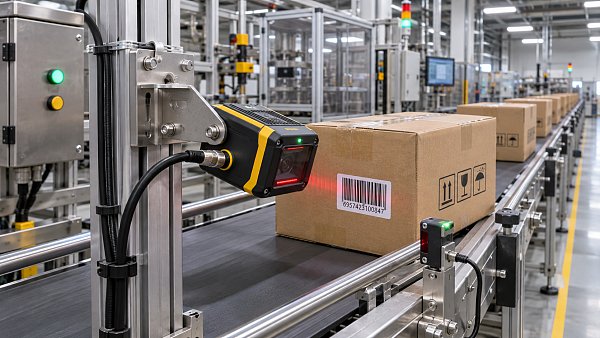
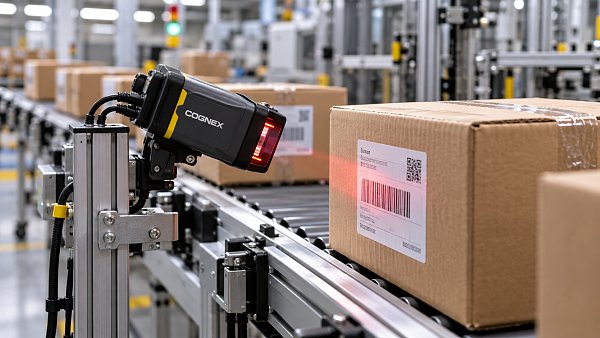
For commercial printing and corrugated packaging businesses, the decision depends heavily on where scanning takes place and what happens when it fails. A reader used at a manual packing station faces different demands from one identifying cartons on a conveyor before automatic sorting. If both devices reliably meet their respective requirements, spending more at the manual station may add little value. On the automated line, the same premium could protect throughput and prevent identification errors from reaching dispatch.
Start with the cost of a failed read
Before comparing readers, establish the operational consequence of an unsuccessful scan. Does the conveyor stop? Is the carton diverted for inspection? Can an operator recover it without disrupting production? Or does the system continue with an unidentified item? These responses determine how much improved reading performance is worth.
A no-read is visible and can trigger a controlled exception. A successfully decoded barcode containing the wrong job, product, or shipment information is a different problem. The reader may have performed correctly while the production system accepted an inappropriate code. Preventing that error requires checking decoded data against the expected order or product record. Paying for a more capable reader only helps if the complete system performs the required validation.
The financial exposure also changes with the stage of production. A missed scan before a folder gluer may create a local handling task. An identification failure after cartons have been grouped, palletized, or assigned to a shipment can make recovery more complicated. Evaluate the affected process, including any need to unpack, inspect, relabel, or reconcile records.
Use plant records to establish the baseline wherever possible. Separate reader-related exceptions from missing labels, incorrect printed data, conveyor positioning problems, and software failures. Otherwise, a replacement reader may receive credit for savings it cannot deliver. The most useful starting point is a record of what fails, how often it fails, and how much work each failure creates.
Pay for reliable reading within a defined production range
Higher-priced readers can offer capabilities such as more flexible optics, controlled illumination, faster image capture, broader decoding support, or better diagnostic tools. Their value depends on the reading task. A clean, consistently positioned barcode at a fixed distance may be straightforward for a modest device. A code moving quickly across a variable background, with changing orientation or carton height, presents a more demanding application.
In packaging production, print and substrate variation deserve particular attention. A barcode printed on brown corrugated board may offer less contrast than one on a white label. Ink spread, uneven surfaces, scuffing, gloss, and placement near folds can affect readability. The evaluation should include acceptable variation from the actual process, rather than only a clean sample prepared for demonstration.
Production speed also needs a precise definition. A supplier’s stated decoding capability does not establish performance on your conveyor. The reader must capture a usable image while the code is visible, decode it, and deliver the result before the downstream control action is required. Code size, motion, exposure, working distance, and available lighting all influence that sequence.
A larger field of view can accommodate positional variation, but it can also reduce the image detail available for a small code at a given sensor resolution. More resolution can help in some applications, yet still leave problems caused by glare or motion blur unresolved. These tradeoffs make a trial with the proposed lens, lighting, mounting position, and line geometry more useful than comparing isolated specifications.
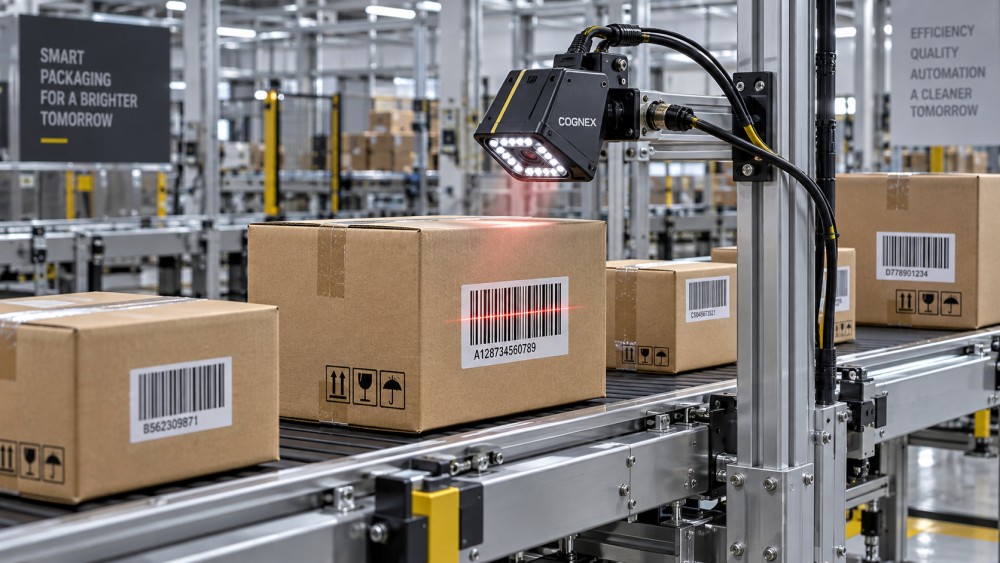
The application should therefore be defined as a range of conditions: minimum and maximum carton size, expected code location, smallest code, working distance, orientation, substrate, and required speed. Include foreseeable job changes. A reader that works well on one carton format but needs physical adjustment for every short run can introduce setup cost and opportunities for error.
There is also a limit to what better decoding should be asked to achieve. A reader may successfully decode a marginal printed symbol that another scanner later struggles to read. Successful decoding alone does not establish barcode print quality or compliance with a customer’s requirements. Where formal quality grading is required, barcode verification needs its own evaluation; a production reader should not automatically be treated as a verifier.
If poor print quality drives most failures, compare the reader upgrade with improvements to printing, labeling, or code placement. Correcting the source can improve readability throughout the supply chain. A premium reader may still be justified for normal process variation, but its business case weakens if it mainly compensates for a correctable production defect.
The integration and recovery costs can outweigh the hardware difference
The industrial barcode reader price on a quotation may cover only the device. A working installation can also require lenses, lighting, brackets, cables, power supplies, protective housings, software licenses, engineering, and commissioning. Two quotations with similar hardware descriptions can have very different installed costs.
Ask for a clearly defined scope covering the complete reading station and its connection to the existing controls. Confirm who supplies the trigger, who configures communication, where job-specific settings are stored, and how results reach the production or warehouse system. If an integrator must develop custom software to bridge missing functions, a lower purchase price can lose its advantage before production begins.
Connectivity should be assessed through actual behavior. A list of supported interfaces does not show whether the reader can exchange the required data with your PLC or software using the proposed configuration. The system needs to associate each result with the correct physical carton, especially when several cartons are moving between the reading point and the reject or sorting mechanism.
Exception handling deserves equal attention. The controls should define what happens after a no-read, an unexpected code, a communication interruption, or a restart. A premium reader with useful status signals and accessible diagnostics may reduce troubleshooting effort. That benefit becomes commercially meaningful when maintenance staff can identify the failure and restore operation without prolonged specialist support.
For frequent changeovers, assess how easily operators can select and confirm the correct settings. Multiple saved configurations are useful only if they can be managed reliably. Manual parameter entry, unclear job selection, or inconsistent settings across shifts can undermine otherwise capable hardware. Integration with job data may justify extra expenditure when it removes repeated setup work and reduces configuration errors.
Support should be evaluated in practical terms. Establish the availability of replacement units, the process for restoring a saved configuration, software licensing conditions, and the support included during commissioning. A rapid hardware replacement has limited value if the plant cannot reload its settings or reconnect the unit to production controls. Obtain these details in the quotation or service terms.
Environmental protection is another area where the application should govern the premium. Dust, vibration, temperature, cleaning methods, and exposure to impact can affect installation choices. Specify the conditions at the mounting location and assess the complete assembly, including connectors and lighting. Buying protection beyond those needs adds cost without a demonstrated operating benefit.
Build the business case around avoidable losses
Compare the incremental installed cost of the higher-priced option with the losses it can reasonably prevent. Include additional maintenance, licensing, or support costs over the intended ownership period. If the premium option saves engineering time or avoids extra lighting and hardware, include those differences as well.
A useful calculation is straightforward: annual net benefit equals avoidable handling, downtime, rework, and error costs, less any additional annual operating costs. The incremental investment divided by that annual net benefit gives a simple payback estimate. Use your company’s investment method if it also requires discounting, tax treatment, or a defined assessment period.
Keep the assumptions tied to how the plant operates. Time recovered on a conveyor has financial value when it increases useful output, avoids overtime, or releases constrained capacity. It does not automatically produce additional revenue if demand or another machine limits production. Similarly, fewer manual checks may free an operator for other tasks without reducing payroll expense.
Take care with overlapping savings. A single missed read might cause both a line stop and manual recovery, but labor recorded during that stop should not be counted twice. Separate routine exceptions from infrequent shipment errors, and use a range of plausible outcomes where historical evidence is limited. The purchase should remain defensible under a conservative estimate, not depend entirely on the most expensive possible failure.
Some requirements are better treated as acceptance conditions than as uncertain savings. If the line must identify every carton and divert unresolved items before palletizing, any candidate that cannot support that workflow is unsuitable. Compare price among solutions that meet the requirement, then assess whether additional performance provides enough operating margin to justify further spending.
Make the supplier demonstrate the premium
A useful trial compares candidates under the same conditions and tests the complete application. Agree on the production range and acceptance criteria before the demonstration. Allow each supplier to configure its proposed solution, while recording the hardware, settings, accessories, and engineering effort needed to achieve the result.
The trial should address a small set of decisive questions:
- Can the system read representative codes at the required speed across the agreed range of carton positions and formats?
- Does it report the result in time for the intended control action and associate that result with the correct carton?
- Can it identify and handle no-reads, unexpected data, and communication failures without losing product tracking?
- Can plant staff change jobs, diagnose faults, and restore the configuration using the proposed procedures?
Record total scan opportunities as well as unsuccessful reads, false triggers, unexpected accepted data, and recovery time. An aggregate read rate can conceal repeated failures on a particular substrate or carton format. Review results by meaningful production condition so that a troublesome job does not disappear inside an otherwise strong average.
Include difficult but acceptable samples and deliberately unacceptable ones. The first group tests resilience to normal variation; the second tests whether the system handles faults correctly. A reader that extracts data from challenging print is useful, but missing codes and wrong-job codes still need a controlled response. The demonstration should show that response through the downstream equipment.
A lower-priced reader is a sound choice when code presentation is controlled, the required performance is demonstrated, integration is straightforward, and exceptions can be recovered economically. A premium becomes credible when testing shows fewer costly failures, simpler operation, or a dependable margin across the production range. Ask the supplier to connect each additional cost to one of those outcomes. If the claimed benefit cannot be demonstrated or translated into a clear operational requirement, it has not yet earned a place in the investment.
Related News
 What Affects Barcode Scanner Prices for Production Lines?Barcode scanner price depends on speed, durability, integration, and maintenance. Learn how to compare production-line quotes and make a smarter investment.Machine Vision & Coding Fellow
 Why an Industrial Barcode Scanner Fails to Read CodesIndustrial barcode scanner not reading codes? Discover how to diagnose print, setup, lighting and communication issues and restore reliable production.Machine Vision & Coding Fellow
 How to Choose a High Speed Barcode Reader for Packaging LinesChoose a high speed barcode reader with confidence. Compare optics, line speed, controls, and acceptance tests to improve packaging-line reliability.Machine Vision & Coding Fellow
 How Do Barcode Scanners Verify Serial Numbers on Packaging Lines?Discover how Barcode Scanners validate serial numbers, detect duplicates, and trigger package rejection. Learn how to improve packaging line accuracy and traceability.Machine Vision & Coding Fellow
 How to Choose a High Speed Barcode Scanner for Moving CartonsChoose a high speed barcode scanner for moving cartons with confidence. Compare motion blur, optics, tracking, and real-world tests to reduce no-reads and costly rejects. Explore the guide.Machine Vision & Coding Fellow
 When Is a Higher Industrial Barcode Reader Price Worth Paying?Is a higher industrial barcode reader price worth it? Discover how to compare read reliability, integration costs, and downtime savings to make a smarter investment for your production line.Machine Vision & Coding Fellow