What Automatic Cartoning Machines Improve in Pharma Line Efficiency
One of the more frustrating situations in a pharmaceutical packaging room is when the line is technically running, but not really moving well. Blisters or bottles arrive on time, cartons are stacked nearby, operators are busy, and yet small interruptions keep slowing everything down. A flap does not open cleanly, a leaflet misses insertion, a code needs rechecking, or a manual correction delays the next batch. Nothing looks dramatic in isolation, but over a shift these small inefficiencies start affecting output, labor use, and schedule confidence.
This is often the point where people begin asking whether line efficiency is mainly a matter of adding speed upstream. In many cases, it is not. The bottleneck may sit at the cartoning stage, where product presentation, carton erection, leaflet feeding, coding, closure, rejection, and traceability all meet. Automatic Cartoning Machines are important here because they do more than pack product into a box. They help stabilize a section of the pharma line where compliance pressure and mechanical precision overlap every minute.
Many teams first look at cartoning equipment only when manual packing becomes difficult to manage or when repeated minor stops begin hurting overall line flow. That is understandable, but it can also create a narrow view. If the question is only “Can the machine run faster than operators?” the evaluation misses the real operational value. In pharmaceutical packaging, a cartoning system affects repeatability, inspection discipline, batch separation, format change control, and the amount of intervention needed to keep production consistent.
Where the efficiency problem usually starts
A common misunderstanding is that end-of-line packaging should simply keep pace with filling or primary packaging. In reality, cartoning in pharma has its own complexity. The machine has to handle cartons accurately, feed product with the correct orientation, insert printed material where required, apply or support coding, and reject faults without causing confusion about good product versus bad product. When one of these actions is unstable, the line can still appear productive while creating hidden waste in labor time, stoppages, rework, and verification effort.
People often notice symptoms before they identify the root issue. Operators may spend too much time clearing jams. Supervisors may see more micro-stops around carton opening or leaflet insertion. Maintenance may be called repeatedly for adjustments that are not full breakdowns but still interrupt output. Quality teams may need extra attention on code readability or pack completeness. None of this necessarily means the line is poorly designed. It often means the cartoning stage is carrying more manual dependency than the production plan allows.
In regulated packaging environments, these interruptions are not just productivity annoyances. Every stop-and-restart event can introduce more checks, more handling, and more opportunities for inconsistency. That is why many manufacturers evaluate Automatic Cartoning Machines not simply as packaging hardware, but as process-control equipment inside the broader line.
The correction many decision-makers need to make
It is easy to assume that automation at the cartoning stage is mainly about labor replacement. That view is incomplete. Labor reduction can be part of the picture, but the stronger reason for automation is often process stability. A machine that erects cartons consistently, manages infeed timing correctly, supports leaflet integration, and maintains reliable closure quality helps reduce the number of judgment calls operators must make under pressure.
Another common mistake is comparing machines mostly by nominal speed. For pharma packaging, rated speed tells very little if carton quality variation causes repeated stops, if changeovers are slow between SKUs, or if the machine cannot integrate well with coding, vision inspection, or upstream equipment. A machine that runs slightly below the fastest advertised number but holds stable performance through normal production conditions can be the better efficiency choice.
This is especially relevant for businesses dealing with short runs, frequent product changes, or multiple carton formats. A line may never reach its theoretical maximum if every changeover introduces extended adjustment time. In that situation, the real gain from Automatic Cartoning Machines comes from faster return to steady production, not from peak mechanical speed alone.
What improves when the cartoning stage becomes more controlled
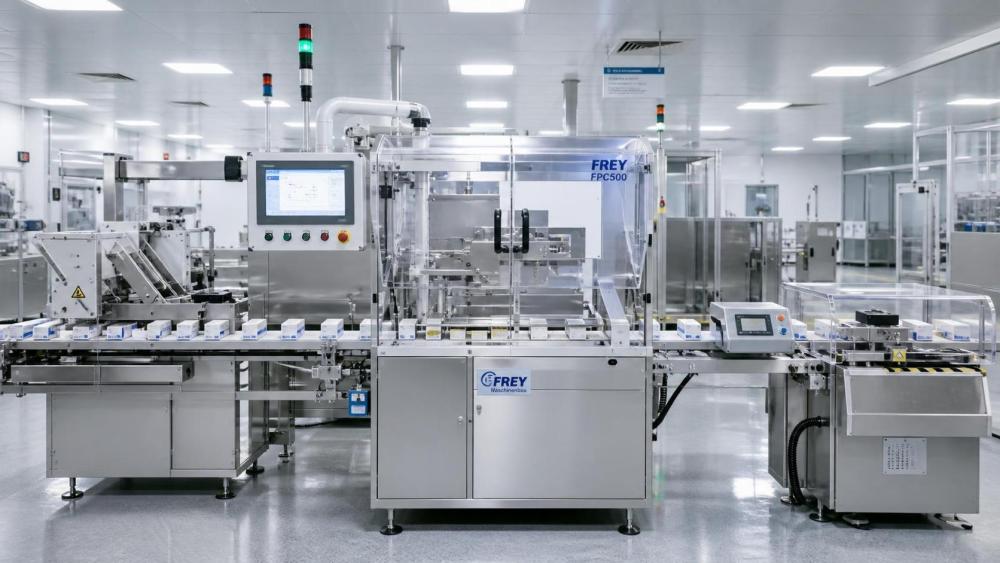
The first visible improvement is usually consistency in carton handling. Manual packing or semi-manual transfer often introduces variation in how cartons are opened, loaded, and closed. Automatic systems reduce that variability by keeping motion, alignment, and timing repeatable. This matters because poor carton presentation does not only affect appearance. It can also interfere with downstream coding, bundling, case packing, and inspection.
A second area is line continuity. In many packaging rooms, the biggest enemy of output is not a major failure but constant interruption. If product accumulation grows because cartoning cannot keep rhythm, upstream equipment may slow down or stop. If the cartoner rejects too many packs because feeding is unstable, operators may shift attention away from monitoring other critical points. When cartoning runs in a more predictable way, the whole line often feels less fragile.
There is also a traceability advantage. Pharmaceutical packaging requires careful handling of printed and coded components. A cartoning process that can be connected with coding and traceability systems, and where product movement is more controlled, helps reduce confusion during verification and rejection handling. It does not remove the need for procedures, but it gives those procedures a more stable mechanical foundation.
Then there is operator workload. This part is sometimes underestimated. If people spend their time correcting feeds, repositioning cartons, separating suspect packs, or restarting after small stoppages, their effort goes into recovery rather than control. Automation changes the nature of work. Operators are still needed, but the role moves closer to monitoring, material replenishment, batch control, and intervention when exceptions occur.
What to examine before treating automation as the answer
Not every efficiency problem should be blamed on the absence of a fully automatic cartoner. Sometimes the real issue is carton quality variation, poor feeder setup, unstable product collation, or lack of coordination between coding and inspection. Before making a judgment, it helps to look at the cartoning stage as a system rather than a standalone machine.
Start with material behavior. Cartons that vary in stiffness, crease quality, or dimensional consistency can create opening and closing issues even on well-built equipment. Leaflets can also affect performance if folding accuracy or static behavior is inconsistent. If packaging materials are not controlled, machine capability may be misread.
Next, look at line interfaces. A cartoner depends heavily on how product arrives and how completed cartons move downstream. If spacing is inconsistent at infeed, or if discharge handling causes backup, efficiency losses may be wrongly assigned to the cartoning unit itself. In pharma lines, coding devices, vision inspection equipment, and reject stations also need to work in coordination rather than as isolated add-ons.
Another factor is the production mix. If a facility runs many SKUs with frequent changeovers, the practical value of a machine lies in recipe management, adjustment accessibility, format part logic, and the ease of cleaning and verification between batches. For a narrower product range, sustained running stability may matter more than changeover flexibility. Efficiency is always tied to the actual production pattern.
When Automatic Cartoning Machines make the most practical difference
They tend to deliver the clearest improvement in a few recurring situations. One is when manual or semi-manual cartoning creates too much dependence on operator pace. Another is when compliance-related checks increase because pack completeness or code management is difficult to keep consistent by hand. A third is when upstream packaging is already relatively stable, but final presentation into cartons keeps disrupting the line.
They are also useful when companies want stronger integration with packaging factory automation. Cartoning is one of the points where product handling, carton conversion, coding, inspection, and rejection logic come together. If the broader plant is moving toward connected equipment, production data visibility, and more structured line control, the cartoner becomes an important coordination point rather than just a boxing station.
That said, the right fit depends on scale and process design. A business with low volume, limited format complexity, or highly variable packaging requirements may still need to compare automatic and semi-automatic approaches carefully. The main question is not whether automation is modern. It is whether the line loses enough time, control, or consistency at the cartoning stage to justify a more integrated method.
A better way to evaluate machine impact
When reviewing Automatic Cartoning Machines, it helps to frame the discussion around operating behavior instead of brochure features. Ask how the machine handles carton erection stability across normal material variation. Ask how changeover steps are controlled and how much adjustment relies on operator experience. Ask how rejects are identified and separated. Ask how the system works with coding, vision inspection, and traceability requirements already present on the line.
It is also worth examining recovery after interruption. Some equipment looks efficient while running cleanly but becomes difficult after a jam or missing product event. In pharma, restart discipline matters. A machine that supports orderly clearance, verification, and return to production can protect both uptime and quality confidence.
Maintenance access should not be treated as a minor detail. Cartoning equipment includes motion, feeding, vacuum, sensing, and transfer elements that need regular attention. If key areas are difficult to access, small issues may take longer to correct and planned maintenance may be delayed. Over time, this affects efficiency more than many buyers expect during initial evaluation.
Finally, look beyond the machine itself to the information it can support. In packaging plants that increasingly use digital production management, machine status visibility, alarm history, batch-level tracking, and integration with inspection systems can improve troubleshooting and planning. This does not make a cartoner “smart” by label alone, but it does make the line easier to manage in a practical sense.
What changes in day-to-day operations after the cartoning stage is improved
Usually, the first change is less firefighting. Operators are not pulled as often into repeated manual corrections. Supervisors can spend more time on flow and less on isolated interruptions. Quality checks remain necessary, but they are performed around a more stable process. Maintenance work also becomes easier to plan when the line is not constantly reacting to small unpredictable stoppages.
There is often a planning benefit too. Production scheduling becomes more reliable when the cartoning stage behaves in a repeatable way across batches. This matters in pharmaceutical packaging because timing pressure is rarely limited to one machine. Delays at cartoning can affect release coordination, downstream packing, and order sequencing. A steadier machine does not solve all planning issues, but it reduces one common source of disruption.
Most importantly, teams begin to see efficiency as a line characteristic rather than a speed number. That is the more useful perspective. In pharma, a packaging line is only as efficient as its ability to maintain control while moving product forward. Automatic cartoning supports that goal by reducing manual variability, improving pack handling consistency, and making it easier to align packaging output with coding, inspection, and traceability expectations.
For anyone trying to understand where packaging performance is being lost, the cartoning stage deserves closer attention than it often gets. It may not be the loudest part of the line, but it is frequently where speed, compliance, and handling discipline either come together or start to drift apart.
Related News
 What Determines Laser Coder Price in Industrial Packaging LinesLaser coder price depends on power, speed, materials, integration, and verification. Discover how to compare total costs and select the right packaging solution.Machine Vision & Coding Fellow
 How to Choose a Serial Number Printing Machine for TraceabilityChoose a serial number printing machine with confidence. Explore traceability, code quality, data control, inspection, and integration factors for reliable packaging serialization.Machine Vision & Coding Fellow
 How to Choose a Barcode Reader for a Packaging LineChoose the right barcode reader for packaging line applications with expert guidance on code quality, speed, optics, lighting, validation, and reject control.Machine Vision & Coding Fellow
 What to Check Before Choosing a Laser Coder ManufacturerChoose a laser coder manufacturer with confidence. Learn how to assess application trials, code quality, integration, safety, service support, and lifecycle cost.Machine Vision & Coding Fellow
 How Variable Data Printing Machines Improve Traceability AccuracyDiscover how a variable data printing machine improves traceability accuracy through unique coding, inline verification, and reliable data reconciliation.Machine Vision & Coding Fellow
 How to Calculate Serial Number Printing System Cost and ROISerial number printing system cost: calculate total ownership, compare suppliers, and build a practical ROI model to reduce errors, downtime, and compliance risk.Machine Vision & Coding Fellow