Serial Number Printing Systems for Traceability: What Features Matter Most?
What technical evaluators are really trying to verify
For most teams, the question is not whether a serial number printer can put characters on a pack. Almost any device can do that under ideal conditions. The real issue is whether the system can keep producing readable, compliant, and database-linked codes at line speed without becoming a hidden source of scrap, downtime, or audit risk.
That is why selection usually turns on a narrower set of features than vendor brochures suggest. A good system has to survive production realities: changing substrates, fast line speeds, intermittent stops, maintenance windows that are too short, and serialization data that must stay synchronized across packaging, traceability, and enterprise systems. In that context, the right feature set is less about print technology in the abstract and more about operational control.
Code quality is the first filter
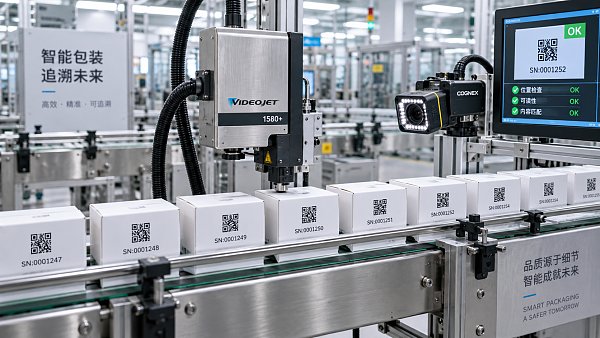
Traceability fails at the point where a code cannot be read or cannot be trusted. For that reason, print quality should be treated as a process capability issue, not a cosmetic one. The system has to produce consistent contrast, sharp edges, and stable placement across the expected operating range. On corrugated, coated board, film, labels, and folded cartons, those requirements can look very different.
Technical evaluators should pay attention to the following:
- Character legibility at the smallest intended size
- Consistency across start-up, steady state, and line changes
- Resistance to smearing, dropout, and ink spread
- Print placement tolerance relative to the target panel or code zone
One common mistake is assuming that a readable code in a controlled demo will remain readable on a real line with vibration, dust, static, or web movement. It often will not. The evaluation needs to cover the worst acceptable substrate and the fastest normal operating condition, not only the easiest sample.
Integration matters more than the printhead alone
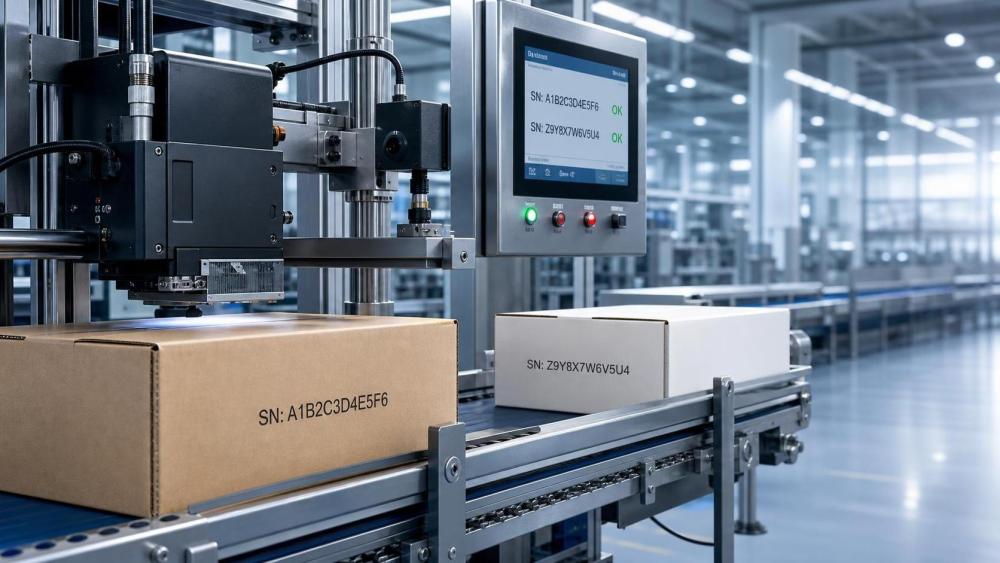
In production, the printer is only one part of a traceability chain. The system must receive the right job data, trigger at the right moment, and log what it actually printed. If any one of those links fails, the code may still appear correct on the surface while the batch record becomes unreliable.
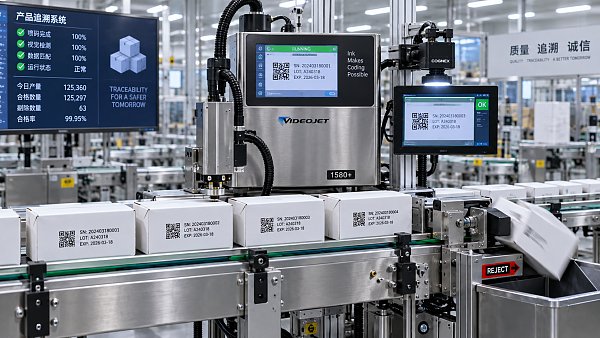
Integration features matter in three areas. First, the line interface must support stable triggering from encoders, PLCs, or upstream controls. Second, the software must handle variable data, including serial increments, lot codes, timestamps, and plant-specific identifiers. Third, the system should provide useful confirmation that the printed output matches the intended record, not just that the device fired.
This is where many low-cost systems become expensive. They may print adequately in isolation, but they create manual reconciliation work, rework risk, or batch hold events once connected to real manufacturing workflows.
Verification is not optional in regulated or high-claim environments
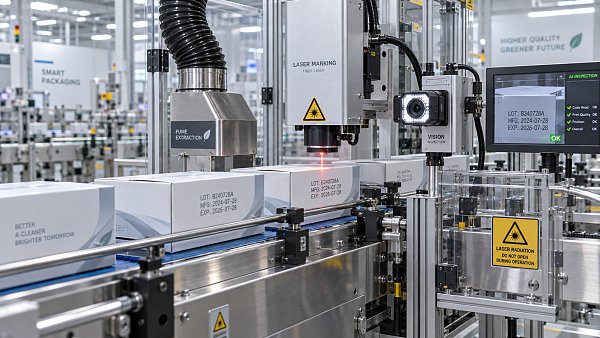
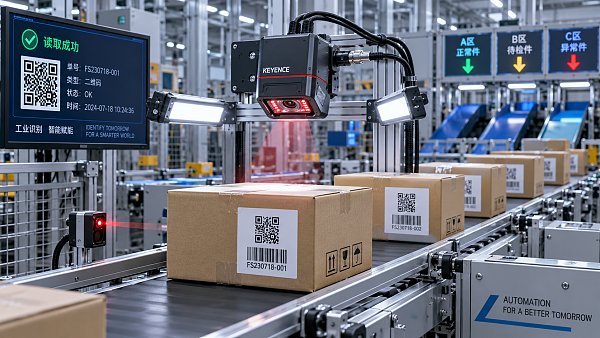
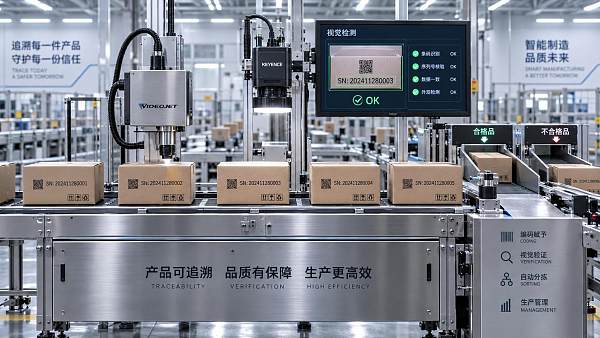
If the code supports recalls, channel tracking, export compliance, or customer-specific proof of origin, inline verification becomes a core feature rather than a nice-to-have. A verifier or vision module should be able to confirm print presence, readability, and basic data integrity at speed. In some operations, that means rejecting faulty packs automatically. In others, it means flagging a lane or batch for review before product leaves the line.
Evaluators should distinguish between three levels of assurance:
- Print confirmation: the device fired when expected
- Readability confirmation: the code can be decoded reliably
- Traceability confirmation: the code is linked to the right production record
Those are not the same thing. Many purchasing failures come from treating them as interchangeable. A system that only confirms print events may leave a plant blind to code degradation, misfeeds, or missed serialization assignments.
Uptime is a feature, not a service promise
In real operations, traceability equipment is judged by how often it interrupts the line. That makes maintenance burden a selection criterion from day one. Cleanability, consumable life, nozzle stability, head protection, and fault recovery all affect whether the printer supports OEE or quietly erodes it.
Some features that matter here are practical rather than sophisticated:
- Quick-change consumables and accessible wear parts
- Automatic purging or cleaning routines that do not waste excessive material
- Error alerts that are specific enough to shorten troubleshooting
- Stable operation during brief stops and restarts
- Protection against environmental contamination, vibration, or substrate dust
For evaluators, the right question is not only “Can it print?” but “How much intervention does it need over a normal shift?” A system that requires constant manual attention may pass a lab test and fail a production cost test.
Data handling determines how useful the system becomes later
Traceability systems rarely stay static. A plant may begin with simple date and lot codes, then add customer-specific serial ranges, regulatory fields, aggregation logic, or multi-site reporting. If the software layer is rigid, the hardware becomes trapped inside a narrow use case.
That is why data handling should be assessed early. Look for support for secure job templates, user permissions, audit trails, and exportable logs. If the system must interact with MES, ERP, warehouse controls, or line management software, confirm that the integration method is supportable over time rather than a one-off custom script.
Technical teams should also ask how the system handles exceptions. Can it pause on missing data? Can it quarantine a batch range? Can it recover serial continuity after a stoppage without duplicating or skipping numbers? These are not edge cases. They are normal production events in high-throughput packaging.
Fit depends on substrate, line speed, and code density
There is no single “best” serial number printing method for every packaging line. The right choice depends on what is being marked and how fast it moves. Corrugated board lines, for example, often care about rough surfaces, ink absorption, and dust. Carton and label lines may care more about fine code density, contrast, and placement accuracy. Film or flexible packaging introduces drying, adhesion, and smudge resistance concerns.
When comparing systems, it helps to test against the actual production envelope:
A system that performs well at one plant may be a poor fit at another if the substrate or speed profile changes materially. This is especially important for multi-site operators trying to standardize equipment across mixed packaging formats.
Compliance pressure is pushing the feature bar upward
Regulatory and customer traceability demands are making serial coding less forgiving. In many supply chains, the issue is no longer whether a code exists, but whether it can be proven, read, retained, and audited across the product’s journey. That creates pressure for printers that do more than mark a surface.
For technical evaluators, the practical implication is that traceability hardware should be judged alongside data retention, verification, and reporting capability. If the chosen system cannot provide evidence of what was printed, when it was printed, and whether it passed inspection, it may satisfy a narrow production requirement while failing a broader compliance one.
This matters even more when packaging lines serve multiple customers or geographies. A system that works for one labeling standard may be too narrow for another without software changes, new verification logic, or tighter integration than originally planned.
What usually separates acceptable systems from strong ones
In procurement reviews, the stronger options tend to share a few traits. They are stable under production conditions, they connect cleanly to line controls, they support verification without heavy custom work, and they do not create hidden maintenance debt. They also scale better when serialization rules become more complex.
By contrast, weaker systems often look adequate in early demonstrations but show the same problems once deployed: poor code consistency, awkward setup, fragile integration, and too much dependence on operators to keep them aligned with production data.
A practical shortlist for evaluation is this:
- Can it print readable codes at actual line speed on actual substrate?
- Can it verify those codes in-line or immediately after print?
- Can it stay synchronized with job data and serial logic across stops and changeovers?
- Can it be maintained without frequent line disruption?
- Can it support the reporting and traceability depth the business will need later?
Serial Number Printing Systems are often bought as a marking function and later judged as a control function. That is the right way to think about them from the start. The most valuable systems are not the ones that merely print more characters or run faster on paper demos. They are the ones that preserve code integrity, reduce operator intervention, and keep traceability credible when production conditions stop being ideal.
Related News
 What Determines Laser Coder Price in Industrial Packaging LinesLaser coder price depends on power, speed, materials, integration, and verification. Discover how to compare total costs and select the right packaging solution.Machine Vision & Coding Fellow
 How to Choose a Serial Number Printing Machine for TraceabilityChoose a serial number printing machine with confidence. Explore traceability, code quality, data control, inspection, and integration factors for reliable packaging serialization.Machine Vision & Coding Fellow
 How to Choose a Barcode Reader for a Packaging LineChoose the right barcode reader for packaging line applications with expert guidance on code quality, speed, optics, lighting, validation, and reject control.Machine Vision & Coding Fellow
 What to Check Before Choosing a Laser Coder ManufacturerChoose a laser coder manufacturer with confidence. Learn how to assess application trials, code quality, integration, safety, service support, and lifecycle cost.Machine Vision & Coding Fellow
 How Variable Data Printing Machines Improve Traceability AccuracyDiscover how a variable data printing machine improves traceability accuracy through unique coding, inline verification, and reliable data reconciliation.Machine Vision & Coding Fellow
 How to Calculate Serial Number Printing System Cost and ROISerial number printing system cost: calculate total ownership, compare suppliers, and build a practical ROI model to reduce errors, downtime, and compliance risk.Machine Vision & Coding Fellow