How to Calculate Serial Number Printing System Cost and ROI
How to Calculate Serial Number Printing System Cost and ROI
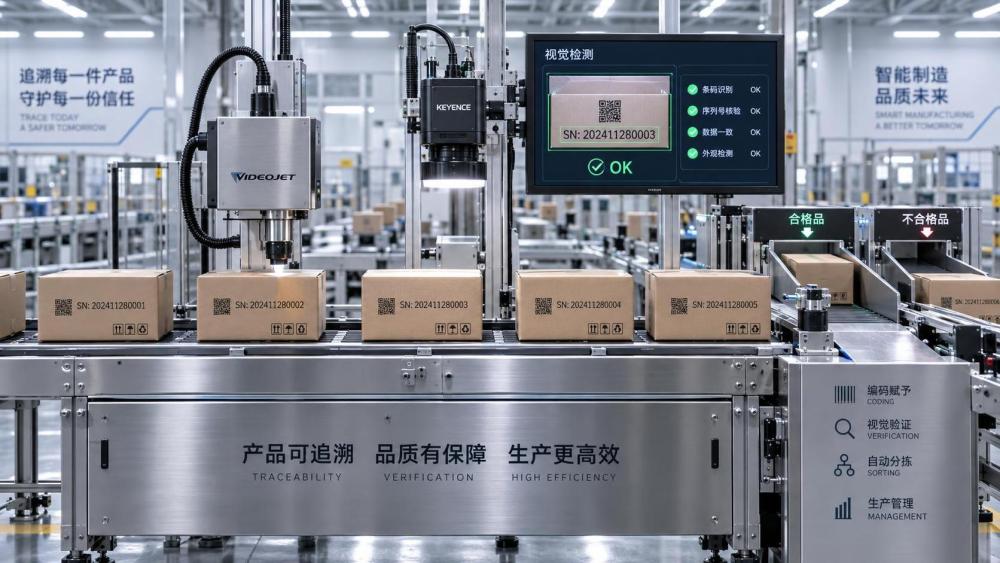
Understanding serial number printing system cost is essential for business decision-makers evaluating traceability, compliance, and production efficiency across printing, packaging, converting, and automated fulfillment operations.
The purchase price matters, but it rarely represents the full investment. Software integration, verification, consumables, maintenance, labor, downtime, and data management often determine lifetime value.
A sound business case begins with one question: what operational or commercial risk will serialisation solve, and what measurable financial improvement should the system create?
For most packaging producers, the strongest returns come from reducing rework, preventing coding errors, improving traceability, protecting customer relationships, and lowering manual inspection requirements.
This guide explains how to calculate total serial number printing system cost, estimate realistic ROI, compare supplier proposals, and avoid assumptions that weaken capital investment decisions.
Start With the Business Problem, Not the Equipment Quote
Serial number printing systems can include thermal inkjet printers, laser coders, thermal transfer units, label printers, vision cameras, databases, production controllers, and reporting software.
Because configurations vary widely, comparing only machine prices can lead to misleading conclusions. A lower-priced printer may require more operators, consumables, service calls, or verification steps.
Decision-makers should first define the application. Is the system needed for carton serialisation, batch coding, anti-counterfeit control, pharmaceutical compliance, warehouse traceability, or brand protection?
The required print location also affects cost. Printing directly on folding cartons differs significantly from coding corrugated cases, applying labels, or marking coated, uneven, or porous surfaces.
Production speed is another critical input. A system designed for intermittent manual packing cannot be evaluated using the same economics as a high-speed folder gluer or flexographic press.
Clarify whether every unit needs a unique number, whether codes require aggregation, and whether rejected products must be recorded automatically for audit purposes.
These requirements determine printer technology, camera resolution, software complexity, data storage needs, line controls, and the number of integration points across the production environment.
A practical investment brief should define products, substrates, line speeds, code content, code size, print positions, inspection requirements, expected volumes, and customer compliance obligations.
Without this baseline, suppliers may quote systems that appear comparable but differ substantially in reliability, automation level, data capability, and long-term operating cost.
Calculate the Full Serial Number Printing System Cost
The total cost of ownership should cover all spending required to install, operate, support, and eventually upgrade the serialisation solution over a defined period.
Most businesses use a three-year or five-year evaluation horizon. Five years usually provides a clearer view for integrated systems installed on high-volume packaging lines.
The first cost category is capital equipment. This includes printers, controllers, conveyors, label applicators, reject devices, cameras, sensors, enclosures, and safety-related modifications.
For direct-to-pack printing, capital costs may also include mounting frames, product handling improvements, printhead protection, drying or curing equipment, and environmental control measures.
The second category is software. Costs may include serial number generation, database licensing, enterprise resource planning integration, manufacturing execution system connectivity, user access, and reporting dashboards.
Software scope should not be underestimated. A standalone printer with local code creation is less expensive than a system requiring centralised serialisation, aggregation, cloud connectivity, and audit trails.
The third category is engineering and installation. Include mechanical design, electrical work, line modifications, factory acceptance testing, site commissioning, validation, and production start-up support.
Installation costs can rise when equipment must be fitted into an existing line with limited space, legacy controls, frequent product changes, or strict hygiene requirements.
The fourth category is integration. Printers and cameras may need to communicate with PLCs, line controllers, vision systems, reject stations, warehouse systems, or customer data portals.
Ask suppliers to state exactly which interfaces are included. Unclear responsibility for data exchange, line stop logic, or rejected-product handling can create expensive project variations.
The fifth category is training. Operators, maintenance technicians, quality teams, supervisors, and IT personnel need different levels of instruction to operate the system reliably.
Training should include abnormal-condition response, code verification, changeovers, cleaning, data backup, alarm management, and escalation procedures for failed inspections or duplicate serial numbers.
The final initial-cost category is contingency. For complex retrofit projects, reserve a reasonable allowance for unforeseen mechanical, electrical, software, or validation work during commissioning.
Include Operating Costs That Are Often Missed
Operating costs determine whether a serial number printing system remains economical after installation. They should be forecast using actual annual output, shift patterns, and product mix.
Consumables are commonly the largest recurring expense for inkjet and thermal transfer applications. Calculate ink, solvent, ribbons, cleaning materials, filters, and replacement cartridges separately.
Use supplier consumption data carefully. Confirm whether published figures reflect continuous production, the required code density, expected print coverage, substrate type, and normal line stop frequency.
Laser coding avoids many fluid consumables, but it may require higher initial investment, extraction systems, optical maintenance, safety controls, and careful testing on sensitive packaging materials.
Labels add another cost layer. Include label stock, ribbons, applicator wear parts, liner waste, inventory management, and the labor required to replenish rolls during production.
Maintenance costs include scheduled servicing, spare parts, remote support, emergency callouts, calibration, firmware updates, and replacement of printheads, lenses, belts, rollers, or sensors.
A service contract can make budgeting predictable, but review exclusions closely. Travel, premium response times, consumables, software updates, and accidental damage may not be fully covered.
Energy use is usually smaller than consumable expense, yet it can matter for multiple lines, laser systems, curing units, extraction equipment, compressors, and climate-controlled production areas.
Labor costs should cover both direct operation and indirect administration. Serialisation may require database administration, quality review, reconciliation, exception handling, and customer reporting activities.
Quantify planned downtime for coding equipment cleaning, ribbon changes, ink replenishment, line setup, verification tests, and product changeovers. These losses affect effective production capacity.
Also calculate the cost of unplanned downtime. A coding fault that stops a high-speed carton line can cost more per hour than the annual maintenance contract.
Build a Simple but Defensible ROI Model
A useful ROI model compares the total annual financial benefit with the annualised cost of the system. It should use conservative assumptions that management can validate.
Begin with the investment amount. Add equipment, integration, installation, training, validation, and contingency to establish the total project capital cost rather than relying on quoted hardware alone.
Then estimate annual operating costs. Combine consumables, service, spare parts, energy, software subscriptions, labor, and expected production losses caused by routine maintenance activities.
Next, identify annual benefits. Benefits should be tied to measurable operational changes, not broad claims about automation, quality, or digital transformation.
One common benefit is reduced rework. Calculate the number of coding-related defects avoided each year, multiplied by the material, labor, inspection, disposal, and rescheduling cost per defective unit.
Another benefit is avoided customer claims. Incorrect or unreadable serial numbers can trigger chargebacks, rejected deliveries, expedited replacement production, contractual penalties, and damage to customer confidence.
Traceability can also reduce recall exposure. While the probability of a recall may be low, faster identification of affected batches can substantially limit destruction, logistics, and reputational costs.
Labor savings are valid only when time is genuinely removed or redeployed. Measure manual code entry, visual inspection, paper recordkeeping, reconciliation, and supervisor intervention before implementation.
Capacity gains may create significant value. Faster changeovers, automated verification, and fewer line interruptions can increase sellable output without requiring an additional production line.
Use contribution margin, not revenue, when valuing additional production. Extra output only creates financial benefit when it can be sold and when sufficient demand exists.
The basic calculation is: annual net benefit equals annual savings and additional contribution margin, minus annual operating cost. This figure becomes the foundation for ROI analysis.
ROI percentage equals annual net benefit divided by total initial investment, multiplied by one hundred. Payback period equals total initial investment divided by annual net benefit.
For larger projects, use net present value. Discount future cash flows using the company’s required return, especially where benefits depend on multi-year contracts or future capacity growth.
Test the Assumptions With Scenario Analysis
Do not approve a project using a single forecast. Serial number printing system cost and ROI should be tested against realistic production, quality, and integration scenarios.
Create a conservative case using lower output growth, smaller labor savings, higher consumable consumption, and slower implementation. This shows whether the project remains viable under pressure.
Create a base case using current production data and verified defect rates. This should become the principal financial case presented to the investment committee.
Create an upside case only when there is evidence of higher customer demand, new compliance requirements, expanded product ranges, or measurable commercial opportunities enabled by traceability.
Sensitivity analysis should focus on the few variables that can materially change results. Typical examples are coding error rate, line downtime cost, consumable use, and annual volume.
For example, a vision inspection system may have limited value if coding errors are already rare. It may have strong value where unreadable codes cause recurring customer rejections.
Similarly, a premium printer may justify its price when it reduces stoppages on a high-output line. The same unit may be excessive for low-volume, manual production.
Document assumptions and data sources. Finance teams should be able to trace each savings estimate to production records, quality reports, maintenance logs, customer claims, or labor studies.
Compare Suppliers Beyond the Headline Price
Supplier evaluation should compare delivered performance, not only unit price. The right system must print legible codes consistently under actual production conditions and expected operating loads.
Request substrate-specific samples using real cartons, labels, films, coated boards, and corrugated materials. Test code readability after handling, abrasion, humidity exposure, and downstream converting processes.
Verify code quality requirements before purchase. Barcode grading, optical character verification, contrast, print placement, permanence, and serial number uniqueness may be contractual or regulatory obligations.
Ask how the supplier handles failed verification. A robust system should identify the defective product, trigger rejection, record the event, and prevent incorrect units from continuing downstream.
Review line-speed performance at normal and maximum production rates. A coding system that works during a demonstration may fail when vibration, dust, temperature changes, or frequent stop-start cycles occur.
Changeover time deserves close attention in short-run packaging operations. Confirm how operators select a job, load serial ranges, change print templates, and verify the first approved product.
Evaluate software ownership and data access. Businesses should understand where serial number records are stored, how long they remain available, and how data can be exported.
Cybersecurity and user permissions are increasingly relevant. Systems connected to plant networks should support controlled access, activity records, backup procedures, and a clear patching responsibility.
Service capability should be measured locally. Ask about response time, installed service resources, spare-part availability, remote diagnostics, training coverage, and experience with similar production lines.
Finally, request a transparent commercial schedule. Separate equipment, installation, software, licenses, consumables, support, travel, and optional functions so total cost remains visible.
Know When a Serialisation Investment Is Justified
A serial number printing system is usually justified when incorrect coding creates material financial, compliance, customer, or brand risk that manual procedures cannot control consistently.
It is particularly valuable for pharmaceutical cartons, food packaging, regulated products, premium consumer goods, automotive components, electronics, and products vulnerable to counterfeiting or diversion.
High-volume corrugated and folding-carton operations can also benefit when customer-specific codes, batch records, logistics labels, or traceability data create frequent production complexity.
For low-volume operations, a modular solution may be more appropriate. Start with reliable printing and verification, then add database connectivity, aggregation, or automation as requirements grow.
Businesses should avoid overspecification. A fully integrated enterprise serialisation platform may not deliver a reasonable return when production is simple and customer requirements remain limited.
However, underspecification also carries risk. Selecting a basic printer without verification, data controls, or suitable integration can create future compliance gaps and expensive retrofit work.
Make the Decision Using Total Value, Not Just Cost
The best serial number printing system is not necessarily the lowest-cost option. It is the solution that reliably meets traceability requirements while improving measurable operating performance.
Decision-makers should evaluate capital cost, lifetime operating cost, coding accuracy, downtime exposure, data capability, service support, scalability, and the financial impact of prevented failures.
A credible ROI case depends on real factory data, clear ownership, and conservative assumptions. It should show how the system improves quality control without creating hidden operational burdens.
When evaluated properly, serialisation becomes more than a coding purchase. It becomes a production-control investment that supports compliance, customer trust, waste reduction, and long-term packaging competitiveness.
Related News
 When Is a Higher Industrial Barcode Reader Price Worth Paying?Is a higher industrial barcode reader price worth it? Discover how to compare read reliability, integration costs, and downtime savings to make a smarter investment for your production line.Machine Vision & Coding Fellow
 What Determines Laser Coder Price in Industrial Packaging LinesLaser coder price depends on power, speed, materials, integration, and verification. Discover how to compare total costs and select the right packaging solution.Machine Vision & Coding Fellow
 How to Choose a Serial Number Printing Machine for TraceabilityChoose a serial number printing machine with confidence. Explore traceability, code quality, data control, inspection, and integration factors for reliable packaging serialization.Machine Vision & Coding Fellow
 How to Choose a Barcode Reader for a Packaging LineChoose the right barcode reader for packaging line applications with expert guidance on code quality, speed, optics, lighting, validation, and reject control.Machine Vision & Coding Fellow
 What to Check Before Choosing a Laser Coder ManufacturerChoose a laser coder manufacturer with confidence. Learn how to assess application trials, code quality, integration, safety, service support, and lifecycle cost.Machine Vision & Coding Fellow
 How Variable Data Printing Machines Improve Traceability AccuracyDiscover how a variable data printing machine improves traceability accuracy through unique coding, inline verification, and reliable data reconciliation.Machine Vision & Coding Fellow