How Variable Data Printing Machines Improve Traceability Accuracy
A traceability failure often becomes visible only after a pallet has left the plant: a barcode will not scan, two units carry the same serial number, a batch code does not match the production record, or an inspection system rejects otherwise acceptable cartons. At that point, the issue is no longer limited to print quality. It affects containment, rework, shipment release, and the ability to identify which products are actually involved.
A variable data printing machine improves traceability accuracy by creating, assigning, printing, and verifying changing information at the unit level rather than treating codes as static artwork. Its value depends on the full control loop: the correct data must reach the correct product, be printed in a readable form, survive the intended handling conditions, and be recorded as successfully applied. Printing alone is not traceability; confirmed association between a physical pack and a digital record is.
Where traceability accuracy breaks down on a packaging line
In a conventional workflow, preprinted packaging may contain a fixed product name, design, and regulatory text, while batch, date, serial, lot, or routing information is added later. That late-stage coding step is vulnerable because the line may be moving quickly, operators may change jobs frequently, and several data sources may be active at the same time. A correct label template combined with the wrong production-order data is still a traceability error.
Variable data printing brings control closer to the point where the identifier becomes physically attached to the product or package. Depending on the application, the changing content may include human-readable batch details, linear barcodes, 2D codes, serial numbers, expiry information, order references, or aggregation identifiers for bundles and cases. Each printed instance can be linked to a defined record, making it possible to distinguish one pack from another rather than identifying only a general production run.
The most persistent failures usually come from one of five gaps:
- Data selection errors: the printer receives a previous job, an incorrect SKU, or an outdated date rule.
- Sequence-control errors: a serial number is duplicated, skipped without being recorded, or printed out of order.
- Print-quality errors: code contrast, cell formation, quiet zones, or placement prevent reliable reading.
- Product-to-code association errors: the code is valid but applied to the wrong carton, label, tray, or shipper.
- Verification gaps: rejected, unreadable, or reworked packs remain in production records as though they were acceptable.
A well-configured system does not eliminate every cause of error automatically. It makes these failure modes observable, controllable, and easier to isolate before they become a release or recall problem.
The accuracy chain: data, print, inspection, and reconciliation
Technical evaluation should begin with the idea that traceability accuracy has several layers. A code can be visually sharp yet contain the wrong information. It can contain correct information but be printed in a position that a scanner cannot reach. It can be readable at the printer but fail after abrasion, condensation, folding, varnishing, or transport. Evaluating only one layer produces false confidence.
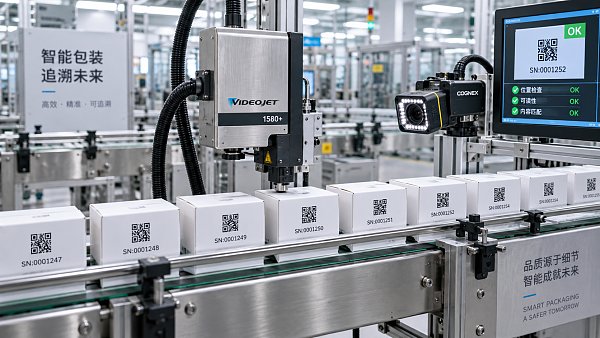
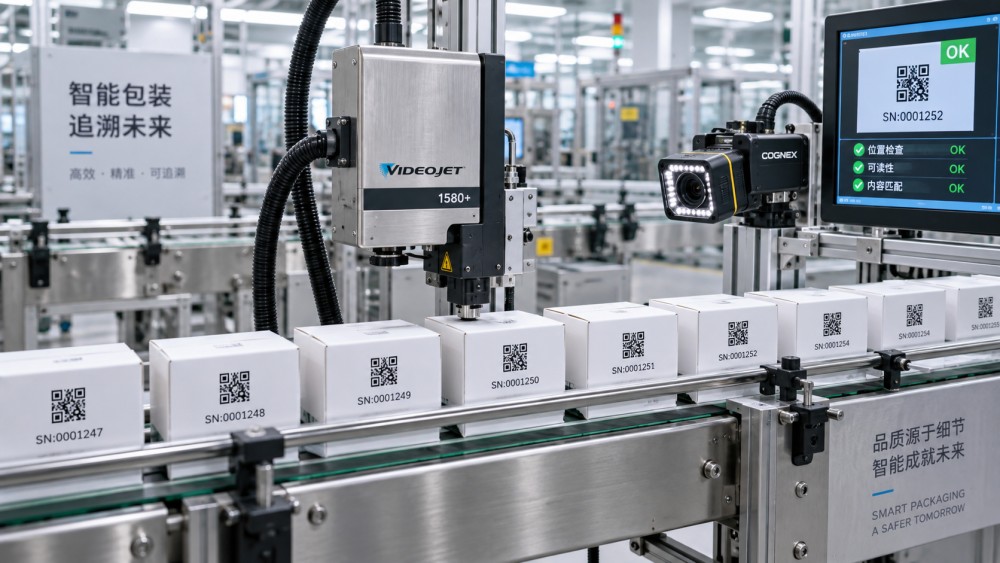
The strength of a variable-data system comes from joining these layers. A print controller may request a unique identifier from a database or receive a defined serial range from a production management system. The printer applies it to the pack. A vision system or scanner checks presence, content, readability, and position. The line then either accepts the unit, removes it, or places it into a controlled exception path. The resulting event should update the identifier status rather than leaving it as “printed” by default.
Why unique printing improves the quality of investigations
When all cartons in a batch carry the same code, traceability can identify a broad production window but may not distinguish individual units. Unique coding adds resolution. It allows a manufacturer to determine whether a specific pack was produced, inspected, rejected, packed into a particular case, or associated with a particular distribution unit—provided the data capture points are designed to preserve those relationships.
This is particularly useful where packaging moves through several stages. A folding carton may be printed with a unit identifier, then combined with a product at cartoning, grouped into a shipper, and finally assigned to a pallet. Each step can create a parent-child relationship: unit to bundle, bundle to case, case to pallet. The identifier alone does not create aggregation. The production system must capture the association at the moment the grouping is made and must prevent incomplete or mixed groups from being treated as valid.
Traceability investigations also benefit from status control. A serial number that has been generated but never verified should not be treated like a released serial number. Similarly, a code printed on a rejected pack should be marked as rejected or decommissioned according to the site’s data rules. Without this distinction, a database may show an identifier as available even though it exists physically in waste, rework, or a quarantined product stream.
Choosing the print method around the code, substrate, and line condition
Not every variable data printing machine is equally suitable for every packaging operation. The right choice depends less on a generic speed claim than on the relationship between substrate, code design, available print area, production motion, and verification requirement.
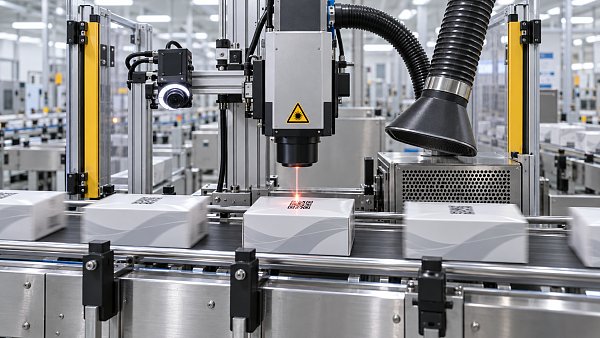
Inkjet-based systems can be appropriate where non-contact printing is needed on corrugated cases, coated cartons, flexible materials, or uneven surfaces. Their performance depends on ink-substrate interaction, drying time, printhead maintenance, throw distance, and the stability of the product path. A code may look acceptable at low speed but degrade when vibration changes the print distance or when absorbency varies across the board surface.
Thermal transfer printing is commonly considered for labels and certain flexible substrates where durable, high-resolution variable text and codes are needed. Ribbon selection, printhead condition, pressure, heat settings, and substrate smoothness affect edge definition and adhesion. The evaluator should confirm that the code remains readable after the package passes through expected downstream handling, not merely immediately after printing.
Laser marking may suit selected materials and line layouts, but contrast and material response require close attention. A change in coating, color, surface treatment, or product temperature can alter mark quality. Digital printing systems can combine variable content with broader graphics requirements, though registration, substrate behavior, file preparation, and inspection logic must still be controlled at production speed.
The decision should be based on a production sample set rather than one ideal sheet or label. Test the range of actual material variation: lighter and darker surfaces, coated and uncoated areas, board texture, seam zones, flap transitions, and expected environmental exposure. A code that scans on a flat sample may fail on a folded carton where the printed area is distorted or partially hidden.
Print verification should test the data, not just the presence of ink
A simple sensor can confirm that a mark exists. It cannot establish whether the right serial number was printed, whether a Data Matrix symbol is decodable, or whether a barcode is sufficiently well formed for the scanners used later in the supply chain. The inspection method must match the actual risk.
For human-readable date and batch information, optical character inspection can compare printed characters against expected values and flag missing or substituted characters. For barcodes and 2D symbols, camera-based verification can assess decodability and detect problems such as low contrast, damaged modules, insufficient margins, incomplete symbols, skew, or unintended duplication. Position inspection is equally important where automated scanners expect a code within a defined zone.
The inspection result must trigger an unambiguous response. A failed pack should be rejected physically, and the line should confirm that the reject action occurred. If the reject bin becomes full, a reject mechanism faults, or a product is not removed, continued production without intervention weakens the entire control loop. Technical reviews should therefore examine reject confirmation, fault handling, restart behavior, and the treatment of products produced during a verification outage.
Do not confuse readable with traceable
A handheld scanner may read a code that an automated vision system grades poorly, and a vision system may confirm a technically readable symbol that contains a valid format but the wrong serial assignment. The verification rule should include content matching. The expected data can be derived from the active job, a serial-number request, a batch rule, or a product record. The inspection system should compare what was printed with what should have been printed at that point in the sequence.
Job changeovers are often the highest-risk moment
Traceability errors frequently occur at changeover because physical packaging, printer settings, inspection recipes, and production-order data do not always switch at the same time. A line can start producing the next SKU while one device remains on the previous template. In mixed manufacturing environments, a correct code format may hide this mistake because it still appears plausible to operators and scanners.
Controlled changeover requires more than asking an operator to select the correct file. Useful safeguards include a released job record, restricted template editing, material identification, confirmation that the correct print and camera recipes are loaded, and a defined first-off approval process. The first acceptable samples should be checked for visible content, encoded data, code position, and association with the current order—not only for general print appearance.
When a job is interrupted, the restart sequence deserves the same discipline. The system must know whether partially used serial ranges remain valid, whether identifiers printed before the stop were accepted or rejected, and whether rework will create duplicate application risk. Treating every restart as a clean start can create hidden gaps in the traceability record.
How to assess a system before integration
Evaluation is stronger when it follows the actual product journey. Map where the unique identifier is created, where it is printed, where it is read, where it is aggregated, and where its final status is stored. Then identify every handoff between machine, operator, database, and material flow. Those handoffs are where traceability usually loses accuracy.
- Define the traceability unit. Decide whether control is needed at item, carton, bundle, case, pallet, or a combination of levels.
- Specify the data rule. Establish required fields, identifier format, sequence behavior, duplicate prevention, and the expected status of unused or rejected codes.
- Review the substrate and print zone. Confirm available space, orientation, surface variability, drying or curing conditions, and accessibility for later scanning.
- Match inspection to the risk. Determine whether presence detection, OCR, barcode verification, code comparison, or aggregation confirmation is required.
- Test exception handling. Simulate unreadable codes, duplicate data, printer faults, camera faults, reject failures, and line stops to see how records and physical products are controlled.
- Confirm data retention and retrieval. Make sure production personnel can retrieve the identifier history needed to investigate a pack, batch, case, or pallet without relying on manual notes.
Integration should also account for timing. On high-speed cartoning, corrugated converting, or label application lines, there is a finite interval between data assignment, print trigger, camera inspection, and reject point. Product tracking through that interval must remain stable. Encoder feedback, conveyor spacing, sensor placement, and product pitch all influence whether an inspection result is attributed to the correct physical unit.
Operational details that protect long-term accuracy
Traceability performance can drift even when the original installation was sound. Printheads wear, nozzles clog, ribbons wrinkle, lenses collect dust, substrates change, and operators adopt workarounds during busy periods. Maintenance should therefore include functional tests that reflect traceability risk, not only machine availability. A printer can be mechanically running while producing codes outside the usable quality range.
Controlled access to templates and data fields also matters. Operators may need permission to select released jobs and acknowledge alarms, while changes to code structure, date logic, serial rules, and inspection tolerances should be traceable to an authorized process. Free editing at the line is convenient during a problem, but it can make later investigation difficult because the printed result no longer matches the approved configuration.
The practical measure of success is not that a machine can print variable information. It is that every accepted pack can be tied to the correct production context, every exception is visible, and the physical flow agrees with the digital record. When data management, print quality, inline verification, rejection, and reconciliation are treated as one connected process, variable data printing becomes a dependable control point rather than a last-minute coding operation.
Related News
 When Is a Higher Industrial Barcode Reader Price Worth Paying?Is a higher industrial barcode reader price worth it? Discover how to compare read reliability, integration costs, and downtime savings to make a smarter investment for your production line.Machine Vision & Coding Fellow
 What Determines Laser Coder Price in Industrial Packaging LinesLaser coder price depends on power, speed, materials, integration, and verification. Discover how to compare total costs and select the right packaging solution.Machine Vision & Coding Fellow
 How to Choose a Serial Number Printing Machine for TraceabilityChoose a serial number printing machine with confidence. Explore traceability, code quality, data control, inspection, and integration factors for reliable packaging serialization.Machine Vision & Coding Fellow
 How to Choose a Barcode Reader for a Packaging LineChoose the right barcode reader for packaging line applications with expert guidance on code quality, speed, optics, lighting, validation, and reject control.Machine Vision & Coding Fellow
 What to Check Before Choosing a Laser Coder ManufacturerChoose a laser coder manufacturer with confidence. Learn how to assess application trials, code quality, integration, safety, service support, and lifecycle cost.Machine Vision & Coding Fellow
 How Variable Data Printing Machines Improve Traceability AccuracyDiscover how a variable data printing machine improves traceability accuracy through unique coding, inline verification, and reliable data reconciliation.Machine Vision & Coding Fellow