How Serial Number Printing Systems Support Product Traceability Compliance
In regulated packaging, printing a code is not the same as creating traceability. A serial number only becomes useful when it is generated consistently, printed legibly, captured reliably, and linked to the right product record. That is where Serial Number Printing Systems matter most. For quality control and safety teams, the real issue is not whether a line can print numbers at speed, but whether those numbers can stand up to audits, recalls, counterfeiting investigations, and cross-border compliance checks.
In practice, serialization sits at the intersection of production control and compliance evidence. A carton, label, corrugated box, or leaflet may carry a lot code, batch identifier, expiration date, and unique serial number. If any one of those elements is missing, duplicated, unreadable, or disconnected from the backend record, traceability weakens immediately. For industries with strict documentation requirements—especially pharmaceuticals, medical devices, food contact packaging, and high-value consumer goods—that weakness can become a regulatory problem rather than a printing defect.
Why serial number printing is a compliance issue, not just a coding task
Many teams still treat serialization as an end-of-line marking function. That approach works only until the first deviation appears. A misprinted character, a missed label, a duplicated code after a line stop, or a database mismatch can break the chain of custody for an entire production lot. In a traceability review, regulators and customers usually care less about whether the printer was fast and more about whether the code was unique, readable, and traceable back to a controlled record.
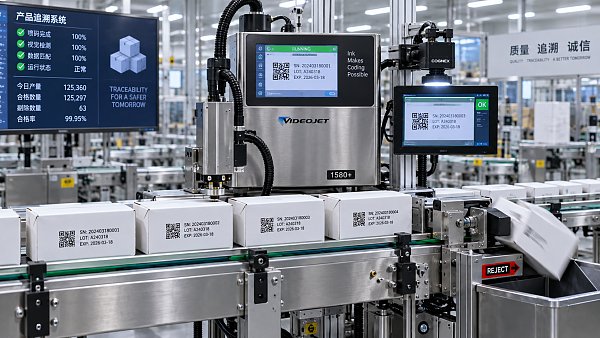
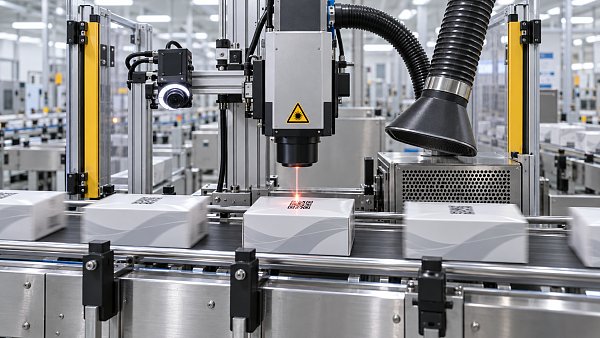
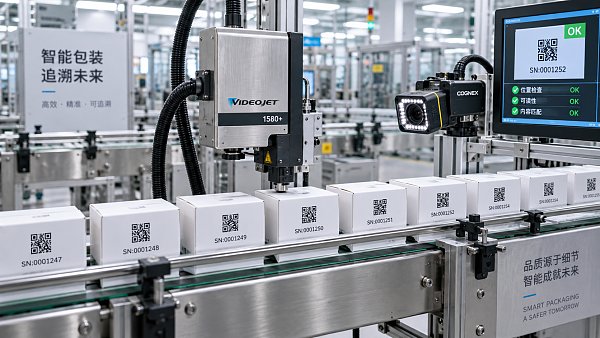
That is why Serial Number Printing Systems are increasingly tied to compliance workflows. They do three jobs at once: generate a unique identifier, apply it to the package or component, and confirm that the printed result matches the planned data set. If any of those steps are manual, the risk of human error rises quickly. In high-speed packaging operations, manual checks are rarely enough to catch all exceptions.
The compliance value comes from control. A good system helps teams answer basic audit questions: Which serial number was assigned to which product unit? When was it printed? On which line? Was the code verified? Was the rejected unit physically removed? Is there a complete record of exceptions and rework?
What quality and safety teams should verify in the printing process
From a control perspective, serialization should be evaluated as a process capability issue. It is not enough to test print quality on a sample basis. The important question is whether the system can maintain consistent output under real production conditions—line speed changes, substrate variation, ink wear, operator shifts, and scheduled downtime.
Key checkpoints usually include:
- Code uniqueness: every serial number must be generated only once and protected against duplication.
- Print legibility: the code must be readable by humans and machine vision systems across normal handling and storage conditions.
- Data integrity: printed data must match the approved master record, including product ID, batch, and expiry where applicable.
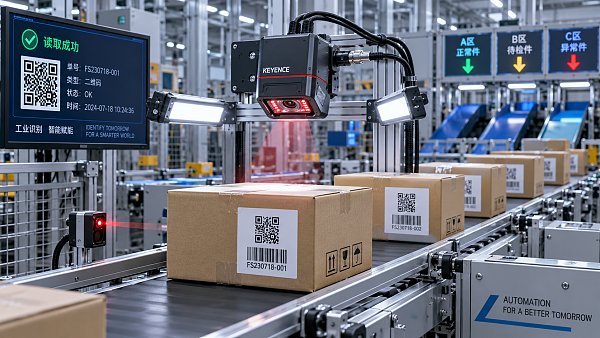
- Verification and rejection: unreadable or incorrect units should be detected and removed automatically.
- Event logging: all print, reset, rework, and downtime events should be recorded for audit review.
For safety teams, the issue extends beyond print quality. A traceability failure can delay recalls, complicate investigations, and weaken a company’s ability to prove containment. In some sectors, that can also affect liability exposure if a suspect product reaches the market without a reliable identity trail.
Where serialization breaks down in real production
The most common failure is not the printer itself, but the way the system is integrated into the line. If the coding device is technically capable but the data feed is unstable, the result is still a compliance gap. Likewise, if the printer is accurate but the vision system is poorly calibrated, unreadable codes may pass unnoticed.
Typical weak points include:
- late or manual code assignment before printing;
- network interruptions between the ERP/MES system and the print station;
- operator overrides without full audit trail;
- poor contrast on glossy, curved, or textured substrates;
- code placement that conflicts with folding, cutting, or sealing operations;
- inadequate rejection logic when multiple packages are printed in sequence.
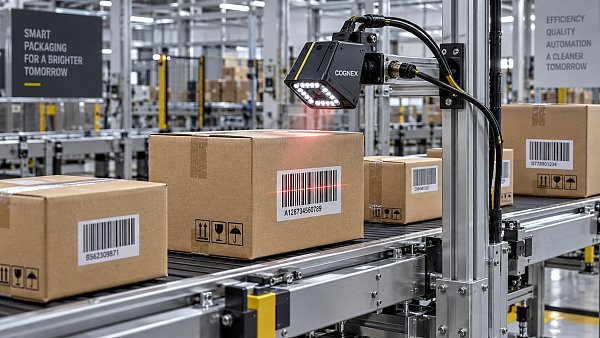
These issues are common in corrugated and folding carton environments, where the printed surface may be affected by dust, vibration, ink absorption, or mechanical handling. A serial number can be technically correct but still non-compliant if it cannot be reliably scanned after packaging. That is why print verification should be designed around the full lifecycle of the code, not just the moment it is applied.
How automated systems strengthen audit readiness
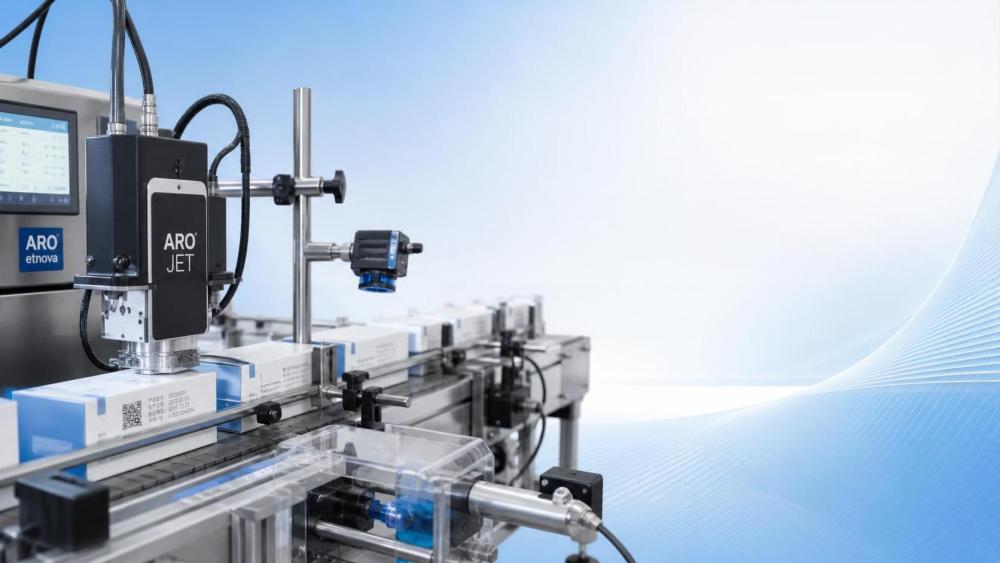
Automated Serial Number Printing Systems reduce dependence on operator judgment and create a repeatable record of what happened on the line. This is especially useful when auditors ask for traceability evidence across multiple shifts or multiple production sites. A properly configured system can link the serial number to batch data, machine parameters, timestamps, and rejection records. That makes the compliance file much easier to defend.
Audit readiness is not only about documentation volume. It is about consistency. If one site prints serials in a different format, or one shift handles exceptions differently, the traceability chain becomes harder to prove. Standardized print logic and verification rules help eliminate those differences. For multinational operations, that consistency can be more valuable than adding more manual checkpoints.
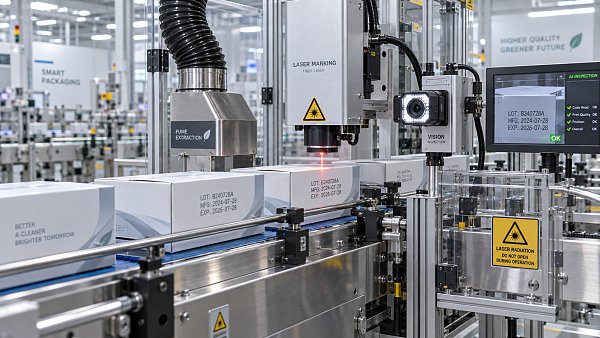
Vision inspection also plays a critical role. In many cases, the best practice is not “print and hope,” but “print, verify, reject if needed, and log automatically.” The ability to detect a missing digit or incorrect code in real time is often what separates a manageable deviation from a reportable incident.
Standards and compliance expectations vary, but the logic is similar
Different sectors follow different rules, and exact requirements depend on the market and product category. Pharmaceutical serialization, medical device UDI, food labeling, and export packaging traceability are not identical frameworks. Still, the compliance logic is similar: the code must support product identity, chain-of-custody control, and evidence retention.
In regulated environments, teams should avoid assuming that one system configuration fits all. A line that performs well for secondary packaging may fail when moved to primary packaging or when substrate conditions change. Likewise, a printer that meets one customer’s barcode quality target may not satisfy another buyer’s verification threshold.
For this reason, quality teams often need to confirm not only the code format but also the underlying validation rules, rejection thresholds, and data retention policies. If the company exports into jurisdictions with stricter traceability expectations, those requirements should be built into the system design early, not patched in after launch.
Choosing a system for compliance use
When evaluating Serial Number Printing Systems, the main question is not speed alone. Quality and safety teams should look at how the system handles exception control, code verification, and record integrity.
Useful evaluation points include:
- Can the system generate unique codes without manual intervention?
- Does it support secure data exchange with upstream planning systems?
- Can it verify print quality in real time?
- Does it create a complete audit trail for reprints and rejects?
- Can it adapt to different package formats and line speeds?
- Is the maintenance routine simple enough to sustain stable performance?
Maintenance deserves attention because serialization failures often emerge slowly. Worn printheads, unstable ink delivery, dirty sensors, or outdated software can create intermittent defects that are difficult to spot during short tests. A system that looks compliant during commissioning may drift out of control during extended production unless maintenance and verification are built into routine operations.
The practical compliance payoff
When serial number printing is controlled properly, the benefit is not only regulatory. It improves containment, speeds up investigations, and reduces the cost of recalls or customer disputes. It also supports supplier qualification, especially when buyers want proof that packaging or product units can be traced back to specific production records.
For quality and safety teams, the main takeaway is simple: serialization should be treated as a control system, not a label printer. The more complex the packaging line, the more important it becomes to connect printing, inspection, and data logging into one traceable workflow. In that setup, the serial number is no longer a code on a box. It becomes evidence.
As regulatory expectations continue to tighten across global supply chains, companies that can prove reliable serialization will have an easier time defending product integrity, responding to incidents, and maintaining customer trust. Those that rely on partial controls or manual checks will keep facing the same problem: the code exists, but the compliance proof does not.
Related News
 When Is a Higher Industrial Barcode Reader Price Worth Paying?Is a higher industrial barcode reader price worth it? Discover how to compare read reliability, integration costs, and downtime savings to make a smarter investment for your production line.Machine Vision & Coding Fellow
 What Determines Laser Coder Price in Industrial Packaging LinesLaser coder price depends on power, speed, materials, integration, and verification. Discover how to compare total costs and select the right packaging solution.Machine Vision & Coding Fellow
 How to Choose a Serial Number Printing Machine for TraceabilityChoose a serial number printing machine with confidence. Explore traceability, code quality, data control, inspection, and integration factors for reliable packaging serialization.Machine Vision & Coding Fellow
 How to Choose a Barcode Reader for a Packaging LineChoose the right barcode reader for packaging line applications with expert guidance on code quality, speed, optics, lighting, validation, and reject control.Machine Vision & Coding Fellow
 What to Check Before Choosing a Laser Coder ManufacturerChoose a laser coder manufacturer with confidence. Learn how to assess application trials, code quality, integration, safety, service support, and lifecycle cost.Machine Vision & Coding Fellow
 How Variable Data Printing Machines Improve Traceability AccuracyDiscover how a variable data printing machine improves traceability accuracy through unique coding, inline verification, and reliable data reconciliation.Machine Vision & Coding Fellow