How Do Barcode Scanners Verify Serial Numbers on Packaging Lines?
Barcode scanners verify serial numbers on packaging lines by feeding decoded data into a controlled sequence of validation, product tracking, and rejection. The scanner reads the printed symbol; connected software determines whether the serial belongs to the current product and production order, whether it has already appeared, and whether its status permits release. A package passes only when those checks succeed and the result remains correctly associated with that physical package.
A readable barcode therefore proves only part of the process. A perfectly printed code can contain an unauthorized serial, belong to another order, or repeat a number already used. Reliable verification requires both dependable reading and a defined response whenever the data, timing, or package identity becomes uncertain.
Separate barcode reading from serial validation
Three functions often share the label “verification,” although they answer different questions. Decoding establishes what data the symbol contains. Serial validation establishes whether that data is acceptable for the packaging operation. Print-quality verification evaluates symbol characteristics using a suitable verifier and controlled measurement conditions. An inline reader’s successful decode or proprietary quality score does not automatically constitute standardized barcode verification.
This distinction affects equipment selection. A fixed industrial scanner might consistently read a code while leaving duplicate detection entirely to a line controller or serialization application. An integrated vision system might combine reading, data comparison, and visual inspection, but its software configuration still determines which serial checks actually occur.
Build the decision around each physical package
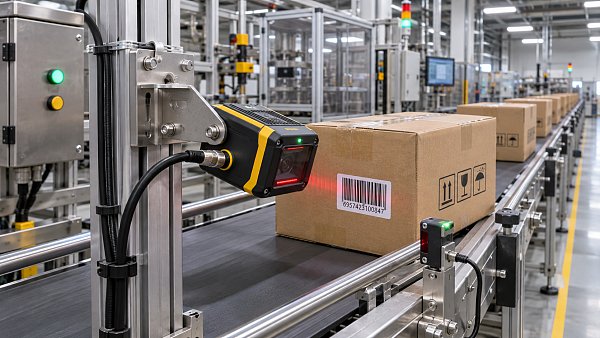
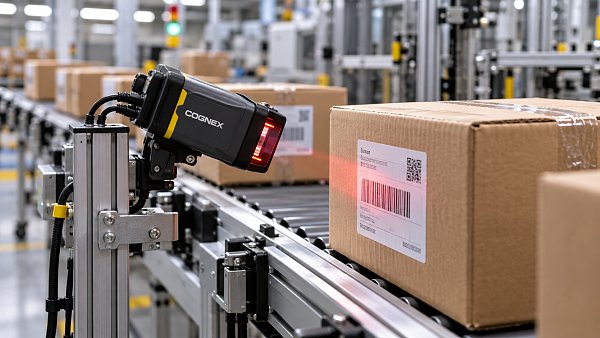
The workflow begins when a sensor or machine signal identifies a package entering the inspection zone. The controller creates a tracking record and triggers image acquisition. The decoded message, inspection result, and timing information must attach to that record. A free-running stream of decoded strings is insufficient where cartons travel close together or several codes enter the field of view.
After decoding, the application parses the message according to the selected format. For structured symbols, this includes correctly interpreting field identifiers, separators, and variable-length data. Comparing raw text without parsing can produce false mismatches when different interfaces represent control characters differently. Normalization must preserve meaningful characters: removing leading zeros or changing case can alter an identity.
The application then compares the extracted fields with the active recipe and authorized serial records. A positive result releases the package only after every required condition is satisfied. Missing results, ambiguous reads, and responses arriving after the decision deadline need explicit handling, usually rejection or a controlled line stop.
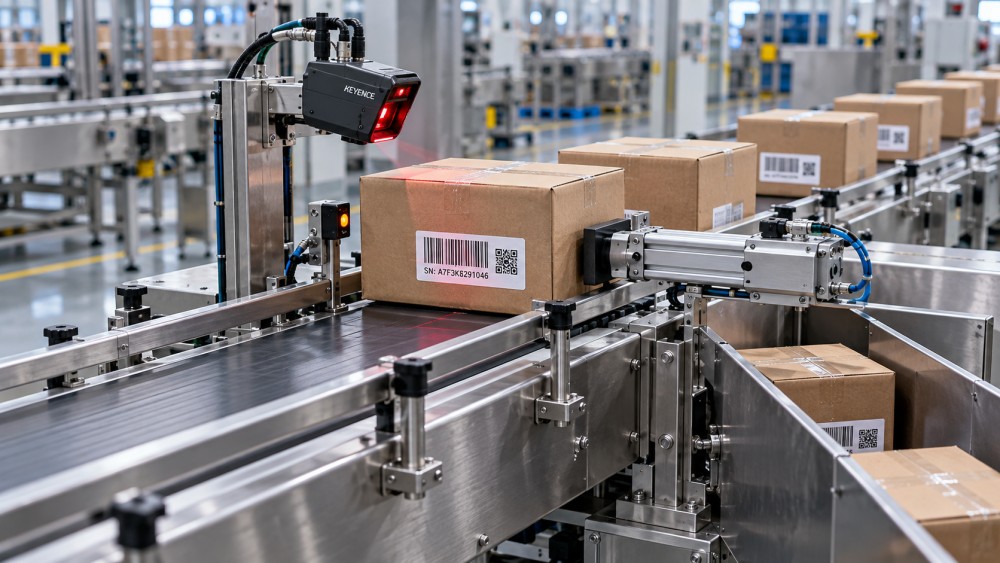
The useful process diagram follows two connected paths: the data path from trigger through validation, and the physical path from inspection to reject confirmation. Both paths meet at the same package tracking record. This relationship becomes especially important when a conveyor buffers, accelerates, or stops between the camera and reject station.
Define what makes a serial number valid
Format validation is the first filter. It can enforce field presence, length, allowed characters, and any check digit defined by the coding scheme. A symbol’s internal error correction or checksum supports decoding integrity; it does not establish that the serial was authorized or assigned to the correct product.
Order matching adds production context. The expected product identifier, packaging level, and relevant batch information come from the active job. Where an authorized serial pool is used, the system also verifies membership in that pool and the serial’s current lifecycle state. Merely matching the string sent to the printer provides limited assurance if the printer and inspection system both received the same incorrect job data.
Uniqueness requires an explicit identity key. Some applications define it as a serial alone; others use a product identifier combined with the serial. The database and line software must use the same definition. Otherwise, the system can either reject legitimate identities or accept duplicates that should have been detected.
The duplicate-search boundary also matters. Memory held inside one scanner detects only repetitions visible within that memory’s scope and retention period. It does not establish uniqueness across parallel lines, earlier production, or a restarted controller. Shared validation needs persistent records and a coordinated state transition so two stations cannot simultaneously accept the same available identity.
Authorized-list matching still has a boundary: a copied valid code can pass its first encounter if its identity has not already been consumed. Scanning alone does not prove that the package carrying the code is authentic.
Make the reading station tolerate the actual packaging
Reader capability must be assessed against the smallest printed barcode element at the intended working distance. Overall image resolution is an incomplete specification: widening the field of view reduces the pixels available for each element. A setup that reads a large shipping label can struggle with a compact serial code on a folding carton.
Motion introduces another constraint. During exposure, the printed code moves across the image; longer exposure increases blur. Shorter exposure requires sufficient illumination to retain contrast. Line speed, exposure time, optical magnification, and lighting therefore need evaluation together. A fast decoding processor cannot recover detail that the camera never captured.
Packaging surfaces change the optical problem:
- Coated cartons and film-covered labels can reflect illumination into the camera. Lighting angle, diffuse illumination, or polarization can improve contrast, although polarization also reduces available light.
- Corrugated board introduces liner texture, ink absorption, and panel movement. A symbol beside a score or over an uneven area can distort as the case travels.
- Carton flaps, seams, and glue areas create local changes in height or shape. Code placement on a stable panel often provides more consistent results than compensating through reader settings.
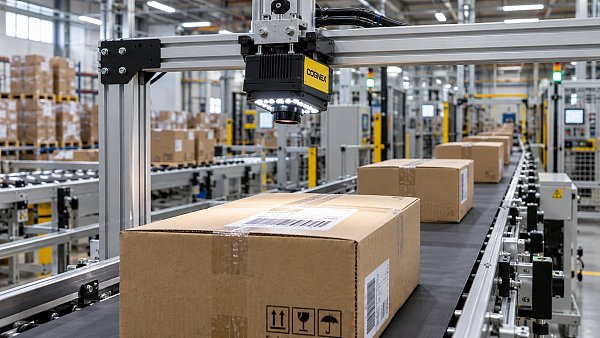
The inspection position determines which defects are visible. Reading immediately after printing confirms the code at that stage. Folding, gluing, case erection, or label application can subsequently hide, scuff, or distort it. Where those operations threaten readability, the acceptance scan belongs after the relevant operation, or an additional downstream inspection is needed.
Reject decisions must survive conveyor movement
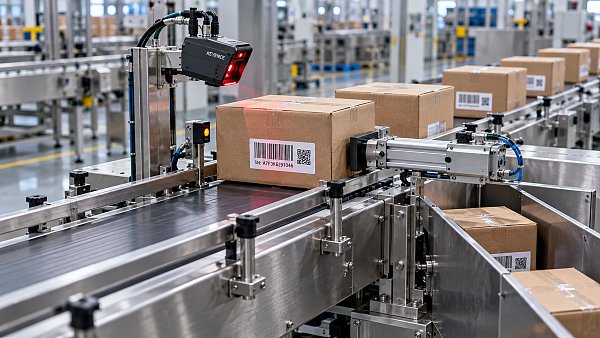
A correct validation result has no practical value if the reject mechanism removes the wrong carton. The controller needs to preserve the association between each package and its result until physical disposition is complete. A fixed time delay works only where transport conditions remain sufficiently controlled. Encoder-based tracking better accommodates speed changes, but belt slip, package sliding, accumulation, and manual removal can still break the assumed relationship.
The available decision window follows from the distance between inspection and rejection and the actual transport speed. Exposure, decoding, data transfer, validation, controller processing, and actuator response all consume that window. Evaluation should consider the longest credible combined delay, including communication retries and server congestion, rather than average decoding time alone.
A reject command records an intention. Confirmation requires appropriate sensing and logic to establish that the expected item entered the reject path. A full reject bin, failed actuator, or unexpected package at the confirmation sensor needs a defined fault response. Detection without a reliable disposition response leaves suspect packaging in the accepted stream.
No-read handling deserves the same discipline. If a package produces no valid decode, the system cannot infer which serial was present. Its physical tracking record still exists and must reach a controlled outcome. Repeated no-reads should also remain distinguishable from invalid serials because the corrective actions differ.
Keep serial state consistent through faults and rework
Network architecture changes how validation behaves during interruptions. A line-local authorized dataset reduces dependence on a remote response for every package, but requires controlled allocation and later synchronization. Central validation provides shared visibility while placing communication availability and response time directly in the release path. Either arrangement needs defined behavior when its required services become unavailable.
The point at which a serial changes state must be explicit. Reading a number, accepting a package, rejecting it, and assigning it to a shipping case are different events. A system that permanently consumes every number as soon as it is scanned can complicate recovery after a downstream jam. A system that postpones all state changes can leave a window for duplicate acceptance.
Rework therefore needs a controlled route. A previously rejected carton returning to inspection should encounter rules based on its recorded status and authorized rework action. Clearing duplicate memory to make that carton pass also removes protection against unrelated repetitions. Persistent event records allow reinspection without treating the entire production history as disposable.
For case packing, aggregation adds another relationship: which accepted unit identities belong inside which case. Scanning a case label does not establish its contents. That association requires controlled pack-in events or another validated method, with updates when units are removed or cases reopened.
Demonstrate performance with deliberate faults
An acceptance trial should test the complete release decision using production materials, actual code sizes, and the intended speed range. A collection of successful scans demonstrates readability under those conditions; it provides little evidence that the system detects incorrect identities or removes the right package.
Useful challenge samples include a readable serial from another order, a repeated valid identity, a well-formed serial absent from the authorized pool, and a package with no readable code. Where multiple symbols appear on the packaging, introduce a readable neighboring code to establish that the system selects the intended symbol.
Transport and recovery trials reveal different weaknesses. Closely spaced cartons test result association. A stop between inspection and rejection tests tracking persistence. Loss of the validation connection tests timeout behavior. A controlled restart establishes whether pending packages and serial states are recovered consistently.
Record outcomes separately: decoding failure, data rejection, late decision, tracking fault, and unsuccessful physical rejection. Combining them into one read-rate figure conceals the source of failure. Evidence should connect each challenged package to its decoded data, validation reason, reject command, and confirmed disposition. That record makes it possible to determine whether a problem originated in printing, identity management, communication, or conveyor control.
Related News
 What Affects Barcode Scanner Prices for Production Lines?Barcode scanner price depends on speed, durability, integration, and maintenance. Learn how to compare production-line quotes and make a smarter investment.Machine Vision & Coding Fellow
 Why an Industrial Barcode Scanner Fails to Read CodesIndustrial barcode scanner not reading codes? Discover how to diagnose print, setup, lighting and communication issues and restore reliable production.Machine Vision & Coding Fellow
 How to Choose a High Speed Barcode Reader for Packaging LinesChoose a high speed barcode reader with confidence. Compare optics, line speed, controls, and acceptance tests to improve packaging-line reliability.Machine Vision & Coding Fellow
 How Do Barcode Scanners Verify Serial Numbers on Packaging Lines?Discover how Barcode Scanners validate serial numbers, detect duplicates, and trigger package rejection. Learn how to improve packaging line accuracy and traceability.Machine Vision & Coding Fellow
 How to Choose a High Speed Barcode Scanner for Moving CartonsChoose a high speed barcode scanner for moving cartons with confidence. Compare motion blur, optics, tracking, and real-world tests to reduce no-reads and costly rejects. Explore the guide.Machine Vision & Coding Fellow
 When Is a Higher Industrial Barcode Reader Price Worth Paying?Is a higher industrial barcode reader price worth it? Discover how to compare read reliability, integration costs, and downtime savings to make a smarter investment for your production line.Machine Vision & Coding Fellow