Carton Coding Machines: Choosing the Right Print Method for Each Packaging Line
Carton Coding Machines: Choosing the Right Print Method for Each Packaging Line
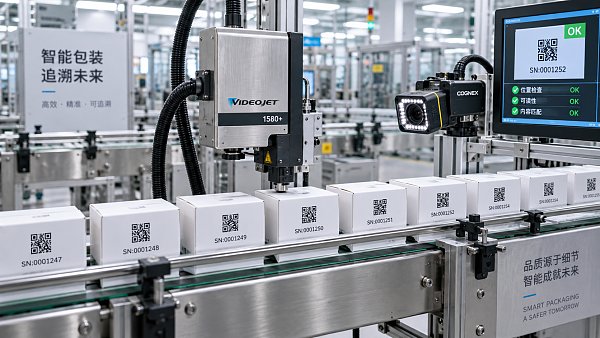
Carton Coding Machines sit at an awkward but decisive point in a packaging line. They are rarely the largest capital item, yet they can quietly dictate whether a plant runs cleanly or spends its shift chasing unreadable dates, drifting barcodes, solvent issues, or rejected cartons at the pack-out station. In pharmaceutical cartons, food sleeves, cosmetic folding boxes, and e-commerce secondary packs, coding is no longer a minor add-on. It is part of traceability, compliance, rework control, and ultimately OEE.
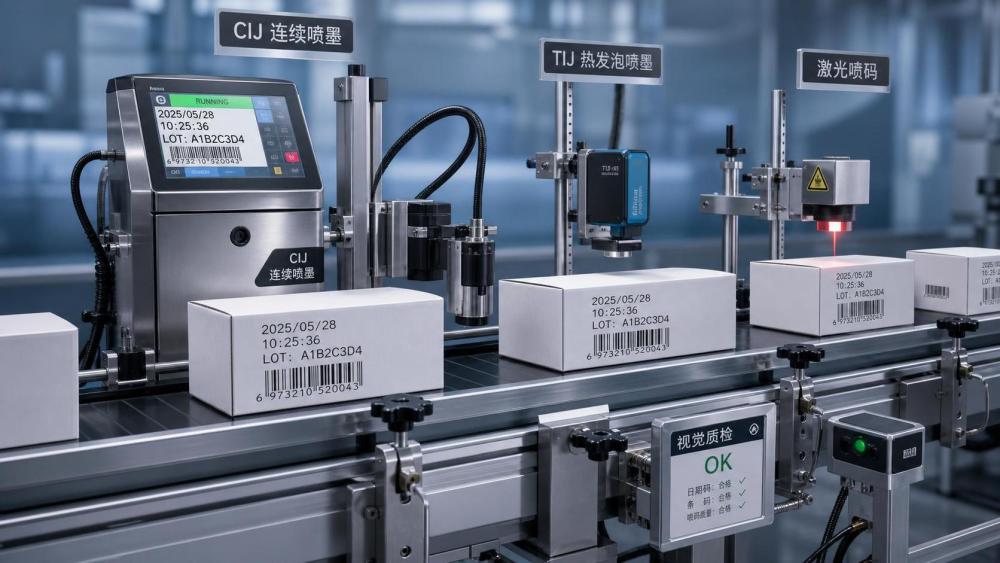
That is why the print method matters more than many line specifications suggest. A code that looks acceptable on a sample carton at slow speed may fail on a real folder gluer discharge, on varnished stock, or after downstream handling. Technical evaluation teams usually compare four options first: CIJ, TIJ, laser, and thermal transfer. The mistake is to ask which one is “best.” The better question is simpler: which one fits the substrate, speed envelope, code content, duty cycle, and maintenance reality of this line?
From the CPCS perspective, coding cannot be separated from the wider mechanics of corrugated and carton converting. A printhead mounted after a die-cutter, before a folder gluer, or at the end of a high-speed cartoner is living inside a world of cam timing, board variability, ink behavior, registration windows, and inspection logic. That is exactly where seemingly small coding decisions start to affect waste.
Start with the line, not the code format
Most selection problems begin when buyers jump directly to print resolution or consumable cost. In practice, the first screen should be mechanical and operational.
Ask what the carton is doing at the coding point. Is it a flat blank, an erected carton, a sleeve, or a glued pack? Is it moving continuously or indexing? What is the actual line speed, not the nominal brochure speed? How much product-to-product spacing exists? Is the print window always presented at a stable distance and angle? A coding technology that performs well on a stable flat carton can struggle when cartons flutter, rotate slightly, or arrive with inconsistent gap control.
The substrate question is just as important. Uncoated board, aqueous-coated carton, UV varnished stock, laminated surfaces, and porous corrugated each behave differently. Ink absorption, drying, adhesion, and contrast all change. This is one reason CPCS consistently treats coding and vision inspection as part of the same quality conversation. You do not just need a printed mark; you need a mark that can be read reliably downstream at production speed.
Where each coding method really fits
CIJ: still the flexible choice for difficult line conditions
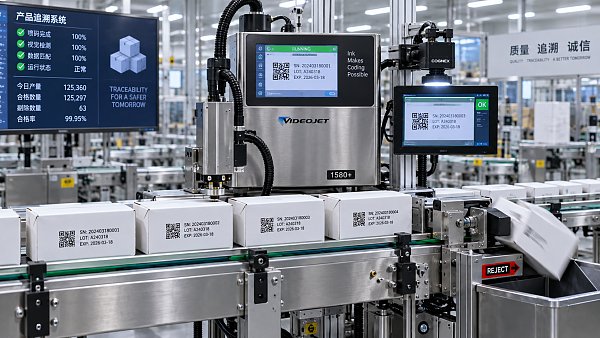
Continuous Inkjet remains common because it tolerates motion well. It can print on moving products at high speed, accepts some variation in throw distance, and handles date codes, lot numbers, and variable text with relatively little mechanical contact. On fast packaging lines where cartons do not stop long enough for more precise methods, CIJ is often the practical answer.
Its trade-offs are familiar: solvent management, nozzle maintenance, ink selection, and print sharpness limits compared with higher-resolution systems. On porous or semi-porous carton surfaces, CIJ can work very well. On coated cartons, the result depends heavily on ink chemistry and drying time. If the line includes immediate handling, rubbing, or compression after coding, smudge risk needs real testing rather than assumptions.
For many technical evaluators, CIJ makes the most sense when uptime under variable conditions matters more than fine graphic quality.
TIJ: cleaner operation, sharper codes, narrower operating window
Thermal Inkjet is attractive because it offers high-resolution text and barcode output with relatively clean operation. Cartridge-based systems can reduce some of the service burden associated with CIJ, and they are often favored where code readability is critical but line architecture allows tight control of print distance.
The catch is that TIJ is less forgiving mechanically. Print gap, substrate flatness, and carton stability matter. On folding carton lines with a well-controlled product path, TIJ can be excellent for crisp 2D codes, especially where vision inspection is stringent. On rougher corrugated applications or lines with vibration and inconsistent presentation, the performance advantage can disappear quickly.
Laser: durable, low-consumable coding with substrate limits
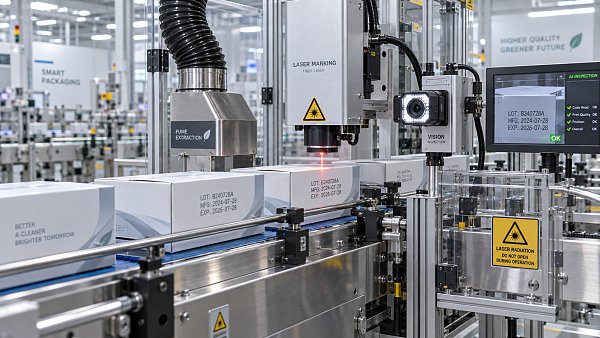
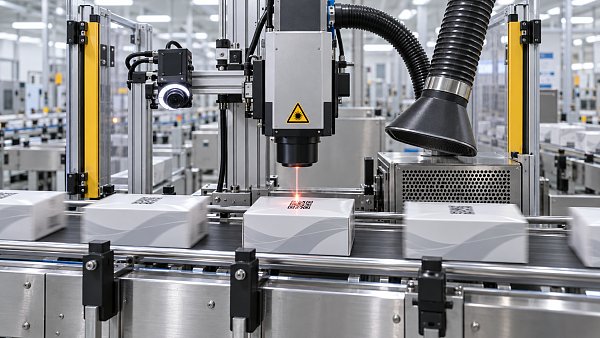
Laser coding earns attention whenever permanence and consumable reduction are high priorities. There is no ink drying issue, no ribbon, and usually no concern about code transfer after printing. For some carton materials, especially where surface reaction is predictable, laser can produce very stable codes for date marking or serialization.
But laser is not universally suitable for cartons. The visible result depends on how the board coating or printed layer reacts to the beam. Some substrates mark cleanly; others produce low contrast, edge charring, or inconsistent appearance. Fume extraction, guarding, and integration space must also be considered. On paper-based packaging lines already under pressure from sustainability requirements and tighter compliance review, teams should verify whether the visual outcome and substrate integrity are acceptable for the target market.
Thermal transfer: excellent print quality, mainly for film and label workflows
Thermal transfer printing delivers dense, clear codes and is widely trusted in flexible packaging and label applications. On carton lines, though, it is usually less natural unless the coding point and material path are specifically designed around it. It generally requires contact, ribbon handling, and a controlled presentation surface.
That does not make it irrelevant. If a packaging line includes labels, overwrap, or certain specialty applications, thermal transfer may still be the strongest option. It is simply not the default answer for every carton coding project.
A practical comparison for decision-making
What technical evaluators should verify before choosing
Three issues regularly decide success more than the print technology brochure does.
One is code durability in the real production sequence. A code may pass immediately after printing and still fail after folding, bundling, or pallet vibration. This matters especially on coated cartons and on end-of-line coding after gluing.
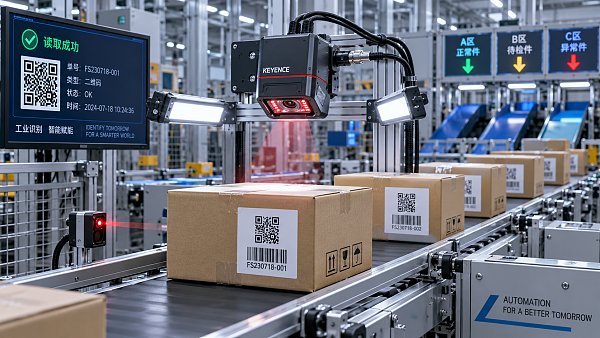
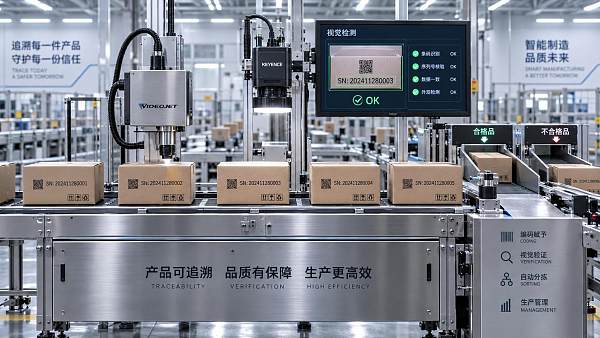
Another is the relationship between coding and inspection. If a line uses line-scan cameras or barcode verification, the coding method has to produce not only visible output but repeatable contrast and geometry. CPCS often emphasizes this in high-speed corrugated and carton environments: print quality is an image-processing issue as much as a marking issue. A method that generates occasional edge feathering or contrast drift may look acceptable to operators and still trigger vision rejects.
The third is maintenance discipline. CIJ asks for a different routine than TIJ. Laser shifts attention toward optics, extraction, and safety. Thermal transfer introduces ribbon changeovers and contact wear. None of these is inherently bad, but a line should be matched to the maintenance culture actually available on site.
How application changes the answer
On a pharmaceutical carton line, readability, serialization, and inspection validation tend to push teams toward methods that deliver sharp, consistent variable data and integrate cleanly with vision systems. TIJ or laser often enter the discussion early, though substrate tests remain essential.
On corrugated transit packs or e-commerce secondary packaging, the priorities are often different. Surfaces are less refined, line speeds can be aggressive, and code content may be simpler. Here, CIJ can remain very competitive because it handles motion and variation better than more delicate methods.
On premium printed cartons with varnish or decorative coatings, buyers should be careful. A coding technology that is perfect on plain board may underperform badly once the surface treatment changes. This is where CPCS’s broader view of flexo, converting, and end-of-line dynamics becomes useful: coding should be evaluated as part of the finished packaging architecture, not as an isolated device purchase.
Common selection mistakes
A few errors come up repeatedly:
- Choosing on acquisition cost alone while ignoring consumables, reject cost, and cleaning time.
- Approving print samples produced off-line rather than at actual speed and actual product spacing.
- Assuming a substrate family is uniform; coated board grades can behave very differently.
- Adding vision inspection after the coding decision instead of evaluating both together.
- Underestimating installation constraints such as guarding, extraction, head access, and operator reach.
None of this is theoretical. In high-speed converting, small mismatches become recurring waste events. Ms. Vivienne Cross’s OEE-focused lens at CPCS is relevant here: if setup spoilage, restarts, and false rejects increase, the cheapest coding head on paper can become the expensive choice on the floor.
A better way to make the final choice
For most projects, the cleanest path is a short qualification matrix built around actual production conditions. That usually means testing the real carton material, final artwork area, expected variable data, maximum line speed, and downstream handling sequence. If the line serves regulated sectors or export markets, traceability rules, barcode grading expectations, and local safety requirements also need confirmation at project level.
The right Carton Coding Machines decision is rarely the one with the most impressive headline specification. It is the one that keeps code quality stable through the ugly realities of industrial motion: substrate variation, acceleration, heat, dust, operator intervention, and inspection tolerance. In some plants that points clearly to CIJ. In others, TIJ or laser will justify themselves. Thermal transfer still has a place, but usually in more defined application windows.
If the evaluation is being done seriously, the next step is not a broad request for generic brochures. It is to lock down substrate details, print window dimensions, speed profile, code content, verification method, and maintenance expectations. Once those are clear, the print method usually narrows itself far faster than most teams expect.
Related News
 What Determines Laser Coder Price in Industrial Packaging LinesLaser coder price depends on power, speed, materials, integration, and verification. Discover how to compare total costs and select the right packaging solution.Machine Vision & Coding Fellow
 How to Choose a Serial Number Printing Machine for TraceabilityChoose a serial number printing machine with confidence. Explore traceability, code quality, data control, inspection, and integration factors for reliable packaging serialization.Machine Vision & Coding Fellow
 How to Choose a Barcode Reader for a Packaging LineChoose the right barcode reader for packaging line applications with expert guidance on code quality, speed, optics, lighting, validation, and reject control.Machine Vision & Coding Fellow
 What to Check Before Choosing a Laser Coder ManufacturerChoose a laser coder manufacturer with confidence. Learn how to assess application trials, code quality, integration, safety, service support, and lifecycle cost.Machine Vision & Coding Fellow
 How Variable Data Printing Machines Improve Traceability AccuracyDiscover how a variable data printing machine improves traceability accuracy through unique coding, inline verification, and reliable data reconciliation.Machine Vision & Coding Fellow
 How to Calculate Serial Number Printing System Cost and ROISerial number printing system cost: calculate total ownership, compare suppliers, and build a practical ROI model to reduce errors, downtime, and compliance risk.Machine Vision & Coding Fellow