Why Inkjet Printhead Prices Vary with Design and Ink Compatibility
Why Inkjet Printhead Prices Vary with Design and Ink Compatibility
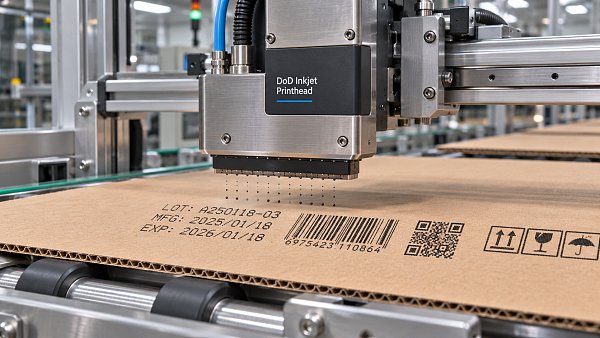
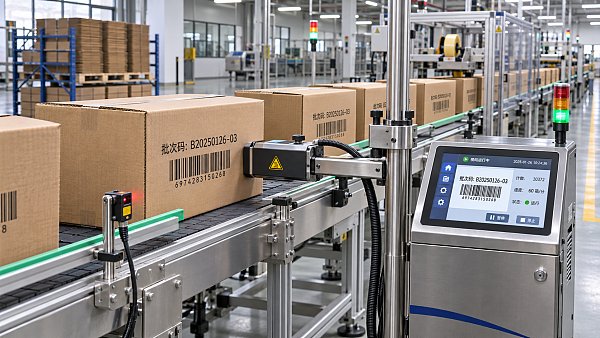
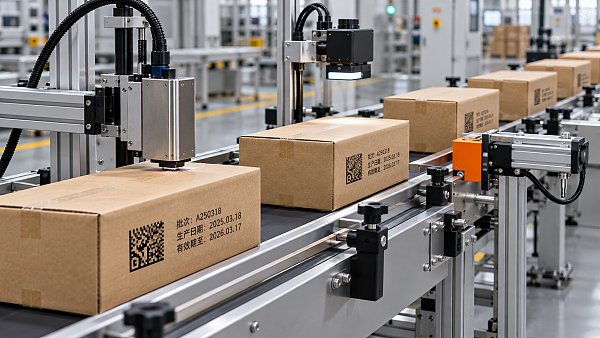
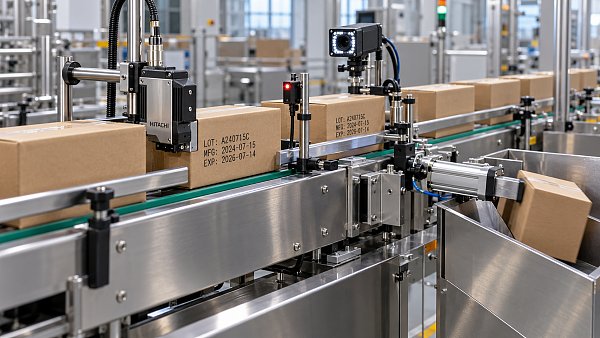
An inkjet printhead price is only meaningful when viewed alongside the design and ink requirements of the printing system. For technical evaluators comparing packaging and commercial printing equipment, differences in actuator technology, nozzle density, ink recirculation, and wetted materials can explain substantial price gaps. Compatibility with water-based, solvent, or UV-curable inks also shapes operating limits, maintenance demands, and replacement risk. Understanding these relationships helps distinguish a lower purchase price from a genuinely cost-effective choice.
The useful question is not simply why one head costs more. It is whether the additional engineering solves a problem in the intended production process. A coding unit printing occasional batch information and a single-pass press producing full-color corrugated packaging place very different demands on their printheads, even when both use inkjet technology.
Start by checking what the quoted price includes
Before comparing specifications, establish the supply boundary. A quotation may cover a bare printhead, a cartridge with an integrated head, or a complete module containing manifolds, mounting hardware, heaters, and electronics. These are not equivalent purchases. An apparently inexpensive head may require a separate drive board, ink delivery system, temperature controller, and substantial integration work.
Replacement quotations need similar scrutiny. Confirm the exact part number and revision, whether the unit is new or refurbished, and which calibration records accompany it. A mechanically compatible replacement may still require different firmware, drive waveforms, or alignment procedures. Warranty conditions and authorized supply channels also affect the practical value of the quoted price.
Comparing cost per nozzle or per unit of print width can help expose differences in scope, but neither is a complete measure. Usable width, operating frequency, ink restrictions, and the number of heads needed to achieve the required coverage must remain part of the comparison.
Architecture sets the performance envelope
Actuator technology changes both manufacturing and ink requirements
Thermal inkjet creates a vapor bubble to eject ink, while piezoelectric inkjet uses a deforming actuator to generate pressure in an ink chamber. Thermal designs can suit compact coding systems and replaceable cartridge formats. Their inks must tolerate the repeated heating process and satisfy the requirements of the heater and fluid channels.
Piezoelectric designs can accommodate a broader range of formulations, depending on their construction, and are widely used in industrial printing. However, “piezoelectric” does not mean compatible with every ink. Actuator structures, chamber geometry, bonding processes, and drive electronics differ between products. Those differences influence production complexity and pricing, but actuator type alone cannot establish whether a premium is justified.
Nozzle density is valuable only when it produces usable output
Higher nozzle density can support finer detail or reduce the number of staggered heads needed across a printbar. It also places tighter demands on manufacturing accuracy, fluid-channel consistency, and electrical interconnection. A dense array is not automatically the better choice for corrugated board, where surface texture, absorbency, and sheet movement may limit the benefit of finer dots.
Distinguish native nozzle pitch from the advertised resolution of the assembled printer. Staggering, multiple passes, and substrate movement can change the effective addressability. Likewise, compare firing frequency at the specified drop size and grayscale mode—not an isolated maximum frequency. Multiple pulses used to form grayscale drops may change the achievable production speed.
Small drops can improve fine text and tonal transitions; larger drops may better suit coverage requirements or more difficult substrates. What matters is stable drop volume, velocity, and direction at the required operating condition. Satellites and inconsistent trajectories can undermine barcode edges or create banding despite an impressive resolution specification.
Recirculation adds engineering—and must be evaluated precisely
Ink recirculation can support pigment management, temperature consistency, and recovery from certain fluid disturbances. Its relevance increases with demanding production schedules and formulations prone to settling. Yet suppliers may use “recirculation” to describe different arrangements: flow through an external manifold, through the head body, or close to the nozzle chambers.
Ask for the fluid-path diagram. Circulation upstream of the nozzles does not necessarily refresh ink within every nozzle chamber. The location of the flow path determines which problems the design can address, especially during idle periods or when using heavily pigmented inks.
A recirculating architecture may require more complex channels, seals, pressure regulation, and system controls. It can also add pumps, degassing equipment, and filtration outside the head. That investment may be sensible for a continuously operated packaging press, but less compelling for a low-duty coding application. Recirculation does not eliminate capping, cleaning, or nozzle maintenance.
Ink compatibility is a defined operating window
“Water-based compatible” or “UV compatible” is a starting point, not an approval for an entire ink category. Compatibility depends on the complete formulation and its interaction with adhesives, seals, metals, coatings, and nozzle-plate surfaces. Cleaning and flushing fluids belong in that assessment too; they can damage a system that otherwise handles the production ink reliably.
Request the permitted viscosity range at the actual jetting temperature, along with surface-tension requirements, filtration guidance, and pressure limits. A viscosity value measured at room temperature is insufficient if the head operates with heated ink. Pigment particle distribution, agglomeration behavior, and dissolved gas also influence reliability.
Water-based inks: drying and substrate behavior matter
Water-based formulations can contain pigments, binders, humectants, and other additives that create very different jetting conditions. Evaporation at the nozzle face may cause concentration changes or deposits during idle periods. Material compatibility must also account for the formulation’s chemistry, including pH where relevant.
For paper-based packaging, reliable jetting is only part of the task. Absorption, primer choice, drying capacity, and board moisture influence edge definition, color, and distortion. A more expensive head will not compensate for an unsuitable drying arrangement or poorly controlled substrate.
Solvent and UV-curable inks impose different risks
Solvent formulations may swell seals, attack bonding materials, or alter surface coatings. Evaporation can also change nozzle conditions during stops. Approval should cover the specific solvent blend and maintenance fluids, rather than rely on the broad description “solvent-resistant.”
UV-curable inks introduce their own material and temperature requirements. Stray curing light near the nozzle face can create deposits or blockage, making lamp placement and shielding relevant to printhead reliability. Some formulations require heating to reach their jetting viscosity, which adds control demands. Head compatibility does not establish suitability for food packaging; ink selection, curing, migration assessment, and the finished packaging structure require separate evaluation.
Compare demonstrated performance, not disconnected specifications
A useful supplier comparison connects every important specification to a production condition. A drop-volume range without the ink, waveform, temperature, and firing mode tells only part of the story. The same applies to life expectancy: ask how it was assessed and which failure criteria were used. Calendar time, ink throughput, and operating hours describe different exposures.
For a technical review, request evidence addressing these points:
- Approved ink and cleaning-fluid combinations, including restrictions on substitutions.
- Jetting conditions: temperature, viscosity, pressure, waveform, drop mode, and firing frequency.
- Nozzle acceptance criteria, including missing jets, directional deviation, and compensation limits.
- Idle-time recovery procedures and permitted cleaning methods.
- Replacement requirements, including alignment, calibration, electronics, and software support.
Run application tests on representative substrates, not only smooth laboratory media. Include cold starts, sustained production, job changes, idle periods, and restart recovery. On corrugated lines, test realistic sheet-height variation and operating gaps. Mechanical head-strike protection deserves attention because an otherwise suitable printhead can fail through contact with warped board.
Where barcode quality is a release requirement, agree on verification conditions rather than relying on visual inspection. ISO/IEC 15416 addresses linear barcode print quality, while ISO/IEC 15415 addresses two-dimensional symbols. Applicable customer requirements and verification settings still need confirmation; neither standard proves printhead durability or ink compatibility.
Translate the price difference into production exposure
The relevant ownership cost includes replacement heads, maintenance labor, purge ink, filters, calibration waste, and downtime. It also includes the supporting fluid system and any service dependency. Avoid assuming a premium head will last longer without evidence, but do not assume a cheaper replacement is economical simply because it is easier to purchase.
Single-pass systems make this distinction particularly important. A defective nozzle can leave a persistent line through every sheet, while replacement may require printbar realignment and color recalibration. Multipass systems can sometimes mask nozzle defects through additional passes, but that may reduce throughput. Maintenance access and recovery time therefore belong alongside resolution in the evaluation.
This system-level perspective aligns with Global Commercial Print & Corrugated Packaging Intelligence (CPCS), which connects printing technology with packaging production, inspection, converting, and factory automation. Printhead performance affects more than image appearance: unreliable coding can trigger inspection rejects, and unstable printing can disrupt downstream delivery schedules.
Before accepting an inkjet printhead price, bring the quotation, compatibility documentation, fluid-system requirements, and application-test results into one review. If a price premium buys proven stability under the actual ink, substrate, speed, and maintenance conditions, it has a defensible purpose. If that connection cannot be demonstrated, the specification sheet alone is not enough.
Facing technical bottlenecks in manufacturing or looking for more efficient industrial solutions? Leave your details below and let the engineering experts at CPCS solve them for you.
We respect your privacy. Your information is strictly confidential.
Related News
 How Do Drop on Demand Inkjet Printers Control Ink Droplets?Discover how Drop on Demand Inkjet Printers control droplets through precise firing, ink formulation, and substrate handling for sharper codes and graphics.Machine Vision & Coding Fellow
 What Affects the Price of a Carton Coding Machine?Carton coding machine price depends on printing technology, speed, automation, and running costs. Discover how to compare quotes and choose the best value for your production line.Machine Vision & Coding Fellow
 How to Choose a Variable Data Printing Machine for PackagingChoose the right variable data printing machine for packaging. Compare material compatibility, speed, data control, and inspection to reduce waste and make a confident investment.Machine Vision & Coding Fellow
 How Can an Online TIJ Printer System Prevent Missing Batch Codes?Discover how an online TIJ printer system helps prevent missing batch codes with reliable triggers, vision inspection, and verified rejection. Reduce rework and protect traceability.Machine Vision & Coding Fellow
 Industrial Inkjet Printer Market Forecast to Reach $9.2 Billion by 2035Industrial inkjet printer market forecast: $9.2 billion by 2035. Explore how packaging traceability, automation, and CIJ and TIJ technologies could shape equipment investment.Machine Vision & Coding Fellow
 How Does Variable Data Printing for Cartons Improve Traceability?Discover how variable data printing for cartons improves traceability with verified codes and linked records to help locate affected stock and support faster recall decisions.Machine Vision & Coding Fellow