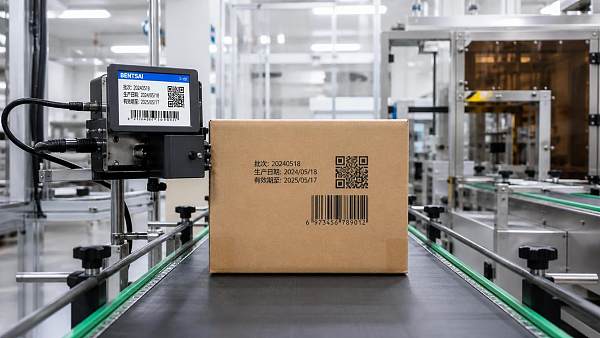
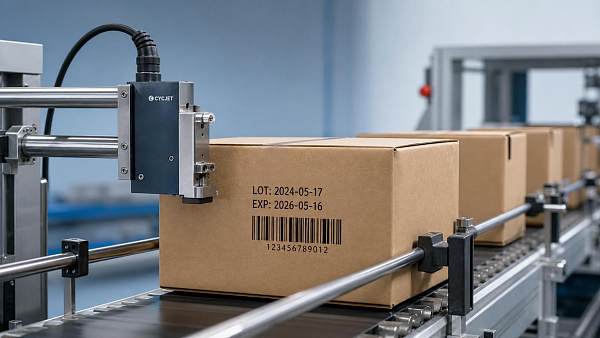
Variable Data Printing Systems: Key Factors That Affect Cost Per Pack
Variable Data Printing Systems: Key Factors That Affect Cost Per Pack
For finance-led packaging investments, variable data printing is easy to underestimate. The discussion often starts with compliance, traceability, late-stage customization, or serialized codes. The budget impact, however, shows up somewhere else: in cost per pack, line interruption, substrate waste, ink consumption, rejected batches, and the amount of labor needed to keep data and print quality under control.
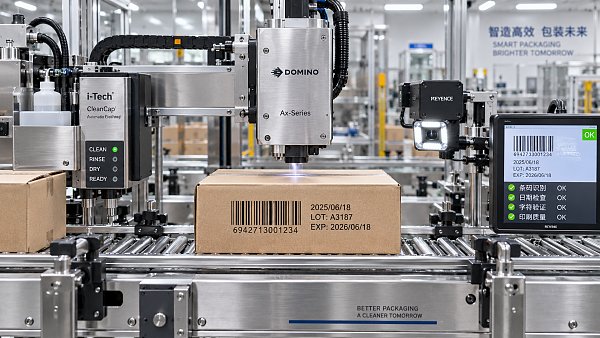
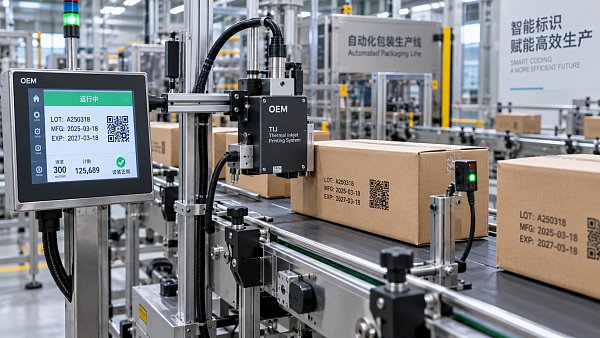
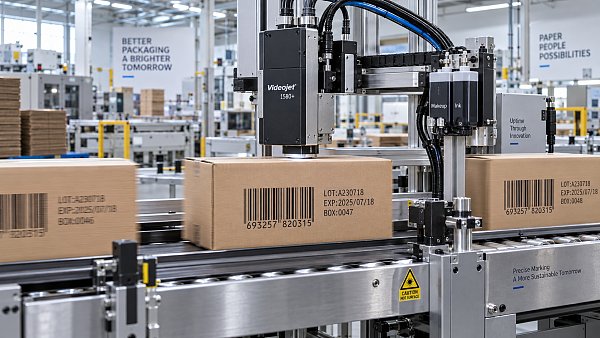
That is why Variable Data Printing Systems should not be treated as an isolated coding device. In real production, they sit inside a moving mechanical environment shaped by corrugated lines, flexo or offset presses, die-cutters, folder gluers, and vision inspection. If the system cannot stay synchronized with board movement, ink behavior, drying windows, and inspection logic, the nominal equipment price becomes almost irrelevant. The true number that matters is what each printed pack costs when the line is running at production speed.
This is also where the CPCS perspective is useful. The Global Commercial Printing & Corrugated Systems tracks packaging production as a connected chain rather than a series of separate machines. On high-speed paper and board lines, “geek-level motion precision” and “absolute material yield” are not slogans. They are the conditions under which serialized printing can work without quietly increasing spoilage and reducing OEE.
Cost per pack starts with the print method, not the software dashboard
One of the most common procurement mistakes is focusing too early on the front-end promise: database connectivity, message management, job switching, or traceability features. Those matter, but the cost structure usually begins with the print engine itself. CIJ, TIJ, piezo inkjet, laser, and hybrid architectures behave very differently in terms of consumables, maintenance, print resolution, throw distance, substrate tolerance, and achievable line speed.
For example, a system that prints cleanly on flat, coated carton at moderate speed may struggle on porous corrugated board, uneven kraft surfaces, or packs with dust and vibration near converting sections. When that mismatch happens, the finance impact is not limited to higher ink spend. It can mean more unreadable codes, more operator intervention, and more packs diverted by inspection systems.
In other words, a lower-cost printhead can become the expensive option if it forces slower throughput or more frequent stoppages.
Substrate behavior is a cost driver that buyers often leave to operations
Board and paper are not passive surfaces. Absorbency, coating, roughness, flute profile, moisture variation, dust level, and color all influence how variable data is formed and verified. On corrugated packaging in particular, the coding result depends not only on the print technology but also on how stable the board remains after corrugation, printing, die-cutting, and folding.
CPCS has long emphasized that packaging machinery performance is governed by fluid dynamics and motion control together. The same logic applies here. If ink spread changes with board absorbency, or if carton vibration changes print placement, the cost per pack rises through invisible channels: extra setup sheets, more conservative speed settings, and more inspection rejects that are technically “print quality” issues but operationally become material losses.
This is one reason why samples printed in a demo room rarely tell the full story. Financial approval should be based on substrate-specific trials under realistic production conditions, ideally including the actual board grades and pack geometries used in the plant.
Line speed and data complexity usually move against each other
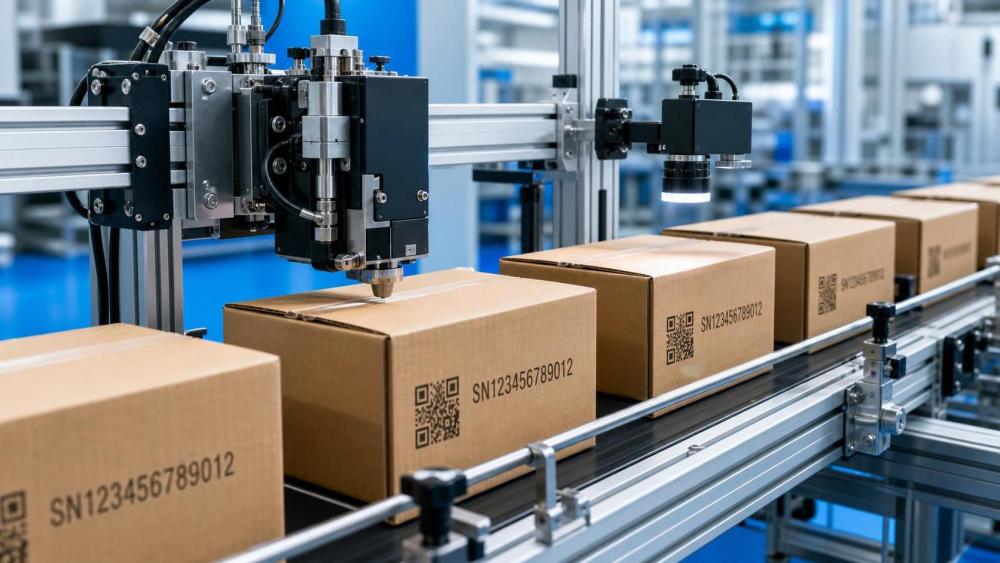
A Variable Data Printing System may look economical when the message is simple: a date code, batch number, or fixed-format barcode. Costs change when each pack carries unique serialization, 2D codes, graphics elements, or market-specific text pulled from an external database. Data processing load increases, buffering requirements change, and print accuracy becomes more sensitive to latency, triggering, and registration.
On fast packaging lines, this matters more than many business cases admit. A system rated for a certain speed under simple coding conditions may not hold that performance when every carton needs a unique code verified in real time. When procurement teams compare quotations, the important question is not “What is the maximum rated speed?” but “At what data load, resolution, and print width is that speed sustainable without rising reject rates?”
That distinction becomes critical in sectors where a missing or unreadable code is not just a quality issue. Pharmaceutical cartons, regulated food packaging, and export packs often require verification logic that catches errors immediately. In those environments, the cheaper system may create a more expensive production regime if it cannot maintain print and inspection integrity at target throughput.
Waste is rarely caused by the printer alone
Finance teams usually ask about ink cost, solvent use, service intervals, and spare parts. Those are valid line items, but in high-volume packaging the larger number may be waste tied to setup instability and downstream rejection. A variable data unit that is mechanically sound but poorly integrated with feeder timing, web tracking, sheet handling, or inspection can generate steady low-level loss that never appears on the original CAPEX proposal.
CPCS often analyzes this at the line level. A corrugator running at up to 300 meters per minute, a die-cutter cycling thousands of times an hour, or a folder gluer placing adhesive in milliseconds leaves very little room for code placement drift. If a printed code lands near a crease, flap edge, varnished area, or glue zone, quality failures can rise even if the coder itself is functioning exactly as specified.
That is why “waste control” in Variable Data Printing Systems is really an integration question. Triggering method, encoder stability, carton orientation, print-to-cut relationship, and vision feedback loops all affect whether code-related scrap stays low or becomes a recurring operating burden.
Where hidden cost usually appears
Inspection and verification are part of the print cost equation
For many packaging operations, especially in regulated or retailer-sensitive categories, printing data is only half the task. The other half is proving that the right data was printed, in the right place, at the right quality level. Inline vision inspection, line-scan cameras, and AI-assisted defect detection can sharply reduce the risk of shipping non-conforming product, but they also change project economics.
The extra cost is justified when it prevents high-value waste or compliance exposure. But the benefit depends on calibration, false reject rates, and how cleanly the inspection system communicates with the coder and the host line. A verification setup that rejects too aggressively can inflate cost per pack almost as much as poor printing. A setup that is too tolerant defeats the purpose.
This is where finance and operations need a shared acceptance standard. Not just “code readable,” but readable by which scanner class, under what contrast threshold, after what abrasion or handling conditions, and at what line speed.
Changeovers, job mix, and ERP connectivity shape the real ROI
Plants with long, stable runs evaluate variable data very differently from plants producing many SKUs, many languages, and many customer-specific versions. In short-run or high-mix environments, the cost of changeover discipline becomes central. Template errors, delayed data loading, or weak ERP/MES connectivity can create expensive stoppages even when the printer itself is reliable.
For financial approval, this means the system should be judged on total workflow fit. How are messages approved? Who owns master data? How are version-control mistakes prevented? Can the line recover quickly after a rejected job? These are not software-side details. They directly influence labor usage, waste exposure, and the probability of shipping the wrong pack.
In practice, the more complex the customer mix, the more valuable disciplined data governance becomes. A robust workflow can save more money than marginal reductions in ink price.
What finance should ask before approving a Variable Data Printing System
A useful business case usually comes down to a few hard questions:
- What is the expected cost per pack at target line speed, using actual substrate and actual code complexity?
- How much setup waste is expected before stable output is reached?
- What happens to OEE when verification is activated at full production conditions?
- Which costs are variable with volume, and which are driven by maintenance, downtime, or labor?
- Does the supplier’s speed claim apply to unique serialized data, or only to simple fixed messages?
- How will the system interact with existing press, converting, and inspection equipment?
Those questions sound operational, but they are really finance questions in disguise.
A practical view of cost control
The best Variable Data Printing Systems are not necessarily the cheapest to buy or the most feature-rich on paper. They are the ones that maintain readable output, stable placement, and manageable maintenance under real packaging conditions. In corrugated and carton converting, that means respecting the mechanics of the line as much as the intelligence of the software.
That line-level view is exactly why CPCS keeps linking coding and inspection back to corrugation, flexo ink transfer, die-cut timing, folder-gluer dynamics, and waste economics. When capital decisions are made in isolation, cost per pack is easy to misjudge. When they are made with the whole production chain in view, hidden losses become easier to model before they hit the plant floor.
Before moving forward, it is usually worth validating three things on the intended line: print quality on the real substrate, sustained performance at the real data load, and reject behavior with the actual inspection standard. If those three hold, the investment case becomes much clearer. If they do not, the lowest quoted price will not stay low for long.
Related News
 How Inkjet Printheads Affect Code Quality and Maintenance CostsInkjet Printheads directly influence code clarity, barcode reliability, downtime, and maintenance costs. Learn practical steps to prevent defects and extend printhead life.Machine Vision & Coding Fellow
 How to Evaluate an OEM TIJ Printer Manufacturer for Production LinesChoose an OEM TIJ printer manufacturer with confidence: evaluate print quality, ink compatibility, integration, uptime, and total cost for reliable production-line coding.Machine Vision & Coding Fellow
 What Determines Inkjet Printhead Price in Industrial Coding SystemsInkjet printhead price depends on technology, ink compatibility, resolution, maintenance, and uptime. Learn how to compare total ownership cost and choose the right coding solution.Machine Vision & Coding Fellow
 How to Choose an Inkjet Printhead Supplier for Reliable ProductionChoose an inkjet printhead supplier with confidence. Learn how to verify compatibility, quality control, technical support, traceability, and total production cost.Machine Vision & Coding Fellow
 When Are Thermal Inkjet Printers the Right Choice for Product Coding?Thermal Inkjet Printers deliver crisp, flexible product coding for cartons, QR codes, barcodes, and variable data. Discover when TIJ is the right fit for your line.Machine Vision & Coding Fellow
 Common Carton Coding Problems and How to Fix Poor Print ReadabilityCarton Coding Machines often face poor print readability due to ink flow, alignment, or carton surface issues. Learn practical fixes to reduce rework, protect traceability, and keep lines running smoothly.Machine Vision & Coding Fellow