How to Choose an Inkjet Printhead Supplier for Reliable Production
A printhead purchase often becomes urgent at the worst possible time: a digital press is being installed, a replacement program is underway, or a packaging job begins showing banding, missing nozzles, unstable color, or inconsistent barcode readability. In that situation, the lowest quoted component price can look attractive. Yet an unsuitable supplier can create a more expensive problem through ink incompatibility, uncertain lead times, weak technical diagnosis, or inconsistent product traceability.
To choose an inkjet printhead supplier for reliable production, procurement teams should first confirm that the supplier can support the exact printhead, ink chemistry, electronics, waveform requirements, and operating conditions of the intended system. Then assess supply continuity, quality control, technical response, warranty terms, and the real cost of using the printhead over its service life. A supplier should be evaluated as part of the production system, not as a source of interchangeable spare parts.
Start with the production risk, not the quotation
Inkjet printheads sit at the point where digital data, ink, substrate, motion control, and curing or drying conditions meet. A printhead that appears correct on a purchase order may still perform poorly if it is paired with unsuitable ink, operated outside its temperature range, supplied without the required drive electronics, or installed without correct flushing and priming procedures.
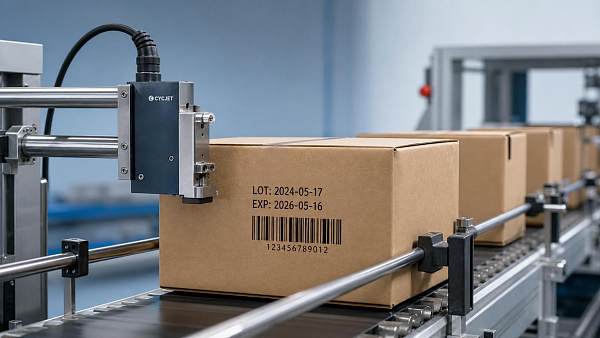
This is especially relevant in commercial printing and packaging applications. A failure may not only create visible defects. It can interrupt variable-data printing, reduce code readability, cause waste on coated paper or corrugated substrates, delay order release, and require unplanned cleaning or replacement. When production includes serialized codes, batch information, branded graphics, or frequent short-run changes, downtime and rejected output may cost more than the difference between two printhead prices.
Before comparing suppliers, define what production reliability means for the application. For some operations, the priority is fine text and image detail. For others, it is stable high-speed coding, wide-web coverage, resistance to frequent starts and stops, or long runs with water-based, solvent, UV, or specialty inks. The supplier assessment should reflect that actual duty cycle.
Build a technical requirement sheet before requesting offers
A clear requirement sheet prevents a common procurement error: receiving quotations for products that share a similar name or form factor but differ in performance, revision level, or required system conditions. The document does not need to be lengthy, but it should be specific enough for engineering, maintenance, and purchasing to review the same requirement.
- Printhead identification: manufacturer, model, part number, nozzle configuration, native resolution, grayscale capability where applicable, and revision or generation.
- Ink system: ink type, viscosity range, pigment or dye composition, solvent content, surface tension, filtration requirement, and recommended operating temperature.
- Application conditions: substrate types, line speed, print width, expected daily operating hours, job-change frequency, and start-stop behavior.
- Integration requirements: compatible controller, data path, waveform capability, manifold design, cabling, recirculation arrangement, and mounting interfaces.
- Quality expectation: acceptable defect level, image quality requirement, code readability needs, registration tolerance, and inspection method.
- Service requirement: expected delivery window, local or remote support needs, spare-head policy, return process, and documentation required with each shipment.
A supplier that responds with detailed questions about these conditions is usually more useful than one that immediately confirms availability without clarifying the application. The purpose is not to make the process difficult; it is to identify where a printhead selection may create an integration risk before production is affected.
Verify what the supplier is actually supplying
Not every supplier operates in the same way. Some provide original equipment parts through an established channel. Others sell surplus inventory, refurbished units, compatible alternatives, or components removed from decommissioned equipment. These options may suit different purchasing situations, but they should never be treated as identical.
Condition and provenance matter because inkjet printheads are sensitive components. Storage temperature, humidity exposure, packaging integrity, contamination, prior ink contact, and handling procedures can influence installation results. A supplier should be able to state whether the item is new, unused, repaired, tested, or taken from existing inventory, rather than using vague descriptions such as “equivalent quality” or “ready to use.”
Ask for part-label photographs, batch or serial traceability where available, packaging details, and a written description of the condition. This is not only for dispute prevention. It also helps maintenance teams preserve records when a print defect later needs to be investigated.

Compatibility is broader than fitting the machine
A printhead can physically fit a print station and still be a poor production choice. The most important compatibility questions involve fluid behavior, electrical driving conditions, and the mechanical design around the head.
Ink and fluid-path compatibility
Ink chemistry affects nozzle wetting, drop formation, sediment behavior, drying at the nozzle plate, and cleaning frequency. Pigmented inks may require robust filtration, agitation, or recirculation. Fast-drying inks can increase the risk of nozzle dry-out during idle periods. UV inks introduce curing-related considerations, while solvent-based formulations may demand compatible seals, tubing, dampers, and cleaning fluids.
A capable supplier should not simply state that a printhead is “compatible with UV ink” or “suitable for water-based ink.” Ask what viscosity and temperature range is expected, whether recirculation is recommended, what filtration level the system requires, and whether the proposed application has limitations related to pigment loading or ink maintenance. The supplier may not control the ink formulation, but it should be able to identify the operating conditions that must be validated.
Electronics, waveform, and controller support
Print quality depends on controlled droplet formation. This is influenced by the waveform, voltage range, firing frequency, cable design, controller capability, and ink temperature. A replacement sourced without confirming these elements may install successfully but produce satellite drops, density variation, overspray, inconsistent line edges, or premature nozzle loss.
During supplier evaluation, request confirmation of the controller and drive system assumptions. If the printhead will be used in a custom-built or upgraded digital printing system, engineering should review the proposed configuration before the purchase is released. The supplier does not need to design the whole machine to provide useful support, but it should clearly identify the interfaces and limitations that affect reliable use.
Mechanical and environmental conditions
Head-to-substrate distance, mounting flatness, vibration, pressure control, purge arrangement, and ambient temperature can all affect output. Corrugated board, for example, may have surface variation that requires a different approach from smooth coated paper or folding carton stock. A supplier that understands the application can help distinguish a printhead issue from a transport, vacuum, registration, or substrate-handling issue.
Assess quality control through evidence, not general claims
“Tested before shipment” is not enough unless the supplier explains what was tested. Procurement teams should ask for the process behind the claim. A meaningful answer may include incoming inspection, packaging inspection, electrical checks, nozzle verification where appropriate, controlled storage, and shipment handling procedures. The exact checks depend on the printhead type and the supplier’s role, but the process should be understandable.
Pay attention to how the supplier handles a suspected defect. The strongest signal is often not a broad warranty statement but a clear process: what installation records are needed, how troubleshooting is performed, what evidence is reviewed, whether return authorization is required, and how replacement eligibility is determined. Inkjet printhead issues can be caused by ink contamination, incorrect pressure, improper cleaning, waveform settings, or mechanical damage. A fair process should recognize these variables without using them as automatic reasons to reject every claim.
It is also useful to ask whether the supplier can provide installation and handling guidance. A new head can be damaged by improper unpacking, incorrect flushing fluid, excessive wiping pressure, running dry, or an uncontrolled first start-up. Written handling instructions reduce preventable failures and give production teams a consistent procedure.
Compare total operating cost rather than purchase price
The quoted unit price is only one part of the cost. A lower-priced source may be commercially reasonable for a non-critical line, but it should be compared against the cost of production interruption, additional cleaning, repeat commissioning, rejected material, emergency shipping, and internal troubleshooting time.
Use a simple total-cost review for each shortlisted supplier:
- Unit price and any quantity break conditions
- Freight method, transit uncertainty, import handling, and emergency shipment options
- Expected lead time for routine orders and confirmed stock availability
- Technical support included before and after delivery
- Warranty scope, exclusions, response procedure, and replacement timing
- Required consumables such as filters, cleaning fluids, dampers, manifolds, or protective caps
- Likely maintenance burden created by the selected ink and operating method
- Risk and cost of line stoppage if the part is unavailable
The analysis does not require invented service-life projections. Instead, use internal maintenance history where it exists. Review how often heads are changed, why they are removed, whether failures cluster around particular inks or operating conditions, and how long the line remains unavailable during replacement. This often reveals whether the purchasing issue is supplier reliability, process control, or both.
Test the supplier’s responsiveness before a critical failure occurs
Reliable support is easier to judge during the quotation stage than during an emergency. Send a technical question that requires a specific answer, such as recommended storage conditions, compatibility with a stated ink type, or the information required to investigate nozzle loss. Evaluate whether the reply is accurate, timely, and appropriately cautious.
Warning signs include answers that avoid part-revision questions, promises of universal compatibility, unclear stock status, refusal to describe condition, or a warranty that exists only as a verbal assurance. Another concern is a supplier that provides no distinction between application advice and final system responsibility. Good technical support explains what can be confirmed, what must be validated on the machine, and what operating information is needed to reach a reliable conclusion.
For high-utilization equipment, establish a contact path for production interruptions. Confirm who receives technical questions, which time zone applies, what information should be sent first, and whether photos, nozzle test images, ink details, or controller settings will be needed. This preparation shortens diagnosis when an actual problem occurs.
Plan supply continuity and spare-head strategy
Printhead availability can change because of production allocation, product revisions, transport delays, or the gradual retirement of older designs. Procurement should ask whether the supplier expects to support the required part over the planned life of the equipment and whether alternative versions require engineering changes.
A spare-head policy should reflect production criticality. Keeping excessive stock can tie up capital and create storage-management risk, while holding no spare may expose a high-value line to a long outage. The right approach depends on replacement frequency, confirmed replenishment time, storage requirements, and whether a single printhead failure stops the entire machine or only reduces output quality.
Store spare heads according to the supplier’s documented conditions and record receipt date, part identification, storage location, and any recommended inspection interval. Inventory without traceability becomes difficult to use confidently when an urgent replacement is needed months later.
Questions that often arise during supplier selection
Should a buyer always choose the original printhead source?
Not automatically. The decision depends on production risk, application sensitivity, support needs, and the condition of the available alternatives. For critical lines or new systems, a fully traceable supply route and clear technical support usually carry more value. Legacy equipment may require a broader sourcing approach, but the condition and storage history of the component should be checked carefully.
Can an inkjet printhead supplier guarantee print quality?
No supplier can reasonably guarantee final print quality without considering ink, waveform, mechanics, substrate, maintenance, and operating conditions. The supplier should be able to confirm printhead specifications, known compatibility boundaries, handling requirements, and diagnostic information needed when output becomes unstable.
What should be included in the first purchase order?
Include the exact part number and revision where relevant, required quantity, condition requirement, packaging expectation, delivery terms, warranty terms, and any documentation or traceability requested. Where technical compatibility is still being validated, record the approved application assumptions rather than relying only on a generic product description.
The most dependable supplier relationship is built before the line is under pressure. Select a source that can identify the correct component, explain its application boundaries, document what it supplies, and respond methodically when performance questions arise. That approach gives purchasing teams a stronger basis for controlling cost without shifting avoidable risk into production.
Related News
 How Inkjet Printheads Affect Code Quality and Maintenance CostsInkjet Printheads directly influence code clarity, barcode reliability, downtime, and maintenance costs. Learn practical steps to prevent defects and extend printhead life.Machine Vision & Coding Fellow
 How to Evaluate an OEM TIJ Printer Manufacturer for Production LinesChoose an OEM TIJ printer manufacturer with confidence: evaluate print quality, ink compatibility, integration, uptime, and total cost for reliable production-line coding.Machine Vision & Coding Fellow
 What Determines Inkjet Printhead Price in Industrial Coding SystemsInkjet printhead price depends on technology, ink compatibility, resolution, maintenance, and uptime. Learn how to compare total ownership cost and choose the right coding solution.Machine Vision & Coding Fellow
 How to Choose an Inkjet Printhead Supplier for Reliable ProductionChoose an inkjet printhead supplier with confidence. Learn how to verify compatibility, quality control, technical support, traceability, and total production cost.Machine Vision & Coding Fellow
 When Are Thermal Inkjet Printers the Right Choice for Product Coding?Thermal Inkjet Printers deliver crisp, flexible product coding for cartons, QR codes, barcodes, and variable data. Discover when TIJ is the right fit for your line.Machine Vision & Coding Fellow
 Common Carton Coding Problems and How to Fix Poor Print ReadabilityCarton Coding Machines often face poor print readability due to ink flow, alignment, or carton surface issues. Learn practical fixes to reduce rework, protect traceability, and keep lines running smoothly.Machine Vision & Coding Fellow