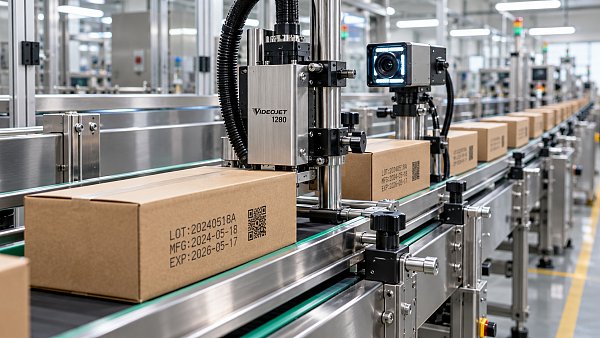
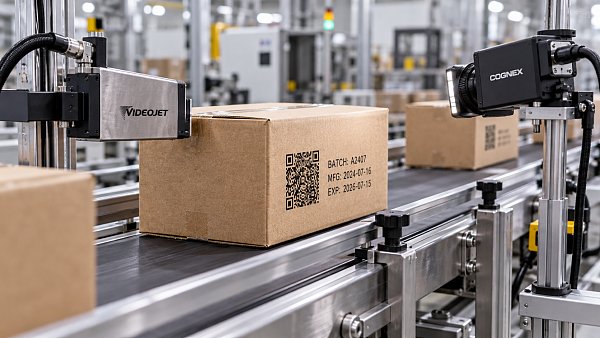
How to Choose a Variable Data Printing Machine for Packaging
Choose a variable data printing machine by proving that it can print your required content on actual packaging materials, at the required production speed, with reliable data control and inspection. Resolution and rated throughput are screening criteria—not acceptance criteria. A sharp demonstration sample does not establish that the system will maintain readable codes, correct serialization, or accurate placement throughout a production run.
The problem often appears when a coding station joins an existing converting line: coated cartons resist ink, corrugated sheets move beneath the printhead, or a restart breaks the link between printed packages and database records. These failures create rejects, rework, and traceability gaps. Start with an application specification, shortlist suitable technologies, then validate the complete print–inspect–reject workflow before comparing purchase prices.
Define the application before selecting the machine
Separate simple variable marking from variable-content production. Printing a batch number on a fixed panel is different from producing a unique serialized Data Matrix on every carton. Changing full-color artwork between orders introduces another level of image processing, print width, and file preparation. These requirements should not share an undifferentiated equipment specification.
Prepare a sample set and a job description covering:
- Packaging materials: actual paper grades, coatings, varnishes, laminates, colors, and expected variation between suppliers.
- Variable content: text, dates, linear barcodes, two-dimensional codes, unique identifiers, graphics, and languages.
- Print geometry: image dimensions, position tolerance, code orientation, quiet zones, and distance from folds or glue areas.
- Production conditions: running speed, package pitch, acceleration, stop frequency, dust, temperature, and humidity.
- Acceptance requirements: code quality, data correctness, adhesion, scuff resistance, and downstream reporting.
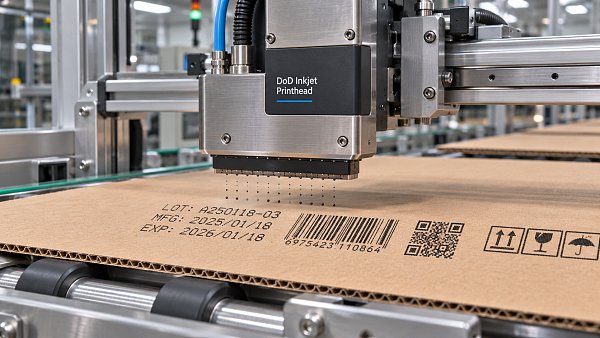
Also specify where marking occurs: on flat sheets, carton blanks, erected cases, labels, or flexible webs. A printer that performs well on a supported blank may not tolerate the movement and changing stand-off distance of an erected corrugated case.
Match printing technology to the surface and content
Technology selection should narrow the supplier list, not replace material testing. Ink formulation, printhead design, transport stability, and drying conditions can make two systems using the same broad technology behave differently.
For wide variable graphics or frequent artwork changes, evaluate whether a dedicated digital packaging press is more appropriate than adding a narrow coding head. Conversely, purchasing full-width digital capability for a small batch-code panel may introduce unnecessary operating and maintenance costs.
Laser marking is another option for some applications, but it changes or removes material rather than depositing ink. Contrast, substrate damage, extraction, and guarding require separate assessment; it is not a universal substitute for an ink-based system.
Test the finished surface, not just the paper grade
Varnish and coating differences can change wetting and adhesion even when the underlying board specification remains unchanged. Print on production-finished samples, including the least absorbent and most textured variants. Check the image immediately after printing and again after the handling, rubbing, stacking, and environmental exposure relevant to the package.
For food-related packaging, confirm ink suitability for the intended construction and use. Printing on the outside does not, by itself, resolve migration or set-off concerns. Obtain application-specific documentation and assess the complete printed package rather than accepting a generic claim about an ink family.
Translate rated speed into a usable operating window
A supplier’s maximum speed may apply to a particular resolution, print height, ink, or image density. Ask for the achievable speed at your exact print mode, including the largest data payload and most demanding substrate. Increasing resolution can reduce throughput on some systems without delivering a corresponding improvement in code readability.
Evaluate accepted output, not conveyor speed alone. A line that moves quickly but produces frequent unreadable codes, stops for cleaning, or loses material during restarts may deliver less usable production than a slower, stable configuration.
Transport deserves as much attention as the print engine. Inspect belt support, sheet guidance, encoder location, trigger sensing, and printhead mounting. Corrugated warp and vibration can change the head-to-surface distance; skew can move a code into a crease or outside the camera’s viewing area. Multiple printheads also introduce alignment and stitching requirements.
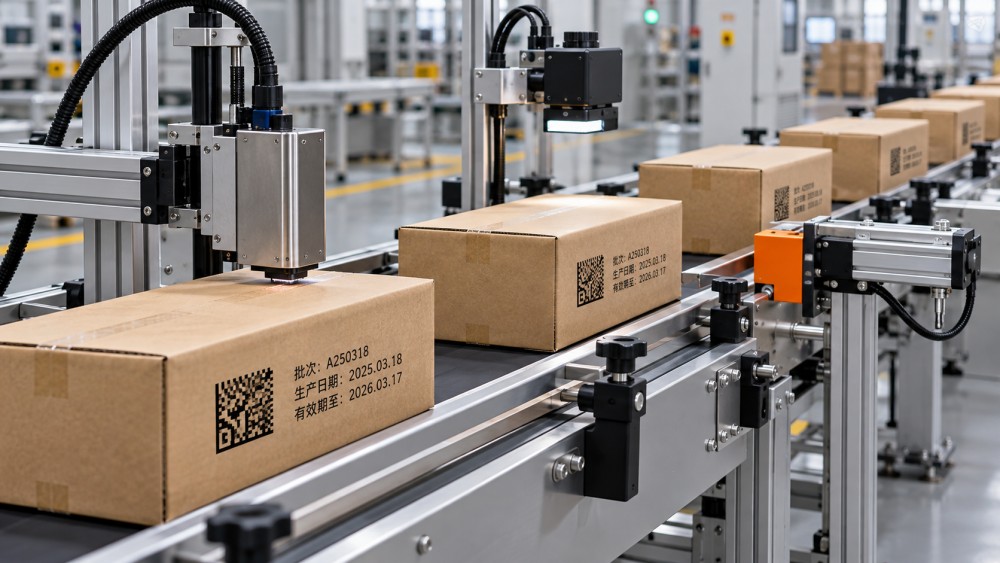
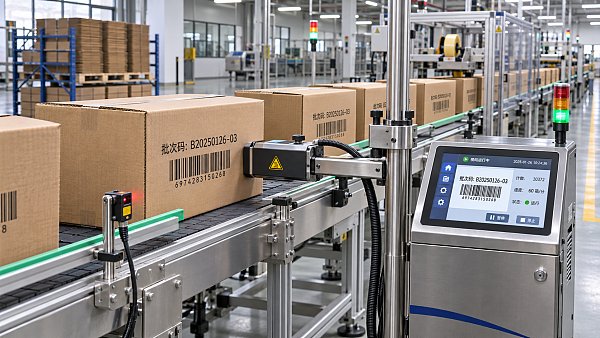
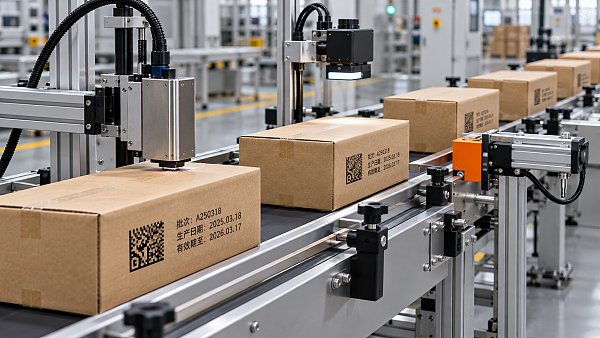
Map the physical sequence from product detection through printing, drying or curing, inspection, and rejection. There must be enough distance for each function at maximum intended speed, while keeping the identity of every package consistent through the sequence. Available floor space can therefore eliminate an otherwise suitable printer.
Treat variable data as a controlled production process
Data handling becomes critical when every package carries a unique identifier. The machine must do more than receive a spreadsheet: it needs a defined method for validating records, assigning them to physical items, and recording their final status.
Ask the supplier to demonstrate how the system handles:
- Missing fields, invalid characters, incorrect lengths, and duplicate input records.
- Job changes, database disconnections, and exhausted data queues.
- Emergency stops, power interruptions, and products remaining between the printhead and reject station.
- Reprints, rejected identifiers, reconciliation, and export of production results.
Require a clear definition of record states. “Sent to printer” is not equivalent to “printed,” and “printed” is not equivalent to “verified and accepted.” Where serialization matters, the workflow must distinguish these events and prevent uncontrolled reuse of identifiers.
For encoded data, check formatting rules, separators, date structures, and human-readable text against the customer’s specification. A readable symbol can still contain the wrong information. Integration responsibility should be explicit: identify who owns templates, field mapping, database connections, software updates, backups, and access permissions.
Specify inspection and rejection together
A successful scanner read is useful, but it does not establish a formal barcode quality grade. Define whether the application requires presence detection, content comparison, duplicate checking, print-quality grading, or a combination. Applicable verification methods include ISO/IEC 15416 for linear barcodes and ISO/IEC 15415 for two-dimensional symbols; confirm the method, measurement setup, and acceptance threshold required by the buyer or application.
Inline cameras and dedicated verifiers serve related but different purposes. Assess whether the proposed inspection system actually grades symbols using the required method or only decodes them. Lighting, exposure, viewing geometry, calibration, and line speed affect results. Testing must include codes at the smallest intended size and on the lowest-contrast material.
Code design also matters. Adequate module size and quiet zones can be more valuable than a higher nominal printer resolution. Brown liners, textured surfaces, and background graphics may limit contrast or edge definition. Reserve a suitable print panel early rather than asking the printer to compensate for unsuitable artwork.
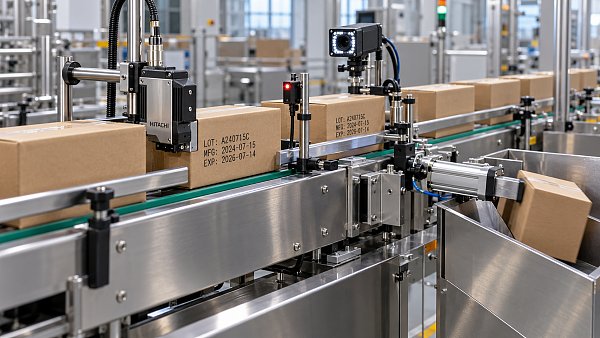
The reject mechanism must remove the correct physical package. Demonstrate adjacent defective items, closely spaced products, a full reject bin, and loss of reject confirmation. For critical traceability applications, define when an inspection or rejection fault stops the line rather than allowing unverified output to continue.
Use an acceptance trial that exposes production risks
Send shortlisted suppliers the same materials, files, operating requirements, and acceptance criteria. Supplier-selected samples are useful for initial screening, but they should not determine the purchase decision.
- Establish the baseline. Run actual substrates with the intended ink, resolution, print size, and drying or curing configuration. Record all settings.
- Challenge the operating range. Include low and high speeds, acceleration, stops, restarts, and realistic changes in package spacing.
- Introduce known defects. Test missing prints, incorrect records, duplicates, unreadable codes, and inspection faults. Confirm detection and physical rejection.
- Assess sustained operation. Run long enough to expose cleaning needs, nozzle loss, ink replenishment, and image drift rather than judging isolated samples.
- Reconcile results. Compare input records, accepted packages, rejects, unused identifiers, and exported production data.
Agree on measurable limits before the trial: placement tolerance, required code quality, permitted defects, restart waste, intervention frequency, and recovery behavior. The limits should come from your application, not from values chosen after seeing the results.
Retain representative samples and trial logs. Make the tested configuration part of the purchase specification, including software functions, inspection equipment, utilities, and material assumptions. Repeat the relevant checks after installation because factory transport, dust, vibration, and upstream controls may differ from the demonstration setup.
Compare cost per accepted package and define ownership
Build the operating-cost model around the tested print layout and accepted output. Include ink or ribbon, cleaning fluids, replacement heads or cartridges, filters, curing energy, extraction, compressed air, software fees, service, and operator time. Add startup waste, rejected packaging, scheduled maintenance, and recovery after prolonged idle periods.
Consumable estimates should identify their assumptions. Coverage, image size, purge routines, cleaning cycles, and unused ink remaining at replacement can materially affect consumption. Ask whether yield figures include these losses and whether the proposed maintenance schedule matches your shift pattern.
Finally, assign responsibility for integration. Mechanical mounting, line controls, data exchange, inspection, rejection, and safety modifications often cross supplier boundaries. One technically capable printer can still become a poor investment when these interfaces have no clear owner.
Shortlist only systems that pass the material, data-integrity, and accepted-output requirements. Among those, compare operating cost, maintainability, local service capability, spare-parts availability, and changeover effort. A lower purchase price should not offset an unresolved failure to reconcile serialized records or reject defective packages reliably.
Related News
 How Do Drop on Demand Inkjet Printers Control Ink Droplets?Discover how Drop on Demand Inkjet Printers control droplets through precise firing, ink formulation, and substrate handling for sharper codes and graphics.Machine Vision & Coding Fellow
 What Affects the Price of a Carton Coding Machine?Carton coding machine price depends on printing technology, speed, automation, and running costs. Discover how to compare quotes and choose the best value for your production line.Machine Vision & Coding Fellow
 How to Choose a Variable Data Printing Machine for PackagingChoose the right variable data printing machine for packaging. Compare material compatibility, speed, data control, and inspection to reduce waste and make a confident investment.Machine Vision & Coding Fellow
 How Can an Online TIJ Printer System Prevent Missing Batch Codes?Discover how an online TIJ printer system helps prevent missing batch codes with reliable triggers, vision inspection, and verified rejection. Reduce rework and protect traceability.Machine Vision & Coding Fellow
 Industrial Inkjet Printer Market Forecast to Reach $9.2 Billion by 2035Industrial inkjet printer market forecast: $9.2 billion by 2035. Explore how packaging traceability, automation, and CIJ and TIJ technologies could shape equipment investment.Machine Vision & Coding Fellow
 How Does Variable Data Printing for Cartons Improve Traceability?Discover how variable data printing for cartons improves traceability with verified codes and linked records to help locate affected stock and support faster recall decisions.Machine Vision & Coding Fellow