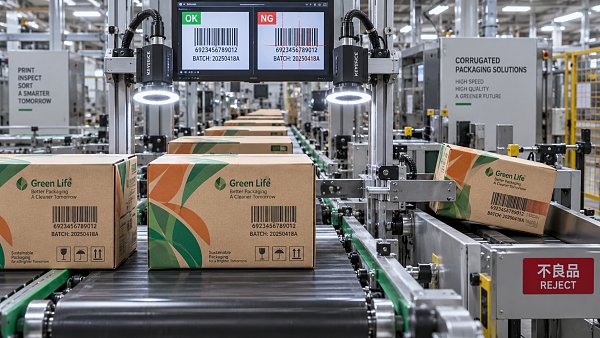
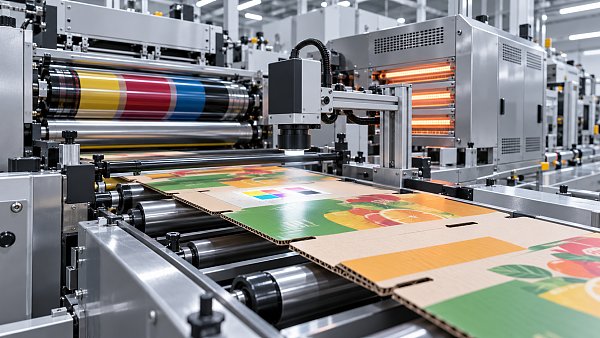
Why an AI Inspection Camera Matters for Print Quality Control
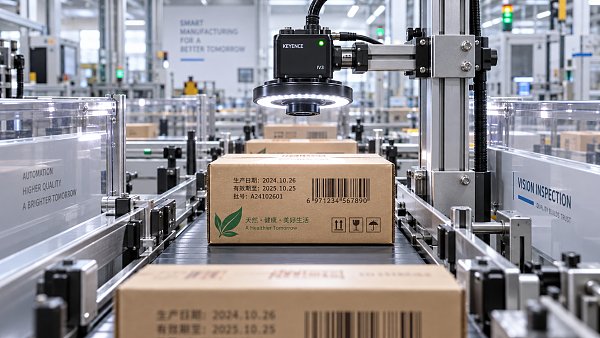
In high-speed printing and corrugated converting, the question is rarely whether defects exist. The real question is when they are discovered, by whom, and at what cost. That is why an AI inspection camera matters. For quality and safety teams, it is less a nice-to-have vision upgrade and more a control layer that changes the timing of decisions: defects move from end-of-line discovery to in-process intervention.
That timing shift matters because modern print operations are under pressure from several directions at once. Run speeds are higher, SKU counts are broader, version changes are more frequent, and compliance exposure is tighter in sectors such as pharmaceuticals, food, cosmetics, and e-commerce packaging. At the same time, material waste has become harder to absorb, especially as paper-based packaging demand grows under sustainability policies such as the EU’s PPWR framework【待核实:application details by product category should be checked against current legal text】. In that environment, a missed registration drift or unreadable code is no longer just a quality issue. It can become a waste issue, a traceability issue, a customer claim, or a shipment-hold issue.
For people searching this topic, the useful discussion is not “what is an AI inspection camera” in abstract terms. It is whether this technology solves a real control problem in their plant, what it can reliably catch, where it still needs human judgment, and how to evaluate it without being distracted by vendor language.
What changes when inspection becomes AI-assisted
Traditional vision systems in print quality control are usually good at repeatable rule-based checks: presence or absence, contrast thresholds, code reading, gross color deviation, registration marks, and dimensional reference. They remain valuable. But they can become fragile when the production environment gets messy: substrate variation, ink fluctuation, gloss, scuffing, carton warpage, artwork changes, mixed defect types, and borderline faults that do not fit a single threshold.
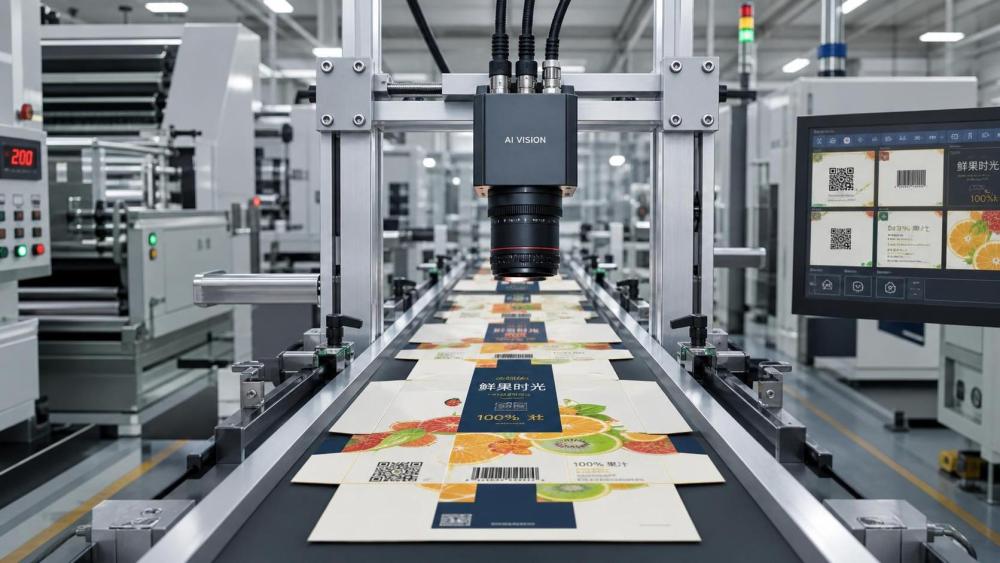
An AI inspection camera extends that logic. Instead of relying only on fixed pass/fail rules, it can classify patterns, compare against learned defect signatures, and reduce the amount of manual tuning needed when the same press produces many job variations. In practice, this can improve detection of issues such as:
- subtle print voids or streaks that appear intermittently
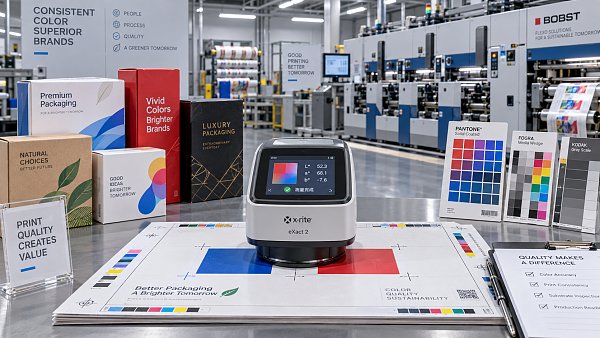
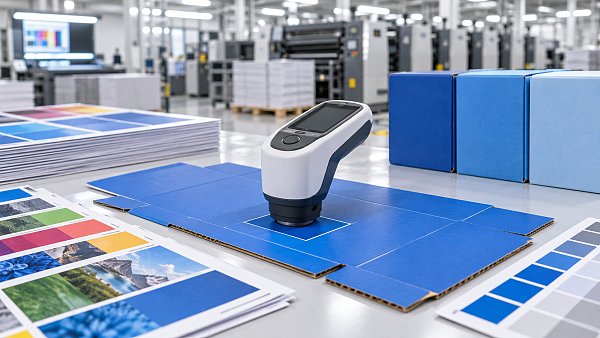
- small color inconsistency that trends toward customer-visible failure
- barcode or 2D code degradation before full unreadability
- text smearing, missing characters, or font breakage in variable data fields
- registration drift between colors or layers
- repeating defects tied to mechanical sources such as plate damage, anilox contamination, web handling instability, or debris
That does not mean AI replaces standards-based inspection. In a serious print environment, it usually sits on top of existing controls, not in place of them. Quality teams still need measurable tolerances, known reject criteria, code grading logic, and escalation rules. The value of AI is that it makes the system more adaptive and more useful under real production variability.
Why this matters more now than five years ago
The economics of defect detection have changed. In corrugated and folding carton production, waste generated during setup and during unstable ramp-up has always been a major hidden cost. What is changing is that many plants now have less room to hide that cost. Input material volatility, labor constraints, shorter runs, versioned packaging, retail compliance demands, and customer expectations for traceability all push inspection upstream.
There is also a structural change in packaging itself. More products now depend on printed codes to support downstream scanning, warehouse routing, anti-mixup controls, recalls, and sometimes regulatory traceability. In that context, a print defect is no longer just cosmetic. A poor code can break an automated process outside the print room, and the failure may only show up at a distribution center, hospital, pharmacy, or customer site.
For safety and compliance managers, this is the key point: visual inspection is increasingly connected to product integrity and chain-of-custody, not just appearance. The more packaging carries machine-readable data, the more the inspection camera becomes part of risk control.
Where an AI inspection camera is most justified
Not every line needs the same level of intelligence. The business case is strongest where the cost of a miss is high, the defect mix is broad, or the process window is narrow.
Typical high-value scenarios include pharmaceutical cartons, food labels, personal care packaging, export packaging with strict artwork requirements, and high-speed corrugated applications where long runs can amplify even a short undetected fault into significant waste. It also makes sense where plants run many SKU changes per shift and operators do not have time to repeatedly retune conventional vision parameters.
In contrast, if a line runs limited artwork variation, low speed, low compliance exposure, and defects are already well controlled with simple sensors and offline checks, the return may be weaker. This is where many projects go wrong: teams buy for the idea of “AI” rather than for a defined failure mode.
A more disciplined question is this: which defects currently escape early enough to create scrap, rework, complaint risk, or release risk? If the answer is vague, the investment case is not mature yet.
Useful triggers for evaluation include:
- repeat complaints around unreadable barcodes, serial data, or print consistency
- high setup spoilage or long stabilization time after job changes
- significant manual inspection labor with inconsistent results between shifts
- frequent false rejects from rule-based systems that operators start to ignore
- customer or regulatory pressure for stronger documented inspection records
What buyers often misunderstand
The most common misunderstanding is that AI automatically means better detection in every condition. It does not. An inspection camera is still a physical measurement system. If lighting is unstable, camera placement is poor, vibration is unmanaged, image resolution is insufficient, or the line produces contamination that obscures the print area, the software layer cannot rescue weak image acquisition.
The second misunderstanding is that a high detection rate on a demo sample equals real production readiness. In actual plants, defects are rarely presented in clean, isolated examples. They appear amid speed changes, substrate variation, operator adjustments, plate wear, ink viscosity shifts, and maintenance drift. Any serious evaluation should ask how the system performs over time, across shifts, and across job transitions.
The third misunderstanding is that fewer false rejects always means a better system. Sometimes low false reject performance is achieved by making the system too tolerant. For quality managers, the right metric is not merely “reject less.” It is “separate harmless variation from meaningful risk without normalizing actual defects.” That balance requires application-specific tuning and a clear defect taxonomy.
What to check before procurement
For quality and safety teams, selection should begin with process reality rather than spec-sheet language. The core questions are practical.
1. What inspection task is actually required?
There is a big difference between checking print presence, grading barcodes, comparing artwork, verifying variable data, monitoring color consistency, and identifying process-origin defects. Some systems do one or two of these well; few do all equally well in one installation.
2. Can the system keep up with line conditions?
Line speed, substrate reflectivity, print method, web or sheet stability, resolution needs, and lighting geometry determine whether the camera can produce usable data. In high-speed corrugated and flexo environments, this matters as much as the AI model itself.
3. How are defects defined and trained?
If the system uses machine learning, teams should understand what “training” means in plant terms. How many good and bad samples are needed? Who labels them? How often must models be retrained after artwork changes or process modifications? Is there a fallback rule-based mode for critical checks?
4. What is the response logic after detection?
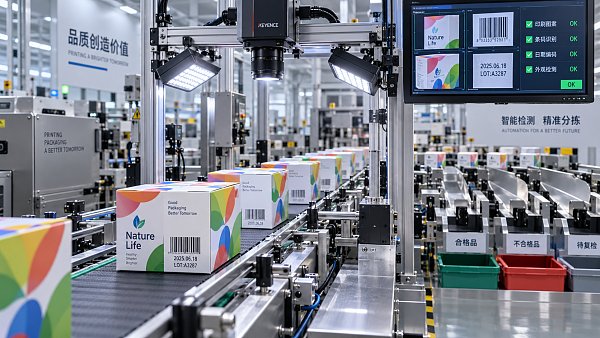
An alarm without a response path is just noise. The useful setup links inspection results to actions: mark-and-reject, stop the line, flag suspect batches, notify operators, or feed trend data into maintenance and quality systems. Integration with MES, QMS, serialization, or historian systems may matter depending on the plant architecture.
5. What evidence does it produce?
For regulated or claim-sensitive environments, image records, audit trails, event logs, user access controls, and recipe management may be as important as detection performance. This is especially relevant where investigations or customer disputes require proof of what was printed and when.
Standards, compliance, and traceability: where the discussion gets serious
Many searches around print inspection are really searches about risk. A quality manager may be trying to prevent customer complaints, but a safety or compliance manager may be trying to prevent release of packaging that breaks identification, usage, or legal labeling requirements.
That is why the inspection conversation often intersects with standards even when buyers begin with productivity concerns. Barcode verification may need alignment with recognized grading methods and customer specifications. Pharmaceutical or food-related packaging may require stronger validation expectations, data integrity controls, and documented change management depending on jurisdiction and use case【待核实】. Export packaging can also bring language, symbol, recycling mark, and traceability obligations that make artwork verification more than a visual preference.
The practical takeaway is straightforward: if the line supports products where printed information affects legality, safety, recall readiness, or automated distribution, inspection criteria should be defined with compliance stakeholders involved, not left solely to production engineering.
Where AI inspection helps OEE, and where it does not
There is a real OEE argument for AI-assisted inspection, but it should be stated carefully. It can improve effective performance by reducing undetected waste, shortening time to stable production, and lowering the burden of manual checks and troubleshooting. It can also support maintenance by revealing repeating defect signatures tied to specific mechanical causes.
But it does not fix the root cause on its own. If color drift is caused by ink control instability, if registration errors come from mechanical wear, or if code degradation comes from substrate and printhead mismatch, the camera identifies symptoms faster than operators can see them. The plant still needs a disciplined response process to remove the underlying cause.
This distinction matters because some projects underperform after installation. The system catches problems, but the organization has no agreed threshold for intervention, no ownership of recurring fault analysis, and no feedback loop into process improvement. In those cases, the camera becomes an expensive alarm archive.
How to judge ROI without relying on optimistic assumptions
For most operations, the cleanest ROI model starts with avoided waste and avoided escapes, not with vague labor savings. Estimate the cost of setup spoilage, suspect-product quarantine, customer returns, reruns, code-related failures, and manual inspection hours. Then compare that with the defects most likely to be caught earlier by inline inspection.
Plants should also separate one-time visible savings from recurring structural savings. Catching one serious defect event can justify attention, but sustained value usually comes from repeated prevention of smaller losses: shorter adjustment cycles, fewer unplanned stops to investigate quality complaints, less over-inspection, and better confidence at release.
Where possible, run a trial around a known pain point rather than a general demo. For example, test on a line with frequent barcode contrast issues, intermittent print voids, or version-control risk across SKU changes. A narrow evaluation usually reveals more than a broad proof-of-concept.
What to watch in the next phase of adoption
The direction of travel is clear even if specific vendor claims vary. Inspection is moving from isolated defect spotting toward connected decision support. That means more linkage between vision systems, press controls, maintenance diagnostics, and traceability records. Over time, the strongest systems are likely to be those that do three things at once: detect reliably, explain usefully, and integrate cleanly with plant workflows.
For corrugated and commercial print operations serving a market shaped by e-commerce growth, material-efficiency pressure, and tighter packaging compliance, that shift is difficult to ignore. An AI inspection camera matters because it gives quality control a more active role in production governance. It changes inspection from a checkpoint into a live control function.
The important question is not whether AI belongs in print quality control in principle. It is whether your current defect risks, compliance exposure, and waste profile are already at the point where human checks and conventional rules can no longer keep pace with the line.
Related News
 How to Build a Reliable Compact Vision Sensor Inspection SystemBuild a reliable compact vision sensor inspection system with proven guidance on lighting, triggering, defect detection, and production-ready quality control.Machine Vision & Coding Fellow
 How High Accuracy Spectrophotometers Improve Print Color Controlhigh accuracy spectrophotometers help print and packaging teams detect color drift early, reduce waste, improve approvals, and protect brand consistency across every production run.Machine Vision & Coding Fellow
 How Spectrophotometers for Color Matching Improve Print ConsistencySpectrophotometers for color matching help printers control Delta E, reduce waste, and deliver reliable brand color across every press run.Machine Vision & Coding Fellow
 How Print Inspection Systems Prevent Defects Before ShipmentPrint Inspection Systems help detect print, barcode, color, and coding defects in real time—improving traceability, reducing waste, and preventing costly shipment failures.Machine Vision & Coding Fellow
 Smart Cameras for Inspection That Catch Print Defects in Real TimeSmart camera for inspection solutions catch print defects in real time, verify codes, reduce false rejects, and strengthen packaging quality control.Machine Vision & Coding Fellow
 How Color Sensors Support Reliable Inline Print Quality InspectionColor Sensors enable reliable inline print quality inspection, helping packaging plants detect color drift early, reduce waste, protect brand consistency, and improve traceability.Machine Vision & Coding Fellow